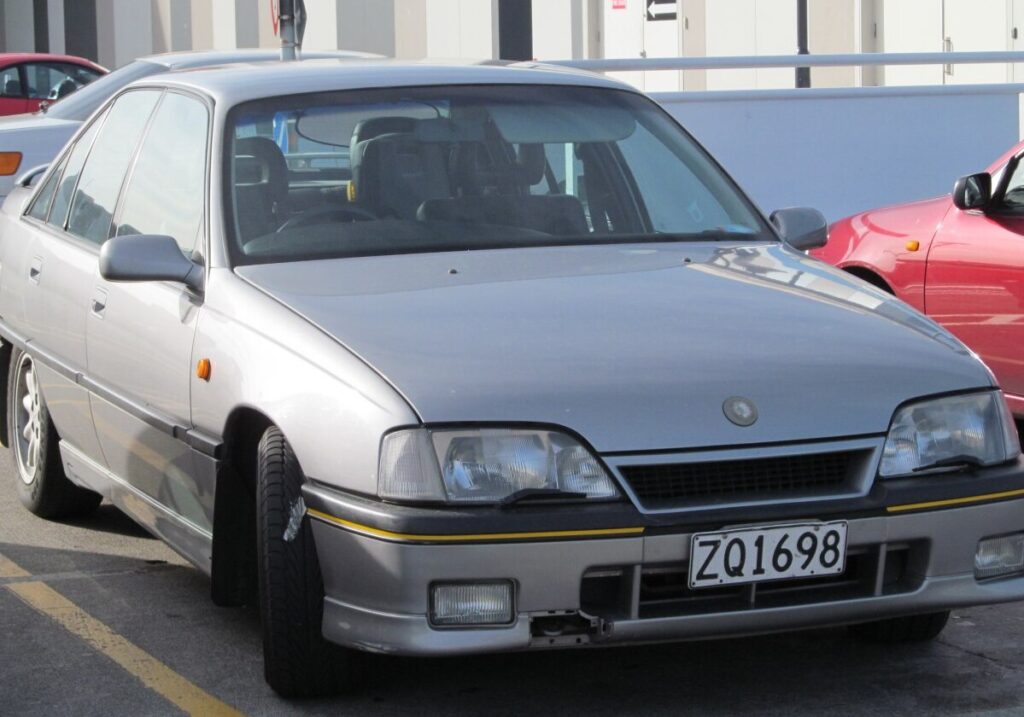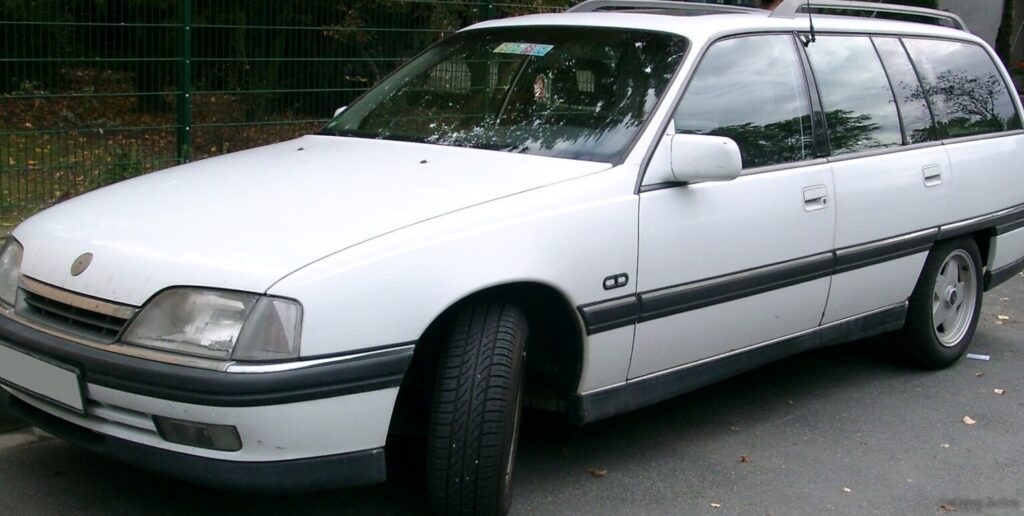
The Opel Omega A Caravan 2.3 TD Intercooler, produced between 1988 and 1993, represented a practical and relatively efficient offering within Opel’s large family car lineup. Positioned as a diesel-powered variant of the Omega A series, the Caravan (estate) body style prioritized cargo capacity and versatility. This particular 2.3-liter turbocharged diesel engine, producing 100 horsepower, was aimed at buyers seeking fuel economy and long-distance comfort rather than outright performance. It occupied a middle ground in the Omega A range, slotting below the more powerful gasoline engines and above the naturally aspirated diesel options.
Technical Specifications
| Brand | Opel |
| Model | Omega |
| Generation | Omega A Caravan |
| Type (Engine) | 2.3 TD Interc. (100 Hp) |
| Start of production | 1988 year |
| End of production | 1993 year |
| Powertrain Architecture | Internal Combustion engine |
| Body type | Station wagon (estate) |
| Seats | 5 |
| Doors | 5 |
| Fuel consumption (urban) | 8.7 l/100 km (27 US mpg, 32.5 UK mpg, 11.5 km/l) |
| Fuel consumption (extra urban) | 5.8 l/100 km (40.6 US mpg, 48.7 UK mpg, 17.2 km/l) |
| Fuel consumption (combined) | 7.7 l/100 km (30.5 US mpg, 36.7 UK mpg, 13 km/l) |
| Fuel Type | Diesel |
| Acceleration 0 – 100 km/h | 15 sec |
| Acceleration 0 – 62 mph | 15 sec |
| Acceleration 0 – 60 mph | 14.3 sec |
| Maximum speed | 176 km/h (109.36 mph) |
| Weight-to-power ratio | 13.6 kg/Hp, 73.8 Hp/tonne |
| Weight-to-torque ratio | 6.3 kg/Nm, 158.7 Nm/tonne |
| Power | 100 Hp @ 4200 rpm |
| Power per litre | 44.2 Hp/l |
| Torque | 215 Nm @ 2200 rpm (158.58 lb.-ft. @ 2200 rpm) |
| Engine layout | Front, Longitudinal |
| Engine Model/Code | 23DTR |
| Engine displacement | 2260 cm3 (137.91 cu. in.) |
| Number of cylinders | 4 |
| Engine configuration | Inline |
| Cylinder Bore | 92 mm (3.62 in.) |
| Piston Stroke | 85 mm (3.35 in.) |
| Compression ratio | 23:1 |
| Number of valves per cylinder | 2 |
| Fuel injection system | Precombustion chamber injection |
| Engine aspiration | Turbocharger, Intercooler |
| Engine oil capacity | 5.5 l (5.81 US qt | 4.84 UK qt) |
| Coolant capacity | 10.9 l (11.52 US qt | 9.59 UK qt) |
| Kerb Weight | 1355 kg (2987.26 lbs.) |
| Max. weight | 1990 kg (4387.2 lbs.) |
| Max load | 635 kg (1399.94 lbs.) |
| Trunk (boot) space – minimum | 520 l (18.36 cu. ft.) |
| Trunk (boot) space – maximum | 1850 l (65.33 cu. ft.) |
| Fuel tank capacity | 70 l (18.49 US gal | 15.4 UK gal) |
| Length | 4770 mm (187.8 in.) |
| Width | 1760 mm (69.29 in.) |
| Height | 1480 mm (58.27 in.) |
| Wheelbase | 2730 mm (107.48 in.) |
| Front track | 1460 mm (57.48 in.) |
| Rear track | 1475 mm (58.07 in.) |
| Drivetrain Architecture | Rear wheel drive |
| Drive wheel | Rear wheel drive |
| Number of gears | 5 gears, manual transmission |
| Front suspension | Spring Strut |
| Rear suspension | Wishbone |
| Front brakes | Ventilated discs |
| Rear brakes | Disc |
| Assisting systems | ABS (Anti-lock braking system), Hydraulic Steering |
| Tires size | 195/65 R15 |
| Wheel rims size | 6J x 15 |
Powertrain & Engine Architecture
The heart of the Omega A Caravan 2.3 TD Intercooler was the 23DTR engine, a 2.3-liter inline-four cylinder diesel. This engine utilized precombustion chamber injection, a system common in European diesels of the era. This system involved injecting fuel into a small pre-chamber within the cylinder head, where it partially combusted before igniting the main charge. This improved combustion efficiency and reduced engine noise compared to direct injection systems. The addition of a turbocharger and intercooler significantly boosted power output to 100 horsepower and 215 Nm (158.58 lb-ft) of torque. The intercooler cooled the compressed air from the turbocharger, increasing its density and further enhancing performance. The engine was mounted longitudinally in the front of the vehicle, driving the rear wheels. The five-speed manual transmission was the standard offering for this variant, providing a balance between fuel efficiency and drivability.
Driving Characteristics
The 2.3 TD Intercooler Omega A Caravan wasn’t designed for rapid acceleration. Its 0-60 mph time of around 14.3 seconds reflects its focus on fuel economy and relaxed cruising. However, the 215 Nm of torque available from 2200 rpm provided adequate pulling power for everyday driving and hauling loads. The manual transmission allowed drivers to effectively utilize the engine’s torque band, while the relatively long gearing contributed to improved fuel efficiency on the highway. Compared to the gasoline-powered Omega A models, the diesel offered significantly better fuel economy, but at the expense of performance. Against other diesel variants in the Omega A range, the 2.3 TD Intercooler offered a noticeable step up in power and refinement thanks to the turbocharging and intercooling.
Equipment & Trim Levels
The 2.3 TD Intercooler Caravan typically came with a reasonable level of standard equipment, reflecting its position as a mid-range offering. Features included central locking, power windows, and a basic stereo system. Interior upholstery was typically cloth, with a durable and practical design. Optional extras included air conditioning, a sunroof, and upgraded audio systems. The dashboard layout was functional and straightforward, prioritizing ease of use over stylistic flair. The Caravan body style itself added significant practicality, with a large cargo area accessible through a rear tailgate.
Chassis & Braking
The Omega A Caravan featured a conventional chassis layout with a spring strut front suspension and a wishbone rear suspension. The suspension was tuned for comfort, providing a relatively smooth ride quality. Braking was handled by ventilated discs at the front and solid discs at the rear. ABS (Anti-lock Braking System) was included as standard, enhancing safety. The steering was hydraulic, providing light and easy steering effort. The weight distribution was reasonably balanced, contributing to stable handling characteristics.
Market Reception & Comparison
The Opel Omega A Caravan 2.3 TD Intercooler was generally well-received by critics as a practical and economical family car. Its fuel efficiency was a major selling point, particularly in Europe where diesel fuel was often cheaper than gasoline. However, some reviewers noted the engine’s lack of refinement compared to gasoline alternatives. Compared to other Omega A trims, the 2.3 TD Intercooler offered a compelling balance of performance, economy, and practicality. It appealed to buyers who prioritized fuel efficiency and cargo space over outright performance.
Legacy
The Opel Omega A Caravan 2.3 TD Intercooler, while not a performance icon, proved to be a reliable and durable vehicle. The 23DTR engine, when properly maintained, is known for its longevity. Today, these vehicles are relatively rare, but those that remain are often sought after by enthusiasts and collectors. The combination of a spacious interior, practical estate body style, and fuel-efficient diesel engine makes it a unique and appealing classic car. Parts availability can be a challenge, but a dedicated community of Omega owners helps to keep these vehicles on the road.