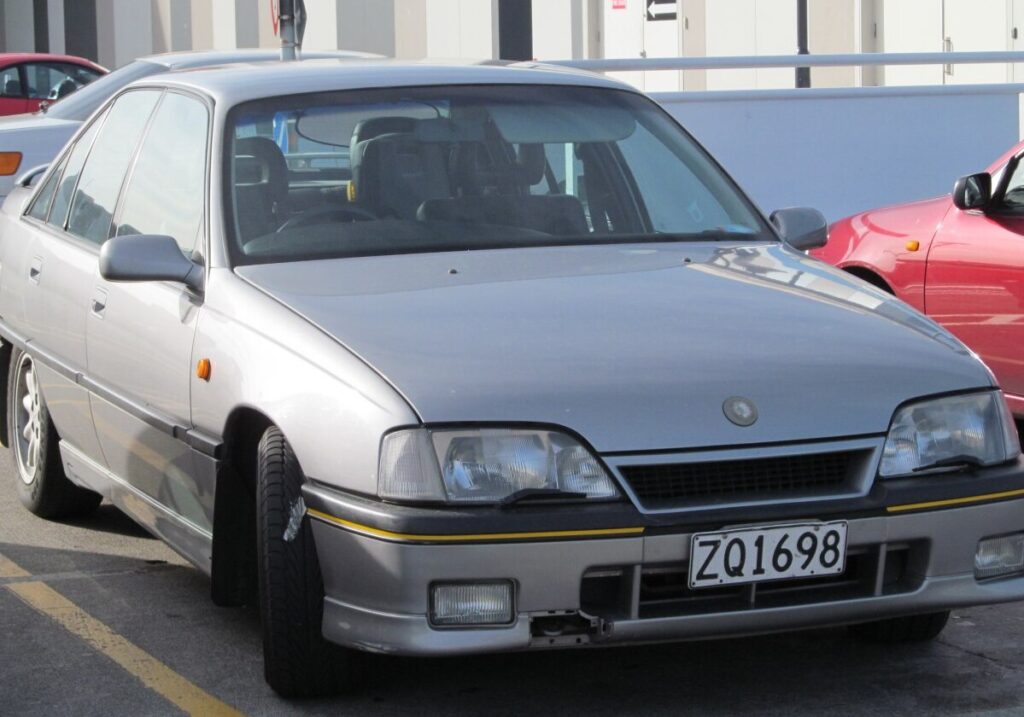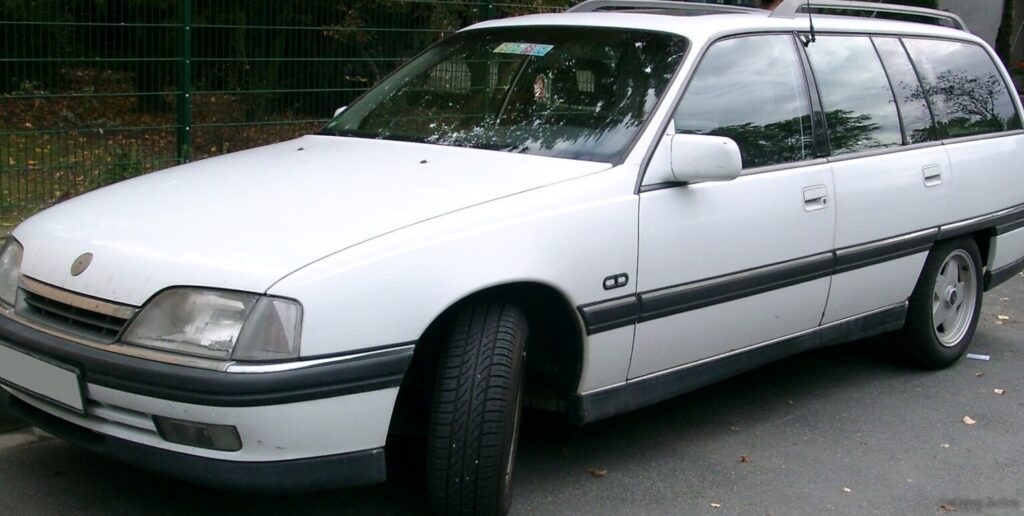
The Opel Omega A Caravan 2.4i CAT Automatic, produced between 1988 and 1993, represented a comfortable and practical offering within Opel’s flagship model range. Positioned as a mid-range trim within the Omega A Caravan lineup, it catered to buyers seeking a spacious, well-equipped station wagon with a balance of performance and fuel economy. The Omega A, launched in 1986, was Opel’s replacement for the Rekord, aiming to compete with established European and increasingly, Japanese, executive cars. The Caravan body style, a station wagon, was a crucial part of the Omega A’s appeal, particularly in European markets where practicality was highly valued. This specific 2.4i variant, with its catalytic converter (“CAT” designation) and automatic transmission, was designed for relaxed, long-distance cruising and family transport.
Technical Specifications
| Brand | Opel |
| Model | Omega |
| Generation | Omega A Caravan |
| Type (Engine) | 2.4i CAT (125 Hp) Automatic |
| Start of production | 1988 |
| End of production | 1993 |
| Powertrain Architecture | Internal Combustion engine |
| Body type | Station wagon (estate) |
| Seats | 5 |
| Doors | 5 |
| Fuel consumption (urban) | 12.8 l/100 km (18.4 US mpg, 22.1 UK mpg, 7.8 km/l) |
| Fuel consumption (extra urban) | 7.2 l/100 km (32.7 US mpg, 39.2 UK mpg, 13.9 km/l) |
| Fuel consumption (combined) | 8.8 l/100 km (26.7 US mpg, 32.1 UK mpg, 11.4 km/l) |
| Fuel Type | Petrol (Gasoline) |
| Acceleration 0 – 100 km/h | 12.5 sec |
| Acceleration 0 – 62 mph | 12.5 sec |
| Acceleration 0 – 60 mph | 11.9 sec |
| Maximum speed | 190 km/h (118.06 mph) |
| Weight-to-power ratio | 10.6 kg/Hp, 94.7 Hp/tonne |
| Weight-to-torque ratio | 6.8 kg/Nm, 147.7 Nm/tonne |
| Power | 125 Hp @ 4800 rpm |
| Power per litre | 51.9 Hp/l |
| Torque | 195 Nm @ 2400 rpm (143.82 lb.-ft. @ 2400 rpm) |
| Engine layout | Front, Longitudinal |
| Engine Model/Code | C24NE |
| Engine displacement | 2410 cm3 (147.07 cu. in.) |
| Number of cylinders | 4 |
| Engine configuration | Inline |
| Cylinder Bore | 95 mm (3.74 in.) |
| Piston Stroke | 85 mm (3.35 in.) |
| Compression ratio | 9.2:1 |
| Number of valves per cylinder | 2 |
| Fuel injection system | Multi-port manifold injection |
| Engine aspiration | Naturally aspirated engine |
| Engine oil capacity | 4.5 l (4.76 US qt | 3.96 UK qt) |
| Coolant capacity | 7.8 l (8.24 US qt | 6.86 UK qt) |
| Kerb Weight | 1320 kg (2910.1 lbs.) |
| Max. weight | 1950 kg (4299.01 lbs.) |
| Max load | 630 kg (1388.91 lbs.) |
| Trunk (boot) space – minimum | 520 l (18.36 cu. ft.) |
| Trunk (boot) space – maximum | 1850 l (65.33 cu. ft.) |
| Fuel tank capacity | 70 l (18.49 US gal | 15.4 UK gal) |
| Length | 4770 mm (187.8 in.) |
| Width | 1760 mm (69.29 in.) |
| Height | 1480 mm (58.27 in.) |
| Wheelbase | 2730 mm (107.48 in.) |
| Front track | 1460 mm (57.48 in.) |
| Rear track | 1475 mm (58.07 in.) |
| Drivetrain Architecture | Rear wheel drive |
| Number of gears | 4 |
| Gearbox type | Automatic transmission |
| Front suspension | Spring Strut |
| Rear suspension | Wishbone |
| Front brakes | Ventilated discs |
| Rear brakes | Disc |
| Assisting systems | ABS (Anti-lock braking system), Hydraulic Power Steering |
| Tires size | 195/65 R15 |
| Wheel rims size | 6J x 15 |
Powertrain & Engine Architecture
The heart of the Omega A Caravan 2.4i CAT Automatic was the C24NE engine, a 2.4-liter inline-four cylinder gasoline engine. This engine featured multi-port fuel injection, a significant advancement over earlier carbureted Opel engines, contributing to improved fuel efficiency and smoother power delivery. The ‘CAT’ designation indicated the presence of a catalytic converter, mandated in many European markets to reduce harmful emissions. The C24NE engine produced 125 horsepower at 4800 rpm and 195 Nm (143.82 lb-ft) of torque at 2400 rpm. The four-speed automatic transmission, while providing convenience, was a traditional hydraulic unit, lacking the electronic controls found in more modern automatics. It was chosen for its reliability and suitability for comfortable cruising, rather than outright performance.
Driving Characteristics
The 2.4i Automatic Omega A Caravan offered a relaxed driving experience. Acceleration from 0-60 mph took around 11.9 seconds, and top speed was approximately 118 mph. While not particularly sporty, the engine provided adequate power for everyday driving and highway overtaking. The automatic transmission, with its relatively widely spaced gear ratios, prioritized fuel economy over rapid acceleration. Compared to the manual transmission versions of the 2.4i, the automatic was noticeably slower. The higher-performance Omega variants, such as those equipped with the 3.0-liter inline-six engine, offered significantly more spirited performance, but at the cost of increased fuel consumption. The rear-wheel-drive configuration provided balanced handling, although it wasn’t as engaging as more modern front-wheel-drive or all-wheel-drive systems.
Equipment & Trim Levels
The 2.4i CAT Automatic trim typically included features such as central locking, electric windows, power steering, and an anti-lock braking system (ABS). Interior upholstery was usually cloth, with options for upgraded velour or leather. Dashboard design was functional and straightforward, typical of German automotive design of the era. Optional extras included a sunroof, air conditioning, and a more advanced audio system. The Caravan’s defining feature, its large cargo area, was enhanced by folding rear seats, providing considerable versatility for carrying passengers and luggage.
Chassis & Braking
The Omega A Caravan featured a traditional body-on-frame construction, providing a robust and durable platform. Front suspension utilized MacPherson struts, while the rear employed a multi-link wishbone setup. Braking consisted of ventilated discs at the front and solid discs at the rear, providing adequate stopping power for the vehicle’s weight. The power steering system was hydraulically assisted, offering a good balance of assistance and road feel. Stabilizer bars were fitted to both the front and rear axles to reduce body roll during cornering.
Market Reception & Comparison
The Opel Omega A Caravan 2.4i CAT Automatic was generally well-received by automotive critics as a practical and comfortable family car. It was praised for its spacious interior, large cargo capacity, and relatively smooth ride. However, the automatic transmission was sometimes criticized for its lack of responsiveness and impact on fuel economy. Compared to other station wagons in its class, such as the Ford Mondeo Estate and the Volvo 940 Estate, the Omega A Caravan offered a good balance of features and value. The 1.8i and 2.0i variants were more affordable, appealing to budget-conscious buyers, while the 3.0i offered a more premium experience for those prioritizing performance.
Legacy
The Opel Omega A, and specifically the 2.4i CAT Automatic variant, has developed a following among classic car enthusiasts. The C24NE engine is known for its reliability and relative simplicity, making it relatively easy to maintain. While not a particularly collectible model, well-maintained examples are becoming increasingly rare. The Omega A Caravan represents a significant chapter in Opel’s history, showcasing the brand’s commitment to building spacious, comfortable, and practical family cars. Today, finding a pristine example requires dedication, but the Omega A Caravan 2.4i CAT Automatic remains a testament to a bygone era of automotive engineering.