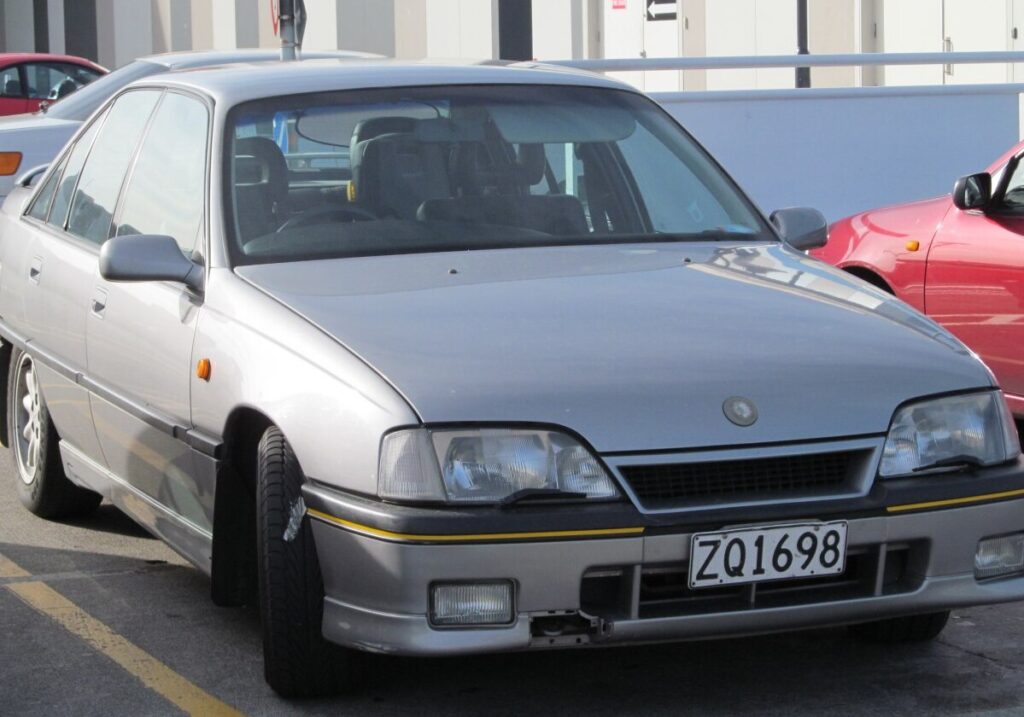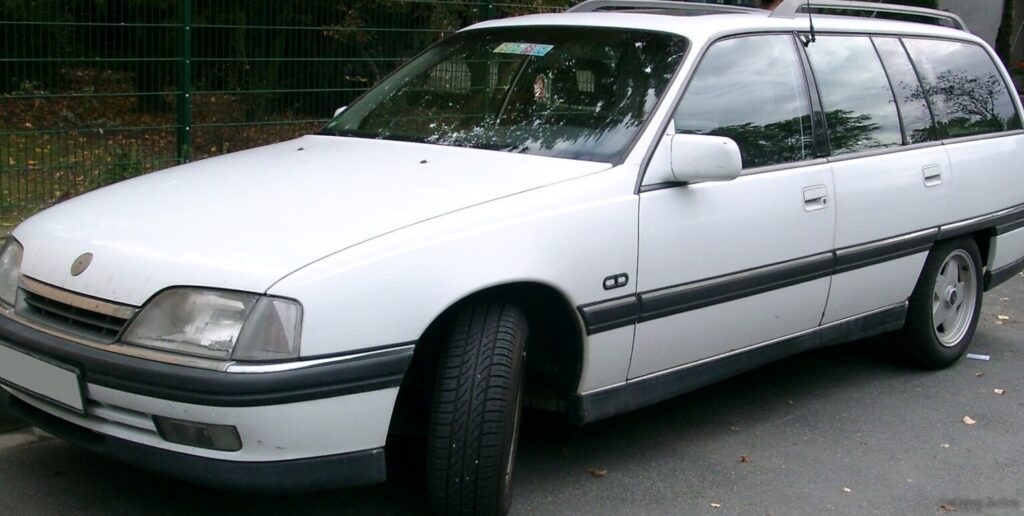
The Opel Omega A Caravan 2.6i CAT, produced between July 1990 and 1993, represented a significant offering in the European market as a spacious and comfortable family estate car. Positioned as a mid-range variant within the Omega A Caravan lineup, it bridged the gap between the more economical base models and the higher-performance versions. The Omega A, internally designated as the 1HX0/A3 platform, was Opel’s flagship model, intended to compete with cars like the Ford Granada and BMW 5 Series Touring. The 2.6i CAT version, with its catalytic converter (hence the “CAT” designation), was aimed at buyers seeking a balance of performance, refinement, and increasingly important, environmental responsibility.
Technical Specifications
| Brand | Opel |
| Model | Omega |
| Generation | Omega A Caravan |
| Type (Engine) | 2.6i CAT (150 Hp) |
| Start of production | July, 1990 |
| End of production | 1993 |
| Powertrain Architecture | Internal Combustion engine |
| Body type | Station wagon (estate) |
| Seats | 5 |
| Doors | 5 |
| Fuel consumption (urban) | 14.1 l/100 km (16.7 US mpg, 20 UK mpg, 7.1 km/l) |
| Fuel consumption (extra urban) | 7.9 l/100 km (29.8 US mpg, 35.8 UK mpg, 12.7 km/l) |
| Fuel consumption (combined) | 9.8 l/100 km (24 US mpg, 28.8 UK mpg, 10.2 km/l) |
| Fuel Type | Petrol (Gasoline) |
| Acceleration 0 – 100 km/h | 10.5 sec |
| Acceleration 0 – 62 mph | 10.5 sec |
| Acceleration 0 – 60 mph | 10 sec |
| Maximum speed | 208 km/h (129.25 mph) |
| Weight-to-power ratio | 9.7 kg/Hp, 102.7 Hp/tonne |
| Weight-to-torque ratio | 6.6 kg/Nm, 150.7 Nm/tonne |
| Power | 150 Hp @ 5600 rpm |
| Power per litre | 57.8 Hp/l |
| Torque | 220 Nm @ 3600 rpm (162.26 lb.-ft. @ 3600 rpm) |
| Engine layout | Front, Longitudinal |
| Engine Model/Code | C26NE |
| Engine displacement | 2594 cm3 (158.3 cu. in.) |
| Number of cylinders | 6 |
| Engine configuration | Inline |
| Cylinder Bore | 88.8 mm (3.5 in.) |
| Piston Stroke | 69.8 mm (2.75 in.) |
| Compression ratio | 9.2:1 |
| Number of valves per cylinder | 2 |
| Fuel injection system | Multi-port manifold injection |
| Engine aspiration | Naturally aspirated engine |
| Engine oil capacity | 5.5 l (5.81 US qt | 4.84 UK qt) |
| Coolant capacity | 10.5 l (11.1 US qt | 9.24 UK qt) |
| Kerb Weight | 1460 kg (3218.75 lbs.) |
| Max. weight | 2080 kg (4585.62 lbs.) |
| Max load | 620 kg (1366.87 lbs.) |
| Trunk (boot) space – minimum | 520 l (18.36 cu. ft.) |
| Trunk (boot) space – maximum | 1865 l (65.86 cu. ft.) |
| Fuel tank capacity | 70 l (18.49 US gal | 15.4 UK gal) |
| Length | 4770 mm (187.8 in.) |
| Width | 1760 mm (69.29 in.) |
| Height | 1480 mm (58.27 in.) |
| Wheelbase | 2730 mm (107.48 in.) |
| Front track | 1460 mm (57.48 in.) |
| Rear (Back) track | 1475 mm (58.07 in.) |
| Drivetrain Architecture | Rear wheel drive |
| Drive wheel | Rear wheel drive |
| Number of gears | 5 gears, manual transmission |
| Front suspension | Spring Strut |
| Rear suspension | Wishbone |
| Front brakes | Ventilated discs |
| Rear brakes | Disc |
| Assisting systems | ABS (Anti-lock braking system) |
| Steering type | Steering rack and pinion |
| Power steering | Hydraulic Steering |
| Tires size | 195/65 R15 |
| Wheel rims size | 6J x 15 |
Powertrain & Engine Architecture
The heart of the Omega A Caravan 2.6i CAT was the C26NE engine, a 2.6-liter inline-six cylinder gasoline engine. This engine was a mainstay of Opel’s mid-range offerings for several years. It featured a cast iron block and an aluminum cylinder head, employing a single overhead camshaft (SOHC) design with two valves per cylinder. Fuel delivery was handled by Bosch Motronic multi-port fuel injection, a system that improved fuel efficiency and reduced emissions compared to earlier carbureted designs. The catalytic converter, crucial for meeting increasingly stringent European emissions standards, was integrated into the exhaust system. The engine produced 150 horsepower at 5600 rpm and 220 Nm (162 lb-ft) of torque at 3600 rpm. The engine was mounted longitudinally in the front of the vehicle, driving the rear wheels. The standard transmission was a five-speed manual gearbox, providing a balance between fuel economy and driver control. A four-speed automatic transmission was also available, though it impacted performance slightly.
Driving Characteristics
The 2.6i CAT offered a comfortable and refined driving experience. While not a sports car, the inline-six engine provided smooth and linear power delivery. The five-speed manual transmission allowed drivers to make the most of the engine’s torque, providing adequate acceleration for highway cruising and overtaking. The automatic transmission, while convenient, resulted in slightly slower acceleration times and a less engaging driving experience. The rear-wheel-drive layout contributed to balanced handling, although it wasn’t as nimble as front-wheel-drive competitors. The suspension, tuned for comfort, absorbed bumps and imperfections in the road well, making it a pleasant long-distance cruiser. The gear ratios in the manual transmission were well-spaced, allowing for relaxed cruising at highway speeds.
Equipment & Trim Levels
The 2.6i CAT trim typically included features such as central locking, electric front windows, and a basic stereo system. Interior upholstery was usually cloth, with options for upgraded velour or leather available. Dashboard design was functional and straightforward, with clear instrumentation. Optional extras included air conditioning, a sunroof, and upgraded sound systems. The Caravan body style, being the estate version, offered a significant amount of cargo space, making it ideal for families or those needing to transport large items. The rear seats could be folded down to further increase cargo capacity.
Chassis & Braking
The Omega A Caravan featured a MacPherson strut front suspension and a semi-trailing arm rear suspension. This setup provided a good balance of ride comfort and handling. Braking duties were handled by ventilated disc brakes at the front and solid disc brakes at the rear. Anti-lock Braking System (ABS) was standard, enhancing safety by preventing wheel lockup during hard braking. The steering was a rack-and-pinion system with hydraulic power assistance, providing light and precise steering feel. The standard tire size was 195/65 R15, mounted on 6J x 15 inch steel or alloy wheels.
Market Reception & Comparison
The Opel Omega A Caravan 2.6i CAT was generally well-received by automotive critics. It was praised for its spacious interior, comfortable ride, and refined engine. However, some critics noted that it wasn’t as dynamically engaging as some of its competitors, such as the BMW 5 Series Touring. Compared to the lower-powered 2.0-liter and 1.8-liter Omega models, the 2.6i CAT offered significantly more performance. Compared to the higher-performance 3.0-liter inline-six models, it provided a more affordable and fuel-efficient option. Fuel economy was respectable for the time, averaging around 24 mpg in combined driving. Reliability was generally good, although like any car of this era, regular maintenance was essential.
Legacy
The Opel Omega A Caravan 2.6i CAT remains a popular choice among classic car enthusiasts and collectors. The C26NE engine is known for its durability and relatively simple construction, making it relatively easy to maintain. Parts availability is generally good, although some components may be becoming increasingly scarce. Today, well-maintained examples of the 2.6i CAT are sought after for their combination of practicality, comfort, and classic styling. The Omega A Caravan, in general, is remembered as a spacious and reliable family car that offered a compelling alternative to more expensive premium estates.