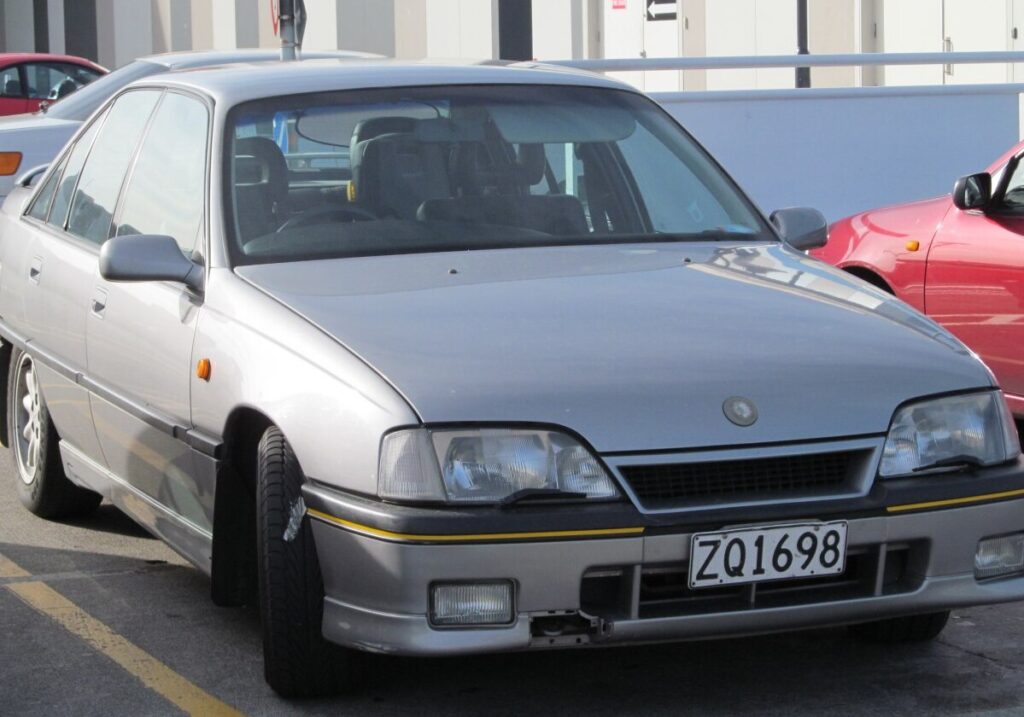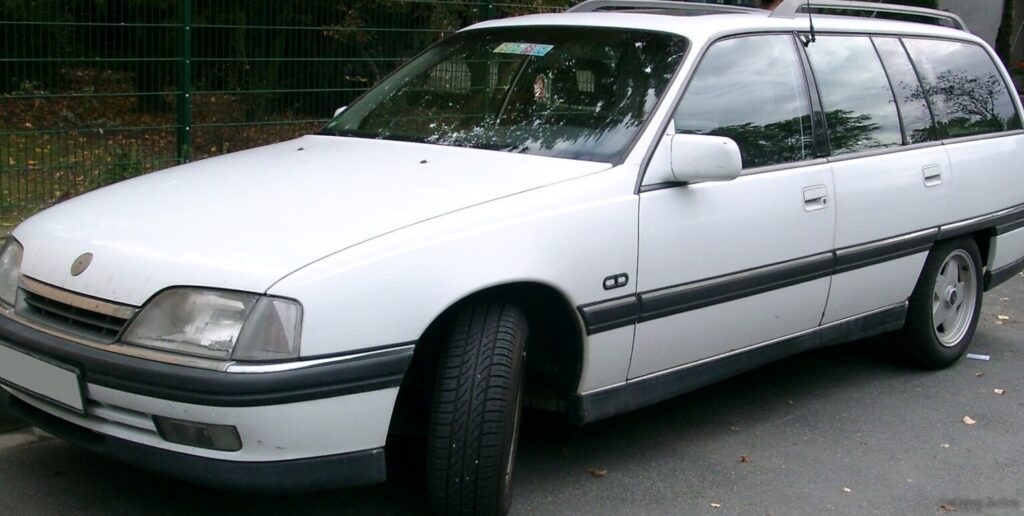
The Opel Omega A Caravan 2.6i CAT Automatic, produced between July 1990 and 1993, represented a refined and spacious offering within Opel’s flagship model range. Part of the Omega A generation (1986-1994), the Caravan – Opel’s designation for a station wagon or estate – aimed to provide a practical and comfortable vehicle for families and those requiring substantial cargo capacity. This particular variant, equipped with the 2.6-liter inline-six engine and a four-speed automatic transmission, occupied a mid-range position in the Omega A lineup, offering a balance between performance, fuel economy, and convenience. It was positioned above the smaller four-cylinder models and below the more powerful 3.0-liter six-cylinder and V6 options.
Technical Specifications
| Brand | Opel |
| Model | Omega |
| Generation | Omega A Caravan |
| Type (Engine) | 2.6i CAT (150 Hp) Automatic |
| Start of production | July, 1990 |
| End of production | 1993 |
| Powertrain Architecture | Internal Combustion engine |
| Body type | Station wagon (estate) |
| Seats | 5 |
| Doors | 5 |
| Fuel consumption (urban) | 14.5 l/100 km (16.2 US mpg, 19.5 UK mpg, 6.9 km/l) |
| Fuel consumption (extra urban) | 7.9 l/100 km (29.8 US mpg, 35.8 UK mpg, 12.7 km/l) |
| Fuel consumption (combined) | 9.8 l/100 km (24 US mpg, 28.8 UK mpg, 10.2 km/l) |
| Fuel Type | Petrol (Gasoline) |
| Acceleration 0 – 100 km/h | 11.5 sec |
| Acceleration 0 – 62 mph | 11.5 sec |
| Acceleration 0 – 60 mph | 10.9 sec |
| Maximum speed | 240 km/h (149.13 mph) |
| Weight-to-power ratio | 9.7 kg/Hp, 102.7 Hp/tonne |
| Weight-to-torque ratio | 6.6 kg/Nm, 150.7 Nm/tonne |
| Power | 150 Hp @ 5600 rpm |
| Power per litre | 57.8 Hp/l |
| Torque | 220 Nm @ 3600 rpm (162.26 lb.-ft. @ 3600 rpm) |
| Engine layout | Front, Longitudinal |
| Engine Model/Code | C26NE |
| Engine displacement | 2594 cm3 (158.3 cu. in.) |
| Number of cylinders | 6 |
| Engine configuration | Inline |
| Cylinder Bore | 88.8 mm (3.5 in.) |
| Piston Stroke | 69.8 mm (2.75 in.) |
| Compression ratio | 9.2:1 |
| Number of valves per cylinder | 2 |
| Fuel injection system | Multi-port manifold injection |
| Engine aspiration | Naturally aspirated engine |
| Engine oil capacity | 5.5 l (5.81 US qt | 4.84 UK qt) |
| Coolant | 10.5 l (11.1 US qt | 9.24 UK qt) |
| Kerb Weight | 1460 kg (3218.75 lbs.) |
| Max. weight | 2080 kg (4585.62 lbs.) |
| Max load | 620 kg (1366.87 lbs.) |
| Trunk (boot) space – minimum | 520 l (18.36 cu. ft.) |
| Trunk (boot) space – maximum | 1865 l (65.86 cu. ft.) |
| Fuel tank capacity | 70 l (18.49 US gal | 15.4 UK gal) |
| Length | 4770 mm (187.8 in.) |
| Width | 1760 mm (69.29 in.) |
| Height | 1480 mm (58.27 in.) |
| Wheelbase | 2730 mm (107.48 in.) |
| Front track | 1460 mm (57.48 in.) |
| Rear (Back) track | 1475 mm (58.07 in.) |
| Drivetrain Architecture | The Internal combustion engine (ICE) drives the rear wheels of the vehicle. |
| Drive wheel | Rear wheel drive |
| Number of gears and type of gearbox | 4 gears, automatic transmission |
| Front suspension | Spring Strut |
| Rear suspension | Wishbone |
| Front brakes | Ventilated discs |
| Rear brakes | Disc |
| Assisting systems | ABS (Anti-lock braking system) |
| Steering type | Steering rack and pinion |
| Power steering | Hydraulic Steering |
| Tires size | 195/65 R15 |
| Wheel rims size | 6J x 15 |
Powertrain & Engine Architecture
The heart of the Omega A Caravan 2.6i CAT Automatic is the C26NE engine, a 2.6-liter (2594 cc) inline-six cylinder gasoline engine. This engine featured a cast iron block and an aluminum cylinder head, employing a single overhead camshaft (SOHC) design with two valves per cylinder. The “CAT” designation indicates the presence of a catalytic converter, reflecting increasing emissions regulations during the early 1990s. Fuel delivery was managed by a Bosch Motronic multi-port fuel injection system, optimizing fuel-air mixture for improved efficiency and reduced emissions. The engine produced 150 horsepower at 5600 rpm and 220 Nm (162 lb-ft) of torque at 3600 rpm. The four-speed automatic transmission, a GM-sourced unit, was chosen for its ease of use and suitability for long-distance cruising. While not known for its sportiness, it provided smooth and relatively refined gear changes.
Driving Characteristics
The 2.6i Automatic Omega A Caravan offered a comfortable and relaxed driving experience. Acceleration from 0 to 60 mph took approximately 10.9 seconds, and top speed was around 149 mph. The automatic transmission, while convenient, did detract somewhat from the engine’s potential. The gear ratios were geared towards fuel efficiency and smooth cruising rather than spirited acceleration. Compared to the manual transmission versions of the 2.6i, the automatic felt noticeably slower. The inline-six engine provided a smooth and relatively quiet power delivery, making it well-suited for highway driving and long journeys. The rear-wheel-drive configuration offered balanced handling, although it wasn’t particularly sporty.
Equipment & Trim Levels
The Omega A Caravan 2.6i CAT Automatic typically came equipped with a reasonable level of standard features. These included central locking, electric front windows, power steering, and an anti-lock braking system (ABS). Interior upholstery was typically cloth, with options for upgraded velour or leather. Dashboard configuration was functional and straightforward, with clear instrumentation. Optional extras included a sunroof, air conditioning, upgraded audio systems, and cruise control. The trim level could vary depending on the specific market, but generally, this variant represented a step up from the base models, offering a more comfortable and well-equipped package.
Chassis & Braking
The Omega A Caravan featured a robust chassis with independent suspension at the front using MacPherson struts and a multi-link wishbone suspension at the rear. This setup provided a comfortable ride and decent handling characteristics. Braking was handled by ventilated discs at the front and solid discs at the rear, providing adequate stopping power for the vehicle’s weight. The ABS system enhanced braking performance, particularly on slippery surfaces. Stabilizer bars were fitted to both the front and rear axles to reduce body roll during cornering.
Market Reception & Comparison
The Opel Omega A Caravan 2.6i CAT Automatic was generally well-received by automotive critics as a practical and comfortable family car. It was praised for its spacious interior, comfortable ride, and relatively refined engine. However, the automatic transmission was sometimes criticized for its lack of responsiveness. Compared to the 2.0-liter four-cylinder models, the 2.6i offered significantly more power and refinement. Compared to the 3.0-liter six-cylinder and V6 versions, it provided a more affordable option with slightly better fuel economy. Fuel economy figures averaged around 24 mpg combined, which was respectable for a large station wagon of that era.
Legacy
The Opel Omega A Caravan 2.6i CAT Automatic, while not a particularly rare or collectible model, remains a reasonably reliable and affordable classic car. The C26NE engine is known for its durability, although regular maintenance is essential. Common issues include oil leaks and wear on the timing chain. The automatic transmission, if properly maintained, can also provide years of reliable service. Today, these Omegas are often found in the hands of enthusiasts who appreciate their spaciousness, comfort, and classic styling. Parts availability can be a challenge, but many components are still available through specialist suppliers and online marketplaces. The Omega A Caravan, in its various forms, represents a significant chapter in Opel’s history, offering a blend of practicality, comfort, and German engineering.