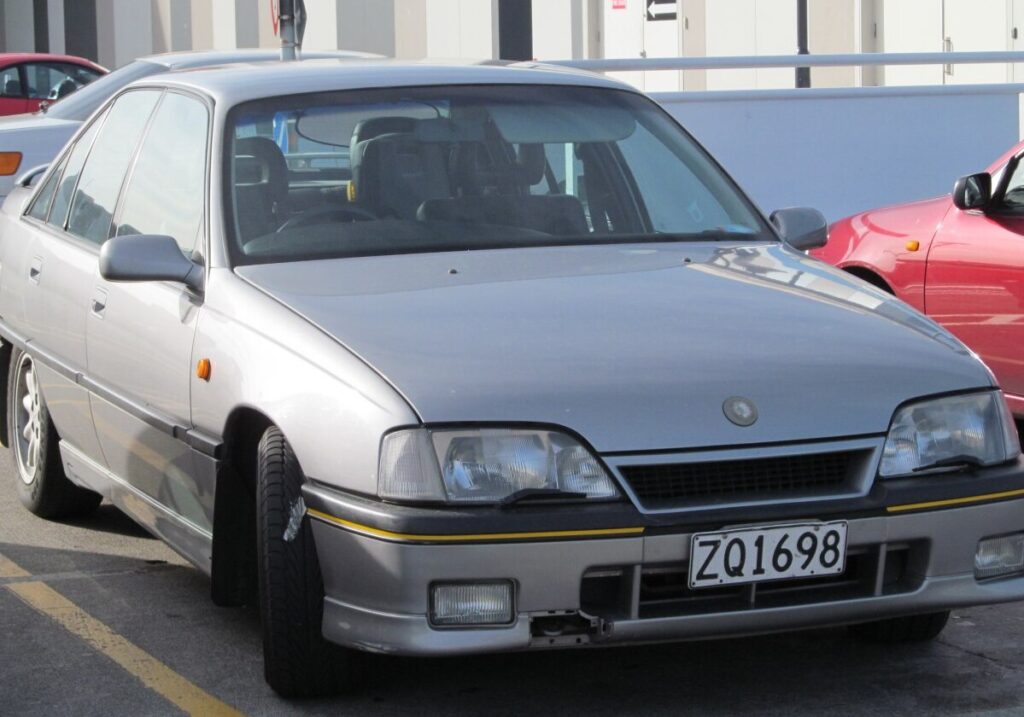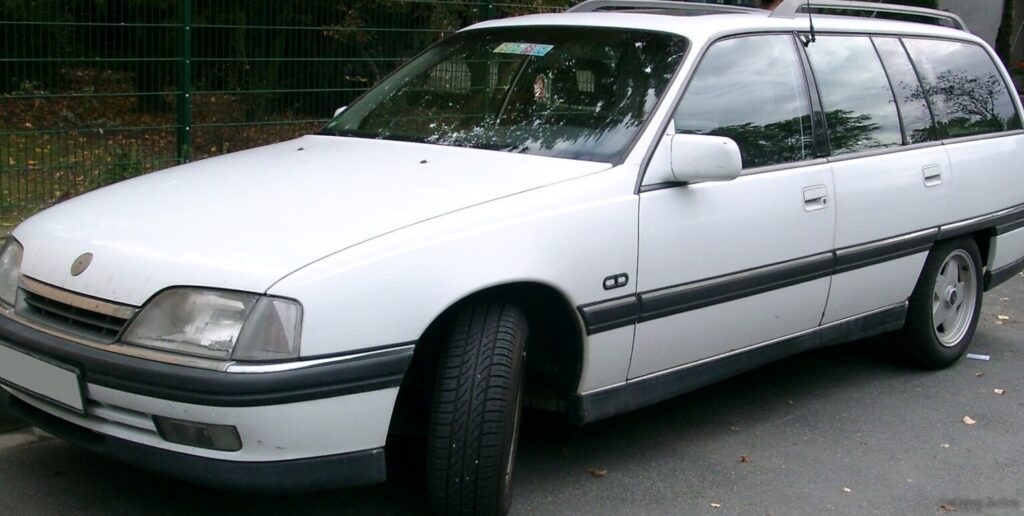
The Opel Omega A Caravan 3.0 24V, produced from July 1990 to 1993, represented a flagship offering within the Omega A series, Opel’s large family car. This variant, a station wagon (estate) body style, was positioned as a premium, performance-oriented option within the Omega A range, appealing to buyers seeking space, comfort, and respectable power. It was a key model for Opel in the European market, competing with vehicles like the Ford Granada and Volvo 740. The Omega A series, built on the GM V platform, aimed to provide a more modern and refined experience compared to its predecessor, the Opel Rekord.
Technical Specifications
| Brand | Opel |
| Model | Omega |
| Generation | Omega A Caravan |
| Type (Engine) | 3.0 3000 24V (200 Hp) |
| Start of production | July, 1990 |
| End of production | 1993 |
| Powertrain Architecture | Internal Combustion engine |
| Body type | Station wagon (estate) |
| Seats | 5 |
| Doors | 5 |
| Fuel consumption (urban) | 14.3 l/100 km (16.4 US mpg, 19.8 UK mpg, 7 km/l) |
| Fuel consumption (extra urban) | 7.9 l/100 km (29.8 US mpg, 35.8 UK mpg, 12.7 km/l) |
| Fuel consumption (combined) | 9.7 l/100 km (24.2 US mpg, 29.1 UK mpg, 10.3 km/l) |
| Fuel Type | Petrol (Gasoline) |
| Acceleration 0 – 100 km/h | 8.2 sec |
| Acceleration 0 – 62 mph | 8.2 sec |
| Acceleration 0 – 60 mph | 7.8 sec |
| Maximum speed | 230 km/h (142.92 mph) |
| Weight-to-power ratio | 7.5 kg/Hp, 134.2 Hp/tonne |
| Weight-to-torque ratio | 5.6 kg/Nm, 177.9 Nm/tonne |
| Power | 200 Hp @ 6000 rpm |
| Power per litre | 67.4 Hp/l |
| Torque | 265 Nm @ 3600 rpm (195.45 lb.-ft. @ 3600 rpm) |
| Engine layout | Front, Longitudinal |
| Engine Model/Code | C30SEJ |
| Engine displacement | 2969 cm3 (181.18 cu. in.) |
| Number of cylinders | 6 |
| Engine configuration | Inline |
| Cylinder Bore | 95 mm (3.74 in.) |
| Piston Stroke | 69.8 mm (2.75 in.) |
| Compression ratio | 10:1 |
| Number of valves per cylinder | 4 |
| Fuel injection system | Multi-port manifold injection |
| Engine aspiration | Naturally aspirated engine |
| Engine oil capacity | 5.5 l (5.81 US qt | 4.84 UK qt) |
| Coolant | 9.8 l (10.36 US qt | 8.62 UK qt) |
| Kerb Weight | 1490 kg (3284.89 lbs.) |
| Max. weight | 2110 kg (4651.75 lbs.) |
| Max load | 620 kg (1366.87 lbs.) |
| Trunk (boot) space – minimum | 540 l (19.07 cu. ft.) |
| Trunk (boot) space – maximum | 1850 l (65.33 cu. ft.) |
| Fuel tank capacity | 70 l (18.49 US gal | 15.4 UK gal) |
| Length | 4770 mm (187.8 in.) |
| Width | 1760 mm (69.29 in.) |
| Height | 1445 mm (56.89 in.) |
| Wheelbase | 2730 mm (107.48 in.) |
| Front track | 1460 mm (57.48 in.) |
| Rear (Back) track | 1475 mm (58.07 in.) |
| Drivetrain Architecture | Rear wheel drive |
| Drive wheel | Rear wheel drive |
| Number of gears and type of gearbox | 5 gears, manual transmission |
| Front suspension | Spring Strut |
| Rear suspension | Wishbone |
| Front brakes | Ventilated discs |
| Rear brakes | Disc |
| Assisting systems | ABS (Anti-lock braking system), Hydraulic Steering |
| Tires size | 205/65 R15 |
| Wheel rims size | 7J x 15 |
Powertrain & Engine Architecture
The heart of the Omega A Caravan 3.0 24V was the C30SEJ engine, a 2.969-liter inline-six cylinder gasoline engine. This engine featured a cast-iron block and an aluminum cylinder head, incorporating dual overhead camshafts (DOHC) and four valves per cylinder. This 24-valve configuration contributed to its relatively high output for the time. Fuel delivery was managed by a Bosch Motronic multi-port fuel injection system, optimizing air-fuel mixture for improved efficiency and performance. The engine produced 200 horsepower at 6000 rpm and 265 Nm (195 lb-ft) of torque at 3600 rpm. The engine was mounted longitudinally in the front of the vehicle, driving the rear wheels. The standard transmission was a five-speed manual gearbox, although a four-speed automatic transmission was also available, though less common with this engine.
Driving Characteristics
The 3.0 24V Omega A Caravan offered a noticeably more engaging driving experience than its four-cylinder counterparts. Acceleration to 60 mph was achieved in around 7.8 seconds, and it could reach a top speed of 143 mph. The inline-six engine provided a smooth and linear power delivery, making it well-suited for long-distance cruising. The manual transmission allowed for precise control, while the automatic, though offering convenience, did slightly diminish the car’s responsiveness. The rear-wheel-drive layout contributed to balanced handling, although it wasn’t a particularly sporty car. The suspension, tuned for comfort, absorbed bumps effectively, providing a refined ride quality.
Equipment & Trim Levels
The Omega A Caravan 3.0 24V typically came well-equipped, reflecting its position as a premium model. Standard features included central locking, electric windows, power steering, and an anti-lock braking system (ABS). Interior upholstery was typically cloth, but leather options were available. Higher trim levels offered features like a sunroof, upgraded audio systems, and climate control. The dashboard layout was functional and straightforward, with clear instrumentation. Optional extras included alloy wheels, a trip computer, and a rear wiper.
Chassis & Braking
The Omega A Caravan featured a MacPherson strut front suspension and a semi-trailing arm rear suspension. This setup prioritized ride comfort and stability. The braking system consisted of ventilated disc brakes at the front and solid disc brakes at the rear. The ABS system enhanced braking performance, particularly in slippery conditions. Steering was hydraulic power-assisted, providing light and precise control. The car rode on 205/65 R15 tires, mounted on 7J x 15 inch wheels.
Market Reception & Comparison
The Opel Omega A Caravan 3.0 24V was generally well-received by automotive critics. It was praised for its spacious interior, comfortable ride, and strong engine performance. However, some critics noted its relatively high fuel consumption and somewhat dated styling. Compared to the lower-spec Omega models, the 3.0 24V offered a significant performance upgrade, but at a higher price point. The 2.0 and 2.3-liter four-cylinder models were more fuel-efficient and affordable, while the V6 offered a more luxurious experience. Against competitors like the Ford Granada and Volvo 740, the Omega A Caravan offered a compelling combination of space, comfort, and performance.
Legacy
The Opel Omega A Caravan 3.0 24V, while not a high-volume seller, has gained a following among enthusiasts. The C30SEJ engine is known for its durability and relatively straightforward maintenance. However, like any older vehicle, it requires regular upkeep to prevent issues. Today, well-maintained examples are sought after by collectors and those looking for a classic European station wagon. Parts availability can be a challenge, but a dedicated aftermarket and online communities support owners. The Omega A Caravan 3.0 24V remains a testament to Opel’s engineering prowess and its commitment to building spacious, comfortable, and capable family cars.