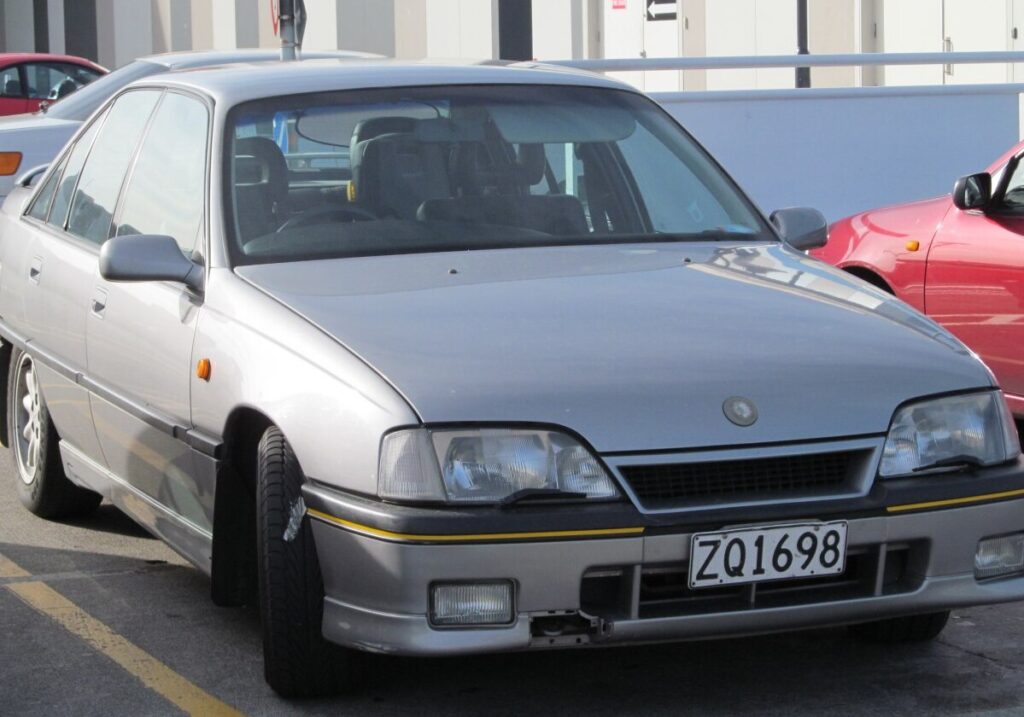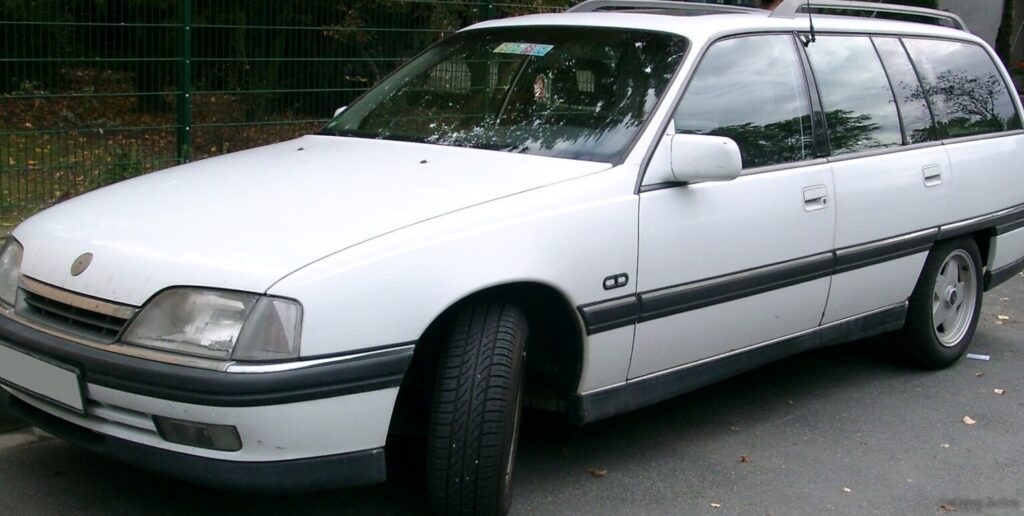
The Opel Omega A Caravan 3.0, produced between 1988 and 1992, represented the top end of Opel’s large family car offerings. This variant, equipped with the 3000 CAT (catalytic converter) engine producing 177 horsepower, was positioned as a premium, long-distance touring vehicle within the Omega A range. The Caravan body style, Opel’s designation for a station wagon, offered a practical and spacious alternative to the saloon, appealing to families and those requiring significant cargo capacity. It was a key model in Opel’s lineup, competing with vehicles like the Ford Granada and Volvo 240 estate in the European market.
Technical Specifications
| Brand | Opel |
| Model | Omega |
| Generation | Omega A Caravan |
| Type (Engine) | 3.0 3000 CAT (177 Hp) |
| Start of production | 1988 |
| End of production | 1992 |
| Powertrain Architecture | Internal Combustion engine |
| Body type | Station wagon (estate) |
| Seats | 5 |
| Doors | 5 |
| Fuel consumption (urban) | 15.2 l/100 km (15.5 US mpg, 18.6 UK mpg, 6.6 km/l) |
| Fuel consumption (extra urban) | 7.6 l/100 km (30.9 US mpg, 37.2 UK mpg, 13.2 km/l) |
| Fuel consumption (combined) | 9.5 l/100 km (24.8 US mpg, 29.7 UK mpg, 10.5 km/l) |
| Fuel Type | Petrol (Gasoline) |
| Acceleration 0 – 100 km/h | 9.5 sec |
| Acceleration 0 – 62 mph | 9.5 sec |
| Acceleration 0 – 60 mph | 9 sec |
| Maximum speed | 227 km/h (141.05 mph) |
| Weight-to-power ratio | 8.2 kg/Hp, 121.2 Hp/tonne |
| Weight-to-torque ratio | 6.1 kg/Nm, 164.4 Nm/tonne |
| Power | 177 Hp @ 5800 rpm |
| Power per litre | 59.6 Hp/l |
| Torque | 240 Nm @ 4200 rpm (177.01 lb.-ft. @ 4200 rpm) |
| Engine layout | Front, Longitudinal |
| Engine Model/Code | C30NE |
| Engine displacement | 2969 cm3 (181.18 cu. in.) |
| Number of cylinders | 6 |
| Engine configuration | Inline |
| Cylinder Bore | 95 mm (3.74 in.) |
| Piston Stroke | 69.8 mm (2.75 in.) |
| Compression ratio | 9.2:1 |
| Number of valves per cylinder | 2 |
| Fuel injection system | Multi-port manifold injection |
| Engine aspiration | Naturally aspirated engine |
| Engine oil capacity | 5.5 l (5.81 US qt | 4.84 UK qt) |
| Coolant capacity | 10.2 l (10.78 US qt | 8.97 UK qt) |
| Kerb Weight | 1460 kg (3218.75 lbs.) |
| Max. weight | 2080 kg (4585.62 lbs.) |
| Max load | 620 kg (1366.87 lbs.) |
| Trunk (boot) space – minimum | 520 l (18.36 cu. ft.) |
| Trunk (boot) space – maximum | 1850 l (65.33 cu. ft.) |
| Fuel tank capacity | 70 l (18.49 US gal | 15.4 UK gal) |
| Length | 4770 mm (187.8 in.) |
| Width | 1760 mm (69.29 in.) |
| Height | 1480 mm (58.27 in.) |
| Wheelbase | 2730 mm (107.48 in.) |
| Front track | 1460 mm (57.48 in.) |
| Rear track | 1475 mm (58.07 in.) |
| Drivetrain Architecture | Rear wheel drive |
| Number of gears | 5 gears, manual transmission |
| Front suspension | Spring Strut |
| Rear suspension | Wishbone |
| Front brakes | Ventilated discs |
| Rear brakes | Disc |
| Assisting systems | ABS (Anti-lock braking system), Hydraulic Steering |
| Tires size | 195/65 R15 |
| Wheel rims size | 6J x 15 |
Introduction
The Opel Omega A Caravan 3.0, launched in 1988, was a significant upgrade over the previous Commodore models. Built on the GM V platform (also known as the 1HX0/A3 platform), it represented a move upmarket for Opel, offering a more refined and spacious alternative to its competitors. The Caravan estate version, in particular, was popular with families and those needing a versatile vehicle. The 3.0-liter engine, designated C30NE, was the flagship powerplant in the Omega A range, offering a blend of performance and relatively smooth operation. This model year ran until 1992, when the Omega B was introduced.
Powertrain & Engine Architecture
The heart of the Omega A Caravan 3.0 was the C30NE engine, a 2.969-liter inline-six cylinder petrol engine. This engine featured a cast iron block and an aluminum cylinder head, employing a single overhead camshaft (SOHC) design with two valves per cylinder. Fuel delivery was handled by Bosch Motronic multi-port fuel injection, providing precise control over the air-fuel mixture. The engine produced 177 horsepower at 5800 rpm and 240 Nm (177 lb-ft) of torque at 4200 rpm. The engine’s longitudinal mounting and rear-wheel drive configuration were typical of larger European cars of the era. The standard transmission was a five-speed manual gearbox, providing a good balance between performance and fuel economy. A four-speed automatic transmission was also available, though it slightly impacted acceleration and fuel consumption.
Driving Characteristics
The Omega A Caravan 3.0 with the manual transmission offered brisk acceleration, achieving 0-60 mph in around 9 seconds and a top speed of 141 mph. The inline-six engine provided a smooth and linear power delivery, making it well-suited for long-distance cruising. The automatic transmission, while offering convenience, resulted in slightly slower acceleration and a less engaging driving experience. The rear-wheel drive layout provided balanced handling, although it wasn’t particularly sporty. The Caravan’s suspension, tuned for comfort, absorbed bumps and imperfections in the road effectively, making it a comfortable vehicle for both driver and passengers. The gear ratios in the manual transmission were well-spaced, allowing for efficient cruising at highway speeds.
Equipment & Trim Levels
The Omega A Caravan 3.0 typically came well-equipped, reflecting its position as a premium model. Standard features included central locking, electric windows, power steering, and an anti-lock braking system (ABS). Interior upholstery was typically cloth, although leather options were available. The dashboard featured a comprehensive instrument cluster with gauges for speed, engine temperature, fuel level, and other vital information. Optional extras included a sunroof, air conditioning, and upgraded audio systems. The trim level often dictated the quality of the interior materials and the availability of certain features.
Chassis & Braking
The Omega A Caravan 3.0 utilized a MacPherson strut front suspension and a semi-trailing arm rear suspension. This setup provided a good balance between ride comfort and handling. The braking system consisted of ventilated disc brakes at the front and solid disc brakes at the rear. The ABS system helped to prevent wheel lockup during hard braking, improving stability and control. The steering was hydraulic power-assisted, making it easy to maneuver at low speeds. The Caravan’s relatively heavy weight (1460 kg / 3218.75 lbs) contributed to its stable handling characteristics.
Market Reception & Comparison
The Opel Omega A Caravan 3.0 was generally well-received by automotive critics. It was praised for its spacious interior, comfortable ride, and refined engine. However, some critics noted that the styling was somewhat conservative and that the handling wasn’t as sharp as some of its competitors. Compared to the lower-spec Omega models (e.g., the 1.8 or 2.0-liter versions), the 3.0 offered significantly more performance and a more luxurious driving experience. The 3.0 was also more expensive to run, due to its higher fuel consumption and potentially more complex maintenance requirements. Compared to the diesel variants, the 3.0 offered superior performance but at the cost of fuel economy.
Legacy
The Opel Omega A Caravan 3.0 remains a popular classic car among enthusiasts. The C30NE engine is known for its reliability and durability, although regular maintenance is essential. Parts availability can be a challenge, but many components are still available through specialist suppliers. Today, well-maintained examples of the Omega A Caravan 3.0 are sought after by collectors and those looking for a spacious, comfortable, and stylish classic estate car. The model represents a high point in Opel’s engineering and design, offering a compelling alternative to more common classic cars.