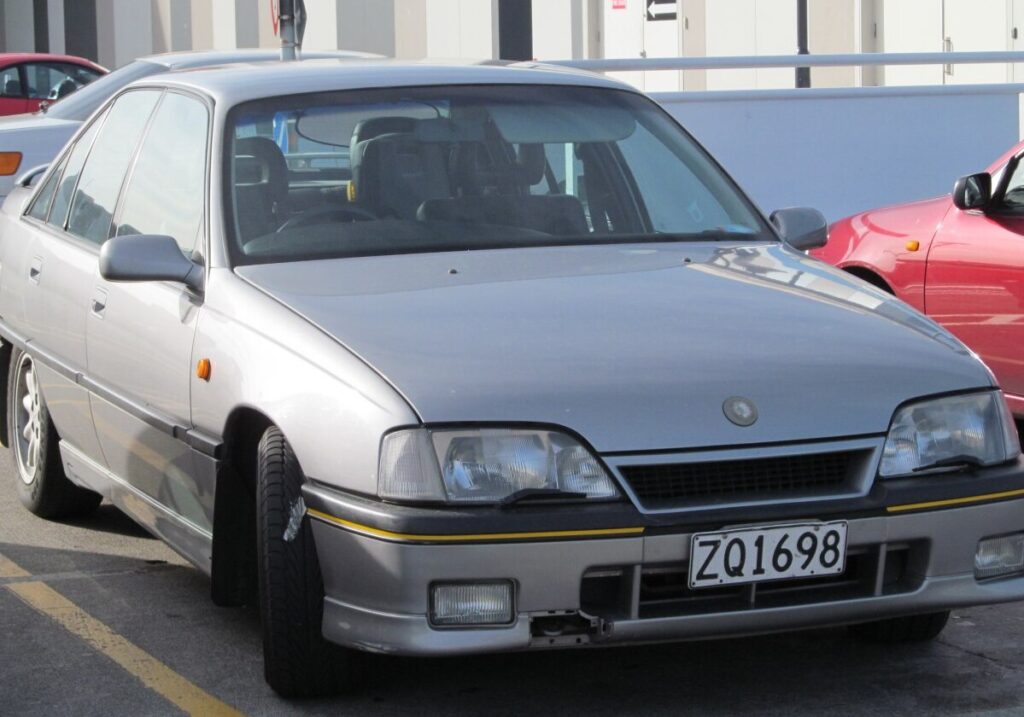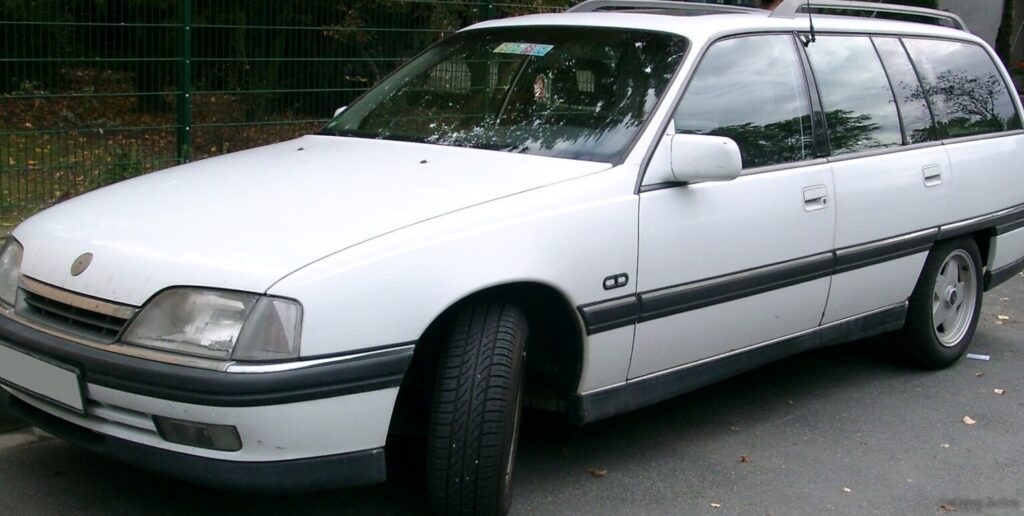
The Opel Omega A Caravan 3.0 CAT Automatic, produced from 1987 to 1988, represented a luxurious and capable offering within Opel’s flagship model range. Positioned as a premium variant of the Omega A series, the Caravan (estate) body style combined practicality with a sophisticated driving experience. This particular configuration, featuring a 3.0-liter inline-six engine paired with a four-speed automatic transmission, aimed to provide comfortable, long-distance cruising for families and executives. It was a key model in Opel’s lineup during a period where the brand sought to establish itself as a serious competitor in the upper-midsize segment, particularly in Europe.
Technical Specifications
| Brand | Opel |
| Model | Omega |
| Generation | Omega A Caravan |
| Type (Engine) | 3.0 CAT (177 Hp) Automatic |
| Start of production | 1987 |
| End of production | 1988 |
| Powertrain Architecture | Internal Combustion engine |
| Body type | Station wagon (estate) |
| Seats | 5 |
| Doors | 5 |
| Fuel consumption (urban) | 15.5 l/100 km (15.2 US mpg, 18.2 UK mpg, 6.5 km/l) |
| Fuel consumption (extra urban) | 8.1 l/100 km (29 US mpg, 34.9 UK mpg, 12.3 km/l) |
| Fuel consumption (combined) | 10.1 l/100 km (23.3 US mpg, 28 UK mpg, 9.9 km/l) |
| Fuel Type | Petrol (Gasoline) |
| Acceleration 0 – 100 km/h | 10.5 sec |
| Acceleration 0 – 62 mph | 10.5 sec |
| Acceleration 0 – 60 mph | 10 sec |
| Maximum speed | 222 km/h (137.94 mph) |
| Weight-to-power ratio | 8.2 kg/Hp, 121.2 Hp/tonne |
| Weight-to-torque ratio | 6.1 kg/Nm, 164.4 Nm/tonne |
| Power | 177 Hp @ 5800 rpm |
| Power per litre | 59.6 Hp/l |
| Torque | 240 Nm @ 4200 rpm (177.01 lb.-ft. @ 4200 rpm) |
| Engine layout | Front, Longitudinal |
| Engine Model/Code | 30NE |
| Engine displacement | 2969 cm3 (181.18 cu. in.) |
| Number of cylinders | 6 |
| Engine configuration | Inline |
| Cylinder Bore | 95 mm (3.74 in.) |
| Piston Stroke | 69.8 mm (2.75 in.) |
| Compression ratio | 9.2:1 |
| Number of valves per cylinder | 2 |
| Fuel injection system | Multi-port manifold injection |
| Engine aspiration | Naturally aspirated engine |
| Engine oil capacity | 5.5 l (5.81 US qt | 4.84 UK qt) |
| Coolant capacity | 10.2 l (10.78 US qt | 8.97 UK qt) |
| Kerb Weight | 1460 kg (3218.75 lbs.) |
| Max. weight | 2080 kg (4585.62 lbs.) |
| Max load | 620 kg (1366.87 lbs.) |
| Trunk (boot) space – minimum | 520 l (18.36 cu. ft.) |
| Trunk (boot) space – maximum | 1850 l (65.33 cu. ft.) |
| Fuel tank capacity | 70 l (18.49 US gal | 15.4 UK gal) |
| Length | 4770 mm (187.8 in.) |
| Width | 1760 mm (69.29 in.) |
| Height | 1480 mm (58.27 in.) |
| Wheelbase | 2730 mm (107.48 in.) |
| Front track | 1460 mm (57.48 in.) |
| Rear (Back) track | 1475 mm (58.07 in.) |
| Drivetrain Architecture | Rear wheel drive |
| Drive wheel | Rear wheel drive |
| Number of gears and type of gearbox | 4 gears, automatic transmission |
| Front suspension | Spring Strut |
| Rear suspension | Wishbone |
| Front brakes | Ventilated discs |
| Rear brakes | Disc |
| Assisting systems | ABS (Anti-lock braking system), Hydraulic Steering |
| Tires size | 195/65 R15 |
| Wheel rims size | 6J x 15 |
Powertrain & Engine Architecture
The heart of the Omega A Caravan 3.0 CAT Automatic was the 30NE engine, a 2.969-liter (181.18 cubic inches) inline-six cylinder gasoline engine. This engine featured a cast-iron block and an aluminum cylinder head, employing a single overhead camshaft (SOHC) design with two valves per cylinder. The “CAT” designation indicated the presence of a catalytic converter, a relatively new technology at the time aimed at reducing harmful emissions. Fuel delivery was managed by a Bosch Motronic multi-port fuel injection system, providing precise control over the air-fuel mixture. The engine produced 177 horsepower at 5800 rpm and 240 Nm (177 lb-ft) of torque at 4200 rpm. The four-speed automatic transmission, a GM-sourced unit, was chosen for its smooth operation and ease of use, prioritizing comfort over outright performance. This transmission featured electronic control for improved shift quality.
Driving Characteristics
The 3.0-liter engine and automatic transmission combination delivered a comfortable and refined driving experience. While not particularly sporty, the Omega A Caravan offered ample power for highway cruising and overtaking. Acceleration from 0 to 60 mph took around 10 seconds, and the car could reach a top speed of 137.94 mph. The automatic transmission, while smooth, did result in some power loss compared to the available five-speed manual transmission. Gear ratios were optimized for relaxed cruising, with a focus on fuel efficiency at higher speeds. The rear-wheel-drive layout provided balanced handling, although it lacked the all-weather capability of front-wheel-drive competitors. Compared to the lower-powered 1.8 and 2.0-liter versions, the 3.0 CAT offered significantly more performance, but at the cost of increased fuel consumption.
Equipment & Trim Levels
The Omega A Caravan 3.0 CAT Automatic typically came well-equipped, reflecting its position as a premium model. Standard features included central locking, electric windows, power steering, and an anti-lock braking system (ABS). Interior upholstery was typically cloth, although leather options were available. The dashboard featured a comprehensive instrument cluster with gauges for speed, engine temperature, fuel level, and other vital information. Optional extras included a sunroof, air conditioning, and a premium sound system. The Caravan body style itself added to the practicality, offering a large cargo area that could be expanded by folding down the rear seats.
Chassis & Braking
The Omega A Caravan featured a robust chassis with independent suspension at the front using MacPherson struts and a multi-link rear suspension. This setup provided a comfortable ride and good handling characteristics. Brakes were ventilated discs at the front and solid discs at the rear, providing adequate stopping power for the car’s weight. The power steering system was hydraulically assisted, making maneuvering easy, especially at low speeds. Stabilizer bars were fitted to both the front and rear axles to reduce body roll during cornering.
Market Reception & Comparison
The Opel Omega A Caravan 3.0 CAT Automatic was generally well-received by automotive critics. It was praised for its comfortable ride, spacious interior, and refined engine. However, some critics noted its relatively high fuel consumption and its lack of sporting pretensions. Compared to rivals such as the Ford Granada and the BMW 5 Series Touring, the Omega offered a good balance of price, features, and performance. The 1.8 and 2.0-liter versions of the Omega were more affordable and fuel-efficient, appealing to a wider range of buyers, but they lacked the power and refinement of the 3.0-liter model. The 3.0-liter was aimed at buyers who prioritized comfort and performance over economy.
Legacy
The Opel Omega A Caravan 3.0 CAT Automatic remains a sought-after classic car today, particularly among enthusiasts who appreciate its spaciousness, comfort, and robust engineering. The 30NE engine is known for its reliability, although regular maintenance is essential to keep it running smoothly. Parts availability can be a challenge, but a dedicated community of Omega owners and specialists exists to provide support. While fuel economy is not a strong point by modern standards, the Omega A Caravan 3.0 CAT Automatic offers a unique and rewarding driving experience, representing a high point in Opel’s engineering history.