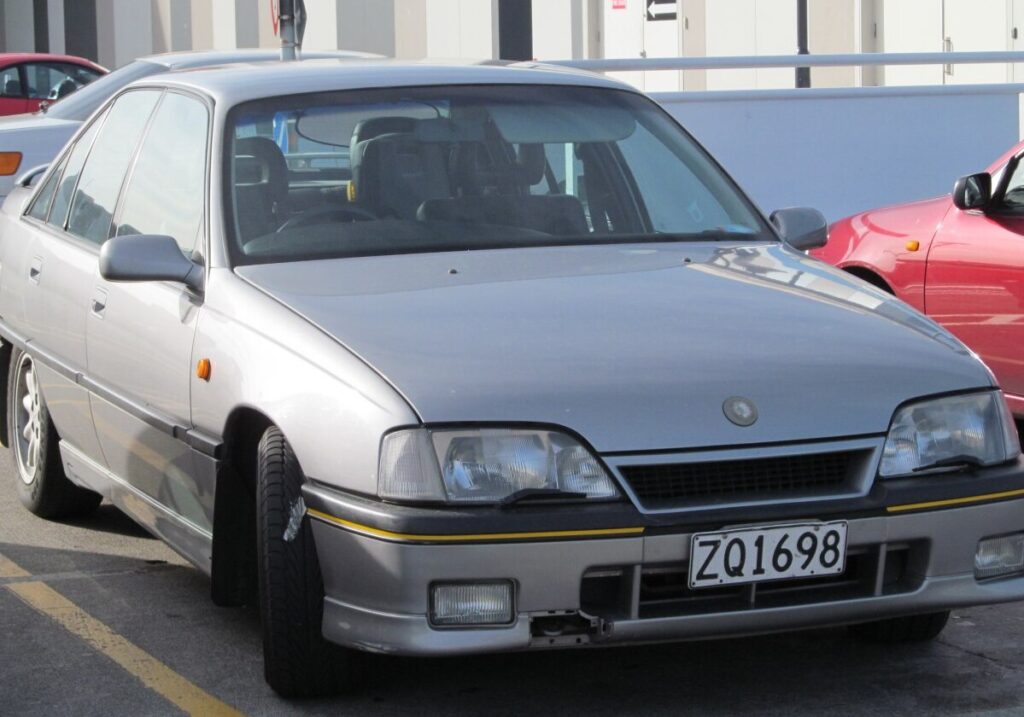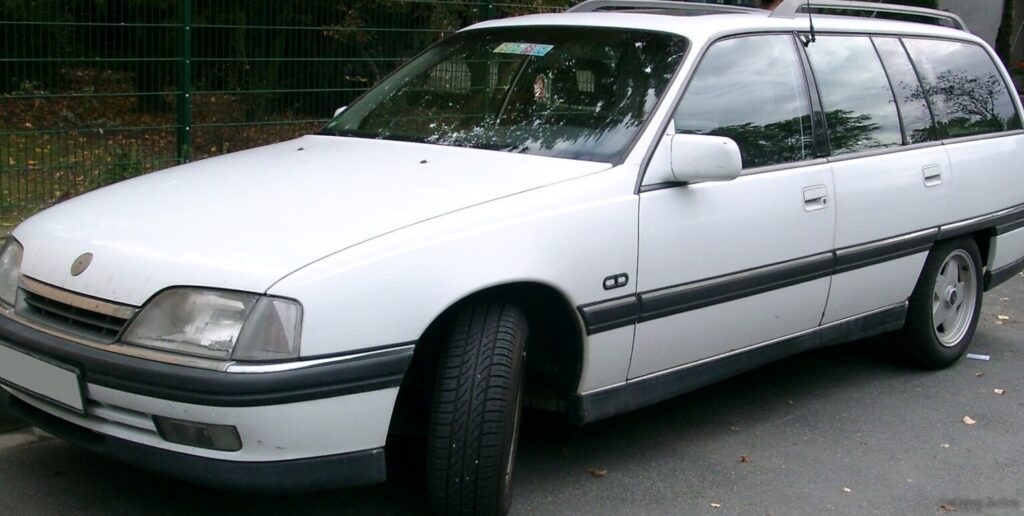
The Opel Omega A Caravan 3.0i, produced between 1987 and 1988, represented a significant offering in Opel’s lineup as a spacious and relatively luxurious executive station wagon. Positioned as a premium variant within the Omega A series (the first generation of the Omega), the 3.0i model aimed to provide a blend of performance, practicality, and comfort for families and business users alike. It was a key competitor in the European market against vehicles like the Ford Granada and Volvo 740 Estate. This particular version, equipped with the 30NE inline-six engine and a five-speed manual transmission, offered a step up in performance compared to the four-cylinder models, while remaining more accessible than the later, more powerful Omega variants.
Technical Specifications
| Brand | Opel |
| Model | Omega |
| Generation | Omega A Caravan |
| Type (Engine) | 3.0i 3000 (177 Hp) |
| Start of production | 1987 |
| End of production | 1988 |
| Powertrain Architecture | Internal Combustion engine |
| Body type | Station wagon (estate) |
| Seats | 5 |
| Doors | 5 |
| Fuel Type | Petrol (Gasoline) |
| Acceleration 0 – 100 km/h | 9.3 sec |
| Acceleration 0 – 62 mph | 9.3 sec |
| Acceleration 0 – 60 mph | 8.8 sec |
| Maximum speed | 220 km/h (136.7 mph) |
| Weight-to-power ratio | 8.1 kg/Hp, 123.3 Hp/tonne |
| Weight-to-torque ratio | 6 kg/Nm, 167.2 Nm/tonne |
| Power | 177 Hp @ 5800 rpm |
| Power per litre | 59.6 Hp/l |
| Torque | 240 Nm @ 4200 rpm (177.01 lb.-ft. @ 4200 rpm) |
| Maximum engine speed | 6300 rpm |
| Engine layout | Front, Longitudinal |
| Engine Model/Code | 30NE |
| Engine displacement | 2969 cm3 (181.18 cu. in.) |
| Number of cylinders | 6 |
| Engine configuration | Inline |
| Cylinder Bore | 95 mm (3.74 in.) |
| Piston Stroke | 69.8 mm (2.75 in.) |
| Compression ratio | 9.2:1 |
| Number of valves per cylinder | 2 |
| Fuel injection system | Multi-port manifold injection |
| Engine aspiration | Naturally aspirated engine |
| Valvetrain | SOHC |
| Engine oil capacity | 5.5 l (5.81 US qt | 4.84 UK qt) |
| Coolant | 10.2 l (10.78 US qt | 8.97 UK qt) |
| Kerb Weight | 1435 kg (3163.63 lbs.) |
| Max. weight | 2065 kg (4552.55 lbs.) |
| Max load | 630 kg (1388.91 lbs.) |
| Trunk (boot) space – minimum | 540 l (19.07 cu. ft.) |
| Trunk (boot) space – maximum | 1850 l (65.33 cu. ft.) |
| Fuel tank capacity | 70 l (18.49 US gal | 15.4 UK gal) |
| Permitted trailer load with brakes (12%) | 1700 kg (3747.86 lbs.) |
| Permitted trailer load without brakes | 720 kg (1587.33 lbs.) |
| Length | 4770 mm (187.8 in.) |
| Width | 1760 mm (69.29 in.) |
| Height | 1480 mm (58.27 in.) |
| Wheelbase | 2730 mm (107.48 in.) |
| Front track | 1450 mm (57.09 in.) |
| Rear (Back) track | 1465 mm (57.68 in.) |
| Minimum turning circle | 10.8 m (35.43 ft.) |
| Drivetrain Architecture | Rear wheel drive |
| Number of gears and type of gearbox | 5 gears, manual transmission |
| Front brakes | Ventilated discs |
| Rear brakes | Disc |
| Tires size | 205/65 R15 |
| Wheel rims size | 15 |
Powertrain & Engine Architecture
The heart of the Omega A Caravan 3.0i was the 30NE engine, a 2.969-liter inline-six cylinder powerplant. This engine was a naturally aspirated unit featuring a single overhead camshaft (SOHC) valvetrain and multi-port fuel injection. The 30NE was known for its smooth operation and relatively robust construction. It produced 177 horsepower at 5800 rpm and 240 Nm (177 lb-ft) of torque at 4200 rpm. The engine’s longitudinal mounting and rear-wheel drive configuration were typical for European executive cars of the era. The five-speed manual transmission provided precise gear changes and allowed drivers to fully utilize the engine’s power band. The transmission ratios were geared towards a balance of acceleration and highway cruising, offering a comfortable driving experience.
Driving Characteristics
The 3.0i Omega A Caravan offered a noticeable step up in performance compared to the lower-displacement models. Acceleration to 60 mph was achieved in around 8.8 seconds, and it could reach a top speed of 136.7 mph. While not a sports car, the 3.0i provided ample power for overtaking and comfortable long-distance cruising. The rear-wheel drive layout contributed to balanced handling, although it wasn’t as nimble as front-wheel drive alternatives. The manual transmission allowed for greater driver control, and the gear ratios were well-matched to the engine’s torque curve. Compared to the later 3.0-liter 24V version, the 30NE offered a more linear power delivery, making it easier to drive in everyday situations. The 30NE was also generally considered more reliable than some of the later, more complex Omega engines.
Equipment & Trim Levels
The Omega A Caravan 3.0i typically came with a good level of standard equipment for its time. This included central locking, electric windows, power steering, and a basic stereo system. Interior upholstery was usually cloth, although leather was available as an option. Dashboard design was functional and straightforward, with clear instrumentation. Optional extras included a sunroof, upgraded stereo systems, and air conditioning. The Caravan body style itself was a key feature, offering a large and practical cargo area that could be expanded by folding down the rear seats. The 3.0i trim generally sat in the mid-range of the Omega A lineup, offering a balance of features and performance.
Chassis & Braking
The Omega A Caravan featured a conventional chassis layout with independent suspension at the front and a rigid axle suspension at the rear. The front suspension utilized MacPherson struts, while the rear employed a multi-link setup. Braking was provided by ventilated discs at the front and solid discs at the rear. The braking system was adequate for the car’s weight and performance, but it lacked the sophistication of more modern systems. Stabilizer bars were fitted to both the front and rear axles to reduce body roll during cornering. The suspension tuning was geared towards comfort, providing a smooth ride over most road surfaces.
Market Reception & Comparison
The Opel Omega A Caravan 3.0i was generally well-received by automotive critics. It was praised for its spacious interior, comfortable ride, and strong engine. However, some critics noted that the styling was somewhat conservative and that the handling wasn’t as sharp as some of its rivals. Compared to the four-cylinder Omega models, the 3.0i offered a significant improvement in performance, but it came at a higher price. Fuel economy was reasonable for a car of its size and engine displacement, but it wasn’t a particularly fuel-efficient vehicle. The 3.0i offered a compelling alternative to other executive station wagons, such as the Ford Granada and Volvo 740 Estate.
Legacy
The Opel Omega A Caravan 3.0i has become a sought-after classic car among enthusiasts. The 30NE engine is known for its durability and relatively simple construction, making it easier to maintain than some of the more complex engines of the era. However, parts availability can be a challenge, as the Omega A is now an older vehicle. Well-maintained examples of the 3.0i are becoming increasingly rare and valuable. The Omega A Caravan, in general, is remembered as a spacious, comfortable, and reliable station wagon that offered a good value for money. The 3.0i variant, with its smooth inline-six engine, remains a particularly desirable version of this classic Opel.