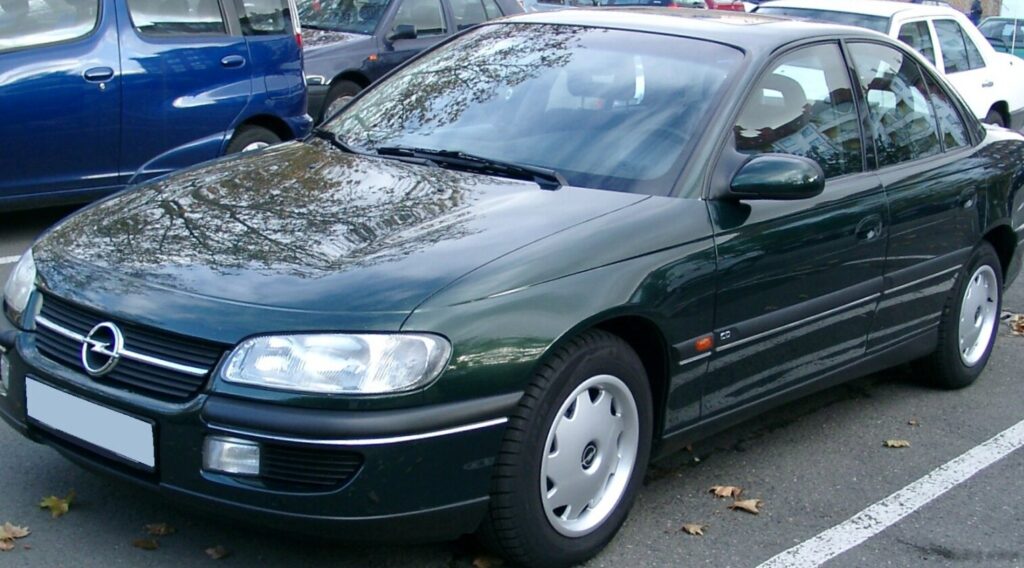
The Opel Omega B 2.0 DTI 16V, producing 101 horsepower, was a variant of the Omega B model manufactured between February 1998 and July 1999. Positioned as an entry-level to mid-range offering within the Omega B lineup, it provided a more economical alternative to the higher-performance gasoline engines and the more powerful 2.5 TDI diesel. The Omega B itself was a large, executive sedan built on Opel’s GM Epsilon platform (internally designated as 1HX0/A3), representing a significant step up in refinement and technology compared to its predecessor, the Omega A.
The 2.0 DTI 16V powertrain centers around the X20DTH engine, a 1995 cc inline four-cylinder diesel. This engine utilized a direct injection common rail diesel injection system, a relatively new technology at the time, allowing for improved fuel efficiency and reduced emissions compared to older diesel injection methods. The “16V” designation indicates the engine features four valves per cylinder, enhancing breathing and contributing to its power output. The X20DTH is a turbocharged engine, with the turbocharger providing increased air intake to boost power and torque. The engine’s valvetrain is an overhead camshaft (OHC) design. The engine produced 101 hp at 4300 rpm and 205 Nm (151.2 lb-ft) of torque at 1650 rpm. The Omega B 2.0 DTI 16V was exclusively offered with a 5-speed manual transmission, delivering power to the rear wheels.
In real-world driving, the 2.0 DTI 16V Omega B offered a comfortable and relaxed driving experience. While not particularly quick – achieving 0-100 km/h (0-62 mph) in approximately 15 seconds – it provided ample torque for everyday driving and highway cruising. The 5-speed manual transmission allowed drivers to effectively manage the engine’s powerband. Compared to the more powerful 2.5 TDI, the 2.0 DTI felt noticeably less responsive, particularly during acceleration. However, it offered superior fuel economy. The gear ratios were geared towards maximizing fuel efficiency rather than outright performance.
The 2.0 DTI 16V Omega B typically came with a reasonably well-equipped standard specification. Interior features generally included cloth upholstery, power windows, central locking, and an AM/FM radio. Higher trim levels, often denoted by additional model designations, offered upgrades such as alloy wheels, air conditioning, a sunroof, and upgraded audio systems. The dashboard layout was functional and straightforward, typical of Opel designs of the era. Optional extras included leather upholstery, heated seats, and a more advanced sound system.
The Omega B 2.0 DTI 16V utilized a conventional suspension setup, featuring coil springs on both the front and rear axles. The front suspension incorporated independent coil springs, while the rear used a semi-independent coil spring arrangement. Braking was accomplished via ventilated discs on the front wheels and solid discs on the rear. Anti-lock Braking System (ABS) was standard equipment, enhancing safety. The car rode on 195/65 R15 tires mounted on 6.5J x 15 inch steel or alloy wheels. Stabilizer bars were fitted to both the front and rear axles to reduce body roll during cornering.
Contemporary reviews of the Opel Omega B 2.0 DTI 16V generally praised its fuel economy and comfortable ride. Critics noted that while the engine lacked the outright performance of the gasoline variants, it provided sufficient power for most drivers. The car was considered a practical and spacious family sedan. Fuel economy figures were around 9.2 l/100 km (25.6 US mpg) in urban conditions and 5 l/100 km (47 US mpg) on the open road. Compared to the 2.5 TDI, the 2.0 DTI offered better fuel efficiency but at the cost of performance. Reliability was generally considered good, although, like all diesel engines of the time, the common rail injection system required careful maintenance.
| Engine Model/Code | X20DTH |
| Engine Displacement | 1995 cm3 (121.74 cu. in.) |
| Number of Cylinders | 4, Inline |
| Cylinder Bore | 84 mm (3.31 in.) |
| Piston Stroke | 90 mm (3.54 in.) |
| Compression Ratio | 18.5:1 |
| Power | 101 Hp @ 4300 rpm |
| Torque | 205 Nm (151.2 lb.-ft.) @ 1650 rpm |
| Fuel Injection System | Diesel Commonrail |
| Engine Aspiration | Turbocharger |
| Valvetrain | OHC |
| Kerb Weight | 1540 kg (3395.12 lbs.) |
| Max. Weight | 2090 kg (4607.66 lbs.) |
| Fuel Tank Capacity | 75 l (19.81 US gal | 16.5 UK gal) |
| Length | 4785 mm (188.39 in.) |
| Width | 1785 mm (70.28 in.) |
| Height | 1450 mm (57.09 in.) |
| Wheelbase | 2730 mm (107.48 in.) |
| 0-100 km/h | 15 sec |
| Maximum Speed | 186 km/h (115.58 mph) |
| CO2 Emissions | 294 g/km |
Today, the Opel Omega B 2.0 DTI 16V is a relatively rare sight on the roads. The X20DTH engine, when properly maintained, has proven to be reasonably durable. However, age-related issues with the fuel injection system and turbocharger are common. The car’s relatively low initial price and its reputation for practicality have made it a popular choice as a used family car in some European markets. Parts availability can be a challenge, but many components are still obtainable through specialist Opel parts suppliers. The 2.0 DTI 16V represents a solid, if unspectacular, entry point into the Omega B range, offering a blend of comfort, economy, and practicality.