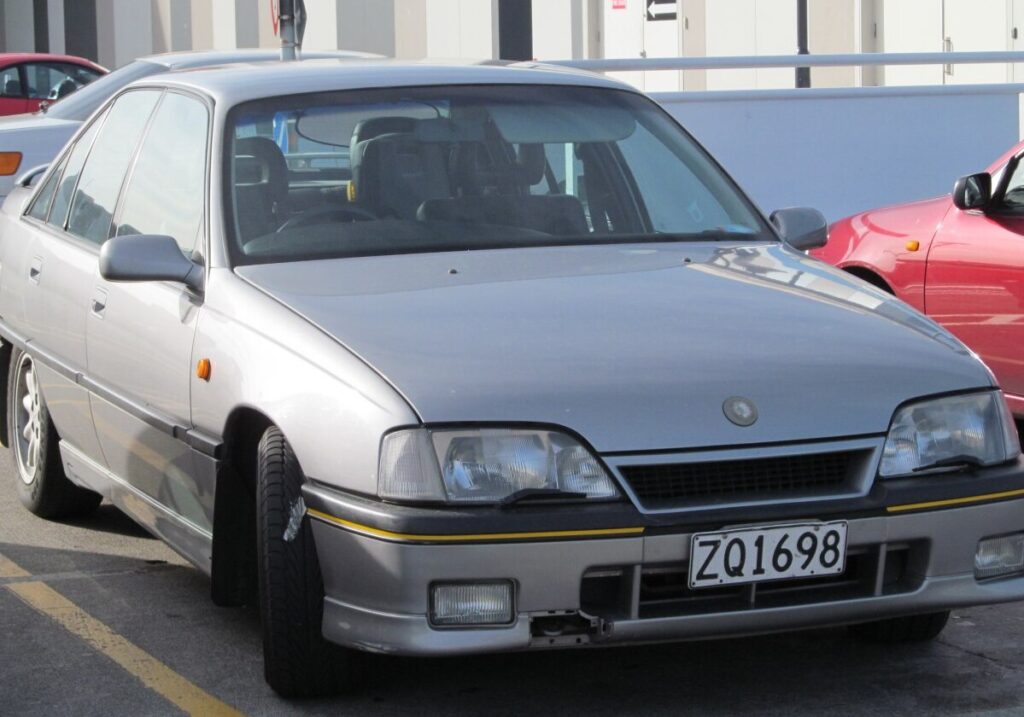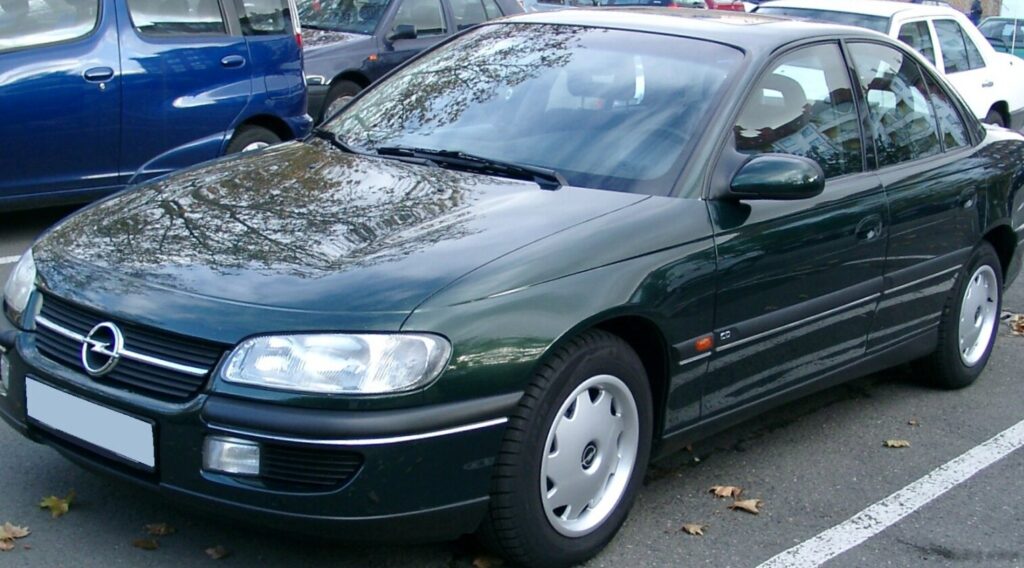
The Opel Omega B 2.0i (116 hp) was a mid-range variant of the Omega B series, produced between April 1994 and June 1998. Positioned within the second generation of the Omega (designated the Omega B, chassis code 1HX0), this model offered a balance between performance and affordability, serving as a popular choice for family transportation and long-distance cruising. The Omega B represented a significant step forward for Opel, offering a more refined and spacious interior compared to its predecessor, the Omega A. It was a flagship model for Opel, intended to compete with executive cars from Ford, Vauxhall, and other European manufacturers.
The 2.0i variant was powered by the 20SE or X20SE inline four-cylinder engine, displacing 1998 cc (121.93 cubic inches). This engine featured multi-port fuel injection and an overhead camshaft (OHC) valvetrain with two valves per cylinder. The engine produced 116 horsepower at 5400 rpm and 172 Nm (126.86 lb-ft) of torque at 2800 rpm. Crucially, the 2.0i was often paired with a five-speed automatic transmission, although a five-speed manual was also available. The engine’s longitudinal front-engine layout and rear-wheel drive configuration were hallmarks of the Omega B, providing a balanced driving experience. The compression ratio was set at 10:1, and the engine required 4.5 liters (4.76 US quarts) of oil and 9 liters (9.51 US quarts) of coolant.
In real-world driving, the 2.0i automatic Omega B delivered adequate, but not exhilarating, performance. Acceleration from 0 to 100 km/h (0-62 mph) took approximately 13 seconds, while 0 to 60 mph was achieved in around 12.4 seconds. The top speed was rated at 195 km/h (121.17 mph). The automatic transmission, while providing convenience, did slightly diminish acceleration compared to the manual version. The gear ratios were tuned for comfortable cruising, prioritizing fuel efficiency over outright speed. Power delivery was relatively linear, making the car easy to drive in everyday traffic. The rear-wheel drive configuration contributed to balanced handling, although it wasn’t a particularly sporty vehicle.
The 2.0i trim level typically included features such as power windows, central locking, and an adjustable steering column. Interior upholstery was generally cloth, although leather options were available. The dashboard layout was functional and straightforward, with a focus on ergonomics. Optional extras included air conditioning, a sunroof, and upgraded audio systems. The Omega B was known for its spacious interior, offering ample legroom for both front and rear passengers. Trunk space ranged from 530 liters (18.72 cubic feet) to 830 liters (29.31 cubic feet) with the rear seats folded down.
The Omega B 2.0i utilized a coil spring suspension system for both the front and rear axles. Front brakes were ventilated discs, while rear brakes were solid discs. The car was equipped with an Anti-lock Braking System (ABS) as standard. Steering was hydraulic power-assisted, utilizing a worm-reduction unit. The standard tire size was 195/65 R15, mounted on 6.5J x 15 inch wheel rims. The kerb weight of the vehicle was 1460 kg (3218.75 lbs), with a maximum permissible weight of 2010 kg (4431.29 lbs).
Contemporary reviews of the Omega B 2.0i generally praised its comfort, spaciousness, and build quality. However, critics often noted that the 2.0-liter engine felt somewhat underpowered, particularly when paired with the automatic transmission. Fuel economy was reasonable, with urban consumption around 13.5 l/100 km (17.4 US mpg) and extra-urban consumption around 7.2 l/100 km (32.7 US mpg). Compared to the higher-performance Omega B variants, such as the 3.0L inline-six or the 2.5 V6, the 2.0i offered a more economical option, appealing to buyers prioritizing practicality over outright speed. The 2.0i also proved to be more reliable than some of the more complex engine options in the Omega B range, such as the early versions of the V6.
| Engine Model/Code | 20SE, X20SE |
| Engine Displacement | 1998 cm3 (121.93 cu. in.) |
| Number of Cylinders | 4 |
| Engine Configuration | Inline |
| Cylinder Bore | 86 mm (3.39 in.) |
| Piston Stroke | 86 mm (3.39 in.) |
| Compression Ratio | 10:1 |
| Power | 116 Hp @ 5400 rpm |
| Torque | 172 Nm @ 2800 rpm (126.86 lb.-ft. @ 2800 rpm) |
| Fuel Type | Petrol (Gasoline) |
| Fuel Consumption (Urban) | 13.5 l/100 km (17.4 US mpg) |
| Fuel Consumption (Extra Urban) | 7.2 l/100 km (32.7 US mpg) |
| Acceleration 0-100 km/h | 13 sec |
| Acceleration 0-62 mph | 13 sec |
| Maximum Speed | 195 km/h (121.17 mph) |
| Kerb Weight | 1460 kg (3218.75 lbs) |
| Fuel Tank Capacity | 75 l (19.81 US gal) |
| Engine Oil Capacity | 4.5 l (4.76 US qt) |
| Coolant Capacity | 9 l (9.51 US qt) |
Today, the Opel Omega B 2.0i is considered a classic car, particularly in Europe. The 20SE/X20SE engine is known for its durability and relative simplicity, making it a relatively easy engine to maintain. While not a particularly sought-after variant compared to the V6 models, well-maintained examples of the 2.0i can still be found on the used car market at affordable prices. Its reputation for reliability and comfortable ride continue to appeal to enthusiasts seeking a spacious and practical classic saloon.