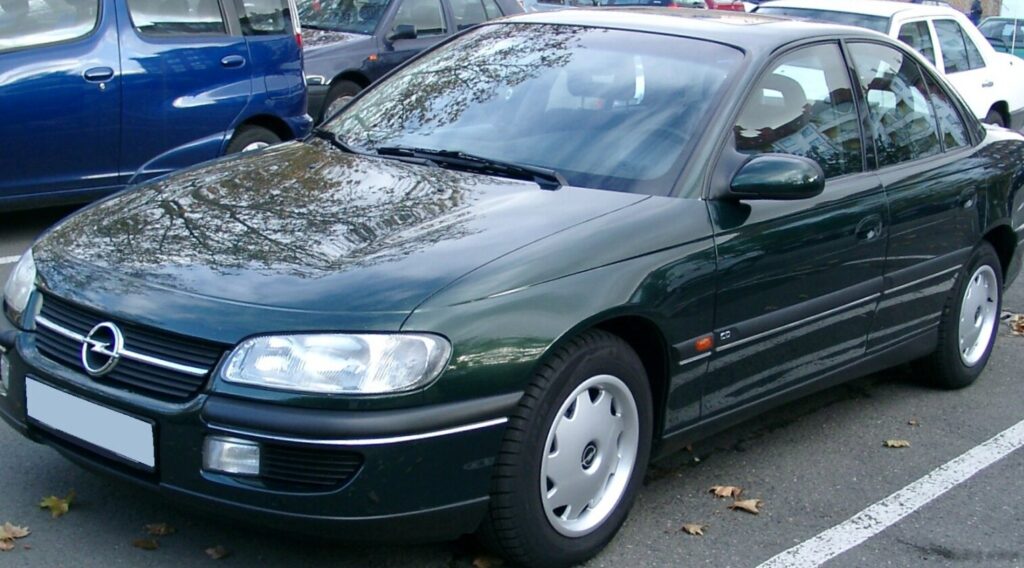
The Opel Omega B 2.0i Automatic, produced between April 1994 and June 1998, represented a key entry point into the second generation (Omega B) of Opel’s flagship sedan. Built on the GM E-platform (internally designated as the 1HX0/A3 platform, shared with models like the Saab 9000 and later the Vectra B), this variant offered a balance of comfort, space, and affordability within the Omega B range. It served as the more accessible alternative to the higher-performance and more expensive 3.0L and 3.2L six-cylinder models, as well as the diesel options.
The 2.0i variant was powered by the 20SE (and sometimes X20SE) inline four-cylinder gasoline engine, displacing 1998 cc (121.93 cubic inches). This engine featured multi-port fuel injection and an overhead camshaft (OHC) valvetrain with two valves per cylinder. The 20SE engine was a well-established unit within the Opel/Vauxhall lineup, known for its relative reliability and straightforward maintenance. The engine produced 116 horsepower at 5400 rpm and 172 Nm (126.86 lb-ft) of torque at 2800 rpm. This power was delivered to the rear wheels through a four-speed automatic transmission. The transmission, while providing convenience, was not known for its sportiness or particularly quick shifts, prioritizing smooth operation over outright performance.
Driving the Omega B 2.0i Automatic offered a comfortable, if not particularly exhilarating, experience. Acceleration from 0 to 100 km/h (0-62 mph) took approximately 14 seconds, while 0-60 mph was achieved in around 13.3 seconds. Top speed was limited to 188 km/h (116.82 mph). The automatic transmission’s gear ratios were geared towards fuel efficiency and relaxed cruising rather than rapid acceleration. Compared to the manual transmission versions of the 2.0i, the automatic resulted in a noticeable performance decrease. The higher-spec Omega B models, such as those equipped with the 3.0L or 3.2L V6 engines, offered significantly more power and a more dynamic driving experience, but at a higher price point.
The 2.0i Automatic typically came with a reasonable level of standard equipment. Interiors generally featured cloth upholstery, although leather was available as an option. The dashboard layout was functional and straightforward, typical of Opel designs of the era. Standard features included power windows, central locking, and an AM/FM radio. Optional extras could include air conditioning, a sunroof, upgraded audio systems, and alloy wheels. Trim levels varied by market, but generally, the 2.0i Automatic represented a mid-range offering, positioned above the base models but below the luxury-focused trims.
The Omega B 2.0i Automatic utilized a conventional suspension setup. Front suspension consisted of coil springs, while the rear also employed coil springs. Braking was accomplished with ventilated discs at the front and solid discs at the rear. Anti-lock Braking System (ABS) was standard, enhancing safety. Steering was hydraulic power-assisted, utilizing a worm-reduction unit. The car rode on 195/65 R15 tires mounted on 6.5J x 15 inch steel or alloy wheels. The suspension was tuned for comfort, prioritizing a smooth ride over sharp handling.
Contemporary reviews of the Omega B 2.0i Automatic generally praised its spacious interior, comfortable ride, and reasonable fuel economy. However, critics often noted the engine’s lack of outright power and the automatic transmission’s somewhat sluggish performance. Fuel consumption was rated at approximately 14 l/100 km (16.8 US mpg) in urban driving and 7.7 l/100 km (30.5 US mpg) on the open road. Compared to the 2.0i manual, the automatic version saw a slight decrease in fuel efficiency. Reliability was generally considered good, although the automatic transmission could be prone to issues if not properly maintained. The Omega B 2.0i Automatic offered a compelling package for buyers seeking a large, comfortable, and relatively affordable sedan.
| Engine Model/Code | 20SE, X20SE |
| Engine displacement | 1998 cm3 (121.93 cu. in.) |
| Number of cylinders | 4 |
| Engine configuration | Inline |
| Cylinder Bore | 86 mm (3.39 in.) |
| Piston Stroke | 86 mm (3.39 in.) |
| Compression ratio | 10:1 |
| Number of valves per cylinder | 2 |
| Fuel injection system | Multi-port manifold injection |
| Engine aspiration | Naturally aspirated |
| Power | 116 Hp @ 5400 rpm |
| Torque | 172 Nm @ 2800 rpm (126.86 lb.-ft. @ 2800 rpm) |
| Fuel Type | Petrol (Gasoline) |
| Acceleration 0 – 100 km/h | 14 sec |
| Acceleration 0 – 62 mph | 14 sec |
| Acceleration 0 – 60 mph | 13.3 sec |
| Maximum speed | 188 km/h (116.82 mph) |
| Kerb Weight | 1460 kg (3218.75 lbs.) |
| Max. weight | 2010 kg (4431.29 lbs.) |
| Fuel tank capacity | 75 l (19.81 US gal | 16.5 UK gal) |
| Engine oil capacity | 4.5 l (4.76 US qt | 3.96 UK qt) |
| Coolant capacity | 8.8 l (9.3 US qt | 7.74 UK qt) |
Today, the Opel Omega B 2.0i Automatic is becoming increasingly rare, particularly in well-maintained condition. The 20SE engine is generally considered reliable, but age and mileage can lead to issues. The automatic transmission requires regular servicing to prevent problems. These cars are often sought after by enthusiasts who appreciate their spaciousness, classic styling, and relatively simple mechanicals. While not a performance car, the Omega B 2.0i Automatic remains a comfortable and capable classic sedan, offering a glimpse into a bygone era of large, rear-wheel-drive European automobiles.