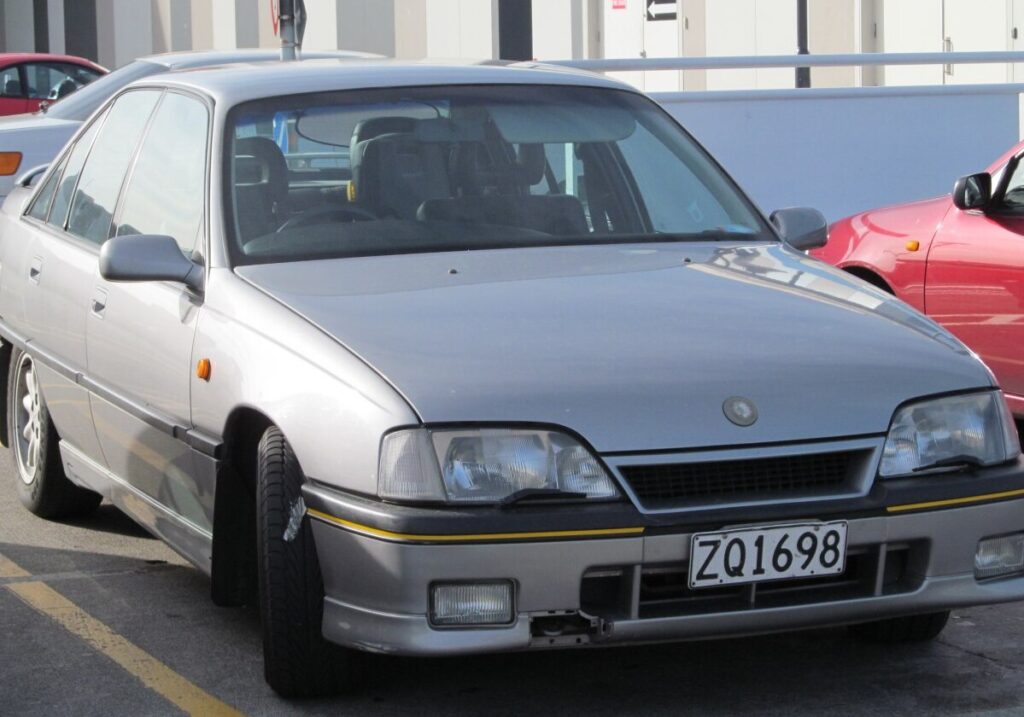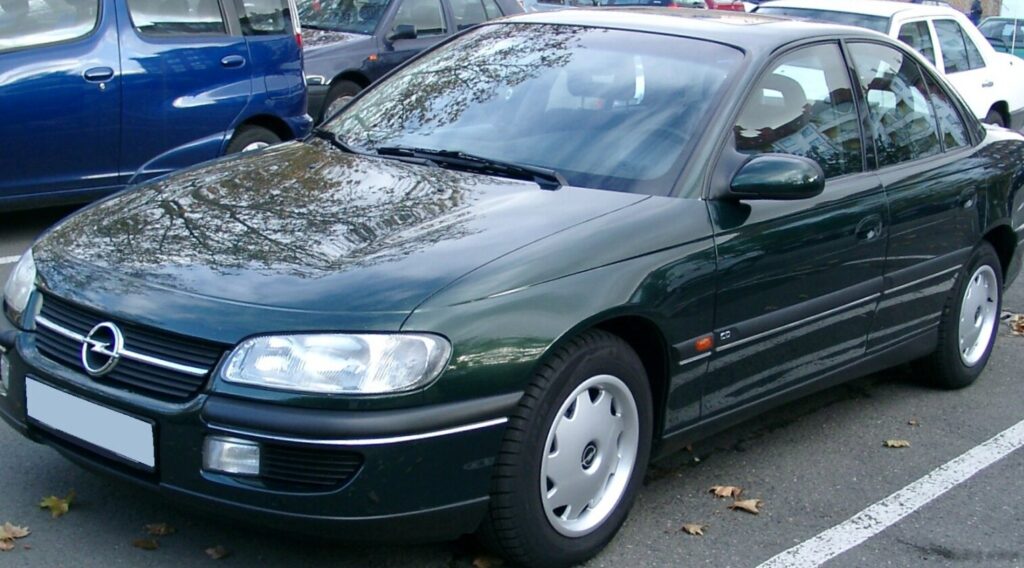
The Opel Omega B 2.5 TD Automatic, produced between January 1994 and July 1999, represented a compelling blend of luxury and efficiency within the Omega B range. Positioned as a mid-range offering, it catered to drivers seeking a comfortable, spacious sedan with the added benefit of a turbocharged diesel engine and the convenience of an automatic transmission. The Omega B, built on the GM E-platform (internally designated as the 1HX0/A3 platform), was Opel’s flagship model, intended to compete with executive cars from BMW, Mercedes-Benz, and Audi. The 2.5 TD Automatic variant offered a more economical alternative to the petrol-powered options while still providing a respectable level of performance and refinement.
At the heart of the Omega B 2.5 TD Automatic lies the 25DT/X25DT inline-six cylinder diesel engine, displacing 2497cc (152.38 cubic inches). This engine utilized a precombustion chamber injection system, a common technology for diesel engines of the era, designed to improve combustion efficiency and reduce noise. A turbocharger with an intercooler was employed to boost power output to 131 horsepower at 4500 rpm and 250 Nm (184.39 lb-ft) of torque at 2200 rpm. The engine featured a double overhead camshaft (DOHC) valvetrain with two valves per cylinder. The automatic transmission was a conventional four-speed unit, chosen for its ease of use and suitability for long-distance cruising. The engine’s longitudinal front-engine layout contributed to balanced weight distribution.
Driving the Omega B 2.5 TD Automatic was characterized by smooth, relaxed progress. While not a sports sedan, the 250 Nm of torque provided ample pulling power for overtaking and maintaining highway speeds. Acceleration from 0 to 100 km/h (0-62 mph) took approximately 12.5 seconds, and 0 to 60 mph was achieved in around 11.9 seconds. The four-speed automatic transmission, while not offering the responsiveness of a manual gearbox or a more modern automatic, provided seamless gear changes and contributed to a comfortable driving experience. Compared to the more powerful petrol engines available in the Omega B range, the 2.5 TD Automatic prioritized fuel economy and low-speed torque over outright acceleration. It differed significantly from the higher-performance variants, such as the 3.0L inline-six, which offered considerably more horsepower but at the expense of fuel consumption.
The 2.5 TD Automatic trim level typically included features such as central locking, electric windows, power steering, and an adjustable steering column as standard equipment. Interior upholstery was generally cloth, although leather options were available. The dashboard layout was functional and well-equipped, with a comprehensive instrument cluster. Optional extras included air conditioning, a sunroof, upgraded audio systems, and alloy wheels. The Omega B was known for its spacious interior, offering ample legroom and headroom for both front and rear passengers. The trunk offered a generous 530-830 liters (18.72-29.31 cubic feet) of cargo space, making it a practical choice for families and those requiring significant luggage capacity.
The Omega B 2.5 TD Automatic featured coil spring suspension on both the front and rear axles. The front brakes were ventilated discs, while the rear brakes were discs. Anti-lock Braking System (ABS) was standard, enhancing safety and stability during braking. The car rode on 205/65 R15 tires mounted on 6.5J x 15 inch wheel rims. The suspension was tuned for comfort, providing a smooth ride over a variety of road surfaces. The car’s kerb weight of 1605 kg (3538.42 lbs) influenced its handling characteristics, making it feel substantial and planted on the road.
Contemporary reviews of the Omega B 2.5 TD Automatic generally praised its comfortable ride, spacious interior, and fuel efficiency. Critics noted that the automatic transmission could feel somewhat dated compared to more modern units, and the engine, while capable, lacked the refinement of some of its competitors. Fuel economy was a strong point, with combined cycle figures around 12.5 l/100 km (18.8 US mpg) in urban driving and 7 l/100 km (33.6 US mpg) on the open road. Reliability was generally good, although diesel engines of this era could be susceptible to issues with the fuel injection system and turbocharger. Compared to the petrol-powered Omega B models, the 2.5 TD Automatic offered a lower total cost of ownership due to its superior fuel economy and generally robust engine.
| Brand | Opel |
| Model | Omega |
| Generation | Omega B |
| Type (Engine) | 2.5 TD (131 Hp) Automatic |
| Start of production | January, 1994 |
| End of production | July, 1999 |
| Fuel consumption (urban) | 12.5 l/100 km (18.8 US mpg) |
| Fuel consumption (extra urban) | 7 l/100 km (33.6 US mpg) |
| Fuel Type | Diesel |
| Acceleration 0 – 100 km/h | 12.5 sec |
| Acceleration 0 – 62 mph | 12.5 sec |
| Acceleration 0 – 60 mph | 11.9 sec |
| Maximum speed | 195 km/h (121.17 mph) |
| Power | 131 Hp @ 4500 rpm |
| Torque | 250 Nm @ 2200 rpm (184.39 lb.-ft. @ 2200 rpm) |
| Engine layout | Front, Longitudinal |
| Engine Model/Code | 25DT, X25DT |
| Engine displacement | 2497 cm3 (152.38 cu. in.) |
| Number of cylinders | 6 |
| Engine configuration | Inline |
| Cylinder Bore | 80 mm (3.15 in.) |
| Piston Stroke | 82.8 mm (3.26 in.) |
| Compression ratio | 22:1 |
| Number of valves per cylinder | 2 |
| Fuel injection system | Precombustion chamber injection |
| Engine aspiration | Turbocharger, Intercooler |
| Engine oil capacity | 6.5 l (6.87 US qt | 5.72 UK qt) |
| Coolant capacity | 10.2 l (10.78 US qt | 8.97 UK qt) |
| Kerb Weight | 1605 kg (3538.42 lbs.) |
| Max. weight | 2170 kg (4784.03 lbs.) |
| Trunk (boot) space – minimum | 530 l (18.72 cu. ft.) |
| Trunk (boot) space – maximum | 830 l (29.31 cu. ft.) |
| Fuel tank capacity | 75 l (19.81 US gal | 16.5 UK gal) |
| Length | 4785 mm (188.39 in.) |
| Width | 1785 mm (70.28 in.) |
| Height | 1450 mm (57.09 in.) |
| Wheelbase | 2730 mm (107.48 in.) |
| Drive wheel | Rear wheel drive |
| Number of gears | 4 |
| Gearbox type | automatic transmission |
Today, the Opel Omega B 2.5 TD Automatic holds a modest position in the used car market. While not highly sought after by enthusiasts, it represents a relatively affordable and reliable option for those seeking a spacious, comfortable, and economical sedan. The 25DT engine, when properly maintained, is known for its durability. However, potential buyers should be aware of the age-related issues common to vehicles of this era, such as corrosion, wear and tear on suspension components, and potential problems with the fuel injection system. Overall, the Omega B 2.5 TD Automatic remains a testament to Opel’s engineering prowess and a practical choice for those seeking a classic European sedan.