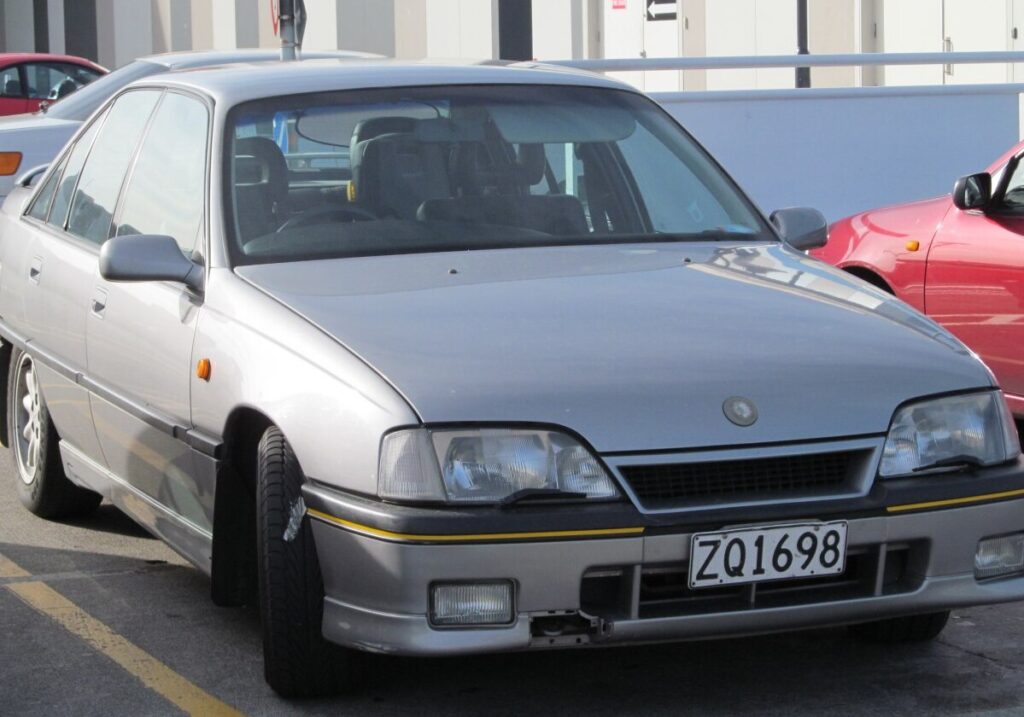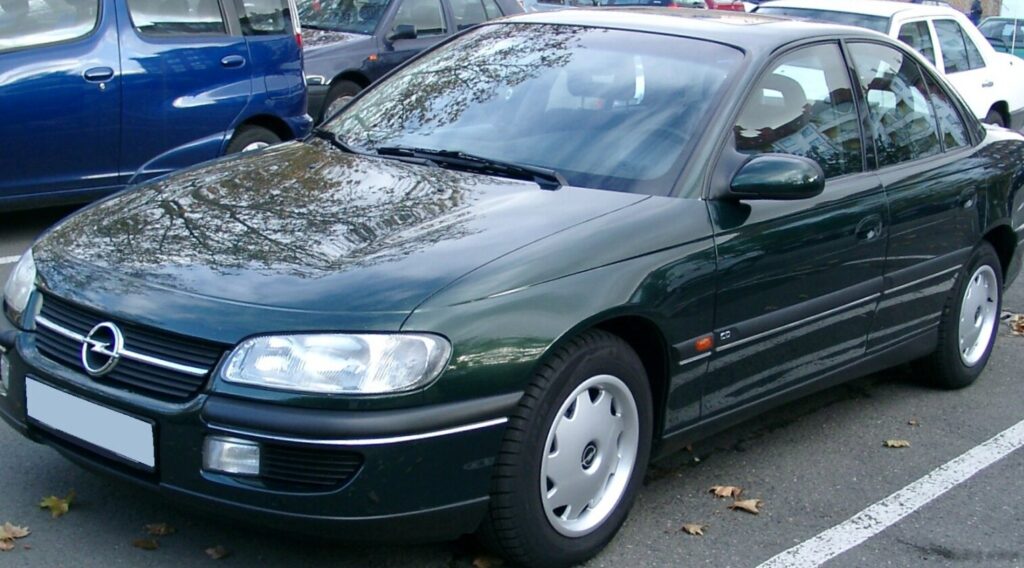
The Opel Omega B 2.5i V6, produced between April 1994 and July 1999, represented a significant step up in the Omega lineage, offering a blend of luxury, performance, and technology. Part of the Omega B generation (1HX0/A3 platform), this variant occupied a mid-to-premium position within the Omega range, appealing to buyers seeking a comfortable and capable grand tourer. It served as a more refined alternative to the base models while remaining more accessible than the flagship trims.
Opel Omega B 2.5i V6: An Overview
The Omega B was Opel’s flagship sedan, intended to compete with executive cars from BMW, Mercedes-Benz, and Audi. The 2.5i V6 model distinguished itself with its smooth, naturally aspirated engine and rear-wheel drive configuration, a setup favored by enthusiasts for its balanced handling characteristics. This model year saw significant advancements in safety and comfort features compared to its predecessor, the Omega A.
Powertrain & Engine Architecture
At the heart of the Omega B 2.5i V6 lies the X25XE engine, a 2.5-liter (2498 cm3 / 152.44 cu. in.) naturally aspirated V6. This engine boasts a 60-degree V-angle and utilizes a double overhead camshaft (DOHC) valvetrain with four valves per cylinder. The X25XE is characterized by its robust construction and relatively simple design, contributing to its reliability. Fuel delivery is managed by a multi-port manifold injection system, ensuring precise fuel atomization and efficient combustion. The engine produces 170 hp (127 kW) at 5800 rpm and 226 Nm (166.69 lb-ft) of torque at 3200 rpm. The compression ratio is 10.8:1.
The Omega B 2.5i V6 was primarily offered with a 5-speed manual transmission, delivering power to the rear wheels. While an automatic transmission was available in some markets, it wasn’t as commonly paired with the 2.5i V6 as the manual. The rear-wheel drive layout contributes to the car’s balanced handling and provides a more engaging driving experience compared to front-wheel drive alternatives.
Driving Characteristics
The 2.5i V6 Omega B delivers a refined and comfortable driving experience. Acceleration from 0 to 100 km/h (0-62 mph) takes approximately 9.5 seconds, while 0-60 mph is achieved in around 9 seconds. Top speed is rated at 228 km/h (141.67 mph). The engine’s torque curve provides ample power for both city driving and highway cruising. The rear-wheel drive configuration offers predictable handling and good stability, particularly at higher speeds. Compared to the base four-cylinder models, the 2.5i V6 provides significantly more power and a smoother, more refined driving experience. However, it doesn’t offer the same level of performance as the higher-output V6 variants available in the Omega B range.
Equipment & Trim Levels
The Omega B 2.5i V6 typically came well-equipped, reflecting its position as a mid-to-premium model. Standard features often included power windows, power steering (hydraulic), central locking, an anti-lock braking system (ABS), and a basic audio system. Interior upholstery was typically cloth, although leather options were available. The dashboard layout was functional and ergonomically designed, with clear instrumentation. Optional extras included a sunroof, upgraded audio systems, climate control, and heated seats. Higher trim levels offered more luxurious appointments, such as leather upholstery, wood trim, and more advanced audio systems.
Chassis & Braking
The Omega B 2.5i V6 utilizes a coil spring suspension system for both the front and rear axles. The front suspension features independent coil springs, while the rear suspension employs a semi-independent coil spring setup. The braking system consists of ventilated discs on the front wheels and solid discs on the rear wheels. The ABS system enhances braking performance and stability, particularly in adverse conditions. The car’s curb weight of 1530 kg (3373.07 lbs) contributes to its stable handling characteristics. The front track measures 1515 mm (59.65 in), and the rear track is 1530 mm (60.24 in). Ride height (ground clearance) is 140 mm (5.51 in).
Market Reception & Comparison
The Opel Omega B 2.5i V6 was generally well-received by automotive critics. It was praised for its comfortable ride, refined engine, and spacious interior. However, some critics noted that its styling was somewhat conservative compared to its rivals. Fuel economy was a common point of criticism, with combined fuel consumption averaging 10.9 l/100 km (21.6 US mpg / 25.9 UK mpg). Compared to the 2.0-liter four-cylinder Omega B models, the 2.5i V6 offered significantly more performance but at the cost of increased fuel consumption. Compared to the higher-output V6 variants, the 2.5i V6 provided a more balanced combination of performance and economy, appealing to buyers who prioritized comfort and refinement over outright speed.
Technical Specifications
| Brand | Opel |
| Model | Omega |
| Generation | Omega B |
| Type (Engine) | 2.5i V6 (170 Hp) |
| Start of production | April, 1994 |
| End of production | July, 1999 |
| Powertrain Architecture | Internal Combustion engine |
| Body type | Sedan |
| Seats | 5 |
| Doors | 4 |
| Fuel consumption (urban) | 15.3 l/100 km (15.4 US mpg / 18.5 UK mpg) |
| Fuel consumption (extra urban) | 8.3 l/100 km (28.3 US mpg / 34 UK mpg) |
| Fuel consumption (combined) | 10.9 l/100 km (21.6 US mpg / 25.9 UK mpg) |
| CO2 emissions | 256 g/km |
| Fuel Type | Petrol (Gasoline) |
| Acceleration 0 – 100 km/h | 9.5 sec |
| Acceleration 0 – 62 mph | 9.5 sec |
| Acceleration 0 – 60 mph | 9 sec |
| Maximum speed | 228 km/h (141.67 mph) |
| Weight-to-power ratio | 9 kg/Hp |
| Weight-to-torque ratio | 6.8 kg/Nm |
| Power | 170 Hp @ 5800 rpm |
| Torque | 226 Nm @ 3200 rpm (166.69 lb.-ft. @ 3200 rpm) |
| Engine layout | Front, Longitudinal |
| Engine Model/Code | X25XE |
| Engine displacement | 2498 cm3 (152.44 cu. in.) |
| Number of cylinders | 6 |
| Engine configuration | V-engine |
| Cylinder Bore | 81.6 mm (3.21 in.) |
| Piston Stroke | 79.6 mm (3.13 in.) |
| Compression ratio | 10.8:1 |
| Number of valves per cylinder | 4 |
| Fuel injection system | Multi-port manifold injection |
| Engine aspiration | Naturally aspirated engine |
| Valvetrain | DOHC |
| Engine oil capacity | 5.75 l (6.08 US qt | 5.06 UK qt) |
| Coolant | 9.7 l (10.25 US qt | 8.53 UK qt) |
| Kerb Weight | 1530 kg (3373.07 lbs.) |
| Max. weight | 2120 kg (4673.8 lbs.) |
| Max load | 590 kg (1300.73 lbs.) |
| Trunk (boot) space – minimum | 530 l (18.72 cu. ft.) |
| Trunk (boot) space – maximum | 830 l (29.31 cu. ft.) |
| Fuel tank capacity | 75 l (19.81 US gal | 16.5 UK gal) |
| Length | 4785 mm (188.39 in.) |
| Width | 1785 mm (70.28 in.) |
| Height | 1450 mm (57.09 in.) |
| Wheelbase | 2730 mm (107.48 in.) |
| Front track | 1515 mm (59.65 in.) |
| Rear (Back) track | 1530 mm (60.24 in.) |
| Ride height (ground clearance) | 140 mm (5.51 in.) |
| Drag coefficient (Cd) | 0.28 |
| Drive wheel | Rear wheel drive |
| Number of gears and type of gearbox | 5 gears, manual transmission |
Legacy
The Opel Omega B 2.5i V6, while not the most powerful variant of the Omega B, remains a desirable classic car. The X25XE engine is known for its durability and relatively straightforward maintenance. Well-maintained examples are increasingly sought after by enthusiasts who appreciate the car’s comfortable ride, balanced handling, and classic styling. In the used car market, these Omegas represent a good value for those seeking a spacious, comfortable, and reliable grand tourer. However, potential buyers should be aware of the age-related issues common to vehicles of this era, such as corrosion and wear on rubber components.