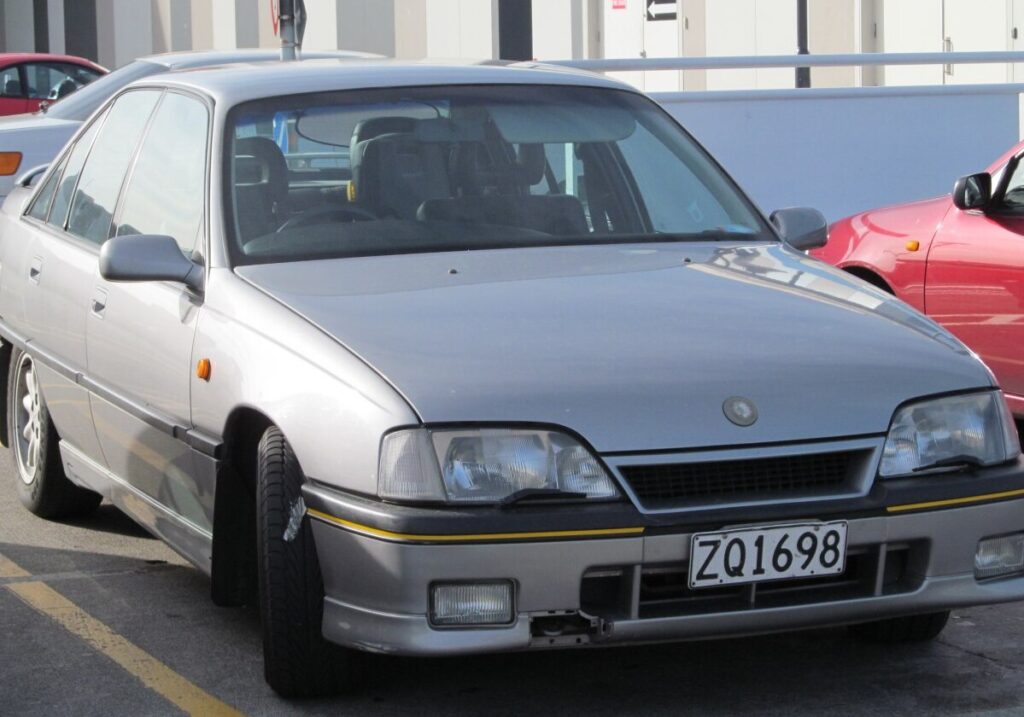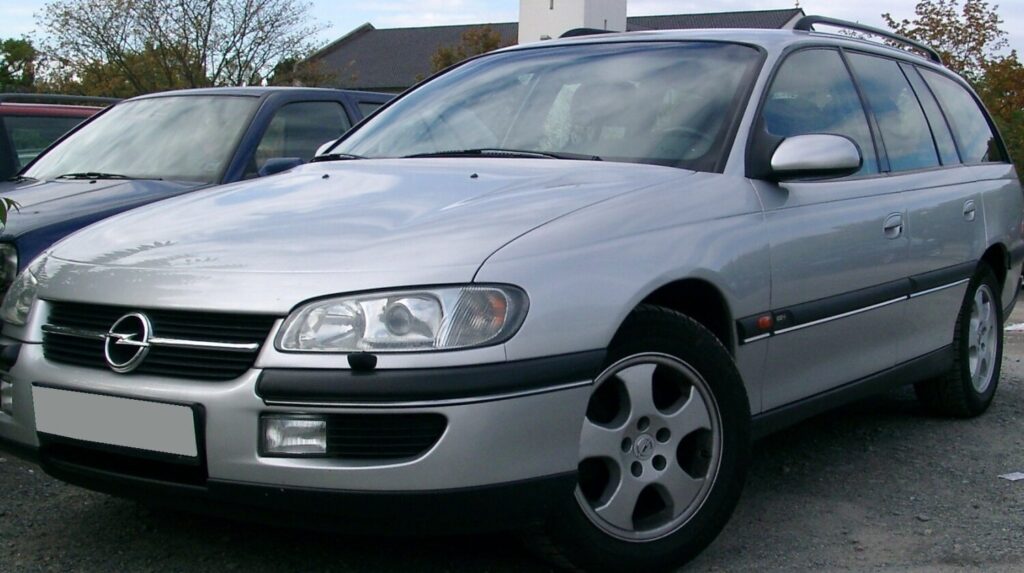
The Opel Omega B Caravan 2.0i (116 hp) Automatic, produced between April 1994 and June 1998, was a key variant within the second generation (Omega B) of Opel’s flagship executive car. Positioned as a mid-range offering in the Caravan (estate) body style, it provided a balance between performance, practicality, and affordability within the Omega B lineup. The Omega B, built on the GM Epsilon platform (internally designated 1HX0/A3), aimed to modernize Opel’s image and compete with established rivals like the Ford Mondeo and Volkswagen Passat. This 2.0i Automatic model catered to buyers seeking a comfortable and spacious family vehicle with the convenience of an automatic transmission.
The 2.0i Powertrain & Engine Architecture
At the heart of the Omega B Caravan 2.0i Automatic lay the 20SE or X20SE inline-four cylinder gasoline engine, displacing 1998 cc (121.93 cubic inches). This engine was a mainstay of Opel’s mid-size and large car offerings throughout the 1990s. It featured a naturally aspirated configuration, multi-port fuel injection, and an overhead camshaft (OHC) valvetrain with two valves per cylinder. The engine produced 116 horsepower at 5400 rpm and 172 Nm (126.86 lb-ft) of torque at 2800 rpm. The compression ratio was set at 10:1.
The engine’s design emphasized reliability and smooth operation rather than outright performance. The 20SE/X20SE engines were known for their durability, although they were not without their potential issues, such as oil consumption in some instances. The engine oil capacity was 4.5 liters (4.76 US quarts / 3.96 UK quarts), and the recommended oil specification was crucial for longevity.
Paired with the 2.0i engine was a four-speed automatic transmission. While not the most modern transmission available at the time, it provided smooth and effortless gear changes, enhancing the Omega’s comfort-oriented driving experience. The transmission was designed to prioritize fuel efficiency and ease of use over sporty responsiveness. The drivetrain architecture was rear-wheel drive, a configuration that was becoming less common in the segment but contributed to the Omega’s balanced handling characteristics.
Fuel Injection and Valvetrain Details
The multi-port fuel injection system delivered fuel directly to each cylinder, optimizing combustion efficiency and contributing to relatively smooth power delivery. The OHC valvetrain, while simpler than dual overhead camshaft (DOHC) designs, was reliable and provided adequate airflow for the engine’s intended performance level. The engine’s aspiration was naturally aspirated, meaning it did not utilize a turbocharger or supercharger to force air into the cylinders.
Driving Characteristics
The Omega B Caravan 2.0i Automatic offered a comfortable and relaxed driving experience. Acceleration from 0 to 100 km/h (0-62 mph) took approximately 15 seconds, and 0 to 60 mph was achieved in around 14.3 seconds. The top speed was rated at 177 km/h (109.98 mph). These figures were not particularly impressive compared to some of its rivals, especially those equipped with more powerful engines or manual transmissions. However, the 2.0i Automatic was never intended to be a performance-focused model.
The automatic transmission’s gear ratios were optimized for cruising and fuel economy. While it offered a ‘kickdown’ function for quicker acceleration, it lacked the responsiveness of a manual gearbox. The rear-wheel-drive configuration provided a balanced feel, although it didn’t offer the same level of grip as front-wheel-drive cars in slippery conditions. The weight-to-power ratio of 13.1 kg/hp and weight-to-torque ratio of 8.8 kg/Nm reflected the car’s moderate performance capabilities.
Equipment & Trim Levels
The Omega B Caravan 2.0i Automatic typically came equipped with a reasonable level of standard features. These included power steering, ABS (Anti-lock Braking System), central locking, electric front windows, and a basic audio system. Interior upholstery was typically cloth, although leather options were available as upgrades. The dashboard layout was functional and straightforward, prioritizing ease of use over stylistic flair.
Optional extras included air conditioning, a sunroof, upgraded audio systems, and alloy wheels. Higher trim levels, such as the GLS, offered additional features like cruise control, heated seats, and more luxurious interior trim. The Caravan body style itself added significant practicality with its large cargo area, offering 540 liters (19.07 cubic feet) of space with the rear seats up and up to 1800 liters (63.57 cubic feet) with the seats folded down.
Chassis & Braking
The Omega B Caravan 2.0i Automatic featured a coil spring suspension system at both the front and rear. The front suspension utilized ventilated disc brakes, while the rear brakes were typically discs. The steering system was a worm-reduction unit with hydraulic power assistance. The standard tire size was 195/65 R15, mounted on 6.5J x 15 inch wheel rims.
The suspension was tuned for comfort, providing a smooth ride over most road surfaces. However, it wasn’t particularly sporty, and body roll was noticeable during cornering. The braking system was adequate for everyday use, but it lacked the stopping power of more modern systems.
Market Reception & Comparison
The Opel Omega B Caravan 2.0i Automatic was generally well-received by critics as a comfortable and practical family car. However, it was often criticized for its lack of performance compared to some of its rivals. Fuel economy was also a concern, with urban consumption rated at 14.1 l/100 km (16.7 US mpg / 20 UK mpg) and extra-urban consumption at 7.9 l/100 km (29.8 US mpg / 35.8 UK mpg).
Compared to the higher-output Omega B variants, such as the 3.0i V6, the 2.0i Automatic offered significantly less power and performance. However, it was more affordable to purchase and operate. The 1.8i models were even more economical, but offered even less power. The 2.5 TDI diesel models provided superior fuel economy but lacked the refinement of the gasoline engines. The 2.0i Automatic struck a balance between these extremes, appealing to buyers who prioritized comfort and practicality over outright performance.
Technical Specifications
| Brand | Opel |
| Model | Omega |
| Generation | Omega B Caravan |
| Type (Engine) | 2.0i (116 Hp) Automatic |
| Start of production | April, 1994 |
| End of production | June, 1998 |
| Powertrain Architecture | Internal Combustion engine |
| Body type | Station wagon (estate) |
| Seats | 5 |
| Doors | 5 |
| Fuel consumption (urban) | 14.1 l/100 km (16.7 US mpg / 20 UK mpg) |
| Fuel consumption (extra urban) | 7.9 l/100 km (29.8 US mpg / 35.8 UK mpg) |
| Fuel Type | Petrol (Gasoline) |
| Acceleration 0 – 100 km/h | 15 sec |
| Acceleration 0 – 62 mph | 15 sec |
| Acceleration 0 – 60 mph | 14.3 sec |
| Maximum speed | 177 km/h (109.98 mph) |
| Weight-to-power ratio | 13.1 kg/Hp |
| Weight-to-torque ratio | 8.8 kg/Nm |
| Power | 116 Hp @ 5400 rpm |
| Torque | 172 Nm @ 2800 rpm (126.86 lb.-ft. @ 2800 rpm) |
| Engine layout | Front, Longitudinal |
| Engine Model/Code | 20SE, X20SE |
| Engine displacement | 1998 cm3 (121.93 cu. in.) |
| Number of cylinders | 4 |
| Engine configuration | Inline |
| Cylinder Bore | 86 mm (3.39 in.) |
| Piston Stroke | 86 mm (3.39 in.) |
| Compression ratio | 10:1 |
| Number of valves per cylinder | 2 |
| Fuel injection system | Multi-port manifold injection |
| Engine aspiration | Naturally aspirated engine |
| Valvetrain | OHC |
| Engine oil capacity | 4.5 l (4.76 US qt | 3.96 UK qt) |
| Coolant | 8.8 l (9.3 US qt | 7.74 UK qt) |
| Kerb Weight | 1515 kg (3340 lbs.) |
| Max. weight | 2010 kg (4431.29 lbs.) |
| Max load | 495 kg (1091.29 lbs.) |
| Trunk (boot) space – minimum | 540 l (19.07 cu. ft.) |
| Trunk (boot) space – maximum | 1800 l (63.57 cu. ft.) |
| Fuel tank capacity | 75 l (19.81 US gal | 16.5 UK gal) |
| Length | 4820 mm (189.76 in.) |
| Width | 1785 mm (70.28 in.) |
| Height | 1500 mm (59.06 in.) |
| Wheelbase | 2730 mm (107.48 in.) |
| Front track | 1510 mm (59.45 in.) |
| Rear (Back) track | 1530 mm (60.24 in.) |
| Drivetrain Architecture | Rear wheel drive |
| Number of gears and type of gearbox | 4 gears, automatic transmission |
| Front suspension | Coil spring |
| Rear suspension | Coil spring |
| Front brakes | Ventilated discs |
| Rear brakes | Disc |
| Assisting systems | ABS (Anti-lock braking system) |
| Steering type | Worm-reduction unit |
| Power steering | Hydraulic Steering |
| Tires size | 195/65 R15 |
| Wheel rims size | 6.5J x 15 |
Legacy
The Opel Omega B Caravan 2.0i Automatic, while not a particularly sought-after variant today, remains a reasonably reliable and affordable used car. The 20SE/X20SE engine is known for its durability, although regular maintenance is essential to prevent oil consumption and other issues. Parts availability is generally good, as the engine was widely used in other Opel and Vauxhall models. The automatic transmission, while not the most sophisticated, is generally reliable if properly maintained. The Omega B Caravan’s spacious interior and large cargo area continue to make it a practical choice for families. However, potential buyers should be aware of the car’s relatively low performance and fuel economy compared to more modern vehicles.