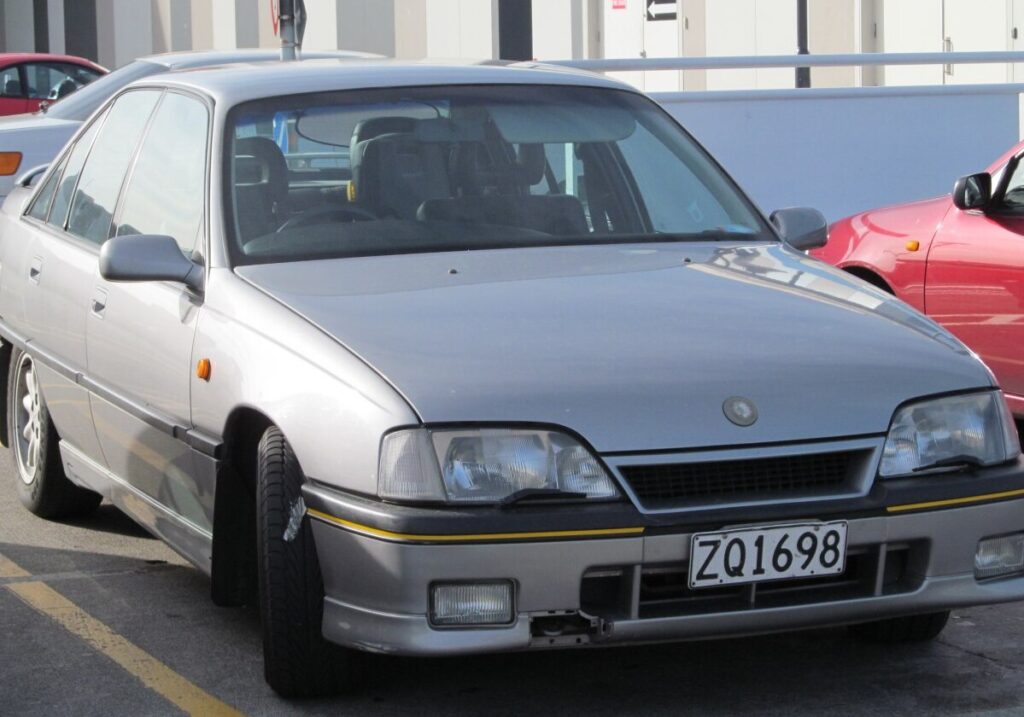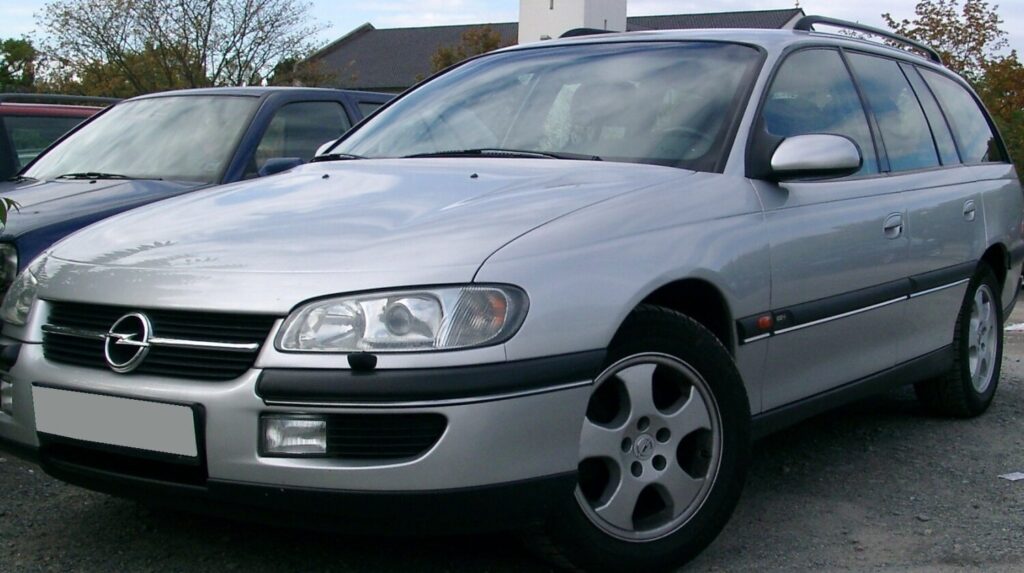
The Opel Omega B Caravan 2.0i 16V, produced between April 1994 and July 1999, was a key variant within the second generation (Omega B) of Opel’s flagship executive car. This model, a station wagon (estate) body style, represented a balance between practicality, performance, and affordability within the Omega B range. It was positioned as a mid-range offering, slotting below the more powerful 2.5 V6 and 3.0 V6 models, and above the base 1.6 and 1.8 non-16V engines. The Omega B series, built on the GM Epsilon platform (internally designated 1HX0/A3), aimed to provide a spacious, comfortable, and technologically advanced vehicle for families and business users alike.
Powertrain & Engine Architecture
The heart of the Omega B Caravan 2.0i 16V is the X20XEV engine, a 1998 cc (121.93 cu. in.) inline-four cylinder gasoline engine. This engine is characterized by its dual overhead camshafts (DOHC) and four valves per cylinder, contributing to its improved breathing and power output compared to single overhead cam designs. The X20XEV utilizes a multi-port fuel injection system, delivering fuel directly into the intake ports just before the intake valves. This system, controlled by an electronic engine management system, optimizes fuel delivery for efficient combustion. The engine produces 136 horsepower (hp) at 5600 rpm and 188 Newton-meters (138.66 lb-ft) of torque at 3200 rpm. The compression ratio is 10.8:1. Engine oil capacity is 4.5 liters (4.76 US qt | 3.96 UK qt), and it requires coolant totaling 8.8 liters (9.3 US qt | 7.74 UK qt).
Transmission
While a five-speed manual transmission was available, the 2.0i 16V was frequently paired with a four-speed automatic transmission. This automatic, a common GM unit of the era, provided smooth shifting but was not known for its particularly quick response or fuel efficiency. The gear ratios were optimized for comfortable cruising rather than outright acceleration. First gear was relatively short for easy take-off, while the higher gears were geared for relaxed highway driving. The automatic transmission contributed to the car’s appeal for drivers prioritizing convenience over sporty performance.
Driving Characteristics
The Omega B Caravan 2.0i 16V with the automatic transmission offered a comfortable and refined driving experience. Acceleration from 0 to 100 km/h (0-62 mph) took approximately 11.5 seconds, and 0 to 60 mph was achieved in around 10.9 seconds. While not a particularly quick car by modern standards, the 2.0i 16V provided adequate performance for everyday driving and long-distance journeys. The engine delivered a reasonably linear power delivery, with usable torque available from relatively low engine speeds. However, the automatic transmission could sometimes feel sluggish, especially when attempting quick overtaking maneuvers. Compared to the manual transmission version, the automatic resulted in a slight performance decrease. The higher-output V6 models offered significantly more potent acceleration, but at the cost of increased fuel consumption and a higher purchase price. The 2.0i 16V offered a good compromise for drivers who didn’t require the ultimate in performance.
Equipment & Trim Levels
The Omega B Caravan 2.0i 16V typically came equipped with a respectable level of standard features. These included central locking, electric front windows, power steering, and an anti-lock braking system (ABS). Interior upholstery was generally cloth, with options for upgraded velour or leather available. The dashboard layout was functional and ergonomically designed, with clear instrumentation. Optional extras included air conditioning, a sunroof, heated front seats, and a premium sound system. Trim levels varied depending on the market, but generally, the 2.0i 16V was positioned as a well-equipped mid-range model, offering a good balance of comfort and convenience features. The Caravan (estate) body style itself added to the practicality with a large cargo area, making it a popular choice for families.
Chassis & Braking
The Omega B Caravan 2.0i 16V featured a coil spring suspension system at both the front and rear, providing a comfortable ride quality. The front suspension utilized independent coil springs, while the rear suspension employed a semi-independent coil spring setup. The car’s weight of 1515 kg (3340 lbs) influenced the suspension tuning, prioritizing ride comfort over sporty handling. Braking was handled by disc brakes on all four wheels, providing adequate stopping power. The ABS system helped to maintain steering control during emergency braking situations. The steering system was a hydraulic power steering setup, offering light and easy steering feel. Tire size was typically 195/65 R15, mounted on 6.5J x 15 inch wheel rims.
Market Reception & Comparison
The Opel Omega B Caravan 2.0i 16V was generally well-received by automotive critics as a practical and comfortable family car. It was praised for its spacious interior, large cargo capacity, and relatively refined driving experience. However, the automatic transmission was sometimes criticized for its lack of responsiveness. Fuel economy was considered average for its class, with urban consumption around 13.3 l/100 km (17.7 US mpg, 21.2 UK mpg) and extra-urban consumption around 7.3 l/100 km (32.2 US mpg, 38.7 UK mpg). Compared to the more powerful V6 models, the 2.0i 16V offered better fuel economy but less exhilarating performance. Compared to other station wagons in its segment, such as the Ford Mondeo Estate and Volkswagen Passat Variant, the Omega B Caravan offered a compelling combination of space, comfort, and value.
Technical Specifications
| Brand | Opel |
| Model | Omega |
| Generation | Omega B Caravan |
| Type (Engine) | 2.0i 16V (136 Hp) |
| Start of production | April, 1994 |
| End of production | July, 1999 |
| Powertrain Architecture | Internal Combustion engine |
| Body type | Station wagon (estate) |
| Seats | 5 |
| Doors | 5 |
| Fuel consumption (urban) | 13.3 l/100 km (17.7 US mpg, 21.2 UK mpg) |
| Fuel consumption (extra urban) | 7.3 l/100 km (32.2 US mpg, 38.7 UK mpg) |
| Fuel Type | Petrol (Gasoline) |
| Acceleration 0 – 100 km/h | 11.5 sec |
| Acceleration 0 – 62 mph | 11.5 sec |
| Acceleration 0 – 60 mph | 10.9 sec |
| Maximum speed | 202 km/h (125.52 mph) |
| Weight-to-power ratio | 11.1 kg/Hp |
| Weight-to-torque ratio | 8.1 kg/Nm |
| Power | 136 Hp @ 5600 rpm |
| Torque | 188 Nm @ 3200 rpm (138.66 lb.-ft. @ 3200 rpm) |
| Engine layout | Front, Longitudinal |
| Engine Model/Code | X20XEV |
| Engine displacement | 1998 cm3 (121.93 cu. in.) |
| Number of cylinders | 4 |
| Engine configuration | Inline |
| Cylinder Bore | 86 mm (3.39 in.) |
| Piston Stroke | 86 mm (3.39 in.) |
| Compression ratio | 10.8:1 |
| Number of valves per cylinder | 4 |
| Fuel injection system | Multi-port manifold injection |
| Engine aspiration | Naturally aspirated |
| Valvetrain | DOHC |
| Engine oil capacity | 4.5 l (4.76 US qt | 3.96 UK qt) |
| Coolant | 8.8 l (9.3 US qt | 7.74 UK qt) |
| Kerb Weight | 1515 kg (3340 lbs.) |
| Max. weight | 2125 kg (4684.82 lbs.) |
| Max load | 610 kg (1344.82 lbs.) |
| Trunk (boot) space – minimum | 540 l (19.07 cu. ft.) |
| Trunk (boot) space – maximum | 1800 l (63.57 cu. ft.) |
| Fuel tank capacity | 75 l (19.81 US gal | 16.5 UK gal) |
| Length | 4820 mm (189.76 in.) |
| Width | 1785 mm (70.28 in.) |
| Height | 1500 mm (59.06 in.) |
| Wheelbase | 2730 mm (107.48 in.) |
| Front track | 1514 mm (59.61 in.) |
| Rear track | 1525 mm (60.04 in.) |
| Drivetrain Architecture | Rear wheel drive |
| Number of gears | 5 |
| Gearbox type | Automatic transmission |
Legacy
The Opel Omega B Caravan 2.0i 16V, while not the most sought-after variant of the Omega B range, remains a reasonably reliable and affordable used car option. The X20XEV engine is generally considered durable, although regular maintenance is crucial to prevent issues such as oil leaks and timing chain wear. The automatic transmission, while not particularly sophisticated, is generally reliable if properly serviced. Today, these cars are often found with relatively high mileage, and finding a well-maintained example is key. The Omega B Caravan 2.0i 16V represents a comfortable and practical choice for those seeking a spacious and affordable estate car from the 1990s, offering a blend of practicality and reasonable performance.