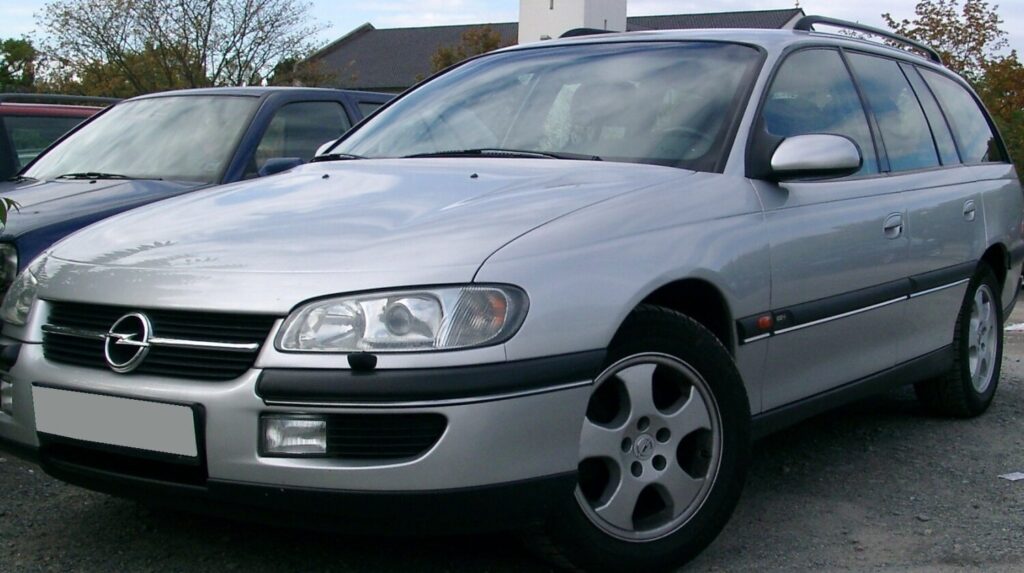
The Opel Omega B Caravan 3.0i V6, produced between April 1994 and July 1999, represented the top-of-the-line engine option for Opel’s flagship estate car. Part of the Omega B (1HX0/A3) generation, the Caravan (estate) body style offered a practical and spacious alternative to the sedan, appealing to families and those requiring significant cargo capacity. The 3.0i V6 variant was positioned as the premium offering within the Omega B range, providing a substantial performance upgrade over the four-cylinder models and a more refined driving experience than the diesel options.
Powertrain & Engine Architecture
The heart of the Omega B Caravan 3.0i V6 is the X30XE engine, a 2.962-liter (180.75 cubic inches) naturally aspirated V6. This engine is a 60-degree V-engine, featuring a cast iron block and aluminum cylinder heads. It produces 211 horsepower at 6000 rpm and 270 Nm (199.14 lb-ft) of torque at 3400 rpm, resulting in a power-to-liter ratio of 71.2 hp/l. The X30XE utilizes multi-port fuel injection, delivering fuel directly to each intake port for optimized combustion. The valvetrain consists of a double overhead camshaft (DOHC) design with four valves per cylinder, contributing to the engine’s responsive nature and broad powerband.
While a five-speed manual transmission was standard, an optional four-speed automatic transmission was also available. This automatic, a common GM unit of the era, was chosen by many buyers for its convenience, particularly in a large, comfortable vehicle like the Omega Caravan. The engine requires 5.75 liters (6.08 US quarts) of engine oil, specified to Opel’s standards, and the cooling system holds 9.7 liters (10.25 US quarts). The engine’s longitudinal front-engine layout contributes to the car’s balanced handling characteristics.
Engine Code Specifics
The X30XE engine code signifies a specific iteration of Opel’s V6 design. It’s known for its relative robustness, though preventative maintenance is crucial, particularly regarding timing belt replacement. The engine’s design prioritizes smooth operation and linear power delivery, making it well-suited for long-distance cruising. The X30XE was also used in other Opel and Vauxhall models, including the Vectra and Calibra, demonstrating its versatility within the GM portfolio.
Driving Characteristics
The Omega B Caravan 3.0i V6 offered a noticeably different driving experience compared to the lower-spec models. Acceleration from 0 to 100 km/h (0-62 mph) took approximately 8 seconds, while 0-60 mph was achieved in around 7.6 seconds. The top speed was electronically limited to 235 km/h (146.02 mph). The V6 engine provided ample power for overtaking and maintaining high speeds on motorways. The automatic transmission, while offering convenience, did slightly diminish acceleration compared to the manual version due to inherent transmission losses. The gear ratios were tuned for a balance between performance and fuel economy, prioritizing comfortable cruising over outright acceleration. The rear-wheel-drive configuration contributed to a balanced feel, although it could exhibit oversteer under aggressive driving conditions.
Equipment & Trim Levels
The 3.0i V6 Caravan typically came well-equipped, reflecting its position as the range-topping model. Standard features often included central locking, electric windows, power steering, ABS (Anti-lock Braking System), and an upgraded audio system. Interior upholstery was typically cloth or leather, with higher trim levels offering more luxurious materials and finishes. Optional extras included a sunroof, climate control, heated seats, and upgraded alloy wheels. The dashboard layout was functional and ergonomically designed, providing easy access to controls. The Caravan’s rear suspension featured self-leveling suspension on some models, maintaining a consistent ride height even when heavily loaded.
Chassis & Braking
The Omega B Caravan’s chassis was designed to provide a comfortable and stable ride. Front suspension utilized coil springs, while the rear also employed coil springs. The front brakes were ventilated discs, providing strong stopping power, while the rear brakes were discs. The ABS system helped to prevent wheel lockup during hard braking, enhancing safety. The steering system was a hydraulic power steering setup, offering light and precise control. Tire size was typically 225/55 R16, mounted on 7J x 16 inch alloy wheels. The weight distribution was relatively balanced, contributing to the car’s handling characteristics. Stabilizer bars were fitted to both the front and rear axles to reduce body roll during cornering.
Market Reception & Comparison
The Opel Omega B Caravan 3.0i V6 was generally well-received by automotive critics. It was praised for its spacious interior, comfortable ride, and powerful engine. However, some critics noted the relatively high fuel consumption (13.7 l/100 km combined) and the somewhat dated design compared to newer rivals. Compared to the four-cylinder Omega models, the V6 offered a significant performance advantage but came at a higher price point. The diesel versions provided better fuel economy but lacked the refinement and power of the V6. The Omega Caravan competed with other large estate cars such as the Ford Mondeo Estate, Volvo V70, and Audi A6 Avant. The Omega often offered a more affordable alternative to the premium brands while providing a comparable level of space and practicality.
Technical Specifications
| Brand | Opel |
| Model | Omega |
| Generation | Omega B Caravan |
| Type (Engine) | 3.0i V6 (211 Hp) |
| Start of production | April, 1994 |
| End of production | July, 1999 |
| Powertrain Architecture | Internal Combustion engine |
| Body type | Station wagon (estate) |
| Seats | 5 |
| Doors | 5 |
| Fuel consumption (urban) | 15.6 l/100 km (15.1 US mpg, 18.1 UK mpg) |
| Fuel consumption (extra urban) | 8.3 l/100 km (28.3 US mpg, 34 UK mpg) |
| Fuel consumption (combined) | 13.7 l/100 km (17.2 US mpg, 20.6 UK mpg) |
| Fuel Type | Petrol (Gasoline) |
| Acceleration 0 – 100 km/h | 8 sec |
| Acceleration 0 – 62 mph | 8 sec |
| Acceleration 0 – 60 mph | 7.6 sec |
| Maximum speed | 235 km/h (146.02 mph) |
| Weight-to-power ratio | 7.8 kg/Hp |
| Weight-to-torque ratio | 6.1 kg/Nm |
| Power | 211 Hp @ 6000 rpm |
| Torque | 270 Nm @ 3400 rpm (199.14 lb.-ft. @ 3400 rpm) |
| Engine layout | Front, Longitudinal |
| Engine Model/Code | X30XE |
| Engine displacement | 2962 cm3 (180.75 cu. in.) |
| Number of cylinders | 6 |
| Engine configuration | V-engine |
| Cylinder Bore | 86 mm (3.39 in.) |
| Piston Stroke | 85 mm (3.35 in.) |
| Compression ratio | 10:1 |
| Number of valves per cylinder | 4 |
| Fuel injection system | Multi-port manifold injection |
| Engine aspiration | Naturally aspirated engine |
| Valvetrain | DOHC |
| Engine oil capacity | 5.75 l (6.08 US qt | 5.06 UK qt) |
| Coolant | 9.7 l (10.25 US qt | 8.53 UK qt) |
| Kerb Weight | 1645 kg (3626.6 lbs.) |
| Max. weight | 2280 kg (5026.54 lbs.) |
| Max load | 635 kg (1399.94 lbs.) |
| Trunk (boot) space – minimum | 540 l (19.07 cu. ft.) |
| Trunk (boot) space – maximum | 1800 l (63.57 cu. ft.) |
| Fuel tank capacity | 75 l (19.81 US gal | 16.5 UK gal) |
| Length | 4820 mm (189.76 in.) |
| Width | 1785 mm (70.28 in.) |
| Height | 1500 mm (59.06 in.) |
| Wheelbase | 2730 mm (107.48 in.) |
| Front track | 1514 mm (59.61 in.) |
| Rear (Back) track | 1525 mm (60.04 in.) |
| Drivetrain Architecture | Rear wheel drive |
| Number of gears and type of gearbox | 5 gears, manual transmission |
| Front suspension | Coil spring |
| Rear suspension | Coil spring |
| Front brakes | Ventilated discs |
| Rear brakes | Disc |
| Assisting systems | ABS (Anti-lock braking system) |
| Steering type | Worm-reduction unit |
| Power steering | Hydraulic Steering |
| Tires size | 225/55 R16 |
| Wheel rims size | 7J x 16 |
Legacy
The Opel Omega B Caravan 3.0i V6, while no longer in production, maintains a following among enthusiasts. The X30XE engine, when properly maintained, is known for its longevity and reliability. However, as with any older vehicle, preventative maintenance is crucial to avoid costly repairs. The Omega Caravan’s spacious interior and comfortable ride continue to appeal to those seeking a practical and refined estate car. On the used car market, these models are relatively affordable, making them an attractive option for those seeking a large, well-equipped vehicle without breaking the bank. Parts availability is generally good, although some specific trim pieces may be difficult to source. The Omega B Caravan 3.0i V6 represents a high point in Opel’s engineering and design, offering a compelling blend of performance, practicality, and comfort.