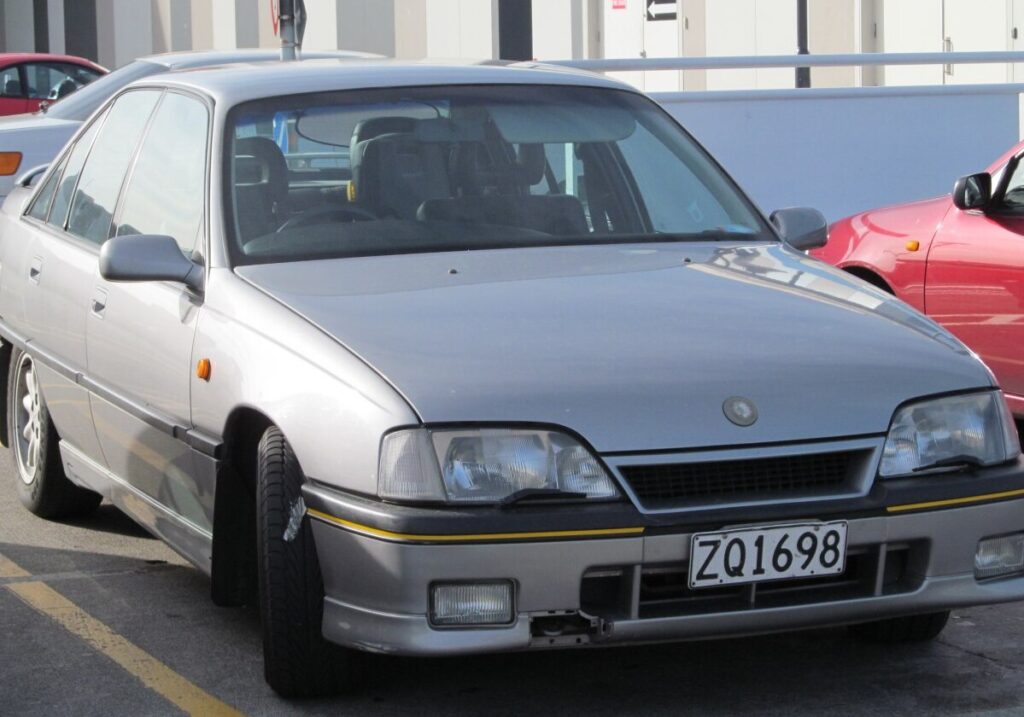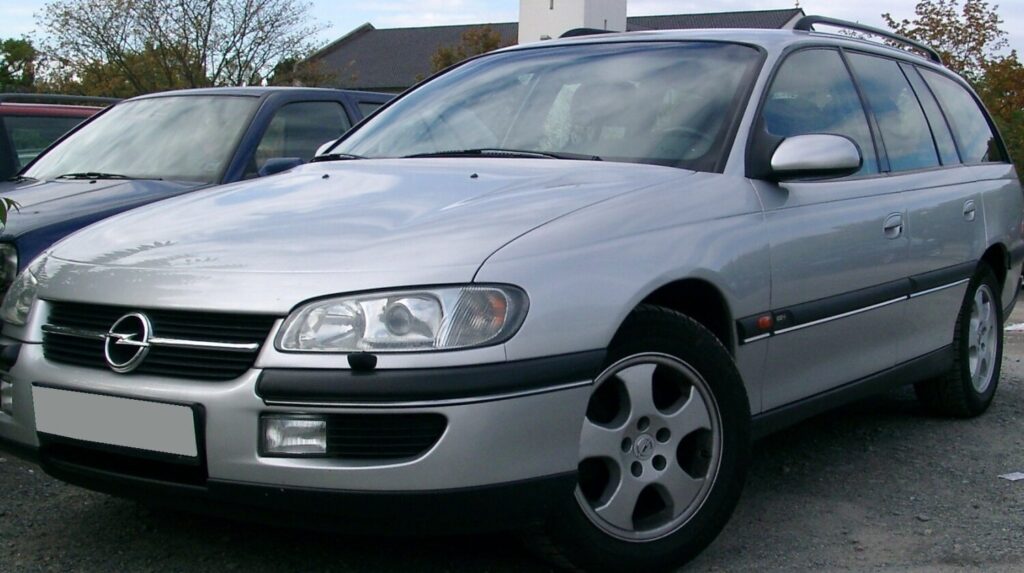
The Opel Omega B Caravan 3.0i V6 Automatic, produced between April 1994 and July 1999, represented the upper echelon of Opel’s large family car offerings. Part of the Omega B (1HX0/A3) generation, the Caravan (estate) body style combined practicality with a degree of luxury and performance. This particular variant, equipped with the 3.0-liter V6 engine and a four-speed automatic transmission, was positioned as a premium trim level, appealing to buyers seeking a spacious, comfortable, and relatively powerful vehicle for long-distance travel and family duties. It sat above the four-cylinder models in the lineup and below the more performance-focused, though less common, trims.
Powertrain & Engine Architecture
The heart of the Omega B Caravan 3.0i was the X30XE engine, a 2,962 cc (180.75 cu. in.) naturally aspirated V6. This engine featured a 60-degree V-angle, four valves per cylinder (DOHC valvetrain), and a compression ratio of 10:1. It utilized multi-port fuel injection, delivering a respectable 211 hp at 6000 rpm and 270 Nm (199.14 lb.-ft.) of torque at 3400 rpm. The engine’s longitudinal mounting allowed for rear-wheel drive, a configuration that distinguished it from many contemporary front-wheel-drive family cars.
The automatic transmission was a four-speed unit, designed to provide smooth and effortless gear changes. While not offering the sporting responsiveness of a manual gearbox, it complemented the V6 engine’s torque curve, making it well-suited for relaxed cruising. Specific gear ratios were tuned for a balance between acceleration and fuel efficiency, though the latter remained a compromise given the engine’s displacement and power output.
Engine Details
- Engine Code: X30XE
- Displacement: 2,962 cc (180.75 cu. in.)
- Configuration: 60-degree V6
- Fuel Injection: Multi-port
- Valvetrain: DOHC (4 valves per cylinder)
Driving Characteristics
The Omega B Caravan 3.0i V6 Automatic offered a distinctly different driving experience compared to its four-cylinder siblings or even the manual transmission versions of the same engine. The automatic transmission, while convenient, did introduce a slight delay in response compared to a manual. Acceleration from 0-100 km/h (0-62 mph) took approximately 10.3 seconds, with a 0-60 mph time calculated at 9.8 seconds. Top speed was electronically limited to 230 km/h (142.92 mph).
The rear-wheel-drive layout provided a balanced feel, although the weight distribution wasn’t ideal. The suspension, tuned for comfort, absorbed bumps effectively, making it a pleasant vehicle for long journeys. However, it wasn’t particularly sporty in handling, exhibiting noticeable body roll during cornering. The engine delivered smooth and linear power delivery, making it easy to modulate and providing ample reserves for overtaking maneuvers. The four-speed automatic, while reliable, lacked the closer gear ratios of more modern transmissions, impacting both acceleration and fuel economy.
Equipment & Trim Levels
The 3.0i V6 Automatic trim typically included a generous level of standard equipment. This often featured power windows, power steering (hydraulic), central locking, an anti-lock braking system (ABS), and comfortable cloth upholstery. Higher-spec versions could be equipped with leather seats, a sunroof, climate control, and upgraded audio systems. The Caravan body style itself offered a significant advantage in terms of cargo capacity, with a minimum of 540 liters (19.07 cu. ft.) expanding to 1800 liters (63.57 cu. ft.) with the rear seats folded down. Dashboard configuration was generally consistent across the Omega B range, featuring a straightforward layout with clearly marked controls.
Chassis & Braking
The Omega B Caravan 3.0i V6 utilized a coil spring suspension system at both the front and rear. The front suspension employed independent coil springs, while the rear featured a semi-independent coil spring setup. Braking duties were handled by disc brakes on all four wheels, providing adequate stopping power for a vehicle of its weight. The ABS system helped to maintain steering control during emergency braking situations. The steering system was a worm-reduction unit with hydraulic power assistance, offering a relatively light and easy steering feel. Standard tire size was 225/55 R16, mounted on 7J x 16 inch wheel rims.
Market Reception & Comparison
The Opel Omega B Caravan 3.0i V6 Automatic was generally well-received by automotive critics, who praised its spacious interior, comfortable ride, and refined engine. However, its fuel consumption was often cited as a drawback, averaging 13.7 l/100 km (17.2 US mpg) combined. Compared to the lower-powered four-cylinder models, the V6 offered a significant performance advantage, but at the cost of increased fuel consumption and a higher purchase price. Against competitors like the Ford Mondeo, Volkswagen Passat, and BMW 5 Series Touring, the Omega B Caravan offered a compelling combination of space, comfort, and value, though it often lacked the brand prestige of its German rivals.
Reliability was generally good, although the automatic transmission could be prone to issues if not properly maintained. The X30XE engine itself was considered robust, but regular servicing was essential to prevent oil leaks and other age-related problems.
Technical Specifications
| Brand | Opel |
| Model | Omega |
| Generation | Omega B Caravan |
| Type (Engine) | 3.0i V6 (211 Hp) Automatic |
| Start of production | April, 1994 |
| End of production | July, 1999 |
| Powertrain Architecture | Internal Combustion engine |
| Body type | Station wagon (estate) |
| Seats | 5 |
| Doors | 5 |
| Fuel consumption (urban) | 16.9 l/100 km (13.9 US mpg) |
| Fuel consumption (extra urban) | 8.6 l/100 km (27.4 US mpg) |
| Fuel consumption (combined) | 13.7 l/100 km (17.2 US mpg) |
| Fuel Type | Petrol (Gasoline) |
| Acceleration 0 – 100 km/h | 10.3 sec |
| Acceleration 0 – 62 mph | 10.3 sec |
| Acceleration 0 – 60 mph | 9.8 sec |
| Maximum speed | 230 km/h (142.92 mph) |
| Weight-to-power ratio | 7.8 kg/Hp |
| Weight-to-torque ratio | 6.1 kg/Nm |
| Power | 211 Hp @ 6000 rpm |
| Torque | 270 Nm @ 3400 rpm (199.14 lb.-ft. @ 3400 rpm) |
| Engine layout | Front, Longitudinal |
| Engine Model/Code | X30XE |
| Engine displacement | 2962 cm3 (180.75 cu. in.) |
| Number of cylinders | 6 |
| Engine configuration | V-engine |
| Cylinder Bore | 86 mm (3.39 in.) |
| Piston Stroke | 85 mm (3.35 in.) |
| Compression ratio | 10:1 |
| Number of valves per cylinder | 4 |
| Fuel injection system | Multi-port manifold injection |
| Engine aspiration | Naturally aspirated engine |
| Valvetrain | DOHC |
| Engine oil capacity | 5.75 l (6.08 US qt | 5.06 UK qt) |
| Coolant | 9.7 l (10.25 US qt | 8.53 UK qt) |
| Kerb Weight | 1645 kg (3626.6 lbs.) |
| Max. weight | 2280 kg (5026.54 lbs.) |
| Max load | 635 kg (1399.94 lbs.) |
| Trunk (boot) space – minimum | 540 l (19.07 cu. ft.) |
| Trunk (boot) space – maximum | 1800 l (63.57 cu. ft.) |
| Fuel tank capacity | 75 l (19.81 US gal | 16.5 UK gal) |
| Length | 4820 mm (189.76 in.) |
| Width | 1785 mm (70.28 in.) |
| Height | 1500 mm (59.06 in.) |
| Wheelbase | 2730 mm (107.48 in.) |
| Front track | 1514 mm (59.61 in.) |
| Rear (Back) track | 1525 mm (60.04 in.) |
| Drivetrain Architecture | Rear wheel drive |
| Number of gears and type of gearbox | 4 gears, automatic transmission |
Legacy
Today, the Opel Omega B Caravan 3.0i V6 Automatic is a relatively rare sight on the roads. While generally reliable, the age of these vehicles means that maintenance costs can be significant. Parts availability can also be a challenge, although a dedicated enthusiast community exists to support owners. The X30XE engine remains well-regarded for its smoothness and durability. In the used car market, well-maintained examples command a premium, appealing to collectors and enthusiasts who appreciate the Omega B’s spaciousness, comfort, and classic styling. It represents a final flourish of large, rear-wheel-drive Opel sedans before the brand shifted towards more mainstream, front-wheel-drive offerings.