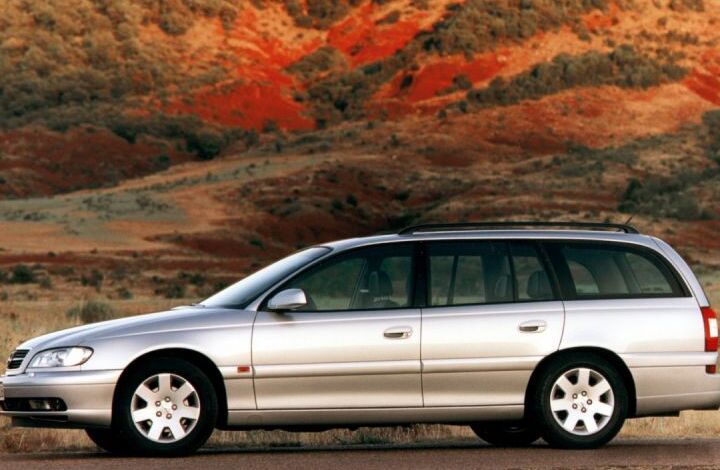
The Opel Omega B Caravan (facelift 1999) 2.2 DTI 16V, producing 120 horsepower, was a station wagon (estate) model produced between October 2000 and June 2003. It represented a key variant within the Omega B range, positioned as a fuel-efficient and practical option for families and those requiring substantial cargo space. The Omega B generation, built on the GM Epsilon platform (internally designated 1HX0/A3), aimed to provide a more refined and modern alternative to its predecessor, the Omega A. The 2.2 DTI 16V model specifically targeted buyers seeking a balance between performance, economy, and load-carrying capability, fitting into the mid-range of the Omega B lineup.
Opel Omega B Caravan 2.2 DTI 16V: An Overview
The facelifted Omega B Caravan, introduced in 1999, featured revised styling cues, improved interior materials, and updated engine options. The 2.2 DTI 16V engine was a significant addition, offering a diesel alternative to the gasoline engines available. This variant was particularly popular in European markets where diesel fuel was more affordable and offered better fuel economy. The Caravan body style, a station wagon, further enhanced the Omega’s practicality, making it a compelling choice for those needing a versatile vehicle.
Powertrain & Engine Architecture
The heart of the Omega B Caravan 2.2 DTI 16V is the Y22DTH engine, a 2.2-liter inline-four cylinder diesel engine. This engine utilizes a direct injection common rail diesel fuel injection system, a technology that significantly improved fuel efficiency and reduced emissions compared to older diesel injection systems. The 16V designation refers to the four valves per cylinder, contributing to improved breathing and power output. The engine produces 120 hp at 4000 rpm and 280 Nm (206.52 lb-ft) of torque at 1500 rpm. This torque curve provides strong low-end and mid-range acceleration, making it well-suited for everyday driving and towing. The engine’s layout is front-mounted and longitudinal, driving the rear wheels.
The engine features an overhead camshaft (OHC) valvetrain. The compression ratio is relatively high at 18.5:1, typical for direct injection diesel engines. Engine oil capacity is 5.5 liters (5.81 US qt / 4.84 UK qt), and the recommended oil specification should be consulted in the vehicle’s owner’s manual. The cooling system requires 7.9 liters (8.35 US qt / 6.95 UK qt) of coolant.
Driving Characteristics
The 2.2 DTI 16V Omega B Caravan offered a comfortable and refined driving experience. While not a performance-oriented model, the 280 Nm of torque provided ample power for overtaking and cruising on highways. Acceleration from 0 to 100 km/h (0-62 mph) takes approximately 13 seconds, and 0 to 60 mph is achieved in around 12.4 seconds. The top speed is rated at 195 km/h (121.17 mph). Compared to the gasoline-powered Omega B variants, the 2.2 DTI 16V offered superior fuel economy and a more relaxed driving style. It differed significantly from higher-performance models like the V6 variants, which prioritized acceleration and handling over fuel efficiency. The five-speed manual transmission, standard on this model, provided precise gear changes and allowed the driver to effectively utilize the engine’s torque.
Equipment & Trim Levels
The Omega B Caravan 2.2 DTI 16V typically came equipped with a reasonable level of standard features. These included power windows, central locking, power steering, and an anti-lock braking system (ABS). Interior upholstery was generally cloth, although leather options were available as upgrades. The dashboard layout was functional and ergonomically designed, with clear instrumentation. Optional extras included air conditioning, a sunroof, upgraded audio systems, and alloy wheels. Trim levels varied depending on the market, but generally offered progressively more features and luxury appointments as you moved up the range.
Chassis & Braking
The Omega B Caravan 2.2 DTI 16V utilized a coil spring suspension system for both the front and rear axles. The front suspension featured ventilated disc brakes, while the rear brakes were also discs. This braking configuration provided adequate stopping power for the vehicle’s weight and performance. The steering system was a hydraulic power-assisted worm-reduction unit, offering a good balance between feel and assistance. The standard tire size was 195/65 R15, mounted on 15-inch wheel rims. The kerb weight of the vehicle is 1730 kg (3814 lbs), and the maximum weight is 2265 kg (4993.47 lbs).
Market Reception & Comparison
The Opel Omega B Caravan 2.2 DTI 16V was generally well-received by automotive critics as a practical and economical station wagon. Its fuel consumption figures of 9.8 l/100 km (24 US mpg / 28.8 UK mpg) urban, 5.8 l/100 km (40.6 US mpg / 48.7 UK mpg) extra-urban, and 7.3 l/100 km (32.2 US mpg / 38.7 UK mpg) combined were considered competitive for its class. Compared to the gasoline-powered Omega B models, the 2.2 DTI 16V offered significantly better fuel economy. Reliability was generally good, although, like all diesel engines, it was susceptible to issues with the fuel injection system and turbocharger if not properly maintained. The Omega B Caravan, in general, faced competition from other large station wagons such as the Ford Mondeo Estate, Volkswagen Passat Variant, and Peugeot 607 SW.
Technical Specifications
| Brand | Opel |
| Model | Omega |
| Generation | Omega B Caravan (facelift 1999) |
| Type (Engine) | 2.2 DTI 16V (120 Hp) |
| Start of production | October, 2000 year |
| End of production | June, 2003 year |
| Fuel consumption (economy) – urban | 9.8 l/100 km (24 US mpg / 28.8 UK mpg) |
| Fuel consumption (economy) – extra urban | 5.8 l/100 km (40.6 US mpg / 48.7 UK mpg) |
| Fuel consumption (economy) – combined | 7.3 l/100 km (32.2 US mpg / 38.7 UK mpg) |
| Fuel Type | Diesel |
| Acceleration 0 – 100 km/h | 13 sec |
| Acceleration 0 – 62 mph | 13 sec |
| Acceleration 0 – 60 mph | 12.4 sec |
| Maximum speed | 195 km/h (121.17 mph) |
| Power | 120 Hp @ 4000 rpm |
| Torque | 280 Nm @ 1500 rpm (206.52 lb.-ft. @ 1500 rpm) |
| Engine layout | Front, Longitudinal |
| Engine Model/Code | Y22DTH |
| Engine displacement | 2171 cm3 (132.48 cu. in.) |
| Number of cylinders | 4 |
| Engine configuration | Inline |
| Cylinder Bore | 84 mm (3.31 in.) |
| Piston Stroke | 98 mm (3.86 in.) |
| Compression ratio | 18.5:1 |
| Number of valves per cylinder | 4 |
| Fuel injection system | Diesel Commonrail |
| Engine aspiration | Turbocharger |
| Valvetrain | OHC |
| Engine oil capacity | 5.5 l (5.81 US qt | 4.84 UK qt) |
| Coolant | 7.9 l (8.35 US qt | 6.95 UK qt) |
| Kerb Weight | 1730 kg (3814 lbs.) |
| Max. weight | 2265 kg (4993.47 lbs.) |
| Max load | 535 kg (1179.47 lbs.) |
| Trunk (boot) space – minimum | 540 l (19.07 cu. ft.) |
| Trunk (boot) space – maximum | 1800 l (63.57 cu. ft.) |
| Fuel tank capacity | 75 l (19.81 US gal | 16.5 UK gal) |
| Length | 4898 mm (192.83 in.) |
| Width | 1776 mm (69.92 in.) |
| Height | 1545 mm (60.83 in.) |
| Wheelbase | 2730 mm (107.48 in.) |
| Drivetrain Architecture | Rear wheel drive |
| Number of gears and type of gearbox | 5 gears, manual transmission |
Legacy
The Opel Omega B Caravan 2.2 DTI 16V, while no longer in production, remains a popular choice among enthusiasts and those seeking a practical and affordable used car. The Y22DTH engine, when properly maintained, is known for its durability and longevity. However, potential buyers should be aware of the common diesel engine issues, such as fuel injector problems and turbocharger wear. Today, these vehicles can be found at relatively low prices, making them an attractive option for those needing a spacious and economical station wagon. The Omega B Caravan, particularly the 2.2 DTI 16V variant, represents a well-engineered and practical vehicle from a bygone era of large, comfortable family cars.