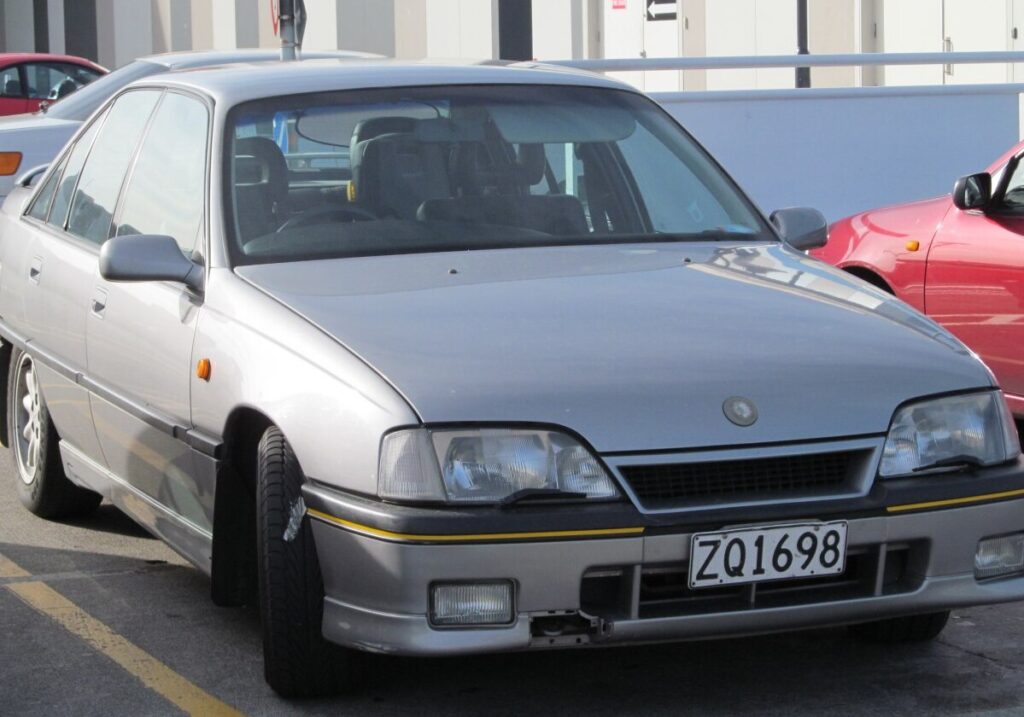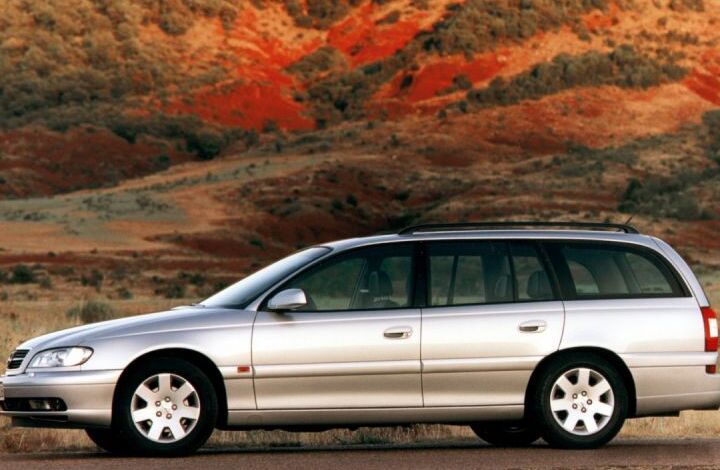
The Opel Omega B Caravan (facelift, introduced in 1999) 2.5 DTI represents a significant offering in the large family car segment produced between July 2001 and June 2003. This variant, powered by a 2.5-liter turbocharged diesel engine producing 150 horsepower, occupied a mid-range position within the Omega B lineup, appealing to buyers seeking a balance of performance, economy, and practicality in a spacious station wagon (estate) body style. It was part of the Omega B generation (1HX0/A3 platform), known for its comfortable ride and generous interior space.
Opel Omega B Caravan 2.5 DTI: An Overview
The Omega B Caravan 2.5 DTI was designed to cater to families and individuals requiring substantial cargo capacity combined with long-distance comfort. The facelifted model, introduced in 1999, featured revised styling cues, including updated headlights, grilles, and interior trim, enhancing its appeal compared to the pre-facelift versions. The 2.5 DTI engine was a key component of this appeal, offering a substantial increase in torque over the gasoline engines while maintaining reasonable fuel efficiency. This model competed with other large European estates like the Ford Mondeo Estate, Volkswagen Passat Variant, and Peugeot 607 SW.
Positioning in the Omega B Lineup
Within the Omega B range, the 2.5 DTI Caravan sat between the lower-powered diesel options (typically the 2.0 DTI) and the higher-specification gasoline models (like the 3.0 V6). It was aimed at buyers who frequently undertook long journeys, often with a full load, and prioritized fuel economy and pulling power over outright acceleration. The 2.5 DTI offered a more refined driving experience than the 2.0 DTI, while remaining more affordable than the V6 variants.
Powertrain & Engine Architecture
The heart of the Omega B Caravan 2.5 DTI is the Y25DT engine, a 2.5-liter inline-six cylinder diesel engine. This engine is characterized by its robust construction and advanced technology for its time. It features a cast iron block and aluminum cylinder head, contributing to its durability. The Y25DT utilizes a common rail direct injection system, delivering fuel directly into the combustion chamber at extremely high pressure. This system, coupled with a variable geometry turbocharger and intercooler, optimizes combustion efficiency and maximizes power output.
Key engine specifications include a compression ratio of 17.5:1 and a displacement of 2497 cm³ (152.38 cubic inches). The engine produces 150 hp at 4000 rpm and a substantial 300 Nm (221.27 lb-ft) of torque at 1750 rpm. The engine employs a double overhead camshaft (DOHC) valvetrain with four valves per cylinder, further enhancing its breathing and performance. Engine oil capacity is 6.5 liters (6.87 US quarts / 5.72 UK quarts), and the recommended oil specification should be consulted in the vehicle’s owner’s manual.
Transmission
While a five-speed manual transmission was available, the 2.5 DTI was often paired with a four-speed automatic transmission. This automatic gearbox was designed to provide smooth and effortless gear changes, complementing the engine’s torque characteristics. The automatic transmission’s gear ratios were optimized for both fuel efficiency and relaxed cruising, making it well-suited for long-distance travel. However, the four-speed automatic was considered by some to be less responsive than the manual option or more modern automatic transmissions.
Driving Characteristics
The Omega B Caravan 2.5 DTI delivers a comfortable and composed driving experience. The engine’s ample torque provides strong acceleration from low speeds, making it easy to overtake and maintain momentum on inclines. While not a sports car, the 2.5 DTI offers sufficient power for confident highway cruising. Acceleration from 0 to 100 km/h (0-62 mph) takes approximately 11 seconds, and the top speed is rated at 200 km/h (124.27 mph). The automatic transmission contributes to a relaxed driving style, although it can sometimes feel sluggish during quick acceleration maneuvers.
The Omega B’s suspension, consisting of coil springs all around, provides a comfortable ride, absorbing bumps and imperfections in the road surface effectively. The steering is light and precise, making it easy to maneuver in urban environments. Overall, the driving experience is geared towards comfort and practicality rather than outright performance.
Equipment & Trim Levels
The Omega B Caravan 2.5 DTI typically came equipped with a reasonable level of standard features. These included central locking, electric windows, power steering, ABS (Anti-lock Braking System), and an integrated stereo system. Interior upholstery was typically cloth, although leather options were available as upgrades. Trim levels varied depending on the market, but generally included options for alloy wheels, climate control, a sunroof, and upgraded audio systems. The Caravan body style, of course, provided a large and versatile cargo area, accessible through a rear tailgate.
Chassis & Braking
The Omega B Caravan 2.5 DTI features a robust chassis designed to handle the weight of the vehicle and its occupants, as well as cargo. The front suspension utilizes coil springs, while the rear suspension also employs coil springs. Braking is provided by ventilated discs on the front wheels and discs on the rear wheels. The ABS system helps to prevent wheel lockup during hard braking, enhancing safety and control. The kerb weight of the vehicle is approximately 1658 kg (3655.26 lbs), and the maximum permissible weight is 2290 kg (5048.59 lbs).
Market Reception & Comparison
The Opel Omega B Caravan 2.5 DTI was generally well-received by automotive critics for its spaciousness, comfort, and fuel efficiency. The 2.5 DTI engine was praised for its strong torque and refined operation. However, some critics noted that the four-speed automatic transmission could feel dated compared to more modern gearboxes. Compared to the gasoline-powered Omega B models, the 2.5 DTI offered significantly better fuel economy, making it a popular choice for high-mileage drivers. In terms of reliability, the Y25DT engine proved to be relatively durable, although regular maintenance was essential to prevent issues with the fuel injection system and turbocharger.
Technical Specifications
| Brand | Opel |
| Model | Omega |
| Generation | Omega B Caravan (facelift 1999) |
| Type (Engine) | 2.5 DTI (150 Hp) |
| Start of production | July, 2001 year |
| End of production | June, 2003 year |
| Fuel consumption (economy) – urban (NEDC) | 10.4 l/100 km (22.6 US mpg / 27.2 UK mpg / 9.6 km/l) |
| Fuel consumption (economy) – extra urban (NEDC) | 6.3 l/100 km (37.3 US mpg / 44.8 UK mpg / 15.9 km/l) |
| Fuel consumption (economy) – combined (NEDC) | 7.8 l/100 km (30.2 US mpg / 36.2 UK mpg / 12.8 km/l) |
| CO2 emissions (NEDC) | 211 g/km |
| Fuel Type | Diesel |
| Acceleration 0 – 100 km/h | 11 sec |
| Acceleration 0 – 62 mph | 11 sec |
| Acceleration 0 – 60 mph | 10.5 sec |
| Maximum speed | 200 km/h (124.27 mph) |
| Emission standard | Euro 3 |
| Weight-to-power ratio | 11.1 kg/Hp |
| Weight-to-torque ratio | 5.5 kg/Nm |
| Power | 150 Hp @ 4000 rpm |
| Torque | 300 Nm @ 1750 rpm (221.27 lb.-ft. @ 1750 rpm) |
| Engine layout | Front, Longitudinal |
| Engine Model/Code | Y25DT |
| Engine displacement | 2497 cm3 (152.38 cu. in.) |
| Number of cylinders | 6 |
| Engine configuration | Inline |
| Cylinder Bore | 80 mm (3.15 in.) |
| Piston Stroke | 82.8 mm (3.26 in.) |
| Compression ratio | 17.5:1 |
| Number of valves per cylinder | 4 |
| Fuel injection system | Diesel Commonrail |
| Engine aspiration | Turbocharger, Intercooler |
| Valvetrain | DOHC |
| Engine oil capacity | 6.5 l (6.87 US qt | 5.72 UK qt) |
| Coolant | 10.2 l (10.78 US qt | 8.97 UK qt) |
| Kerb Weight | 1658 kg (3655.26 lbs.) |
| Max. weight | 2290 kg (5048.59 lbs.) |
| Trunk (boot) space – minimum | 540 l (19.07 cu. ft.) |
| Trunk (boot) space – maximum | 1800 l (63.57 cu. ft.) |
| Fuel tank capacity | 75 l (19.81 US gal | 16.5 UK gal) |
| Length | 4898 mm (192.83 in.) |
| Width | 1776 mm (69.92 in.) |
| Height | 1545 mm (60.83 in.) |
| Wheelbase | 2730 mm (107.48 in.) |
Legacy
The Opel Omega B Caravan 2.5 DTI, while no longer in production, remains a popular choice among enthusiasts and those seeking a practical and reliable estate car. The Y25DT engine, when properly maintained, is known for its longevity and relatively low running costs. In the used car market, these Omegas represent good value for money, offering a spacious interior, comfortable ride, and decent fuel economy. However, potential buyers should be aware of the age-related issues common to older vehicles, such as wear and tear on suspension components and potential problems with the fuel injection system. Despite these considerations, the Omega B Caravan 2.5 DTI continues to hold a loyal following, appreciated for its blend of practicality, comfort, and durability.