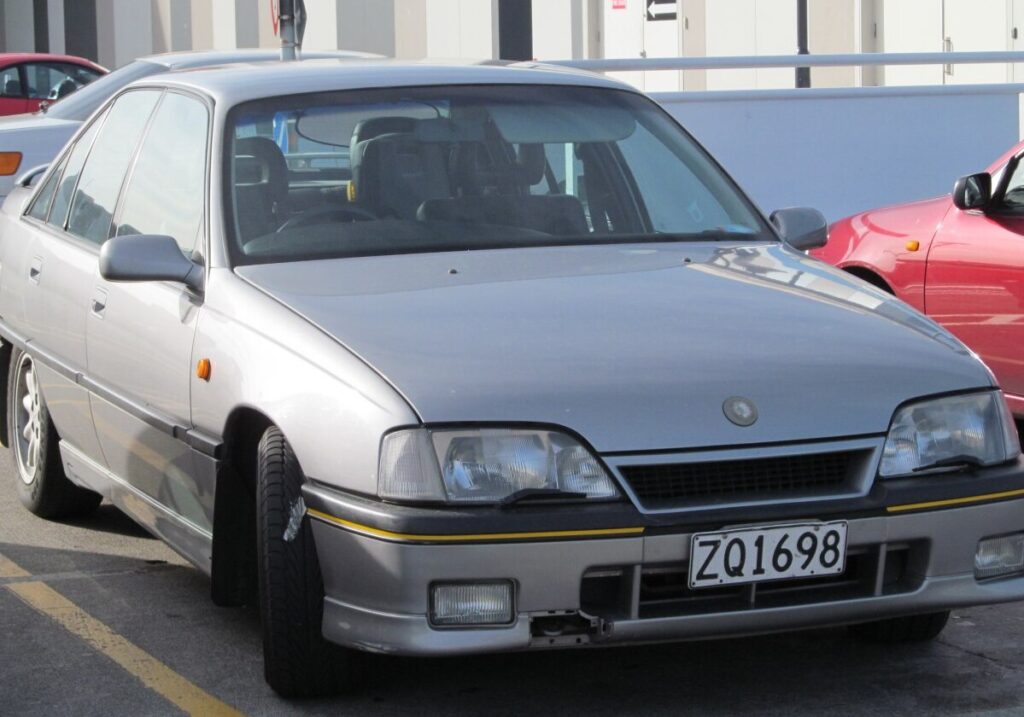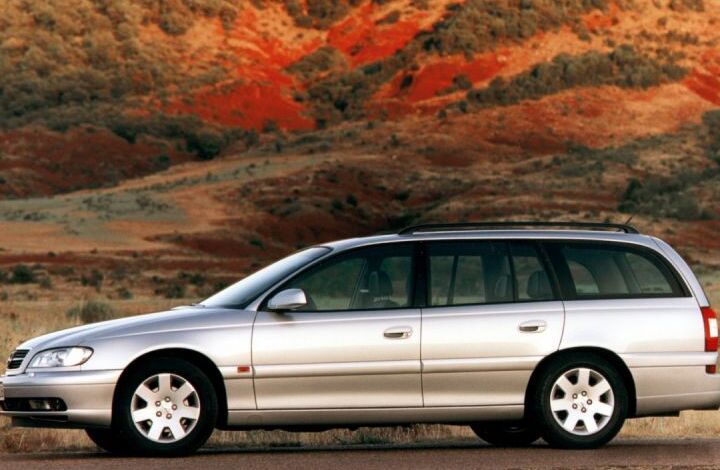
The Opel Omega B Caravan (facelift, 1999) 2.5 TD Automatic was a station wagon produced between October 1999 and November 2000. Representing a refined iteration of the Omega B series, this variant offered a blend of practicality, comfort, and diesel-fueled performance. It occupied a mid-to-upper position within the Omega B Caravan lineup, appealing to buyers seeking a spacious, well-equipped vehicle for long-distance travel and family use. The Omega B series, built on the GM Epsilon platform (internally designated 1HX0/A3), was Opel’s flagship model, intended to compete with executive cars from BMW, Mercedes-Benz, and Audi.
Opel Omega B Caravan 2.5 TD Automatic: An Overview
The facelifted Omega B Caravan, introduced in 1999, featured subtle but significant cosmetic and mechanical updates compared to the pre-facelift models. These changes included revised front and rear styling, improved interior materials, and enhancements to the engine range. The 2.5 TD Automatic model was a key component of this revised lineup, offering a diesel engine option paired with the convenience of an automatic transmission. This combination aimed to provide a balance between fuel efficiency, torque for towing and carrying loads, and ease of driving.
Powertrain & Engine Architecture
At the heart of the Omega B Caravan 2.5 TD Automatic lies the X25DT inline-six cylinder diesel engine. This 2.5-liter (2497 cm3 or 152.38 cu. in.) engine produced 131 horsepower (Hp) at 4500 rpm and 250 Nm (184.39 lb.-ft.) of torque at 2200 rpm. The engine employed precombustion chamber injection, a system common in European diesel engines of the era, which contributed to relatively quiet operation and good combustion efficiency. The bore and stroke measured 80 mm (3.15 in.) and 82.8 mm (3.26 in.) respectively, with a compression ratio of 22:1. The engine featured a double overhead camshaft (DOHC) valvetrain with two valves per cylinder.
The X25DT engine was turbocharged and intercooled, enhancing power output and reducing exhaust emissions. The turbocharger provided increased air intake to the engine, while the intercooler cooled the compressed air, further improving combustion efficiency. The engine oil capacity was 6.5 liters (6.87 US qt | 5.72 UK qt), and the recommended oil specification was specific to Opel/Vauxhall diesel engines of the period. The cooling system held 10.2 liters (10.78 US qt | 8.97 UK qt) of coolant.
The engine was mated to a four-speed automatic transmission. While not the most modern transmission by today’s standards, it provided smooth and convenient gear changes, particularly suited for long journeys. The transmission was electronically controlled, optimizing shift points based on engine load and vehicle speed.
Driving Characteristics
The Omega B Caravan 2.5 TD Automatic offered a comfortable and relaxed driving experience. The 2.5-liter diesel engine delivered ample torque, making it well-suited for hauling passengers and cargo. Acceleration from 0 to 100 km/h (0-62 mph) took approximately 13.5 seconds, while 0 to 60 mph was achieved in around 12.8 seconds. The top speed was rated at 190 km/h (118.06 mph). While not a sports car, the Omega B Caravan provided sufficient power for overtaking maneuvers and maintaining comfortable cruising speeds on highways.
The automatic transmission, while offering convenience, did result in some power loss compared to the manual transmission versions of the same engine. The four-speed configuration meant that the engine often operated at higher rpm during highway cruising, potentially impacting fuel economy. However, the smooth gear changes and ease of use made it a popular choice for drivers prioritizing comfort over outright performance. The weight-to-power ratio of 12.7 kg/Hp and weight-to-torque ratio of 6.7 kg/Nm reflected the vehicle’s substantial weight and the engine’s torque output.
Equipment & Trim Levels
The Omega B Caravan 2.5 TD Automatic typically came equipped with a generous level of standard features. These included power windows, central locking, power steering, an anti-lock braking system (ABS), and a basic audio system. Interior upholstery was typically cloth, although leather options were available as upgrades. The dashboard layout was functional and ergonomically designed, with clear instrumentation and easy-to-reach controls.
Optional extras included a sunroof, upgraded audio systems, climate control, heated seats, and alloy wheels. Higher trim levels, such as the Elegance or GLS, offered more luxurious appointments and additional features as standard. The spacious interior and large cargo area (540 liters minimum, 1800 liters maximum) made the Omega B Caravan a practical choice for families and those requiring ample carrying capacity.
Chassis & Braking
The Omega B Caravan featured a robust chassis and suspension system designed to provide a comfortable ride and stable handling. The front suspension utilized coil springs, while the rear suspension also employed coil springs. The front brakes were ventilated discs, providing good stopping power, while the rear brakes were discs. The steering system was a worm-reduction unit with hydraulic power assistance, offering precise and responsive steering feel.
The vehicle rode on 205/65 R15 tires mounted on 6.5J x 15 inch wheel rims. The suspension was tuned to prioritize ride comfort, absorbing bumps and imperfections in the road surface effectively. However, this did result in some body roll during cornering. The ABS system helped to maintain steering control during emergency braking situations.
Market Reception & Comparison
The Opel Omega B Caravan 2.5 TD Automatic received generally positive reviews from automotive critics. It was praised for its spacious interior, comfortable ride, and fuel-efficient diesel engine. However, some critics noted that the automatic transmission could feel sluggish at times, and the handling was not as sharp as some of its competitors. Fuel consumption was rated at 12.6 l/100 km (18.7 US mpg, 22.4 UK mpg, 7.9 km/l) in urban conditions and 7.2 l/100 km (32.7 US mpg, 39.2 UK mpg, 13.9 km/l) on the extra-urban cycle.
Compared to other trims in the Omega B lineup, the 2.5 TD Automatic offered a balance between performance and economy. The gasoline-powered versions, such as the 2.6 V6, provided more power but were less fuel-efficient. The 2.0 16V offered a more economical gasoline option, but lacked the torque of the diesel. The 1.9 TDI, while offering similar fuel economy, had less power than the 2.5 TD.
Technical Specifications
| Brand | Opel |
| Model | Omega |
| Generation | Omega B Caravan (facelift 1999) |
| Type (Engine) | 2.5 TD (131 Hp) Automatic |
| Start of production | October, 1999 |
| End of production | November, 2000 |
| Powertrain Architecture | Internal Combustion engine |
| Body type | Station wagon (estate) |
| Seats | 5 |
| Doors | 5 |
| Fuel consumption (urban) | 12.6 l/100 km (18.7 US mpg, 22.4 UK mpg) |
| Fuel consumption (extra urban) | 7.2 l/100 km (32.7 US mpg, 39.2 UK mpg) |
| Fuel Type | Diesel |
| Acceleration 0 – 100 km/h | 13.5 sec |
| Acceleration 0 – 62 mph | 13.5 sec |
| Acceleration 0 – 60 mph | 12.8 sec |
| Maximum speed | 190 km/h (118.06 mph) |
| Power | 131 Hp @ 4500 rpm |
| Torque | 250 Nm @ 2200 rpm (184.39 lb.-ft. @ 2200 rpm) |
| Engine layout | Front, Longitudinal |
| Engine Model/Code | X25DT |
| Engine displacement | 2497 cm3 (152.38 cu. in.) |
| Number of cylinders | 6 |
| Engine configuration | Inline |
| Cylinder Bore | 80 mm (3.15 in.) |
| Piston Stroke | 82.8 mm (3.26 in.) |
| Compression ratio | 22:1 |
| Number of valves per cylinder | 2 |
| Fuel injection system | Precombustion chamber injection |
| Engine aspiration | Turbocharger, Intercooler |
| Valvetrain | DOHC |
| Engine oil capacity | 6.5 l (6.87 US qt | 5.72 UK qt) |
| Coolant | 10.2 l (10.78 US qt | 8.97 UK qt) |
| Kerb Weight | 1665 kg (3670.7 lbs.) |
| Max. weight | 2280 kg (5026.54 lbs.) |
| Trunk (boot) space – minimum | 540 l (19.07 cu. ft.) |
| Trunk (boot) space – maximum | 1800 l (63.57 cu. ft.) |
| Fuel tank capacity | 75 l (19.81 US gal | 16.5 UK gal) |
| Length | 4898 mm (192.83 in.) |
| Width | 1776 mm (69.92 in.) |
| Height | 1540 mm (60.63 in.) |
| Wheelbase | 2730 mm (107.48 in.) |
| Drive wheel | Rear wheel drive |
| Number of gears and type of gearbox | 4 gears, automatic transmission |
Legacy
The Opel Omega B Caravan 2.5 TD Automatic, while no longer in production, remains a popular choice among enthusiasts and those seeking a practical and reliable estate car. The X25DT engine, when properly maintained, is known for its durability and longevity. However, like all older diesel engines, it can be susceptible to issues such as injector problems and turbocharger wear. The automatic transmission, while generally reliable, may require servicing or rebuilding after high mileage. Today, well-maintained examples of the Omega B Caravan 2.5 TD Automatic can be found on the used car market, offering a unique blend of classic styling, spaciousness, and diesel-fueled economy.