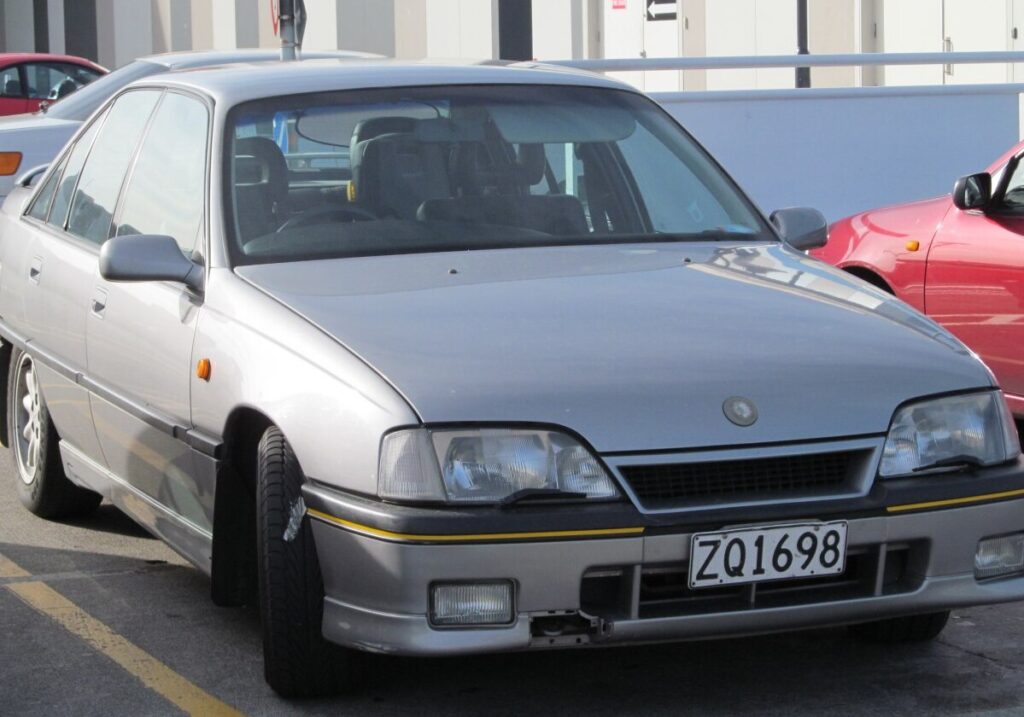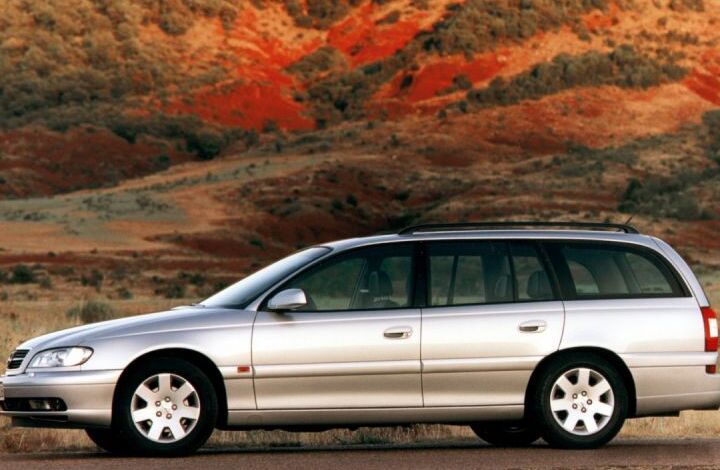
The Opel Omega B Caravan (facelift, 1999) 2.5i V6 represents a high-performance variant within the second generation (Omega B) of Opel’s flagship executive car. Produced briefly between October 1999 and February 2000, this model combined a potent V6 engine with the practicality of a station wagon (estate) body style. The Omega B, built on the GM Epsilon platform (internally designated as 1HX0/A3), aimed to compete with established European executive cars like the Ford Mondeo, BMW 5 Series, and Audi A6. The 2.5i V6 facelifted Caravan occupied the premium end of the Omega B range, offering a blend of performance, space, and comfort for discerning buyers.
The 2.5i V6: Positioning and Overview
The 2.5i V6 Caravan was positioned as the top-tier engine option within the Omega B Caravan lineup during its short production run. Below it were various four-cylinder gasoline and diesel engines, including 1.8L, 2.0L, and 2.2L variants, as well as a 2.5 TDI diesel. The V6 offered a significant performance upgrade over these lower-spec models, appealing to drivers who prioritized power and refinement. While the 2.5 TDI provided strong torque and fuel economy, the V6 delivered a smoother, more responsive driving experience. The facelifted model (introduced in 1999) featured revised styling cues, including updated headlights, grille, and interior trim, enhancing its visual appeal and perceived quality.
Powertrain & Engine Architecture
At the heart of the 2.5i V6 Caravan lies the X25XE engine, a 60-degree V6 displacing 2498 cc (152.44 cubic inches). This engine is a naturally aspirated, internally combustion engine featuring a dual overhead camshaft (DOHC) valvetrain with four valves per cylinder. The X25XE utilizes multi-port fuel injection, delivering fuel directly into the intake ports for optimized combustion. Bore and stroke dimensions are 81.6 mm (3.21 inches) and 79.6 mm (3.13 inches) respectively, with a compression ratio of 10.8:1. The engine produces 170 hp (127 kW) at 5800 rpm and 230 Nm (169.64 lb-ft) of torque at 3200 rpm. The engine oil capacity is 5.75 liters (6.08 US quarts / 5.06 UK quarts) and requires a specification adhering to Opel’s standards. The cooling system holds 9.7 liters (10.25 US quarts / 8.53 UK quarts) of coolant.
The 2.5i V6 was paired with a 5-speed manual transmission as standard. While an automatic transmission was available on other Omega B models, it was not offered with the 2.5i V6 during this specific facelifted production period. This decision likely stemmed from a desire to maximize performance and driver engagement with the more powerful engine. The drivetrain is rear-wheel drive, contributing to the car’s balanced handling characteristics.
Driving Characteristics
The 2.5i V6 Caravan offered a noticeably more spirited driving experience compared to its four-cylinder counterparts. Acceleration from 0 to 100 km/h (0-62 mph) took approximately 10 seconds, while the 0-60 mph sprint was achieved in around 9.5 seconds. Top speed was electronically limited to 220 km/h (136.7 mph). The V6 engine delivered smooth, linear power throughout the rev range, making it well-suited for both relaxed cruising and more enthusiastic driving. The rear-wheel-drive configuration provided a balanced feel, although it required careful throttle control in slippery conditions. The 5-speed manual transmission allowed drivers to fully exploit the engine’s power, offering precise gear changes and a direct connection to the drivetrain. The weight-to-power ratio of 9.7 kg/hp and weight-to-torque ratio of 7.2 kg/Nm contributed to the car’s responsive feel.
Equipment & Trim Levels
The 2.5i V6 Caravan was generously equipped, reflecting its position as the range-topping model. Standard features typically included power windows, central locking, power steering, ABS (Anti-lock Braking System), and a driver’s airbag. Higher trim levels added features such as leather upholstery, climate control, a premium sound system, and alloy wheels. The interior design featured a functional and ergonomically designed dashboard, with clear instrumentation and user-friendly controls. The Caravan’s spacious interior offered ample headroom and legroom for all occupants. The rear seats could be folded down to create a large, flat load area, maximizing cargo capacity. The trunk offered 540 liters (19.07 cubic feet) of space with the rear seats up, expanding to 1800 liters (63.57 cubic feet) with the seats folded.
Chassis & Braking
The Omega B Caravan featured a robust chassis with coil spring suspension at both the front and rear. The suspension was tuned to provide a comfortable ride while maintaining good handling characteristics. The front suspension utilized independent coil springs and MacPherson struts, while the rear suspension employed a multi-link setup. Braking duties were handled by disc brakes on all four wheels, providing ample stopping power. The ABS system helped to prevent wheel lockup during hard braking, enhancing stability and control. The steering system was a hydraulic power-assisted worm-reduction unit, offering precise and responsive steering feel. The standard tire size was 205/65 R15, mounted on 6J x 15 inch wheel rims.
Market Reception & Comparison
The Opel Omega B Caravan 2.5i V6 was generally well-received by automotive critics, who praised its powerful engine, spacious interior, and comfortable ride. However, some reviewers noted that the car’s size and weight could make it feel cumbersome in tight corners. Compared to its rivals, the Omega B Caravan offered a compelling combination of performance, practicality, and value. The BMW 5 Series and Audi A6 were often considered more prestigious, but they also came with a higher price tag. The Ford Mondeo offered a more affordable alternative, but it lacked the Omega B’s refinement and power. The 2.5i V6’s fuel consumption was relatively high, averaging 15.3 l/100 km (15.4 US mpg / 18.5 UK mpg) in urban driving and 8.3 l/100 km (28.3 US mpg / 34 UK mpg) on the extra-urban cycle.
Technical Specifications
| Brand | Opel |
| Model | Omega |
| Generation | Omega B Caravan (facelift 1999) |
| Type (Engine) | 2.5i V6 (170 Hp) |
| Start of production | October, 1999 |
| End of production | February, 2000 |
| Powertrain Architecture | Internal Combustion engine |
| Body type | Station wagon (estate) |
| Seats | 5 |
| Doors | 5 |
| Fuel consumption (urban) | 15.3 l/100 km (15.4 US mpg / 18.5 UK mpg) |
| Fuel consumption (extra urban) | 8.3 l/100 km (28.3 US mpg / 34 UK mpg) |
| Fuel Type | Petrol (Gasoline) |
| Acceleration 0 – 100 km/h | 10 sec |
| Acceleration 0 – 62 mph | 10 sec |
| Acceleration 0 – 60 mph | 9.5 sec |
| Maximum speed | 220 km/h (136.7 mph) |
| Weight-to-power ratio | 9.7 kg/Hp |
| Weight-to-torque ratio | 7.2 kg/Nm |
| Power | 170 Hp @ 5800 rpm |
| Torque | 230 Nm @ 3200 rpm (169.64 lb.-ft. @ 3200 rpm) |
| Engine layout | Front, Longitudinal |
| Engine Model/Code | X25XE |
| Engine displacement | 2498 cm3 (152.44 cu. in.) |
| Number of cylinders | 6 |
| Engine configuration | V-engine |
| Cylinder Bore | 81.6 mm (3.21 in.) |
| Piston Stroke | 79.6 mm (3.13 in.) |
| Compression ratio | 10.8:1 |
| Number of valves per cylinder | 4 |
| Fuel injection system | Multi-port manifold injection |
| Engine aspiration | Naturally aspirated engine |
| Valvetrain | DOHC |
| Engine oil capacity | 5.75 l (6.08 US qt | 5.06 UK qt) |
| Coolant | 9.7 l (10.25 US qt | 8.53 UK qt) |
| Kerb Weight | 1645 kg (3626.6 lbs.) |
| Max. weight | 2280 kg (5026.54 lbs.) |
| Max load | 635 kg (1399.94 lbs.) |
| Trunk (boot) space – minimum | 540 l (19.07 cu. ft.) |
| Trunk (boot) space – maximum | 1800 l (63.57 cu. ft.) |
| Fuel tank capacity | 75 l (19.81 US gal | 16.5 UK gal) |
| Length | 4898 mm (192.83 in.) |
| Width | 1776 mm (69.92 in.) |
| Height | 1540 mm (60.63 in.) |
| Wheelbase | 2730 mm (107.48 in.) |
| Front track | 1510 mm (59.45 in.) |
| Rear (Back) track | 1530 mm (60.24 in.) |
| Drivetrain Architecture | Rear wheel drive |
| Number of gears and type of gearbox | 5 gears, manual transmission |
Legacy
The Opel Omega B Caravan 2.5i V6, despite its short production run, remains a sought-after model among enthusiasts. The X25XE engine is known for its reliability and durability, provided it receives regular maintenance. The engine’s relatively simple design, compared to later, more complex engines, contributes to its longevity. Today, well-maintained examples of the 2.5i V6 Caravan are becoming increasingly rare, commanding a premium in the used car market. Its combination of performance, practicality, and classic Opel styling ensures its continued appeal to collectors and drivers who appreciate a distinctive and capable executive car.