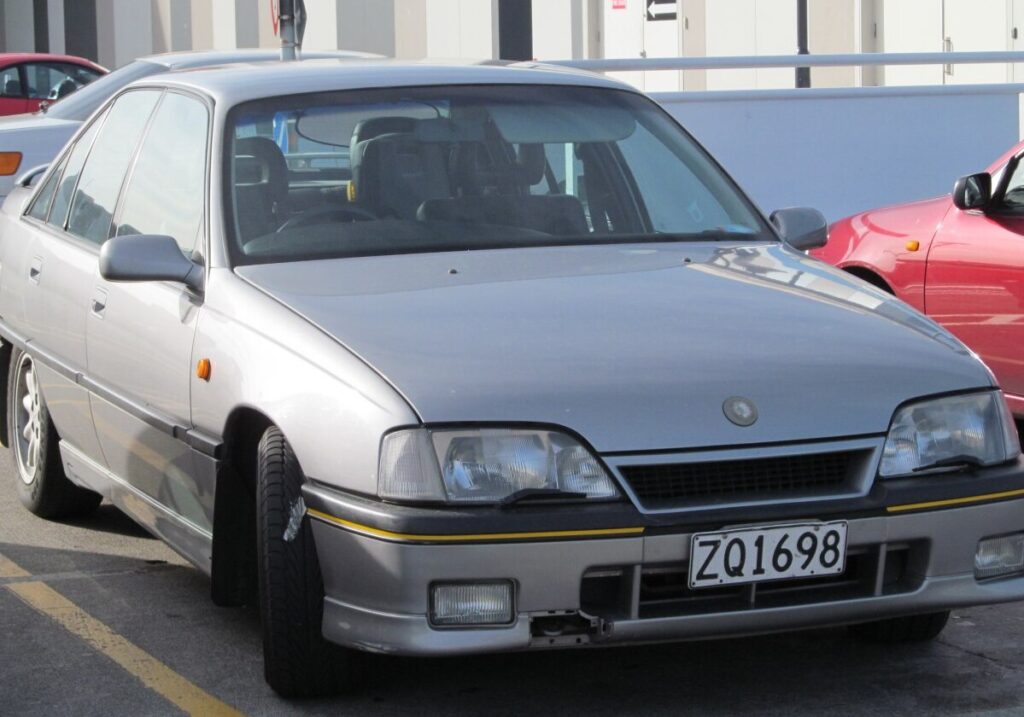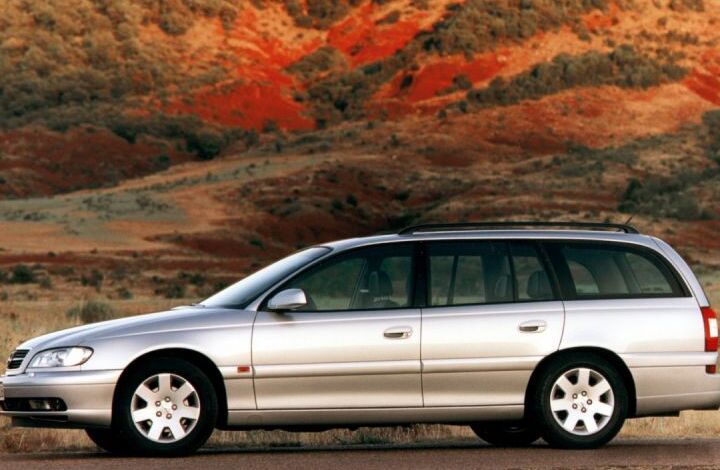
The Opel Omega B Caravan (facelift, 1999) 2.5i V6 Automatic was a premium station wagon produced by Opel between October 1999 and February 2000. Representing the final iteration of the Omega B series before its discontinuation, this variant occupied the upper echelon of the Omega lineup, offering a blend of performance, comfort, and practicality. It was built on the GM Epsilon platform (internally designated 1HX0/A3), shared with other vehicles like the Saab 9-5 and Vectra C. The facelift brought subtle styling revisions and refinements to the already well-regarded Omega B, solidifying its position as a spacious and capable family vehicle.
Opel Omega B Caravan 2.5i V6 Automatic: An Overview
The 2.5i V6 Automatic model was positioned as a luxury offering within the Omega B Caravan range. While the Omega B was available with a variety of engines, including four-cylinder and diesel options, the 2.5-liter V6 represented a significant step up in terms of power and refinement. The automatic transmission further enhanced the car’s appeal to buyers seeking a comfortable and effortless driving experience. This trim level was aimed at families and individuals who prioritized space, comfort, and a degree of performance over outright economy.
Powertrain & Engine Architecture
At the heart of the 2.5i V6 Automatic lay the X25XE engine, a 2.5-liter (2498 cm3 or 152.44 cu. in.) naturally aspirated V6. This engine featured a 60-degree V-angle, contributing to its smooth operation and relatively compact size. It boasted a bore of 81.6 mm (3.21 in.) and a stroke of 79.6 mm (3.13 in.), with a compression ratio of 10.8:1. The engine utilized a dual overhead camshaft (DOHC) valvetrain with four valves per cylinder, optimizing airflow for improved power output. Fuel delivery was managed by a multi-port manifold injection system, ensuring precise fuel metering. The X25XE produced 170 hp (127 kW) at 5800 rpm and 230 Nm (169.64 lb.-ft.) of torque at 3200 rpm. The engine oil capacity was 5.75 liters (6.08 US qt | 5.06 UK qt) and required a specific oil specification (details typically found in the owner’s manual).
The engine was paired with a four-speed automatic transmission. While not the most modern transmission by contemporary standards, it provided smooth and reliable gear changes, complementing the V6 engine’s characteristics. The transmission was designed to deliver a balance of performance and fuel efficiency, with gear ratios optimized for both cruising and acceleration. Specific gear ratios were not widely published but were geared towards comfortable highway driving.
Driving Characteristics
The Omega B Caravan 2.5i V6 Automatic offered a refined and comfortable driving experience. The V6 engine provided ample power for everyday driving and overtaking maneuvers, with a 0-100 km/h (0-62 mph) acceleration time of approximately 11 seconds. While not a sports car, the combination of the V6 engine and automatic transmission delivered a respectable level of performance. The rear-wheel-drive configuration contributed to balanced handling, although it wasn’t as agile as front-wheel-drive alternatives. The automatic transmission, while smooth, did result in some power loss compared to the available manual transmission options. The car’s weight of 1645 kg (3626.6 lbs) was noticeable, but the V6 engine provided sufficient torque to overcome this.
Equipment & Trim Levels
The 2.5i V6 Automatic trim level typically included a generous array of standard features. These commonly included power windows, power door locks, central locking, air conditioning, and an upgraded audio system. Interior upholstery was typically cloth or leather, with higher-spec models offering full leather interiors. The dashboard featured a conventional layout with clear instrumentation. Optional extras available for this trim level often included a sunroof, heated seats, automatic climate control, and upgraded alloy wheels. Safety features such as ABS (Anti-lock Braking System) were standard.
Chassis & Braking
The Omega B Caravan featured a robust chassis with coil spring suspension at both the front and rear. The suspension was tuned for comfort, providing a smooth ride over a variety of road surfaces. The front suspension utilized independent coil springs, while the rear suspension employed a semi-independent coil spring setup. Braking duties were handled by disc brakes on all four wheels, providing adequate stopping power. The ABS system further enhanced braking performance by preventing wheel lockup. Steering was hydraulic power-assisted, offering light and precise control. The car rode on 205/65 R15 tires mounted on 6J x 15 inch wheel rims.
Market Reception & Comparison
The Opel Omega B Caravan 2.5i V6 Automatic was generally well-received by automotive critics. It was praised for its spacious interior, comfortable ride, and refined engine. However, some critics noted that the automatic transmission could feel somewhat dated compared to newer transmissions with more gears. Fuel economy was also a point of concern, with combined fuel consumption averaging around 12.6 l/100 km (20 US mpg / 22.4 UK mpg). Compared to the four-cylinder Omega models, the 2.5i V6 offered significantly more power and refinement, but at the cost of increased fuel consumption and a higher purchase price. Compared to the diesel variants, the V6 provided a smoother and quieter driving experience, but lacked the diesel’s fuel efficiency. The Omega B Caravan, in general, competed with other large station wagons such as the Ford Mondeo Estate, Volvo V70, and Audi A6 Avant.
Technical Specifications
| Engine Model/Code | X25XE |
| Engine Displacement | 2498 cm3 (152.44 cu. in.) |
| Number of Cylinders | 6 |
| Engine Configuration | V-engine |
| Cylinder Bore | 81.6 mm (3.21 in.) |
| Piston Stroke | 79.6 mm (3.13 in.) |
| Compression Ratio | 10.8:1 |
| Power | 170 hp @ 5800 rpm |
| Torque | 230 Nm @ 3200 rpm (169.64 lb.-ft. @ 3200 rpm) |
| Fuel Type | Petrol (Gasoline) |
| Fuel Consumption (Urban) | 16.7 l/100 km (14.1 US mpg / 16.9 UK mpg) |
| Fuel Consumption (Extra Urban) | 8.6 l/100 km (27.4 US mpg / 32.8 UK mpg) |
| Acceleration 0-100 km/h | 11 sec |
| Acceleration 0-62 mph | 11 sec |
| Maximum Speed | 212 km/h (131.73 mph) |
| Kerb Weight | 1645 kg (3626.6 lbs.) |
| Max. Weight | 2280 kg (5026.54 lbs.) |
| Fuel Tank Capacity | 75 l (19.81 US gal | 16.5 UK gal) |
| Trunk (Boot) Space (Minimum) | 540 l (19.07 cu. ft.) |
| Trunk (Boot) Space (Maximum) | 1800 l (63.57 cu. ft.) |
| Transmission | 4-speed Automatic |
Legacy
The Opel Omega B Caravan 2.5i V6 Automatic, while short-lived in its facelifted form, remains a desirable classic car for enthusiasts. The X25XE engine is known for its reliability when properly maintained, although regular servicing is essential. The automatic transmission, while not the most advanced, is generally durable. Today, these cars are relatively affordable on the used car market, offering a spacious and comfortable driving experience for those seeking a classic European station wagon. Parts availability can be a challenge, but a dedicated community of Omega owners and specialists exists to provide support and assistance. The Omega B Caravan 2.5i V6 Automatic represents a high point in Opel’s station wagon history, offering a compelling combination of performance, practicality, and comfort.