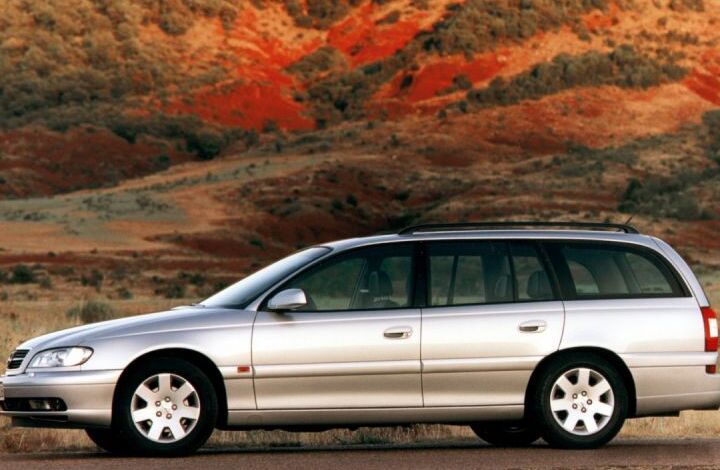
The Opel Omega B Caravan (facelift, 1999) 2.6 V6, produced from 2002 to June 2003, represented a premium offering within the Omega B range. This variant, a large family estate car, was positioned as a comfortable and capable long-distance cruiser, appealing to buyers prioritizing space, refinement, and a more powerful engine. It was part of the Omega B generation (1HX0/A3 platform), which aimed to elevate Opel’s presence in the executive car segment. The facelift brought styling updates and refinements to the already well-regarded Omega B.
Opel Omega B Caravan 2.6 V6: An Overview
The 2.6 V6 Caravan was not an entry-level model. It sat above the four-cylinder variants in terms of price and performance, offering a significant step up in power and driving experience. While not as overtly sporty as some competitors, it provided a compelling blend of practicality and performance for families and individuals needing a spacious and comfortable vehicle. The Omega B, in general, was Opel’s flagship model, intended to compete with cars like the Ford Mondeo, Volkswagen Passat, and BMW 5 Series.
Powertrain & Engine Architecture
At the heart of the 2.6 V6 Caravan lies the Y26SE engine, a 2.6-liter (2597 cm3 or 158.48 cu. in.) naturally aspirated V6. This engine produced 180 hp (134 kW) at 6000 rpm and 240 Nm (177.01 lb-ft) of torque at 3400 rpm. The engine featured a 60-degree V-angle, contributing to its smooth operation. It employed multi-port fuel injection and a double overhead camshaft (DOHC) valvetrain with four valves per cylinder. The compression ratio was 10:1. The engine was mounted longitudinally in the front of the vehicle.
The Omega B Caravan 2.6 V6 was exclusively offered with a 5-speed manual transmission. This transmission was chosen to handle the increased power output of the V6 engine and provide a more engaging driving experience. The gearbox was robustly built, designed for durability and smooth shifting. The rear-wheel drive configuration, typical of larger Opel models, contributed to balanced handling characteristics.
Driving Characteristics
The 2.6 V6 engine delivered a noticeable performance improvement over the four-cylinder options. Acceleration from 0 to 100 km/h (0-62 mph) took approximately 10 seconds, while 0-60 mph was achieved in around 9.5 seconds. The maximum speed was rated at 221 km/h (137.32 mph). The V6 engine provided strong mid-range torque, making it well-suited for overtaking and cruising on highways. While not a sports car, the Omega B Caravan 2.6 V6 offered a refined and effortless driving experience.
The rear-wheel drive layout provided a balanced feel, although it wasn’t as nimble as front-wheel drive cars. The 5-speed manual transmission allowed drivers to fully utilize the engine’s power band. The gear ratios were well-chosen for both everyday driving and longer journeys. Compared to the lower-powered Omega models, the V6 offered a more relaxed and confident driving experience, particularly when fully loaded with passengers and luggage.
Equipment & Trim Levels
The 2.6 V6 Caravan typically came with a higher level of standard equipment than the base Omega models. Standard features often included air conditioning, power windows, central locking, an upgraded audio system, and alloy wheels. Interior upholstery was typically cloth or a combination of cloth and leather. The dashboard featured a comprehensive instrument cluster with clear gauges and controls. Optional extras included leather upholstery, a sunroof, heated seats, and a more advanced audio system with a CD changer.
The facelifted Omega B Caravan (1999 onwards) featured subtle interior revisions, including updated switchgear and improved trim materials. The overall interior design emphasized comfort and practicality, with ample space for passengers and luggage. The Caravan’s defining feature was its large cargo area, offering up to 1800 liters (63.57 cu. ft.) of space with the rear seats folded down.
Chassis & Braking
The Omega B Caravan 2.6 V6 utilized a coil spring suspension system at both the front and rear. The suspension was tuned for comfort, providing a smooth and controlled ride. The front suspension featured independent geometry, while the rear suspension used a semi-independent setup. The car was equipped with ventilated disc brakes on all four wheels, providing ample stopping power. An Anti-lock Braking System (ABS) was standard, enhancing safety and stability during braking.
The steering system was a hydraulic power steering setup, offering a good balance of assistance and feedback. Tire size was typically 205/65 R15, mounted on 15-inch alloy wheels. The chassis was designed to provide a stable and secure platform, even when carrying a full load. The weight distribution was carefully optimized to enhance handling characteristics.
Market Reception & Comparison
The Opel Omega B Caravan 2.6 V6 received generally positive reviews from automotive critics. It was praised for its spacious interior, comfortable ride, and powerful engine. However, some critics noted that the car lacked the sporty handling of some of its competitors. Fuel economy was also a concern, with combined fuel consumption figures of around 10.9 l/100 km (21.6 US mpg).
Compared to the four-cylinder Omega models, the 2.6 V6 offered a significant performance advantage. However, it came at a higher price and with slightly increased fuel consumption. Compared to other cars in its class, such as the Ford Mondeo and Volkswagen Passat, the Omega B Caravan 2.6 V6 offered a compelling combination of space, comfort, and performance. It was often seen as a more refined and luxurious alternative to some of its rivals.
Technical Specifications
| Brand | Opel |
| Model | Omega |
| Generation | Omega B Caravan (facelift 1999) |
| Type (Engine) | 2.6 V6 (180 Hp) |
| Start of production | 2002 year |
| End of production | June, 2003 year |
| Fuel consumption (urban) | 15 l/100 km (15.7 US mpg) |
| Fuel consumption (extra urban) | 8.5 l/100 km (27.7 US mpg) |
| Fuel consumption (combined) | 10.9 l/100 km (21.6 US mpg) |
| Fuel Type | Petrol (Gasoline) |
| Acceleration 0 – 100 km/h | 10 sec |
| Acceleration 0 – 62 mph | 10 sec |
| Acceleration 0 – 60 mph | 9.5 sec |
| Maximum speed | 221 km/h (137.32 mph) |
| Power | 180 Hp @ 6000 rpm |
| Torque | 240 Nm @ 3400 rpm (177.01 lb.-ft. @ 3400 rpm) |
| Engine layout | Front, Longitudinal |
| Engine Model/Code | Y26SE |
| Engine displacement | 2597 cm3 (158.48 cu. in.) |
| Number of cylinders | 6 |
| Engine configuration | V-engine |
| Cylinder Bore | 83.2 mm (3.28 in.) |
| Piston Stroke | 79.6 mm (3.13 in.) |
| Compression ratio | 10:1 |
| Engine oil capacity | 5.75 l (6.08 US qt | 5.06 UK qt) |
| Kerb Weight | 1733 kg (3820.61 lbs.) |
| Max. weight | 2290 kg (5048.59 lbs.) |
| Trunk (boot) space – minimum | 540 l (19.07 cu. ft.) |
| Trunk (boot) space – maximum | 1800 l (63.57 cu. ft.) |
| Fuel tank capacity | 75 l (19.81 US gal | 16.5 UK gal) |
| Length | 4898 mm (192.83 in.) |
| Width | 1776 mm (69.92 in.) |
| Height | 1540 mm (60.63 in.) |
| Wheelbase | 2730 mm (107.48 in.) |
| Number of gears and type of gearbox | 5 gears, manual transmission |
Legacy
The Opel Omega B Caravan 2.6 V6, while not a high-volume seller, has gained a following among enthusiasts who appreciate its spaciousness, comfort, and smooth V6 engine. The Y26SE engine is generally considered to be a reliable unit, although regular maintenance is essential. Today, these cars are relatively affordable on the used market, making them an attractive option for those seeking a large, comfortable estate car. However, potential buyers should be aware of the age-related issues common to older vehicles, such as corrosion and wear and tear on suspension components. Parts availability can be a challenge in some regions, but a dedicated network of Opel enthusiasts and specialists exists to support owners.