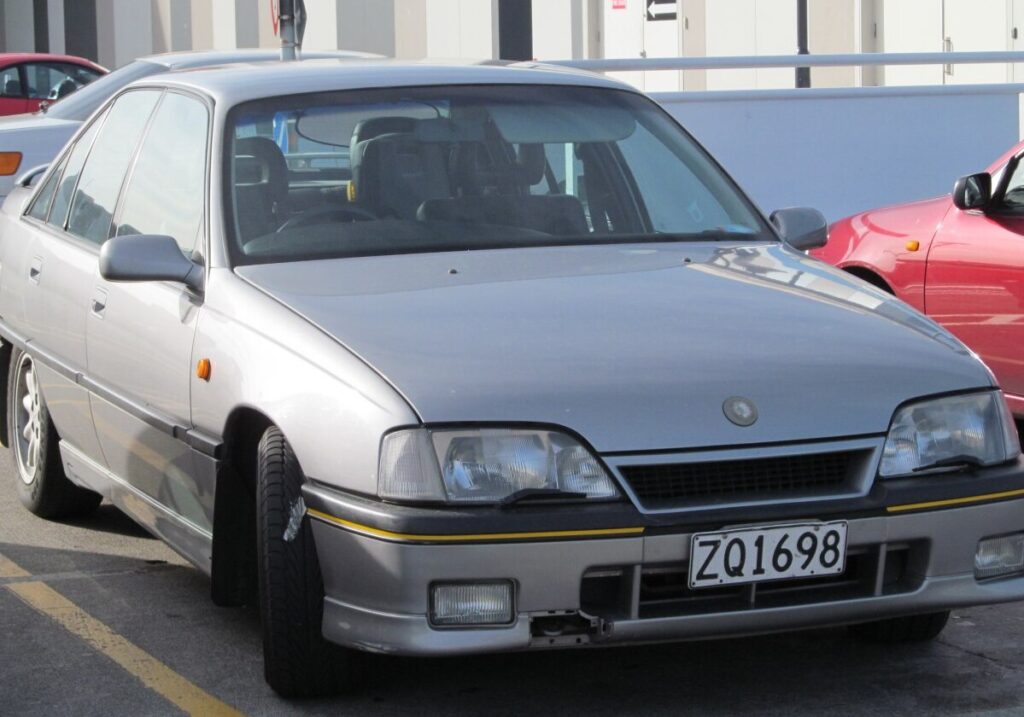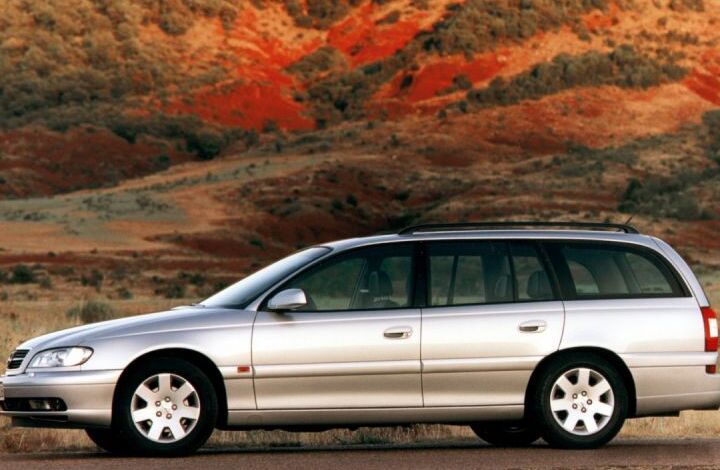
The Opel Omega B Caravan (facelift, 1999) 2.6 V6 Automatic was a station wagon produced between 2002 and June 2003. It represented a higher-specification variant within the Omega B range, positioned as a comfortable and practical grand tourer. The Omega B, built on the GM Epsilon platform (internally designated 1HX0/A3), was Opel’s flagship model, intended to compete with executive cars from BMW, Mercedes-Benz, and Audi. The facelifted version, introduced in 1999, brought revised styling, improved interior materials, and updated engine options, including the 2.6L V6 paired with an automatic transmission.
Opel Omega B 2.6 V6 Automatic: Overview
The 2.6 V6 Automatic model aimed to provide a blend of performance and convenience. While not the sportiest Omega B variant (that title belonged to the 3.0L V6), it offered a significant step up in power and refinement compared to the four-cylinder models. It was targeted towards buyers who prioritized comfortable long-distance cruising and ample cargo space over outright handling prowess. The combination of the V6 engine and automatic transmission made it a popular choice for families and business travelers.
Powertrain & Engine Architecture
The heart of the Omega B 2.6 V6 Automatic is the Y26SE engine, a 2.6-liter (2597 cc) naturally aspirated V6. This engine features a 60-degree V-angle and utilizes a cast iron block with an aluminum cylinder head. It boasts four valves per cylinder (DOHC valvetrain) and employs multi-port fuel injection. The engine produces 180 horsepower (hp) at 6000 rpm and 240 Newton-meters (177.01 lb-ft) of torque at 3400 rpm. The specific power output is 69.3 hp per liter.
The engine’s bore and stroke are 83.2 mm (3.28 in) and 79.6 mm (3.13 in) respectively, resulting in a compression ratio of 10:1. The Y26SE engine is known for its relatively smooth operation and decent reliability, although it is susceptible to oil leaks as it ages.
The engine is mated to a four-speed automatic transmission. While not the most modern transmission by today’s standards, it provided smooth and comfortable gear changes. The transmission is electronically controlled, offering adaptive shift patterns based on driving conditions. The longitudinal engine layout and rear-wheel drive configuration contribute to the car’s balanced handling characteristics.
Driving Characteristics
The Omega B 2.6 V6 Automatic delivers a relaxed and refined driving experience. Acceleration from 0 to 100 km/h (0-62 mph) takes approximately 10 seconds, while 0-60 mph is achieved in around 9.5 seconds. Top speed is rated at 221 km/h (137.32 mph). The automatic transmission prioritizes smooth shifts over aggressive acceleration, making it well-suited for highway cruising.
Compared to the manual transmission versions of the 2.6 V6, the automatic offers less driver involvement but greater convenience. The higher-output 3.0L V6 models provided noticeably quicker acceleration and a more engaging driving experience, but at the cost of increased fuel consumption. The 2.6 V6 Automatic strikes a balance between performance and economy, offering sufficient power for most driving situations without being overly thirsty.
The weight-to-power ratio of 9.6 kg/hp and weight-to-torque ratio of 7.2 kg/Nm indicate a reasonable, though not exceptional, level of performance. The rear-wheel drive layout provides a balanced feel, although it can be less forgiving in slippery conditions compared to front-wheel drive cars.
Equipment & Trim Levels
The Omega B 2.6 V6 Automatic typically came well-equipped, reflecting its position as a higher-end trim level. Standard features generally included air conditioning, power windows and mirrors, central locking, an upgraded audio system, and alloy wheels. Interior upholstery was typically cloth or leather, with wood trim accents on the dashboard and door panels.
Optional extras could include a sunroof, heated seats, a navigation system, and upgraded audio systems. The facelifted models often featured improved interior materials and a more modern dashboard design. Safety features such as ABS (Anti-lock Braking System) were standard. The Caravan (estate) body style offered a generous amount of cargo space, making it a practical choice for families and those needing to transport large items.
Chassis & Braking
The Omega B Caravan featured a coil spring suspension system at both the front and rear. The suspension was tuned for comfort, providing a smooth ride over most road surfaces. Stabilizer bars were fitted to both axles to reduce body roll during cornering. The car’s kerb weight of 1733 kg (3820.61 lbs) contributes to its stable and planted feel.
Braking duties were handled by ventilated discs on all four wheels, providing ample stopping power. The ABS system helped to maintain control during emergency braking situations. The steering system utilized a worm-reduction unit with hydraulic power assistance, offering a reasonably direct and responsive feel. The standard tire size was 205/65 R15, mounted on 15-inch wheels.
Market Reception & Comparison
The Opel Omega B 2.6 V6 Automatic received generally positive reviews from automotive critics. It was praised for its comfortable ride, spacious interior, and refined engine. However, some critics noted that the automatic transmission could feel somewhat sluggish, and the car’s handling was not as sharp as some of its rivals.
Fuel economy was a common point of criticism, with combined fuel consumption figures of 10.9 l/100 km (21.6 US mpg, 25.9 UK mpg). Compared to the four-cylinder Omega B models, the 2.6 V6 Automatic offered significantly more power but at the expense of increased fuel consumption. The 3.0L V6 models offered even greater performance but were even less fuel-efficient. Reliability was generally considered to be good, although preventative maintenance was crucial to avoid potential issues such as oil leaks and cooling system problems.
Technical Specifications
| Brand | Opel |
| Model | Omega |
| Generation | Omega B Caravan (facelift 1999) |
| Type (Engine) | 2.6 V6 (180 Hp) Automatic |
| Start of production | 2002 |
| End of production | June, 2003 |
| Fuel consumption (urban) | 15 l/100 km (15.7 US mpg, 18.8 UK mpg) |
| Fuel consumption (extra urban) | 8.5 l/100 km (27.7 US mpg, 33.2 UK mpg) |
| Fuel consumption (combined) | 10.9 l/100 km (21.6 US mpg, 25.9 UK mpg) |
| Fuel Type | Petrol (Gasoline) |
| Acceleration 0 – 100 km/h | 10 sec |
| Acceleration 0 – 62 mph | 10 sec |
| Acceleration 0 – 60 mph | 9.5 sec |
| Maximum speed | 221 km/h (137.32 mph) |
| Kerb Weight | 1733 kg (3820.61 lbs) |
| Max. weight | 2290 kg (5048.59 lbs) |
| Max load | 557 kg (1227.97 lbs) |
| Trunk (boot) space (min) | 540 l (19.07 cu. ft.) |
| Trunk (boot) space (max) | 1800 l (63.57 cu. ft.) |
| Fuel tank capacity | 75 l (19.81 US gal, 16.5 UK gal) |
| Length | 4898 mm (192.83 in) |
| Width | 1776 mm (69.92 in) |
| Height | 1540 mm (60.63 in) |
| Wheelbase | 2730 mm (107.48 in) |
| Engine layout | Front, Longitudinal |
| Engine Model/Code | Y26SE |
| Engine displacement | 2597 cm3 (158.48 cu. in) |
| Number of cylinders | 6 |
| Engine configuration | V-engine |
| Cylinder Bore | 83.2 mm (3.28 in) |
| Piston Stroke | 79.6 mm (3.13 in) |
| Compression ratio | 10:1 |
| Number of valves per cylinder | 4 |
| Fuel injection system | Multi-port manifold injection |
| Engine oil capacity | 5.75 l (6.08 US qt, 5.06 UK qt) |
| Coolant capacity | 9.7 l (10.25 US qt, 8.53 UK qt) |
| Drive wheel | Rear wheel drive |
| Number of gears | 4 |
| Gearbox type | Automatic transmission |
Legacy
The Opel Omega B 2.6 V6 Automatic, while no longer in production, remains a popular choice among enthusiasts and those seeking a comfortable and spacious used car. The Y26SE engine is generally considered to be reliable, although regular maintenance is essential to prevent oil leaks and other age-related issues. Parts availability is generally good, although some specific components may be becoming increasingly difficult to find. The Omega B’s spacious interior and practical estate car body style continue to appeal to buyers looking for a versatile and affordable vehicle. Today, well-maintained examples are becoming increasingly collectible, representing a piece of Opel’s engineering heritage.