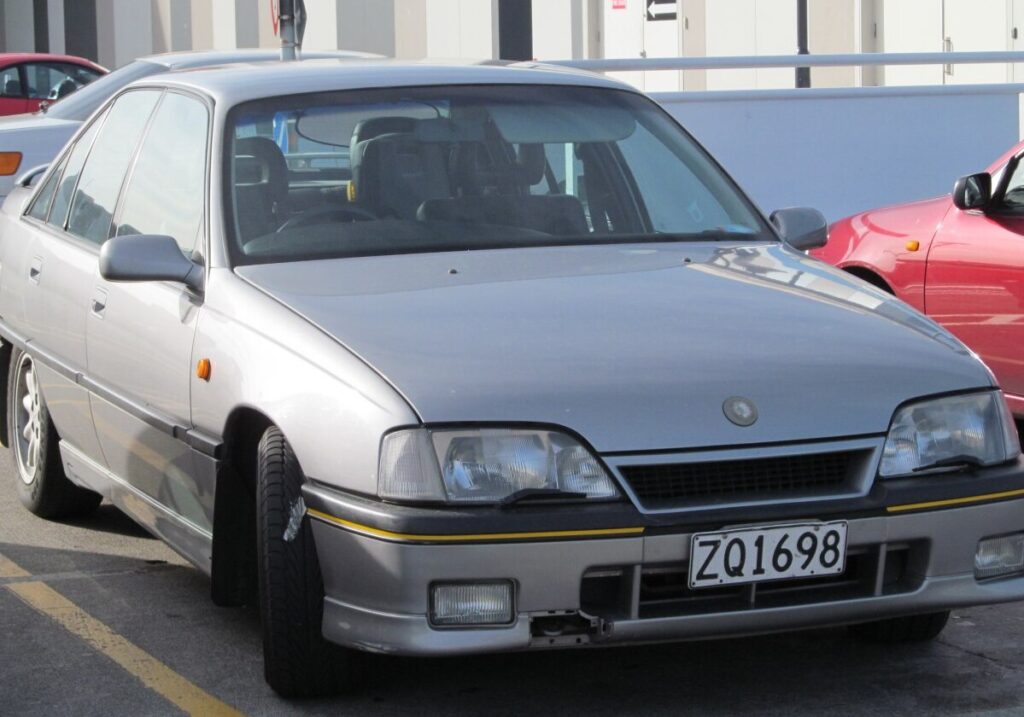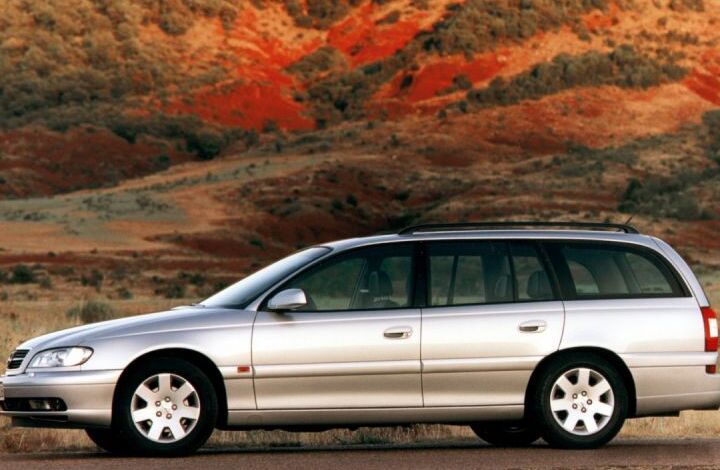
The Opel Omega B Caravan (facelift, introduced in October 1999 and produced through November 2000) represented the final iteration of Opel’s flagship executive car. This particular variant, the 3.0i V6, was positioned as the premium offering within the Caravan (estate) body style, boasting a significant power upgrade over the four-cylinder engines available. It sat at the top of the Omega B Caravan range, appealing to buyers prioritizing performance and refinement in a practical, family-oriented package. The Omega B series, built on the GM Epsilon platform (internally designated 1HX0/A3), aimed to compete with established European executive estates like the Ford Mondeo Estate, Volvo V70, and Audi A6 Avant.
Powertrain & Engine Architecture
The heart of the 3.0i V6 Omega B Caravan is the X30XE engine, a naturally aspirated 2.962-liter (180.75 cubic inches) V6. This engine is a 60-degree V-engine, featuring a cast iron block and aluminum cylinder heads. It produces 211 horsepower (hp) at 6000 rpm and 270 Newton-meters (199.14 lb-ft) of torque at 3400 rpm, resulting in a power-to-liter ratio of 71.2 hp/l. The X30XE utilizes multi-port fuel injection, delivering fuel directly into the intake ports just before the intake valves. The valvetrain employs a double overhead camshaft (DOHC) design with four valves per cylinder, optimizing airflow for improved performance.
While a five-speed manual transmission was standard, an optional four-speed automatic transmission was also available. This automatic, a GM 4L30-E unit, was chosen for its robustness and smooth operation, catering to drivers seeking a more relaxed driving experience. The transmission is electronically controlled, adapting shift points based on throttle position and vehicle speed. The engine requires 5.75 liters (6.08 US quarts) of engine oil, specified to meet Opel’s standards, and the cooling system holds 9.7 liters (10.25 US quarts).
Engine Code Specifics
The X30XE engine code signifies a specific iteration of Opel’s V6 design. It’s known for its relatively simple construction and durability, though it can be susceptible to oil leaks as it ages. The engine’s longitudinal mounting within the front engine bay contributes to the rear-wheel-drive configuration, a defining characteristic of this Omega variant. This layout, while offering balanced handling, was becoming less common in the late 1990s as front-wheel-drive platforms gained popularity.
Driving Characteristics
The 3.0i V6 Omega B Caravan delivers a noticeably more spirited driving experience compared to the lower-powered versions. Acceleration from 0 to 100 km/h (0-62 mph) takes approximately 8 seconds, while 0-60 mph is achieved in around 7.6 seconds. The maximum speed is electronically limited to 235 km/h (146.02 mph). The V6 engine provides a broad torque curve, offering strong acceleration in most driving situations. The automatic transmission, while not as engaging as a manual, provides smooth and predictable gear changes.
Compared to the manual transmission version, the automatic slightly diminishes acceleration due to inherent transmission losses. However, it enhances comfort and ease of driving, particularly in urban environments. The rear-wheel-drive configuration contributes to balanced handling, although it can require more careful throttle control in slippery conditions compared to front-wheel-drive alternatives. The weight-to-power ratio of 7.8 kg/hp and weight-to-torque ratio of 6.1 kg/Nm demonstrate a respectable power-to-weight balance for a large executive estate.
Equipment & Trim Levels
The 3.0i V6 Caravan typically came equipped with a high level of standard features, reflecting its position as the range-topping model. These included power windows, central locking, air conditioning, an upgraded audio system, and alloy wheels. Interior upholstery was typically cloth or leather, with the latter being an optional extra. The dashboard featured wood trim and a comprehensive instrument cluster. Optional extras included a sunroof, heated seats, a navigation system (a relatively new feature at the time), and upgraded sound systems. Safety features such as ABS (Anti-lock Braking System) were standard.
The facelifted model (1999-2000) received minor cosmetic updates, including revised front and rear styling, updated interior trim materials, and improved sound insulation. These changes aimed to enhance the Omega’s perceived quality and refinement.
Chassis & Braking
The Omega B Caravan’s chassis utilizes coil springs on both the front and rear axles. The front suspension employs a MacPherson strut design, while the rear utilizes a multi-link setup. This configuration provides a good balance between ride comfort and handling precision. The 3.0i V6 models typically featured a thicker stabilizer bar compared to the lower-powered variants, further enhancing handling stability. Braking duties are handled by ventilated discs on the front wheels and solid discs on the rear. The ABS system provides enhanced braking control, particularly in emergency situations. The vehicle rides on 225/55 R16 tires mounted on 7J x 16 inch alloy wheels.
Market Reception & Comparison
The Opel Omega B Caravan 3.0i V6 was generally well-received by automotive critics, who praised its powerful engine, spacious interior, and comfortable ride. However, it was often criticized for its relatively high fuel consumption (13.7 l/100 km combined) and its somewhat dated design compared to newer rivals. Compared to the 2.5 TDI diesel variant, the 3.0i V6 offered significantly more performance but at the cost of considerably lower fuel economy. The V6 was also more expensive to maintain due to the complexity of the engine and the potential for oil leaks. Against competitors like the Volvo V70, the Omega offered a more driver-focused experience, while the Audi A6 Avant provided a more premium interior and a more sophisticated all-wheel-drive system.
Technical Specifications
| Brand | Opel |
| Model | Omega |
| Generation | Omega B Caravan (facelift 1999) |
| Type (Engine) | 3.0i V6 (211 Hp) |
| Start of production | October, 1999 |
| End of production | November, 2000 |
| Powertrain Architecture | Internal Combustion engine |
| Body type | Station wagon (estate) |
| Seats | 5 |
| Doors | 5 |
| Fuel consumption (urban) | 15.6 l/100 km (15.1 US mpg, 18.1 UK mpg) |
| Fuel consumption (extra urban) | 8.3 l/100 km (28.3 US mpg, 34 UK mpg) |
| Fuel consumption (combined) | 13.7 l/100 km (17.2 US mpg, 20.6 UK mpg) |
| Fuel Type | Petrol (Gasoline) |
| Acceleration 0 – 100 km/h | 8 sec |
| Acceleration 0 – 62 mph | 8 sec |
| Acceleration 0 – 60 mph | 7.6 sec |
| Maximum speed | 235 km/h (146.02 mph) |
| Weight-to-power ratio | 7.8 kg/Hp |
| Weight-to-torque ratio | 6.1 kg/Nm |
| Power | 211 Hp @ 6000 rpm |
| Torque | 270 Nm @ 3400 rpm (199.14 lb.-ft. @ 3400 rpm) |
| Engine layout | Front, Longitudinal |
| Engine Model/Code | X30XE |
| Engine displacement | 2962 cm3 (180.75 cu. in.) |
| Number of cylinders | 6 |
| Engine configuration | V-engine |
| Cylinder Bore | 86 mm (3.39 in.) |
| Piston Stroke | 85 mm (3.35 in.) |
| Compression ratio | 10:1 |
| Number of valves per cylinder | 4 |
| Fuel injection system | Multi-port manifold injection |
| Engine aspiration | Naturally aspirated engine |
| Valvetrain | DOHC |
| Engine oil capacity | 5.75 l (6.08 US qt | 5.06 UK qt) |
| Coolant | 9.7 l (10.25 US qt | 8.53 UK qt) |
| Kerb Weight | 1645 kg (3626.6 lbs.) |
| Max. weight | 2280 kg (5026.54 lbs.) |
| Max load | 635 kg (1399.94 lbs.) |
| Trunk (boot) space – minimum | 540 l (19.07 cu. ft.) |
| Trunk (boot) space – maximum | 1800 l (63.57 cu. ft.) |
| Fuel tank capacity | 75 l (19.81 US gal | 16.5 UK gal) |
| Length | 4898 mm (192.83 in.) |
| Width | 1776 mm (69.92 in.) |
| Height | 1540 mm (60.63 in.) |
| Wheelbase | 2730 mm (107.48 in.) |
| Front track | 1510 mm (59.45 in.) |
| Rear (Back) track | 1530 mm (60.24 in.) |
| Drivetrain Architecture | Rear wheel drive |
| Number of gears and type of gearbox | 5 gears, manual transmission |
| Front suspension | Coil spring |
| Rear suspension | Coil spring |
| Front brakes | Ventilated discs |
| Rear brakes | Disc |
| Assisting systems | ABS (Anti-lock braking system) |
| Steering type | Worm-reduction unit |
| Power steering | Hydraulic Steering |
| Tires size | 225/55 R16 |
| Wheel rims size | 7J x 16 |
Legacy
Today, the Opel Omega B Caravan 3.0i V6 is considered a classic executive car, appreciated by enthusiasts for its performance, spaciousness, and relative rarity. While not known for exceptional long-term reliability, the X30XE engine is generally durable if properly maintained. Common issues include oil leaks, particularly from the valve cover gaskets and rear main seal, and potential problems with the electronic throttle control. Finding well-maintained examples is becoming increasingly difficult, and parts availability can be a challenge. However, for those seeking a distinctive and capable classic estate car, the 3.0i V6 Omega B Caravan remains an appealing option.