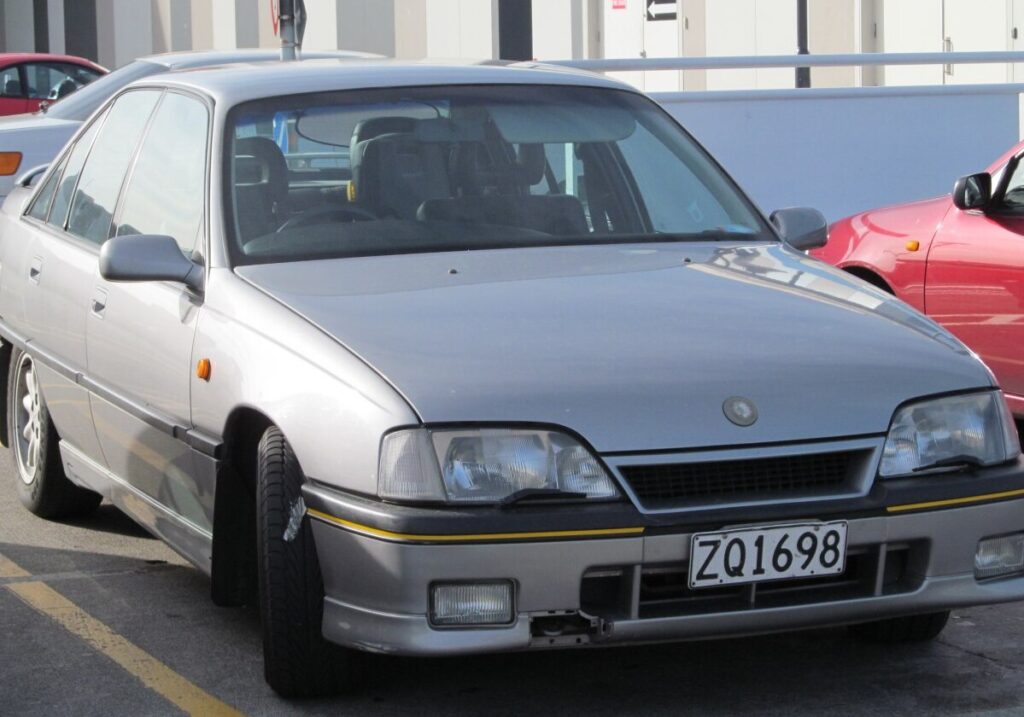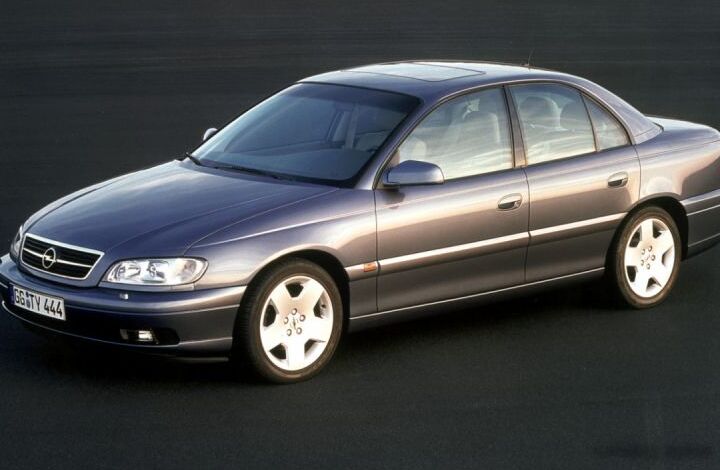
The Opel Omega B (facelift, introduced in 1999) 2.0 DTI 16V, producing 101 horsepower, represented a diesel-powered offering within the final iteration of Opel’s flagship sedan. Production of this specific variant ran from October 1999 to June 2000. Positioned as a more economical alternative to the gasoline-powered Omega Bs, it aimed to provide a balance of comfort, space, and fuel efficiency for long-distance drivers. The Omega B, built on the GM Epsilon platform (internally designated 1HX0/A3), was Opel’s executive car, competing with models like the Ford Scorpio and BMW 5 Series. The 2.0 DTI 16V was a late addition to the range, designed to appeal to buyers seeking lower running costs without sacrificing the Omega’s inherent qualities.
The 2.0 DTI 16V Engine and Powertrain
The heart of this Omega variant is the X20DTH, a 2.0-liter, four-cylinder diesel engine. This engine is a turbocharged, direct-injection diesel featuring 16 valves (four per cylinder) and an overhead camshaft (OHC) valvetrain. The ‘DTI’ designation signifies ‘Direct Turbo Injection’, highlighting the engine’s key features. Unlike earlier Opel diesels, the X20DTH utilized a common rail direct injection system, providing more precise fuel delivery and improved combustion efficiency. This system, supplied by Bosch, operated at a high pressure of 1800 bar, contributing to reduced noise and emissions. The engine’s displacement is 1995 cm³ (121.74 cubic inches), and it boasts a compression ratio of 18.5:1, typical for a direct injection diesel. The engine produces 101 hp at 4300 rpm and 205 Nm (151.2 lb-ft) of torque at 1650 rpm.
The Omega B 2.0 DTI 16V was exclusively offered with a five-speed manual transmission. While an automatic transmission was available on other Omega B models, it was not paired with the 2.0 DTI engine. This decision likely stemmed from the desire to maximize fuel economy and the limitations of the available automatic transmissions in handling the diesel engine’s torque characteristics. The transmission is rear-wheel drive, a configuration consistent throughout the Omega B range.
Fuel Injection and Turbocharging
The common rail direct injection system is central to the X20DTH’s performance. Fuel is delivered to the cylinders via a common rail, which maintains a constant high pressure, allowing for precise control over injection timing and quantity. This results in improved fuel atomization, more complete combustion, and reduced emissions. The turbocharger, a Garrett unit, forces more air into the engine, increasing power output. The turbocharger is intercooled to reduce intake air temperature, further enhancing performance and efficiency.
Driving Characteristics
The 2.0 DTI 16V Omega B offered a distinctly different driving experience compared to its gasoline-powered siblings, particularly the 2.5 V6 or 3.0 V6 models. Acceleration was modest, taking approximately 15 seconds to reach 100 km/h (62 mph) and 14.3 seconds to 60 mph. The focus was not on outright speed but on relaxed cruising and fuel efficiency. The engine’s strong low-end torque, peaking at 1650 rpm, made it well-suited for overtaking maneuvers on the highway, despite the relatively low horsepower figure. The five-speed manual transmission allowed drivers to keep the engine in its optimal power band. Compared to the more powerful Omegas, the 2.0 DTI felt less refined and exhibited more diesel engine noise, although the common rail injection system did mitigate this to some extent.
The rear-wheel-drive configuration provided balanced handling, although the Omega B’s considerable weight (1540 kg / 3395.12 lbs kerb weight) meant it wasn’t a particularly agile car. The suspension, consisting of coil springs all around, prioritized comfort over sporty handling. Steering was light and precise, making the Omega B easy to maneuver in urban environments.
Equipment and Trim Levels
The 2.0 DTI 16V Omega B typically came with a reasonably comprehensive level of standard equipment, reflecting its position as a mainstream executive car. Standard features included central locking, electric windows, power steering, ABS (Anti-lock Braking System), and a basic audio system. Interior upholstery was typically cloth, although leather options were available as an extra cost. Dashboard configuration was consistent across the Omega B range, featuring a straightforward layout with clearly labeled controls. Optional extras included climate control, a sunroof, upgraded audio systems, and alloy wheels. The trim level was generally considered to be mid-range, offering a good balance of features and affordability.
Chassis and Braking
The Omega B 2.0 DTI 16V utilized a conventional chassis layout with coil spring suspension at both the front and rear. The front suspension featured independent coil springs and MacPherson struts, while the rear suspension employed a semi-independent coil spring setup. Braking was provided by ventilated discs at the front and solid discs at the rear. The ABS system helped to maintain steering control during emergency braking. Tire size was typically 195/65 R15, mounted on 6.5J x 15 inch steel or alloy wheels. Stabilizer bars were fitted to both the front and rear axles to reduce body roll during cornering.
Market Reception and Comparison
The 2.0 DTI 16V Omega B was generally well-received by critics as a practical and economical executive car. Its fuel economy, averaging around 9.2 l/100 km (25.6 US mpg) in urban conditions and 5 l/100 km (47 US mpg) on the highway, was a major selling point. However, it was often criticized for its relatively low power output and the inherent noise and vibration associated with diesel engines. Compared to the 2.5 V6 and 3.0 V6 Omega Bs, the 2.0 DTI offered significantly lower performance but also lower running costs. The 2.0 DTI was also often compared to other diesel-powered executive cars of the time, such as the Ford Scorpio 2.0 TD and the BMW 525tds. The Omega B 2.0 DTI generally offered a more spacious interior and a more comfortable ride than its competitors, but its performance was often slightly lower.
Technical Specifications
| Brand | Opel |
| Model | Omega |
| Generation | Omega B (facelift 1999) |
| Type (Engine) | 2.0 DTI 16V (101 Hp) |
| Start of production | October, 1999 |
| End of production | June, 2000 |
| Powertrain Architecture | Internal Combustion engine |
| Body type | Sedan |
| Seats | 5 |
| Doors | 4 |
| Fuel consumption (urban) | 9.2 l/100 km (25.6 US mpg) |
| Fuel consumption (extra urban) | 5 l/100 km (47 US mpg) |
| CO2 emissions | 294 g/km |
| Fuel Type | Diesel |
| Acceleration 0 – 100 km/h | 15 sec |
| Acceleration 0 – 62 mph | 15 sec |
| Acceleration 0 – 60 mph | 14.3 sec |
| Maximum speed | 186 km/h (115.58 mph) |
| Weight-to-power ratio | 15.2 kg/Hp |
| Weight-to-torque ratio | 7.5 kg/Nm |
| Power | 101 Hp @ 4300 rpm |
| Torque | 205 Nm @ 1650 rpm (151.2 lb.-ft. @ 1650 rpm) |
| Engine layout | Front, Longitudinal |
| Engine Model/Code | X20DTH |
| Engine displacement | 1995 cm3 (121.74 cu. in.) |
| Number of cylinders | 4 |
| Engine configuration | Inline |
| Cylinder Bore | 84 mm (3.31 in.) |
| Piston Stroke | 90 mm (3.54 in.) |
| Compression ratio | 18.5:1 |
| Number of valves per cylinder | 4 |
| Fuel injection system | Diesel Commonrail |
| Engine aspiration | Turbocharger |
| Valvetrain | OHC |
| Engine oil capacity | 5.5 l (5.81 US qt | 4.84 UK qt) |
| Coolant | 7.9 l (8.35 US qt | 6.95 UK qt) |
| Kerb Weight | 1540 kg (3395.12 lbs.) |
| Max. weight | 2090 kg (4607.66 lbs.) |
| Max load | 550 kg (1212.54 lbs.) |
| Trunk (boot) space – minimum | 530 l (18.72 cu. ft.) |
| Trunk (boot) space – maximum | 830 l (29.31 cu. ft.) |
| Fuel tank capacity | 75 l (19.81 US gal | 16.5 UK gal) |
| Length | 4898 mm (192.83 in.) |
| Width | 1776 mm (69.92 in.) |
| Height | 1455 mm (57.28 in.) |
| Wheelbase | 2730 mm (107.48 in.) |
| Front track | 1514 mm (59.61 in.) |
| Rear (Back) track | 1528 mm (60.16 in.) |
| Ride height (ground clearance) | 140 mm (5.51 in.) |
| Drag coefficient (Cd) | 0.32 |
| Drivetrain Architecture | Rear wheel drive |
| Number of gears and type of gearbox | 5 gears, manual transmission |
| Front suspension | Coil spring |
| Rear suspension | Coil spring |
| Front brakes | Ventilated discs |
| Rear brakes | Disc |
| Assisting systems | ABS (Anti-lock braking system) |
| Tires size | 195/65 R15 |
| Wheel rims size | 6.5J x 15 |
Legacy
The Opel Omega B 2.0 DTI 16V, while a relatively short-lived variant, has gained a modest following among enthusiasts seeking an affordable and practical classic. The X20DTH engine, when properly maintained, is known for its durability and reliability. However, like all diesel engines, it is susceptible to issues related to the fuel injection system and turbocharger. On the used car market, these Omegas are typically available at very low prices, making them an attractive option for those seeking a spacious and comfortable sedan. Parts availability is generally good, although some specific components may be becoming increasingly difficult to find. The Omega B 2.0 DTI 16V represents a final chapter in the Omega story, offering a blend of comfort, space, and economy that continues to appeal to a niche group of buyers today.