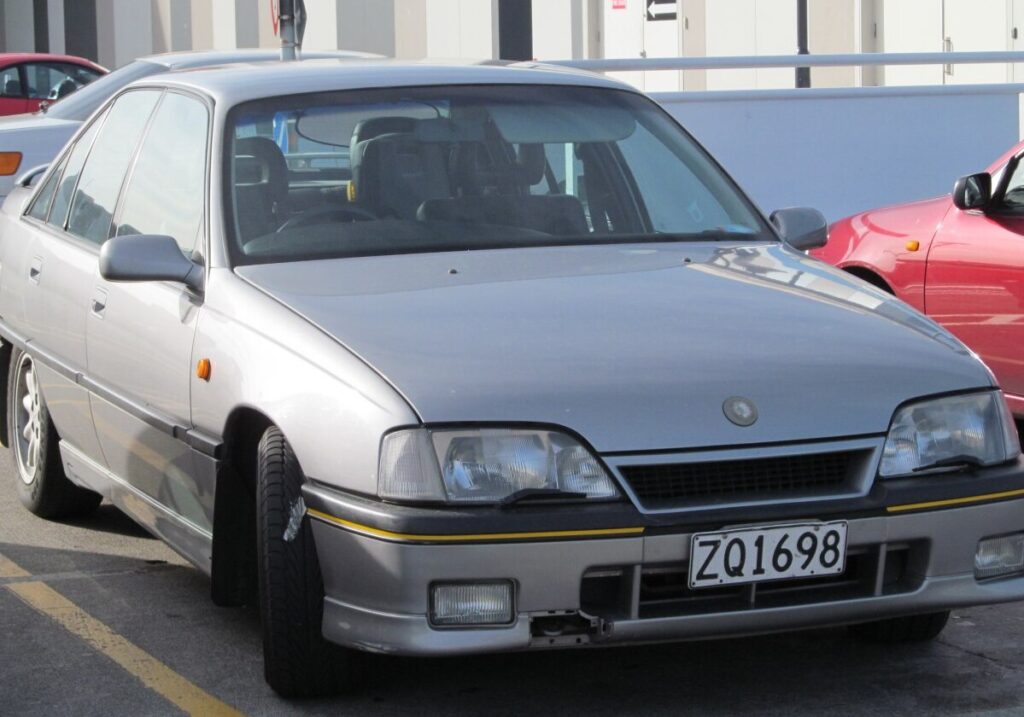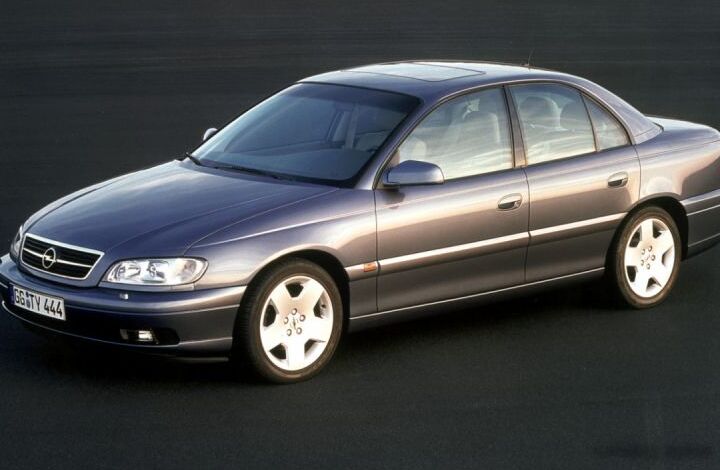
The Opel Omega B (facelift, introduced in 1999) 2.2i, producing 144 horsepower, represented a mid-range offering within the Omega B lineup. Produced from October 1999 to 2000, this variant aimed to balance performance and fuel economy for buyers seeking a comfortable and spacious executive sedan. The Omega B, built on the GM Epsilon platform (internally designated 1HX0/A3), was Opel’s flagship model, intended to compete with vehicles like the Ford Scorpio and BMW 5 Series. The 2.2i model occupied a position between the base 2.0L engines and the more powerful V6 options, appealing to a broader customer base.
The 2.2i Omega B: Positioning and Overview
The facelifted Omega B, launched in 1999, brought revised styling, improved interior materials, and updated engine options. The 2.2i model was a key part of this refresh, offering a step up in performance from the entry-level engines without the higher price tag and running costs associated with the V6 variants. It was primarily targeted at drivers who frequently undertook long journeys and valued a smooth, refined driving experience. The Omega B, in general, was known for its spacious interior, comfortable ride, and generous equipment levels, making it a popular choice for families and company car drivers.
Powertrain & Engine Architecture
The heart of the 2.2i Omega B is the Y22XE engine, a 2.2-liter (2198 cm3 or 134.13 cu. in.) inline four-cylinder gasoline engine. This engine features multi-port fuel injection and a double overhead camshaft (DOHC) valvetrain with four valves per cylinder. The compression ratio is 10.5:1. The Y22XE is a naturally aspirated engine, meaning it does not utilize a turbocharger or supercharger. It produces a maximum power output of 144 hp (107 kW) at 5400 rpm and a peak torque of 205 Nm (151.2 lb-ft) at 4000 rpm. The engine oil capacity is 4.5 liters (4.76 US qt / 3.96 UK qt), and the cooling system requires 9.4 liters (9.93 US qt / 8.27 UK qt) of coolant.
The 2.2i Omega B was typically paired with a five-speed manual transmission, however, an optional four-speed automatic transmission was also available. The automatic transmission was designed to provide smooth gear changes and enhance driving comfort, particularly in urban environments. The automatic transmission’s gear ratios were optimized for both fuel efficiency and acceptable acceleration. While the manual transmission offered more driver control and slightly improved fuel economy, the automatic was favored by many Omega B buyers for its convenience.
Driving Characteristics
The 2.2i Omega B offered a balanced driving experience. Acceleration from 0 to 100 km/h (0-62 mph) took approximately 10.5 seconds, while 0-60 mph was achieved in around 10 seconds. The top speed was rated at 210 km/h (130.49 mph). Compared to the more powerful V6 models, the 2.2i felt less urgent in its acceleration, but it still provided sufficient power for comfortable highway cruising and overtaking. The automatic transmission, while smooth, did result in a slight reduction in performance compared to the manual version. The Omega B’s rear-wheel-drive configuration contributed to balanced handling, although it wasn’t particularly sporty. The focus was on ride comfort and stability, making it a pleasant vehicle for long-distance travel.
Equipment & Trim Levels
The 2.2i Omega B typically came equipped with a generous level of standard features. These included central locking, electric windows, power steering, an anti-lock braking system (ABS), and a basic audio system. Higher trim levels added features such as alloy wheels, climate control, a sunroof, leather upholstery, and upgraded audio systems. Interior upholstery was typically cloth on the base models, with leather available as an option. The dashboard layout was functional and well-designed, with clear instrumentation. Optional extras included a CD changer, heated seats, and parking sensors.
Chassis & Braking
The Omega B featured a robust chassis with coil spring suspension at both the front and rear. The front suspension utilized independent coil springs, while the rear suspension employed a semi-independent coil spring setup. The braking system consisted of ventilated discs at the front and solid discs at the rear. The ABS system helped to maintain control during emergency braking situations. The Omega B’s weight-to-power ratio was 10.7 kg/hp, and the weight-to-torque ratio was 7.5 kg/Nm. The vehicle’s curb weight was 1535 kg (3384.1 lbs), with a maximum permissible weight of 2080 kg (4585.62 lbs). Tire size was typically 195/65 R15, mounted on 6J x 15 inch wheel rims.
Market Reception & Comparison
The Opel Omega B 2.2i was generally well-received by automotive critics. It was praised for its spacious interior, comfortable ride, and good value for money. However, some critics noted that the engine lacked the refinement and performance of its V6 counterparts. Fuel economy was considered reasonable for a vehicle of its size and class, with combined fuel consumption figures of around 9.4 l/100 km (25 US mpg / 30.1 UK mpg). Compared to the 2.0L models, the 2.2i offered a noticeable improvement in performance, while remaining more affordable than the V6 options. Reliability was generally good, although some owners reported issues with the electrical system and the automatic transmission. CO2 emissions were rated at 226 g/km.
Technical Specifications
| Brand | Opel |
| Model | Omega |
| Generation | Omega B (facelift 1999) |
| Type (Engine) | 2.2i (144 Hp) |
| Start of production | October, 1999 |
| End of production | 2000 |
| Powertrain Architecture | Internal Combustion engine |
| Body type | Sedan |
| Seats | 5 |
| Doors | 4 |
| Fuel consumption (urban) | 13.2 l/100 km (17.8 US mpg / 21.4 UK mpg) |
| Fuel consumption (extra urban) | 7.2 l/100 km (32.7 US mpg / 39.2 UK mpg) |
| Fuel consumption (combined) | 9.4 l/100 km (25 US mpg / 30.1 UK mpg) |
| CO2 emissions | 226 g/km |
| Fuel Type | Petrol (Gasoline) |
| Acceleration 0 – 100 km/h | 10.5 sec |
| Acceleration 0 – 62 mph | 10.5 sec |
| Acceleration 0 – 60 mph | 10 sec |
| Maximum speed | 210 km/h (130.49 mph) |
| Weight-to-power ratio | 10.7 kg/Hp |
| Weight-to-torque ratio | 7.5 kg/Nm |
| Power | 144 Hp @ 5400 rpm |
| Torque | 205 Nm @ 4000 rpm (151.2 lb.-ft. @ 4000 rpm) |
| Engine layout | Front, Longitudinal |
| Engine Model/Code | Y22XE |
| Engine displacement | 2198 cm3 (134.13 cu. in.) |
| Number of cylinders | 4 |
| Engine configuration | Inline |
| Compression ratio | 10.5:1 |
| Number of valves per cylinder | 4 |
| Fuel injection system | Multi-port manifold injection |
| Engine aspiration | Naturally aspirated |
| Valvetrain | DOHC |
| Engine oil capacity | 4.5 l (4.76 US qt / 3.96 UK qt) |
| Coolant capacity | 9.4 l (9.93 US qt / 8.27 UK qt) |
| Kerb Weight | 1535 kg (3384.1 lbs) |
| Max. weight | 2080 kg (4585.62 lbs) |
| Max load | 545 kg (1201.52 lbs) |
| Trunk (boot) space (min) | 530 l (18.72 cu. ft.) |
| Trunk (boot) space (max) | 830 l (29.31 cu. ft.) |
| Fuel tank capacity | 75 l (19.81 US gal / 16.5 UK gal) |
| Length | 4898 mm (192.83 in) |
| Width | 1776 mm (69.92 in) |
| Height | 1455 mm (57.28 in) |
| Wheelbase | 2730 mm (107.48 in) |
| Front track | 1514 mm (59.61 in) |
| Rear track | 1528 mm (60.16 in) |
| Ride height (ground clearance) | 140 mm (5.51 in) |
| Drag coefficient (Cd) | 0.32 |
| Drivetrain Architecture | Rear wheel drive |
| Number of gears | 5 (manual) / 4 (automatic) |
| Front suspension | Coil spring |
| Rear suspension | Coil spring |
| Front brakes | Ventilated discs |
| Rear brakes | Disc |
| Assisting systems | ABS (Anti-lock braking system) |
Legacy
The Opel Omega B 2.2i, while not the most sought-after variant, remains a reasonably common sight on the used car market. The Y22XE engine is generally considered reliable, although regular maintenance is essential. The automatic transmission can be prone to issues if not properly serviced. Today, these cars represent an affordable entry point into classic Opel ownership, offering a comfortable and spacious driving experience. Parts availability is generally good, although some specific trim pieces may be difficult to find. The 2.2i Omega B is increasingly appreciated by enthusiasts for its understated elegance and practical features.