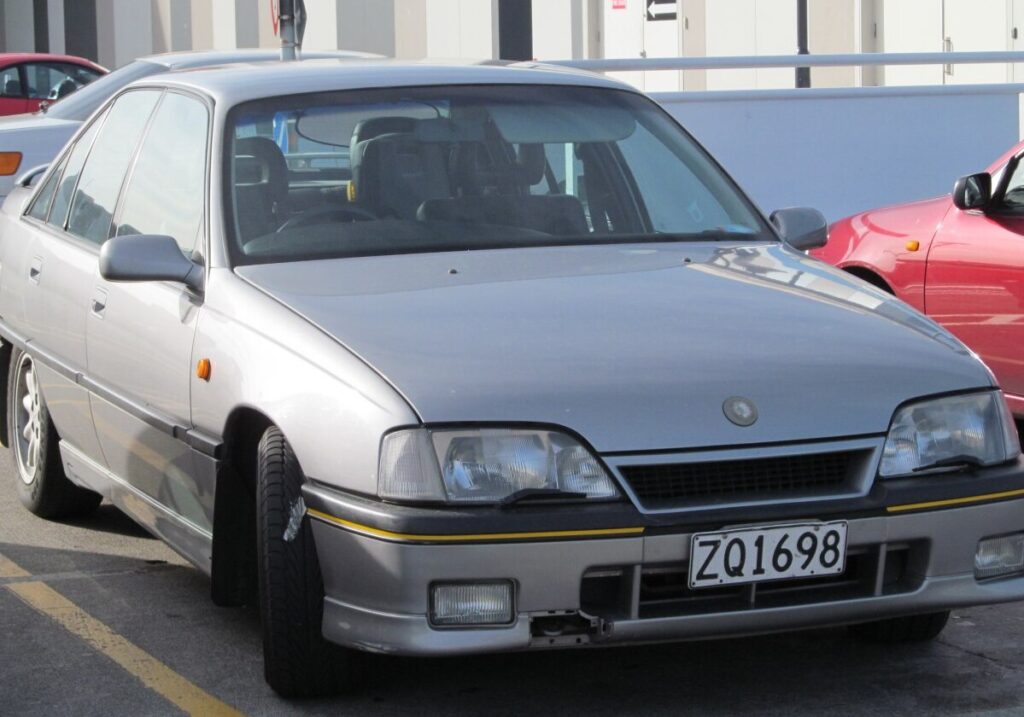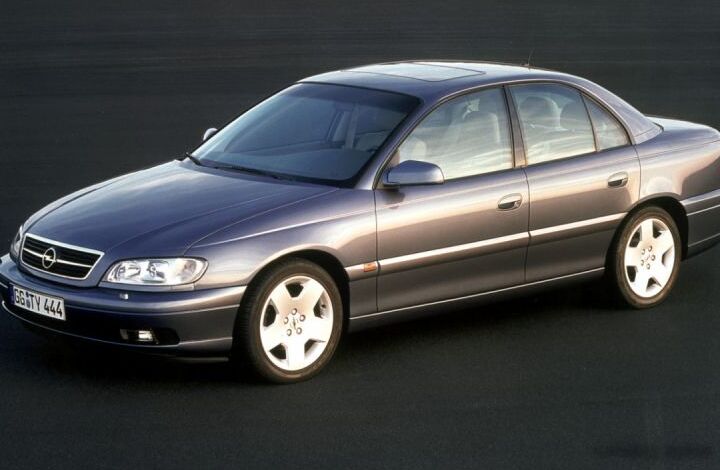
The Opel Omega B (facelift, introduced in 1999) 2.6 V6 represents a significant iteration of Opel’s flagship sedan, produced from 2002 to June 2003. Positioned as a premium offering within the Omega B range, it catered to buyers seeking a blend of performance, comfort, and spaciousness. This variant utilized the Y26SE engine code and was part of the 1HX0 chassis generation, sharing its platform with models like the Saab 9-5 and, briefly, the Holden Commodore (VK) in Australia. The 2.6 V6 aimed to bridge the gap between the more economical four-cylinder models and the higher-performance, but more expensive, 3.0-liter inline-six versions.
Powertrain & Engine Architecture
At the heart of the Omega B 2.6 V6 lies the Y26SE engine, a 2.6-liter (2597 cc) naturally aspirated V6. This engine is characterized by its 60-degree V-angle configuration, contributing to a relatively compact engine bay footprint. It features a cast iron block and aluminum cylinder heads, a common construction for Opel engines of this era. The engine employs multi-port fuel injection, delivering fuel directly into the intake ports just before the intake valves. This system, while not as advanced as direct injection, provided reliable and consistent fuel delivery. The valvetrain utilizes a double overhead camshaft (DOHC) design with four valves per cylinder, optimizing airflow for improved performance.
The Omega B 2.6 V6 was exclusively offered with a 5-speed manual transmission during its limited production run. This transmission was a rear-wheel drive configuration, contributing to the car’s balanced handling characteristics. The gearbox was chosen to complement the engine’s torque curve, providing smooth shifts and efficient power delivery. The transmission’s gear ratios were tuned for a balance between acceleration and fuel economy, though the V6 engine’s inherent thirst for fuel meant that economy was not a primary focus.
Engine Specifications
The Y26SE engine produces 180 horsepower (hp) at 6000 rpm and 240 Newton-meters (177.01 lb-ft) of torque at 3400 rpm. This output translates to a power-to-liter ratio of 69.3 hp/l. The engine’s compression ratio is 10:1, a typical value for naturally aspirated gasoline engines of this period. Engine oil capacity is 5.75 liters (6.08 US quarts / 5.06 UK quarts), and the coolant capacity is 9.7 liters (10.25 US quarts / 8.53 UK quarts).
Driving Characteristics
The Omega B 2.6 V6 offered a noticeably more refined driving experience compared to the four-cylinder variants. The V6 engine provided smooth and linear power delivery, making it well-suited for both city driving and highway cruising. Acceleration from 0 to 100 km/h (0-62 mph) was achieved in 9.5 seconds, while 0-60 mph took approximately 9 seconds. The top speed was electronically limited to 229 km/h (142.29 mph). While not a sports car, the Omega B 2.6 V6 offered ample power for overtaking maneuvers and maintaining comfortable speeds on the open road.
The rear-wheel drive configuration contributed to a balanced chassis and predictable handling. The 5-speed manual transmission allowed drivers to fully exploit the engine’s powerband, providing precise control over gear selection. Compared to the higher-output 3.0-liter inline-six, the 2.6 V6 felt less urgent in its acceleration, but it offered a more manageable and fuel-efficient driving experience. The weight-to-power ratio of 8.9 kg/hp and weight-to-torque ratio of 6.7 kg/Nm further illustrate the car’s performance characteristics.
Equipment & Trim Levels
The Omega B 2.6 V6 was typically equipped with a generous level of standard features, reflecting its position as a premium model. Standard equipment included power windows, power door locks, central locking, air conditioning, and an upgraded audio system. Interior upholstery was typically cloth, though leather options were available as an extra cost. The dashboard featured a wood trim finish, adding to the car’s luxurious ambiance. Optional extras included a sunroof, heated seats, automatic climate control, and a premium sound system. Safety features included ABS (Anti-lock Braking System) and driver and passenger airbags.
Chassis & Braking
The Omega B 2.6 V6 utilized a coil spring suspension system for both the front and rear axles. The front suspension featured independent coil springs, while the rear suspension employed a semi-independent coil spring setup. This suspension configuration provided a comfortable ride quality, absorbing bumps and irregularities in the road surface effectively. The braking system consisted of ventilated discs on all four wheels, providing ample stopping power. The steering system was a hydraulic power steering unit, offering light and precise steering control. Tire size was typically 205/65 R15, mounted on 15-inch wheel rims.
Market Reception & Comparison
The Opel Omega B 2.6 V6 received generally positive reviews from automotive critics. It was praised for its smooth engine, comfortable ride, and spacious interior. However, some critics noted that the fuel economy was relatively poor, especially compared to the four-cylinder models. The 2.6 V6 offered a compelling alternative to the more expensive 3.0-liter inline-six, providing a good balance of performance and affordability. In terms of reliability, the Y26SE engine proved to be reasonably durable, though regular maintenance was essential to prevent issues. Compared to other vehicles in its class, such as the Ford Scorpio and BMW 5 Series, the Omega B 2.6 V6 offered a competitive level of equipment and performance at a more accessible price point.
Technical Specifications
| Brand | Opel |
| Model | Omega |
| Generation | Omega B (facelift 1999) |
| Type (Engine) | 2.6 V6 (180 Hp) |
| Start of production | 2002 year |
| End of production | June, 2003 year |
| Powertrain Architecture | Internal Combustion engine |
| Body type | Sedan |
| Seats | 5 |
| Doors | 4 |
| Fuel consumption (urban) | 14.9 l/100 km (15.8 US mpg / 19 UK mpg) |
| Fuel consumption (extra urban) | 8.3 l/100 km (28.3 US mpg / 34 UK mpg) |
| Fuel consumption (combined) | 10.6 l/100 km (22.2 US mpg / 26.6 UK mpg) |
| CO2 emissions | 255 g/km |
| Fuel Type | Petrol (Gasoline) |
| Acceleration 0 – 100 km/h | 9.5 sec |
| Acceleration 0 – 62 mph | 9.5 sec |
| Acceleration 0 – 60 mph | 9 sec |
| Maximum speed | 229 km/h (142.29 mph) |
| Weight-to-power ratio | 8.9 kg/Hp |
| Weight-to-torque ratio | 6.7 kg/Nm |
| Power | 180 Hp @ 6000 rpm |
| Torque | 240 Nm @ 3400 rpm (177.01 lb.-ft. @ 3400 rpm) |
| Engine layout | Front, Longitudinal |
| Engine Model/Code | Y26SE |
| Engine displacement | 2597 cm3 (158.48 cu. in.) |
| Number of cylinders | 6 |
| Engine configuration | V-engine |
| Cylinder Bore | 83.2 mm (3.28 in.) |
| Piston Stroke | 79.6 mm (3.13 in.) |
| Compression ratio | 10:1 |
| Number of valves per cylinder | 4 |
| Fuel injection system | Multi-port manifold injection |
| Engine aspiration | Naturally aspirated engine |
| Valvetrain | DOHC |
| Engine oil capacity | 5.75 l (6.08 US qt | 5.06 UK qt) |
| Coolant | 9.7 l (10.25 US qt | 8.53 UK qt) |
| Kerb Weight | 1610 kg (3549.44 lbs.) |
| Max. weight | 2180 kg (4806.08 lbs.) |
| Max load | 570 kg (1256.63 lbs.) |
| Trunk (boot) space – minimum | 530 l (18.72 cu. ft.) |
| Trunk (boot) space – maximum | 830 l (29.31 cu. ft.) |
| Fuel tank capacity | 75 l (19.81 US gal | 16.5 UK gal) |
| Length | 4898 mm (192.83 in.) |
| Width | 1776 mm (69.92 in.) |
| Height | 1455 mm (57.28 in.) |
| Wheelbase | 2730 mm (107.48 in.) |
| Front track | 1514 mm (59.61 in.) |
| Rear (Back) track | 1528 mm (60.16 in.) |
| Ride height (ground clearance) | 140 mm (5.51 in.) |
| Drag coefficient (Cd) | 0.32 |
| Drivetrain Architecture | Rear wheel drive |
| Number of gears and type of gearbox | 5 gears, manual transmission |
| Front suspension | Coil spring |
| Rear suspension | Coil spring |
| Front brakes | Ventilated discs |
| Rear brakes | Ventilated discs |
| Assisting systems | ABS (Anti-lock braking system) |
| Steering type | Worm-reduction unit |
| Power steering | Hydraulic Steering |
| Tires size | 205/65 R15 |
| Wheel rims size | 15 |
Legacy
The Opel Omega B 2.6 V6, despite its short production run, has gained a following among enthusiasts who appreciate its blend of comfort, performance, and rear-wheel drive dynamics. The Y26SE engine is generally considered to be a reliable unit, provided it receives regular maintenance. On the used car market, Omega B 2.6 V6 models are relatively affordable, making them an attractive option for those seeking a spacious and comfortable sedan. However, potential buyers should be aware of the car’s age and the potential for age-related issues, such as corrosion and wear and tear on suspension components. Parts availability can also be a concern, though many components are still available through specialist Opel parts suppliers.