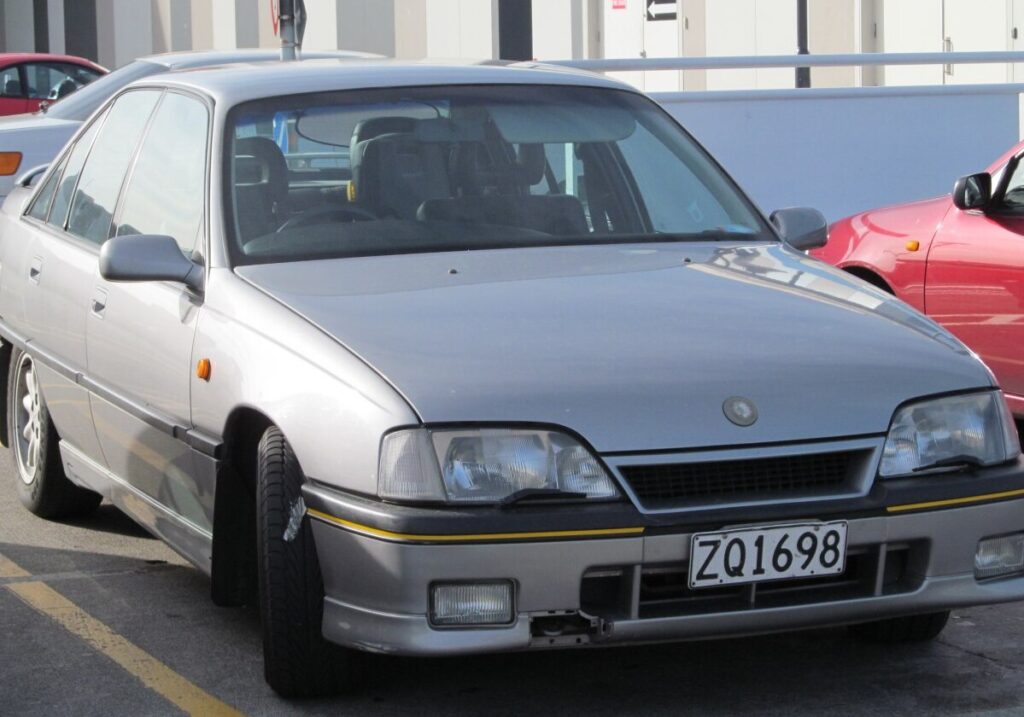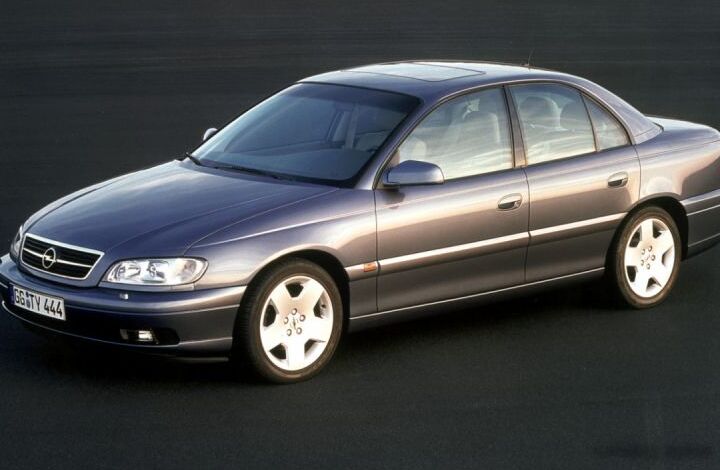
The Opel Omega B (facelift, introduced in 1999) 3.0i V6 represents the pinnacle of performance for the Omega B generation. Produced from October 1999 to November 2000, this variant was positioned as the flagship model, offering a substantial upgrade in power and refinement over the four-cylinder and 2.5 V6 options. The Omega B, built on the GM Epsilon platform (internally designated as 1HX0/A3), aimed to provide a spacious, comfortable, and technologically advanced executive sedan. The 3.0i V6 facelift model was a final evolution of the B-series, incorporating styling updates and refinements before the model was discontinued.
Opel Omega B 3.0i V6: An Overview
The 3.0i V6 facelift model was designed to appeal to drivers seeking a blend of performance, luxury, and practicality. It served as Opel’s answer to competitors like the BMW 5 Series, Audi A6, and Mercedes-Benz E-Class. While not achieving the same sales volumes as its German rivals, the Omega B 3.0i V6 offered a compelling package, particularly for those prioritizing value and space. The facelift brought subtle but noticeable changes to the exterior, including revised headlights, taillights, and front grille, enhancing the car’s modern appearance.
Powertrain & Engine Architecture
At the heart of the 3.0i V6 is the X30XE engine, a naturally aspirated 60-degree V6 displacing 2,962 cc (180.75 cubic inches). This engine features a cast iron block and aluminum cylinder heads, contributing to its durability and relatively lightweight construction. The X30XE utilizes multi-port fuel injection and a double overhead camshaft (DOHC) valvetrain with four valves per cylinder. This configuration allows for efficient combustion and a broad powerband. The engine produces 211 horsepower at 6000 rpm and 270 Nm (199.14 lb-ft) of torque at 3400 rpm. The engine’s bore and stroke are 86 mm (3.39 in) and 85 mm (3.35 in) respectively, with a compression ratio of 10.8:1. The engine requires 5.75 liters (6.08 US quarts) of engine oil, specified to Opel’s standards, and 9.7 liters (10.25 US quarts) of coolant.
Driving Characteristics
The 3.0i V6 Omega B delivers a noticeably more engaging driving experience than its lower-powered siblings. Acceleration from 0 to 100 km/h (0-62 mph) takes approximately 8.5 seconds, while 0 to 60 mph is achieved in around 8.1 seconds. Top speed is electronically limited to 243 km/h (150.99 mph). The V6 engine provides smooth and linear power delivery throughout the rev range, making it well-suited for both relaxed cruising and spirited driving. While the Omega B is a relatively large car, the 3.0i V6’s power helps to mitigate its size, offering confident overtaking capabilities. The rear-wheel-drive configuration contributes to balanced handling, although it can be less forgiving in adverse weather conditions compared to front-wheel-drive alternatives.
Equipment & Trim Levels
The 3.0i V6 Omega B typically came equipped with a generous level of standard features, reflecting its position as the range-topping model. These included leather upholstery, automatic climate control, power-adjustable front seats, a premium sound system, and alloy wheels. Optional extras often included a sunroof, navigation system, and upgraded audio components. The interior design emphasized comfort and spaciousness, with ample legroom for both front and rear passengers. The dashboard layout was functional and well-organized, although the materials used, while of good quality, didn’t quite match the luxury standards of some competitors. The facelift models often featured subtle interior trim upgrades compared to pre-facelift versions.
Chassis & Braking
The Omega B 3.0i V6 utilizes a coil spring suspension system at both the front and rear, providing a comfortable ride quality. The suspension is tuned to prioritize comfort over outright sportiness, but it still offers reasonable body control. The car is equipped with ventilated disc brakes at the front and solid disc brakes at the rear, providing adequate stopping power for its weight and performance. Anti-lock Braking System (ABS) is standard. The steering is hydraulic power-assisted, offering a reasonably direct feel. The standard tire size is 225/55 R16, mounted on 7J x 16 inch alloy wheels. The Omega B’s curb weight of 1605 kg (3538.42 lbs) and a maximum weight of 2170 kg (4784.03 lbs) contribute to its substantial feel on the road.
Market Reception & Comparison
The Opel Omega B 3.0i V6 received generally positive reviews from automotive critics. It was praised for its spacious interior, comfortable ride, and strong performance. However, it was often criticized for its relatively bland styling and lack of brand prestige compared to its German rivals. Fuel economy was also a concern, with combined fuel consumption figures of around 11.7 l/100 km (20.2 US mpg). Compared to the 2.5 V6 Omega B, the 3.0i V6 offered a significant performance boost, but at a higher price point. The 3.0i V6 was also more expensive to maintain than the four-cylinder models, due to the increased complexity of the engine and drivetrain. Against competitors like the BMW 5 Series and Audi A6, the Omega B 3.0i V6 offered a more affordable alternative, but lacked the same level of refinement and brand cachet.
Technical Specifications
| Brand | Opel |
| Model | Omega |
| Generation | Omega B (facelift 1999) |
| Type (Engine) | 3.0i V6 (211 Hp) |
| Start of production | October, 1999 |
| End of production | November, 2000 |
| Powertrain Architecture | Internal Combustion engine |
| Body type | Sedan |
| Seats | 5 |
| Doors | 4 |
| Fuel consumption (urban) | 15.5 l/100 km (15.2 US mpg, 18.2 UK mpg) |
| Fuel consumption (extra urban) | 8.1 l/100 km (29 US mpg, 34.9 UK mpg) |
| Fuel Type | Petrol (Gasoline) |
| Acceleration 0 – 100 km/h | 8.5 sec |
| Acceleration 0 – 62 mph | 8.5 sec |
| Acceleration 0 – 60 mph | 8.1 sec |
| Maximum speed | 243 km/h (150.99 mph) |
| Weight-to-power ratio | 7.6 kg/Hp |
| Weight-to-torque ratio | 5.9 kg/Nm |
| Power | 211 Hp @ 6000 rpm |
| Torque | 270 Nm @ 3400 rpm (199.14 lb.-ft. @ 3400 rpm) |
| Engine layout | Front, Longitudinal |
| Engine Model/Code | X30XE |
| Engine displacement | 2962 cm3 (180.75 cu. in.) |
| Number of cylinders | 6 |
| Engine configuration | V-engine |
| Cylinder Bore | 86 mm (3.39 in.) |
| Piston Stroke | 85 mm (3.35 in.) |
| Compression ratio | 10.8:1 |
| Number of valves per cylinder | 4 |
| Fuel injection system | Multi-port manifold injection |
| Engine aspiration | Naturally aspirated engine |
| Valvetrain | DOHC |
| Engine oil capacity | 5.75 l (6.08 US qt | 5.06 UK qt) |
| Coolant | 9.7 l (10.25 US qt | 8.53 UK qt) |
| Kerb Weight | 1605 kg (3538.42 lbs.) |
| Max. weight | 2170 kg (4784.03 lbs.) |
| Max load | 565 kg (1245.61 lbs.) |
| Trunk (boot) space – minimum | 530 l (18.72 cu. ft.) |
| Trunk (boot) space – maximum | 830 l (29.31 cu. ft.) |
| Fuel tank capacity | 75 l (19.81 US gal | 16.5 UK gal) |
| Length | 4898 mm (192.83 in.) |
| Width | 1776 mm (69.92 in.) |
| Height | 1455 mm (57.28 in.) |
| Wheelbase | 2730 mm (107.48 in.) |
Legacy
The Opel Omega B 3.0i V6, while not a common sight today, has developed a following among enthusiasts who appreciate its spaciousness, comfort, and performance. The X30XE engine is generally considered to be a reliable unit, although regular maintenance is essential. Common issues include oil leaks and occasional sensor failures. In the used car market, the 3.0i V6 Omega B represents a relatively affordable way to experience a well-equipped and capable executive sedan. However, finding well-maintained examples can be challenging, and parts availability may be limited in some regions. Despite its age, the Omega B 3.0i V6 remains a testament to Opel’s engineering capabilities and a comfortable, capable grand tourer.