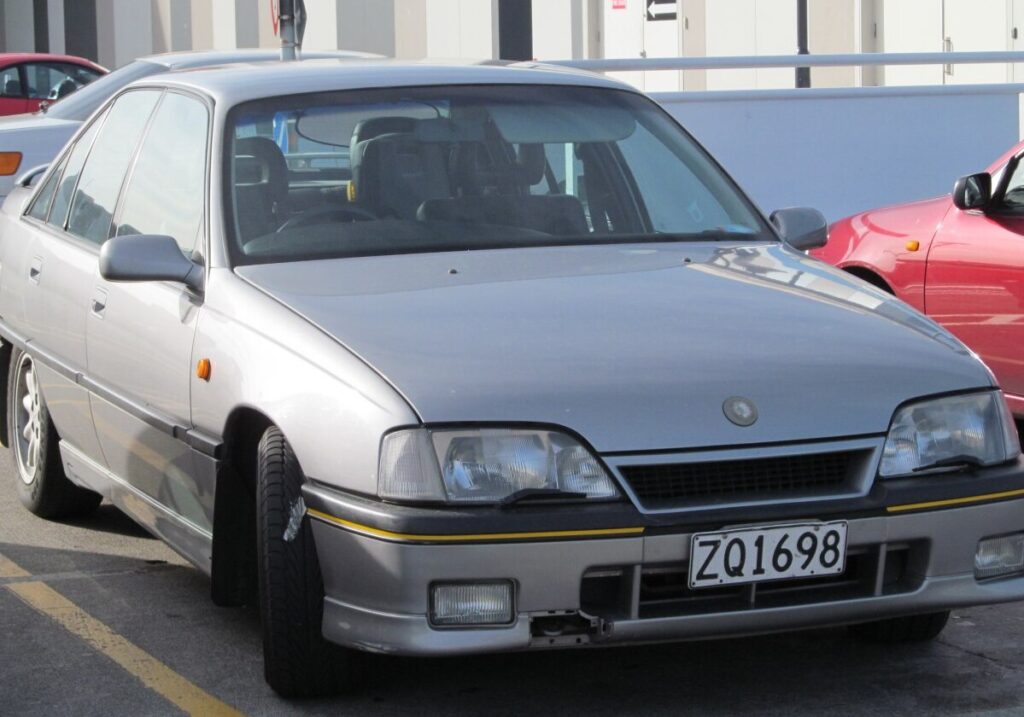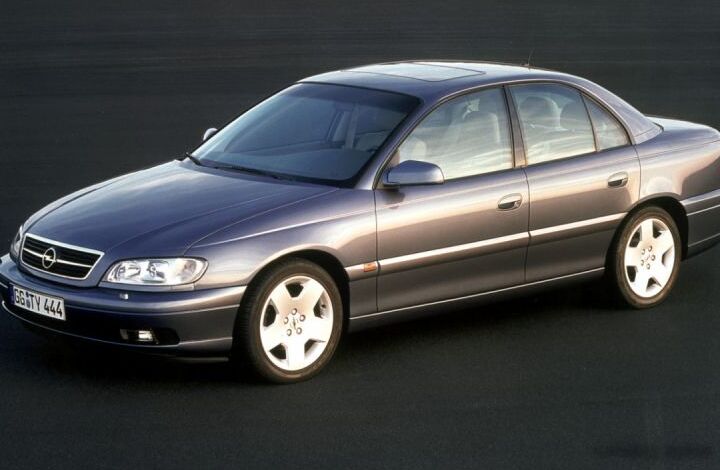
The Opel Omega B (facelift, introduced in 1999) 3.0i V6 Automatic represents the high-performance end of the Omega B sedan range. Produced from October 1999 to November 2000, this variant offered a significant step up in power and refinement compared to the four-cylinder models, positioning itself as Opel’s flagship sedan aimed at buyers seeking a comfortable, yet capable, grand tourer. The Omega B, built on the GM Epsilon platform (internally designated 1HX0/A3), was the final iteration of the Omega line, a nameplate known for its spaciousness and engineering prowess.
Opel Omega B 3.0i V6 Automatic: An Overview
The facelifted Omega B brought with it revised styling, improved interior materials, and updated engine options. The 3.0i V6 Automatic was the top-tier offering, boasting a naturally aspirated 3.0-liter V6 engine paired with a four-speed automatic transmission. This combination delivered a blend of smooth power delivery and effortless cruising, making it a popular choice for long-distance travel. It was intended to compete with other executive sedans of the era, such as the Ford Scorpio, BMW 5 Series, and Mercedes-Benz E-Class, though it often represented a more value-oriented proposition.
Powertrain & Engine Architecture
The heart of the 3.0i V6 Automatic is the X30XE engine, a 2,962 cc (180.75 cubic inches) 60-degree V6. This engine utilizes multi-port fuel injection and a double overhead camshaft (DOHC) valvetrain with four valves per cylinder. The X30XE is known for its robust construction and relatively simple design, contributing to its overall reliability. The compression ratio is set at 10.8:1. The engine produces 211 horsepower at 6000 rpm and 270 Nm (199.14 lb-ft) of torque at 3400 rpm. The engine is longitudinally mounted in the front of the vehicle, driving the rear wheels.
The four-speed automatic transmission, while not the most modern by today’s standards, was a reliable unit designed to handle the V6’s power output. It provided smooth shifts and contributed to the car’s comfortable driving experience. Specific gear ratios were tuned for a balance between acceleration and fuel efficiency, prioritizing comfortable cruising over outright performance. The transmission’s durability was a key factor in the Omega B’s appeal as a long-distance vehicle.
Driving Characteristics
The 3.0i V6 Automatic Omega B offered a distinctly different driving experience compared to the lower-spec models. Acceleration from 0 to 100 km/h (0-62 mph) took approximately 9.8 seconds, while 0-60 mph was achieved in around 9.3 seconds. Top speed was electronically limited to 238 km/h (147.89 mph). While not a sports car, the V6 provided ample power for overtaking and maintaining high speeds on the Autobahn. The automatic transmission, while smooth, did result in some power loss compared to the available five-speed manual transmission offered with the same engine.
The Omega B’s rear-wheel-drive configuration contributed to a balanced feel, although it lacked the agility of some of its competitors. The suspension, tuned for comfort, absorbed bumps and imperfections in the road effectively, providing a relaxed ride. The steering, utilizing a worm-reduction unit with hydraulic power assistance, was precise but lacked the feedback of more modern systems.
Equipment & Trim Levels
The 3.0i V6 Automatic typically came well-equipped, reflecting its position as the range-topping model. Standard features included power windows, power door locks, central locking, air conditioning, and an upgraded audio system. Leather upholstery was often standard, along with wood trim accents on the dashboard and door panels. Optional extras included a sunroof, heated seats, automatic climate control, and upgraded alloy wheels. The interior was spacious and well-appointed, offering a comfortable environment for both driver and passengers.
The facelifted Omega B also benefited from improved interior materials and a more modern dashboard design compared to the pre-facelift models. The instrument cluster was redesigned, and the overall fit and finish was improved. The focus was on creating a premium and comfortable interior environment.
Chassis & Braking
The Omega B 3.0i V6 Automatic featured a coil spring suspension system at both the front and rear. The chassis was designed to provide a comfortable ride while maintaining reasonable handling characteristics. Front brakes were ventilated discs, providing ample stopping power, while rear brakes were solid discs. Anti-lock Braking System (ABS) was standard, enhancing safety and control during emergency braking situations.
The car rode on 225/55 R16 tires mounted on 7J x 16 inch alloy wheels. The suspension was tuned to prioritize ride comfort over sporty handling, making it well-suited for long-distance cruising. Stabilizer bars were fitted to both the front and rear axles to reduce body roll during cornering.
Market Reception & Comparison
The Opel Omega B 3.0i V6 Automatic received generally positive reviews from automotive critics. It was praised for its spacious interior, comfortable ride, and powerful engine. However, some critics noted that the automatic transmission could feel sluggish at times, and the car’s handling was not as sharp as some of its competitors. Fuel economy was also a concern, with combined fuel consumption averaging around 12.3 l/100km (19 US mpg).
Compared to other trims in the Omega B lineup, the 3.0i V6 Automatic offered a significant performance advantage. It was considerably faster and more refined than the four-cylinder models. However, it also came with a higher price tag and increased running costs. In terms of reliability, the X30XE engine proved to be relatively robust, but the automatic transmission could be prone to issues if not properly maintained.
Technical Specifications
| Brand | Opel |
| Model | Omega |
| Generation | Omega B (facelift 1999) |
| Type (Engine) | 3.0i V6 (211 Hp) Automatic |
| Start of production | October, 1999 |
| End of production | November, 2000 |
| Powertrain Architecture | Internal Combustion engine |
| Body type | Sedan |
| Seats | 5 |
| Doors | 4 |
| Fuel consumption (urban) | 16.8 l/100 km (14 US mpg) |
| Fuel consumption (extra urban) | 8.4 l/100 km (28 US mpg) |
| Fuel Type | Petrol (Gasoline) |
| Acceleration 0 – 100 km/h | 9.8 sec |
| Acceleration 0 – 62 mph | 9.8 sec |
| Acceleration 0 – 60 mph | 9.3 sec |
| Maximum speed | 238 km/h (147.89 mph) |
| Weight-to-power ratio | 7.6 kg/Hp |
| Weight-to-torque ratio | 5.9 kg/Nm |
| Power | 211 Hp @ 6000 rpm |
| Torque | 270 Nm @ 3400 rpm (199.14 lb.-ft. @ 3400 rpm) |
| Engine layout | Front, Longitudinal |
| Engine Model/Code | X30XE |
| Engine displacement | 2962 cm3 (180.75 cu. in.) |
| Number of cylinders | 6 |
| Engine configuration | V-engine |
| Cylinder Bore | 86 mm (3.39 in.) |
| Piston Stroke | 85 mm (3.35 in.) |
| Compression ratio | 10.8:1 |
| Number of valves per cylinder | 4 |
| Fuel injection system | Multi-port manifold injection |
| Engine aspiration | Naturally aspirated engine |
| Valvetrain | DOHC |
| Engine oil capacity | 5.75 l (6.08 US qt | 5.06 UK qt) |
| Coolant | 9.7 l (10.25 US qt | 8.53 UK qt) |
| Kerb Weight | 1605 kg (3538.42 lbs.) |
| Max. weight | 2170 kg (4784.03 lbs.) |
| Max load | 565 kg (1245.61 lbs.) |
| Trunk (boot) space – minimum | 530 l (18.72 cu. ft.) |
| Trunk (boot) space – maximum | 830 l (29.31 cu. ft.) |
| Fuel tank capacity | 75 l (19.81 US gal | 16.5 UK gal) |
| Length | 4898 mm (192.83 in.) |
| Width | 1776 mm (69.92 in.) |
| Height | 1455 mm (57.28 in.) |
| Wheelbase | 2730 mm (107.48 in.) |
| Front track | 1514 mm (59.61 in.) |
| Rear (Back) track | 1528 mm (60.16 in.) |
| Ride height (ground clearance) | 140 mm (5.51 in.) |
| Drag coefficient (Cd) | 0.32 |
| Drivetrain Architecture | Rear wheel drive |
| Number of gears and type of gearbox | 4 gears, automatic transmission |
| Front suspension | Coil spring |
| Rear suspension | Coil spring |
| Front brakes | Ventilated discs |
| Rear brakes | Disc |
| Assisting systems | ABS (Anti-lock braking system) |
| Steering type | Worm-reduction unit |
| Power steering | Hydraulic Steering |
| Tires size | 225/55 R16 |
| Wheel rims size | 7J x 16 |
Legacy
Today, the Opel Omega B 3.0i V6 Automatic is a relatively rare sight. While generally reliable, the age of these vehicles means that maintenance and repair costs can be significant. The X30XE engine is known for its durability, but components like the automatic transmission and suspension bushings may require attention. The Omega B has gained a following among enthusiasts who appreciate its spaciousness, comfortable ride, and powerful engine. It represents a final chapter in Opel’s history of large, rear-wheel-drive sedans, and a testament to German engineering.