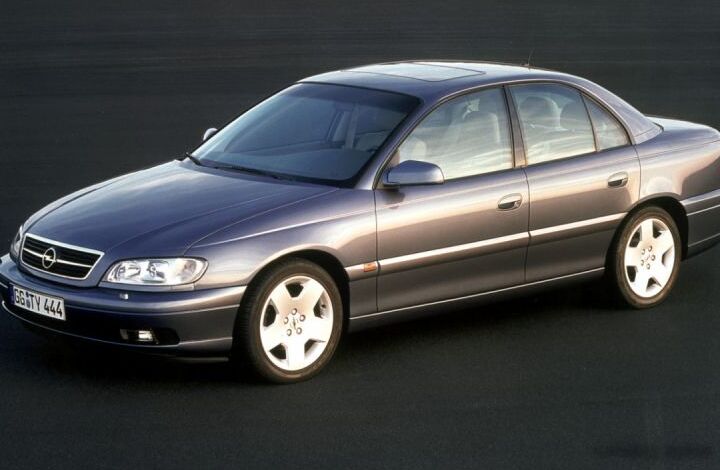
The Opel Omega B (facelift, introduced in 1999) 3.2i V6 Automatic represents the pinnacle of the Omega B range, offering a blend of luxury, performance, and technology. Produced from 2000 to 2003, this variant was positioned as the premium offering within the Omega B lineup, sitting above the four-cylinder and 2.5 V6 models. It was built on the GM Epsilon platform (internally designated 1HX0/A3), sharing its underpinnings with other GM vehicles of the era, including the Saab 9-5 and Vauxhall Vectra. The 3.2i V6 Automatic catered to buyers seeking a refined and powerful executive sedan.
The 3.2i V6 Engine and Transmission
The heart of the Omega B 3.2i is the Y32SE engine, a 3.2-liter (3175 cc) naturally aspirated V6. This engine is a 60-degree V-engine, featuring a cast iron block and aluminum cylinder heads. It produces 218 horsepower at 6000 rpm and 290 Nm (213.89 lb-ft) of torque at 3400 rpm, resulting in a power-to-liter ratio of 68.7 hp/l. The engine utilizes multi-port fuel injection and a double overhead camshaft (DOHC) valvetrain with four valves per cylinder. The Y32SE was known for its smooth power delivery and relatively robust construction.
Paired with the Y32SE engine is a four-speed automatic transmission. While not the most modern transmission by today’s standards, it was well-suited to the engine’s torque characteristics, providing smooth shifts and acceptable responsiveness. The transmission was designed to prioritize comfort and refinement over outright performance. Gear ratios were tuned for relaxed cruising, with a focus on maximizing fuel economy during highway driving. The automatic transmission contributed to the Omega’s appeal as a comfortable and easy-to-drive grand tourer.
Engine Code Specifics & Fuel System
The Y32SE engine code designates a specific iteration of the 3.2L V6 used in the Omega B. It’s important to note that this engine was also used in other GM vehicles, but the Omega B’s implementation included specific calibrations for the engine control unit (ECU) to optimize performance and emissions for the vehicle’s weight and aerodynamics. The fuel system is a conventional multi-port fuel injection system, delivering fuel directly to each intake port. This system, while not as advanced as direct injection, provided reliable and consistent fuel delivery. The engine requires 95 octane gasoline (premium fuel) for optimal performance.
Driving Characteristics
The Omega B 3.2i V6 Automatic delivers a refined and comfortable driving experience. Acceleration from 0 to 100 km/h (0-62 mph) takes approximately 9 seconds, while 0-60 mph is achieved in around 8.6 seconds. Top speed is electronically limited to 240 km/h (149.13 mph). The engine provides ample power for effortless highway cruising and confident overtaking maneuvers. However, it’s not a particularly sporty car; the focus is on smooth power delivery and a relaxed driving style. Compared to the manual transmission versions of the Omega B, the automatic sacrifices some responsiveness, but gains in ease of use. Compared to the lower-displacement engines in the Omega B range, the 3.2i V6 offers a significant performance advantage, providing a more engaging and rewarding driving experience.
The four-speed automatic transmission, while smooth, can feel somewhat dated compared to more modern transmissions with more gears. It doesn’t offer the same level of control or responsiveness as a manual transmission or a more advanced automatic. However, it contributes to the Omega’s overall comfort and ease of driving.
Equipment & Trim Levels
The 3.2i V6 Automatic typically came equipped with a high level of standard features. These included leather upholstery, automatic climate control, power windows and mirrors, central locking, an upgraded audio system, and alloy wheels. Optional extras included a sunroof, navigation system, heated seats, and upgraded sound systems. The interior was designed with comfort and luxury in mind, featuring high-quality materials and a spacious cabin. The dashboard layout was functional and well-organized, with easy-to-read gauges and intuitive controls.
Trim levels varied slightly depending on the market, but generally, the 3.2i V6 Automatic represented the highest level of equipment available for the Omega B. The focus was on providing a premium experience for the driver and passengers.
Chassis & Braking
The Omega B 3.2i V6 Automatic features a coil spring suspension system at both the front and rear. The suspension was tuned for comfort, providing a smooth and controlled ride. The front suspension utilizes MacPherson struts, while the rear suspension employs a multi-link design. The car’s relatively heavy weight (1710 kg / 3769.9 lbs) necessitates a robust suspension setup.
Braking duties are handled by ventilated discs on all four wheels. The braking system provides adequate stopping power, but it’s not particularly sporty. Power steering is standard, providing light and easy steering effort. The Omega B 3.2i V6 Automatic is equipped with 225/55 R16 tires mounted on 16-inch alloy wheels.
Market Reception & Comparison
The Opel Omega B 3.2i V6 Automatic was generally well-received by automotive critics. It was praised for its smooth engine, comfortable ride, and spacious interior. However, some critics noted that the car was somewhat bland in terms of styling and that the four-speed automatic transmission felt dated. Fuel economy was also a concern, with combined fuel consumption averaging 11.8 l/100 km (19.9 US mpg). Compared to other trims in the Omega B lineup, the 3.2i V6 Automatic offered a significant performance advantage, but at a higher price point. It competed with other executive sedans such as the Ford Mondeo, Volkswagen Passat, and BMW 5 Series.
Technical Specifications
| Brand | Opel |
| Model | Omega |
| Generation | Omega B (facelift 1999) |
| Type (Engine) | 3.2i V6 (218 Hp) Automatic |
| Start of production | 2000 year |
| End of production | 2003 year |
| Powertrain Architecture | Internal Combustion engine |
| Body type | Sedan |
| Seats | 5 |
| Doors | 4 |
| Fuel consumption (urban) | 16.8 l/100 km (14 US mpg) |
| Fuel consumption (extra urban) | 8.9 l/100 km (26.4 US mpg) |
| Fuel consumption (combined) | 11.8 l/100 km (19.9 US mpg) |
| Fuel Type | Petrol (Gasoline) |
| Acceleration 0 – 100 km/h | 9 sec |
| Acceleration 0 – 62 mph | 9 sec |
| Acceleration 0 – 60 mph | 8.6 sec |
| Maximum speed | 240 km/h (149.13 mph) |
| Weight-to-power ratio | 7.8 kg/Hp |
| Weight-to-torque ratio | 5.9 kg/Nm |
| Power | 218 Hp @ 6000 rpm |
| Torque | 290 Nm @ 3400 rpm (213.89 lb.-ft. @ 3400 rpm) |
| Engine layout | Front, Longitudinal |
| Engine Model/Code | Y32SE |
| Engine displacement | 3175 cm3 (193.75 cu. in.) |
| Number of cylinders | 6 |
| Engine configuration | V-engine |
| Cylinder Bore | 87.5 mm (3.44 in.) |
| Piston Stroke | 88 mm (3.46 in.) |
| Compression ratio | 10:1 |
| Number of valves per cylinder | 4 |
| Fuel injection system | Multi-port manifold injection |
| Engine aspiration | Naturally aspirated engine |
| Valvetrain | DOHC |
| Engine oil capacity | 5.75 l (6.08 US qt | 5.06 UK qt) |
| Coolant | 9.7 l (10.25 US qt | 8.53 UK qt) |
| Kerb Weight | 1710 kg (3769.9 lbs.) |
| Max. weight | 2185 kg (4817.1 lbs.) |
| Max load | 475 kg (1047.2 lbs.) |
| Trunk (boot) space – minimum | 530 l (18.72 cu. ft.) |
| Trunk (boot) space – maximum | 830 l (29.31 cu. ft.) |
| Fuel tank capacity | 75 l (19.81 US gal | 16.5 UK gal) |
| Length | 4898 mm (192.83 in.) |
| Width | 1776 mm (69.92 in.) |
| Height | 1455 mm (57.28 in.) |
| Wheelbase | 2730 mm (107.48 in.) |
| Front track | 1514 mm (59.61 in.) |
| Rear (Back) track | 1528 mm (60.16 in.) |
| Ride height (ground clearance) | 140 mm (5.51 in.) |
| Drag coefficient (Cd) | 0.32 |
| Drivetrain Architecture | Rear wheel drive |
| Drive wheel | Rear wheel drive |
| Number of gears and type of gearbox | 4 gears, automatic transmission |
| Front suspension | Coil spring |
| Rear suspension | Coil spring |
| Front brakes | Ventilated discs |
| Rear brakes | Ventilated discs |
| Steering type | Worm-reduction unit |
| Power steering | Hydraulic Steering |
| Tires size | 225/55 R16 |
| Wheel rims size | 16 |
Legacy
The Opel Omega B 3.2i V6 Automatic, while not a common sight today, has developed a following among enthusiasts who appreciate its blend of comfort, performance, and relative reliability. The Y32SE engine, when properly maintained, is known to be a durable unit. However, like all older vehicles, it’s susceptible to age-related issues such as oil leaks and sensor failures. The automatic transmission, while generally reliable, can require servicing. On the used car market, these Omegas are typically available at affordable prices, making them an attractive option for those seeking a spacious and comfortable executive sedan with a powerful V6 engine. Parts availability can be a challenge in some regions, but a dedicated community of Omega owners and specialists exists to provide support and assistance.