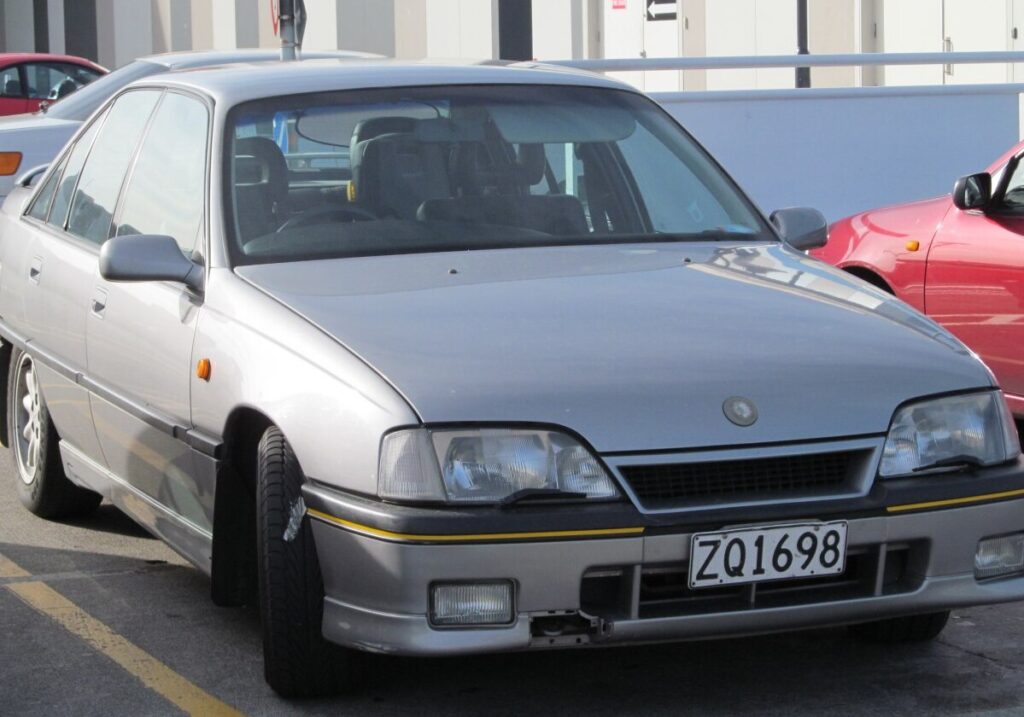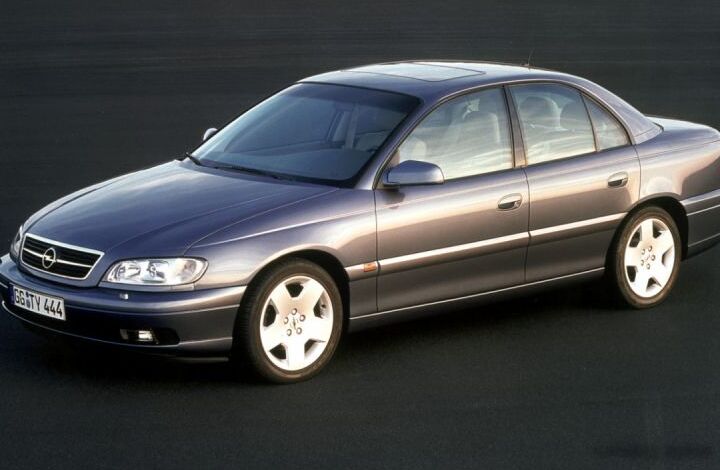
The Opel Omega B (facelift, introduced in 1999) 5.7i V8 Automatic represents the pinnacle of performance for the Omega B generation. Produced from 2000 to 2001, this variant was positioned as the flagship model, offering a substantial increase in power and luxury compared to the more common four and six-cylinder versions. It was built on the GM Epsilon platform (internally designated 1HX0/A3), sharing its underpinnings with other GM vehicles of the era, including the Saab 9-5 and the Vauxhall Vectra. The 5.7i V8 was a relatively short-lived offering, aimed at buyers seeking a powerful, comfortable, and sophisticated grand touring sedan.
The 5.7i V8: A Performance Flagship
The Omega B facelift, released in 1999, brought with it revised styling, improved interior materials, and updated technology. However, the 5.7i V8 was the standout feature, transforming the Omega from a respectable family sedan into a genuine performance machine. This model catered to a niche market, appealing to those who desired a powerful rear-wheel-drive sedan without the prestige price tag of its German competitors like the BMW 5 Series or Mercedes-Benz E-Class. The combination of a large-displacement V8 engine and a four-speed automatic transmission provided a unique driving experience, prioritizing effortless acceleration and comfortable cruising over outright fuel efficiency.
Powertrain & Engine Architecture
At the heart of the 5.7i V8 Omega lies the Y57XE engine, a naturally aspirated 5.7-liter (5665 cc / 345.7 cu. in.) V8. This engine, part of Opel’s LS-series V8 family, features a cast iron block and aluminum cylinder heads. It utilizes a multi-port fuel injection system, delivering fuel directly into the intake ports. The engine boasts a compression ratio of 10.1:1 and is equipped with two valves per cylinder. The Y57XE produces 310 horsepower (hp) at 5600 rpm and 450 Newton-meters (331.9 lb.-ft.) of torque at 4400 rpm. This translates to a power output of 54.7 hp per liter. The engine oil capacity is 6 liters (6.34 US qt / 5.28 UK qt).
The engine is mated to a four-speed automatic transmission, designed to handle the substantial torque output. While not as sophisticated as modern automatic transmissions with more gears, this unit provided smooth and reliable operation. The transmission’s gear ratios were tuned for a balance between acceleration and cruising comfort. The drivetrain is rear-wheel drive, contributing to the car’s balanced handling characteristics.
Driving Characteristics
The 5.7i V8 Omega delivers a distinctly American-style driving experience within a European package. Acceleration from 0 to 100 km/h (0-62 mph) takes approximately 7 seconds, with a 0-60 mph time of around 6.7 seconds. The car’s top speed is electronically limited to 250 km/h (155.34 mph). The engine’s abundant torque provides strong acceleration in any gear, making overtaking effortless. The automatic transmission shifts smoothly, although it lacks the responsiveness of more modern units. The rear-wheel-drive configuration contributes to a balanced feel, although the car’s weight (1650 kg / 3637.63 lbs. kerb weight) is noticeable in corners. Compared to the lower-powered Omega variants, the 5.7i V8 offers a significantly more engaging and rewarding driving experience, prioritizing performance over fuel economy.
Equipment & Trim Levels
As the range-topping model, the 5.7i V8 Omega came standard with a comprehensive list of features. These typically included leather upholstery, power-adjustable front seats with memory function, automatic climate control, a premium sound system, and alloy wheels. Other standard equipment included anti-lock brakes (ABS), traction control, and power windows and mirrors. Optional extras included a sunroof, navigation system, and upgraded audio options. The interior trim was generally executed with high-quality materials, reflecting the car’s premium positioning. The dashboard layout was typical of the Omega B facelift, featuring a clean and functional design.
Chassis & Braking
The Omega B 5.7i V8 utilizes a coil spring suspension system at both the front and rear. The suspension was tuned to provide a comfortable ride while maintaining reasonable handling characteristics. The front brakes are ventilated discs, while the rear brakes are solid discs. The car is equipped with hydraulic power steering, providing a responsive and precise steering feel. Tire size is 235/45 R17, mounted on 17-inch alloy wheels. The ride height (ground clearance) is 140 mm (5.51 in). The drag coefficient (Cd) is 0.32, which is respectable for a sedan of this size and era.
Market Reception & Comparison
The Opel Omega B 5.7i V8 received generally positive reviews from automotive critics. It was praised for its powerful engine, comfortable ride, and spacious interior. However, some critics noted the car’s relatively high fuel consumption and the somewhat dated four-speed automatic transmission. Compared to its rivals, the Omega 5.7i V8 offered a compelling value proposition, providing similar performance to more expensive German luxury sedans at a lower price point. Fuel economy figures are 18 l/100 km (13.1 US mpg / 15.7 UK mpg / 5.6 km/l) urban, 10 l/100 km (23.5 US mpg / 28.2 UK mpg / 10 km/l) extra urban, and 14 l/100 km (16.8 US mpg / 20.2 UK mpg / 7.1 km/l) combined. Reliability was generally good, although the V8 engine requires regular maintenance to ensure optimal performance.
Technical Specifications
| Brand | Opel |
| Model | Omega |
| Generation | Omega B (facelift 1999) |
| Type (Engine) | 5.7i V8 (310 Hp) Automatic |
| Start of production | 2000 year |
| End of production | 2001 year |
| Powertrain Architecture | Internal Combustion engine |
| Body type | Sedan |
| Seats | 5 |
| Doors | 4 |
| Fuel consumption (urban) | 18 l/100 km (13.1 US mpg / 15.7 UK mpg) |
| Fuel consumption (extra urban) | 10 l/100 km (23.5 US mpg / 28.2 UK mpg) |
| Fuel consumption (combined) | 14 l/100 km (16.8 US mpg / 20.2 UK mpg) |
| Fuel Type | Petrol (Gasoline) |
| Acceleration 0 – 100 km/h | 7 sec |
| Acceleration 0 – 62 mph | 7 sec |
| Acceleration 0 – 60 mph | 6.7 sec |
| Maximum speed | 250 km/h (155.34 mph) |
| Weight-to-power ratio | 5.3 kg/Hp |
| Weight-to-torque ratio | 3.7 kg/Nm |
| Power | 310 Hp @ 5600 rpm |
| Torque | 450 Nm @ 4400 rpm (331.9 lb.-ft. @ 4400 rpm) |
| Engine layout | Front, Longitudinal |
| Engine Model/Code | Y57XE |
| Engine displacement | 5665 cm3 (345.7 cu. in.) |
| Number of cylinders | 8 |
| Engine configuration | V-engine |
| Cylinder Bore | 99 mm (3.9 in.) |
| Piston Stroke | 92 mm (3.62 in.) |
| Compression ratio | 10.1:1 |
| Number of valves per cylinder | 2 |
| Fuel injection system | Multi-port manifold injection |
| Engine aspiration | Naturally aspirated engine |
| Engine oil capacity | 6 l (6.34 US qt / 5.28 UK qt) |
| Kerb Weight | 1650 kg (3637.63 lbs.) |
| Max. weight | 2195 kg (4839.15 lbs.) |
| Max load | 545 kg (1201.52 lbs.) |
| Trunk (boot) space (minimum) | 530 l (18.72 cu. ft.) |
| Trunk (boot) space (maximum) | 830 l (29.31 cu. ft.) |
| Fuel tank capacity | 75 l (19.81 US gal / 16.5 UK gal) |
| Length | 4898 mm (192.83 in.) |
| Width | 1775 mm (69.88 in.) |
| Height | 1450 mm (57.09 in.) |
| Wheelbase | 2730 mm (107.48 in.) |
| Front track | 1514 mm (59.61 in.) |
| Rear track | 1528 mm (60.16 in.) |
| Ride height (ground clearance) | 140 mm (5.51 in.) |
| Drag coefficient (Cd) | 0.32 |
| Drivetrain Architecture | Rear wheel drive |
| Number of gears and type of gearbox | 4 gears, automatic transmission |
| Front suspension | Coil spring |
| Rear suspension | Coil spring |
| Front brakes | Ventilated discs |
| Rear brakes | Disc |
| Assisting systems | ABS (Anti-lock braking system) |
| Steering type | Steering rack and pinion |
| Power steering | Hydraulic Steering |
| Tires size | 235/45 R17 |
| Wheel rims size | 17 |
Legacy
The Opel Omega B 5.7i V8, while a relatively rare model, has gained a cult following among enthusiasts. Its combination of power, comfort, and relative affordability has made it a desirable classic. The Y57XE V8 engine, when properly maintained, is known for its durability. However, as with any older vehicle, preventative maintenance is crucial. On the used car market, these Omegas command a premium over the lower-powered variants, reflecting their unique appeal and limited production numbers. The 5.7i V8 Omega B stands as a testament to Opel’s ambition to create a world-class performance sedan, offering a distinctive alternative to its more established German rivals.