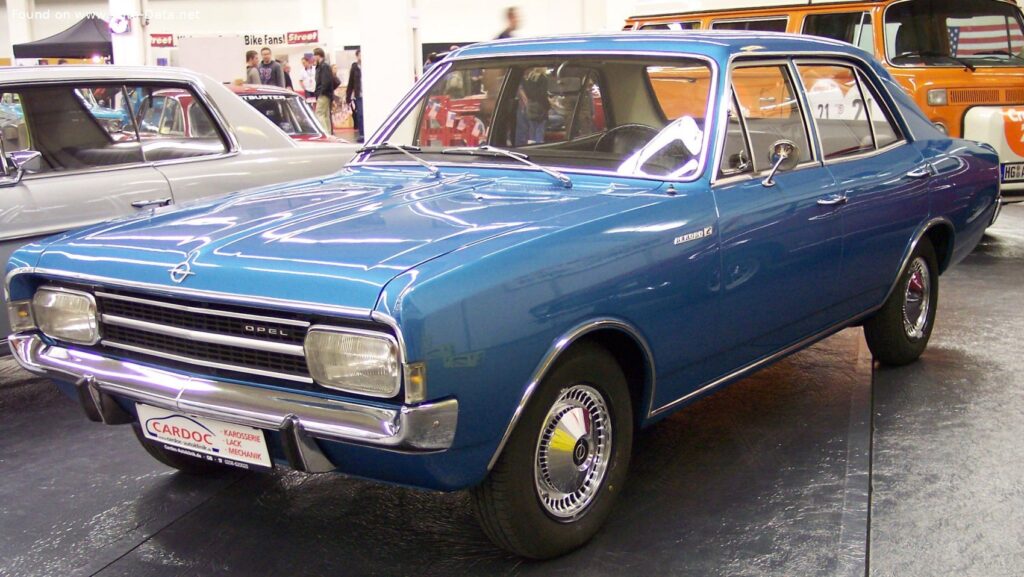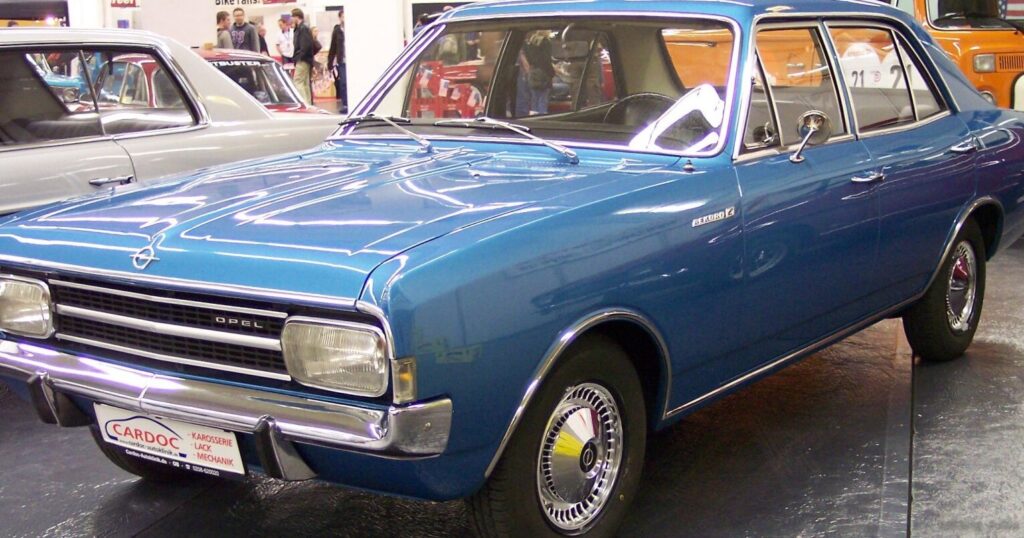
The Opel Rekord C 1.5, producing 58 horsepower, was a mainstay of the Rekord C range produced between 1966 and 1969. Representing the entry-level offering within the Rekord C generation (internally designated as the 1HX0 series), this variant was designed for affordability and practicality, appealing to a broad customer base seeking reliable family transportation. The Rekord C itself was a significant model for Opel, representing a move towards more modern styling and engineering compared to its predecessors. This particular 1.5-liter version, paired with a three-speed manual transmission, was a common sight on European roads during its production run.
Powertrain & Engine Architecture
The heart of the Rekord C 1.5 was the Opel inline-four cylinder engine, displacing 1492 cc (91.05 cubic inches). This engine, identifiable by its various internal codes depending on the specific year and market, was a naturally aspirated unit featuring a single overhead camshaft (SOHC) valvetrain, utilizing Opel’s CIH (Camshaft In Head) design. The CIH engine was a relatively advanced design for its time, offering improved breathing and efficiency compared to older pushrod configurations. Fuel delivery was managed by a carburetor, a common setup for vehicles of this era. The engine produced a maximum power output of 58 hp (43 kW) at 4800 rpm and 103 Nm (75.97 lb-ft) of torque between 2000 and 3000 rpm. The compression ratio was set at 8.2:1. Engine oil capacity was 3.3 liters (3.49 US quarts / 2.9 UK quarts), and the cooling system required 7.2 liters (7.61 US quarts / 6.34 UK quarts) of coolant.
Transmission
The 1.5-liter engine was primarily paired with a three-speed manual transmission. This gearbox was a fully synchronized unit, offering relatively smooth shifting for the period. The gear ratios were optimized for fuel economy and everyday driving, rather than outright performance. The rear-wheel drive configuration was standard for the Rekord C, with the engine mounted longitudinally in the front of the vehicle.
Driving Characteristics
The Rekord C 1.5, with its modest 58 horsepower, was not designed for sporty driving. Acceleration was adequate for merging into traffic and maintaining highway speeds, but it was certainly not a quick car by modern standards. The three-speed manual transmission required frequent shifting, especially when encountering hills or overtaking. The engine’s torque peak at 2000-3000 rpm meant that it felt relatively responsive in the mid-range, but power tapered off noticeably at higher engine speeds. Compared to later Rekord C variants equipped with larger engines (such as the 1.7 or 2.1-liter versions), the 1.5 felt significantly underpowered. However, this also contributed to its better fuel economy and lower running costs.
Equipment & Trim Levels
The Rekord C 1.5 was typically equipped with basic, functional interior appointments. Standard features included cloth upholstery, a simple dashboard layout with basic instrumentation (speedometer, fuel gauge, and temperature gauge), and manually operated windows and door locks. The steering was hydraulic, which was a welcome feature for ease of maneuverability. Optional extras included a radio, upgraded upholstery, and a sunroof. The trim level was generally consistent across the 1.5-liter models, with minimal variations in standard equipment. The focus was on providing a practical and affordable vehicle, rather than luxury or extensive features.
Chassis & Braking
The Rekord C 1.5 utilized a traditional body-on-frame construction. The front suspension consisted of a double wishbone setup, providing a reasonable level of ride comfort. The rear suspension employed a rigid axle with trailing arms and coil springs. This configuration was typical for vehicles of this era and offered a good balance between ride quality and handling. Braking duties were handled by disc brakes at the front and drum brakes at the rear. The steering system was a cone worm with recirculation balls, providing a relatively direct steering feel. Tire size was typically 175/75R13 for both front and rear wheels, mounted on 4.5J or 5J x 13 inch steel rims.
Market Reception & Comparison
The Opel Rekord C 1.5 was generally well-received by the motoring press as a practical and affordable family car. Critics praised its comfortable ride, spacious interior, and reasonable fuel economy. However, the engine’s lack of power was often noted as a drawback, particularly when compared to competitors offering larger displacement engines. In terms of fuel consumption, the Rekord C 1.5 averaged around 11 liters per 100 kilometers (21.4 US mpg / 25.7 UK mpg / 9.1 km/l). Compared to the higher-spec Rekord C models, the 1.5 offered a more economical option, but at the expense of performance. It competed directly with other mainstream family sedans of the time, such as the Ford Taunus and Volkswagen Passat.
Technical Specifications
| Brand | Opel |
| Model | Rekord |
| Generation | Rekord C |
| Type (Engine) | 1.5 (58 Hp) Manual 3-speed |
| Start of production | 1966 |
| End of production | 1969 |
| Body type | Sedan |
| Seats | 5 |
| Doors | 4 |
| Fuel consumption (combined) | 11 l/100 km (21.4 US mpg, 25.7 UK mpg, 9.1 km/l) |
| Fuel Type | Petrol (Gasoline) |
| Maximum speed | 133 km/h (82.64 mph) |
| Weight-to-power ratio | 18 kg/Hp |
| Weight-to-torque ratio | 10.1 kg/Nm |
| Power | 58 Hp @ 4800 rpm |
| Torque | 103 Nm @ 2000-3000 rpm (75.97 lb.-ft. @ 2000-3000 rpm) |
| Engine layout | Front, Longitudinal |
| Engine displacement | 1492 cm3 (91.05 cu. in.) |
| Number of cylinders | 4 |
| Engine configuration | Inline |
| Cylinder Bore | 82.5 mm (3.25 in.) |
| Piston Stroke | 69.8 mm (2.75 in.) |
| Compression ratio | 8.2:1 |
| Number of valves per cylinder | 2 |
| Fuel injection system | Carburettor |
| Engine aspiration | Naturally aspirated |
| Engine oil capacity | 3.3 l (3.49 US qt | 2.9 UK qt) |
| Coolant | 7.2 l (7.61 US qt | 6.34 UK qt) |
| Kerb Weight | 1045 kg (2303.83 lbs.) |
| Max. weight | 1480 kg (3262.84 lbs.) |
| Max load | 435 kg (959.01 lbs.) |
| Fuel tank capacity | 55 l (14.53 US gal | 12.1 UK gal) |
| Length | 4550 mm (179.13 in.) |
| Width | 1758 mm (69.21 in.) |
| Height | 1453 mm (57.2 in.) |
| Wheelbase | 2668 mm (105.04 in.) |
| Front track | 1400 mm (55.12 in.) |
| Rear track | 1400 mm (55.12 in.) |
| Minimum turning circle | 11.74 m (38.52 ft.) |
| Drivetrain | Rear wheel drive |
| Number of gears | 3 |
| Gearbox type | Manual transmission |
| Front suspension | Double wishbone |
| Rear suspension | Rigid axle, Trailing arm, Coil spring |
| Front brakes | Disc |
| Rear brakes | Drum |
Legacy
The Opel Rekord C 1.5, while not the most powerful or technologically advanced variant of the Rekord C, remains a popular choice among classic car enthusiasts due to its affordability, simplicity, and relative reliability. The CIH engine, despite its age, is known for its durability and ease of maintenance. Today, well-maintained examples of the Rekord C 1.5 can be found in the used car market, often appealing to those seeking a classic European sedan for restoration or occasional enjoyment. While parts availability can be a challenge, a dedicated community of Opel enthusiasts continues to support the preservation of these vehicles. The 1.5-liter engine and three-speed manual transmission combination, while modest in performance, represents a significant piece of automotive history and a testament to Opel’s commitment to providing practical and reliable transportation to the masses.