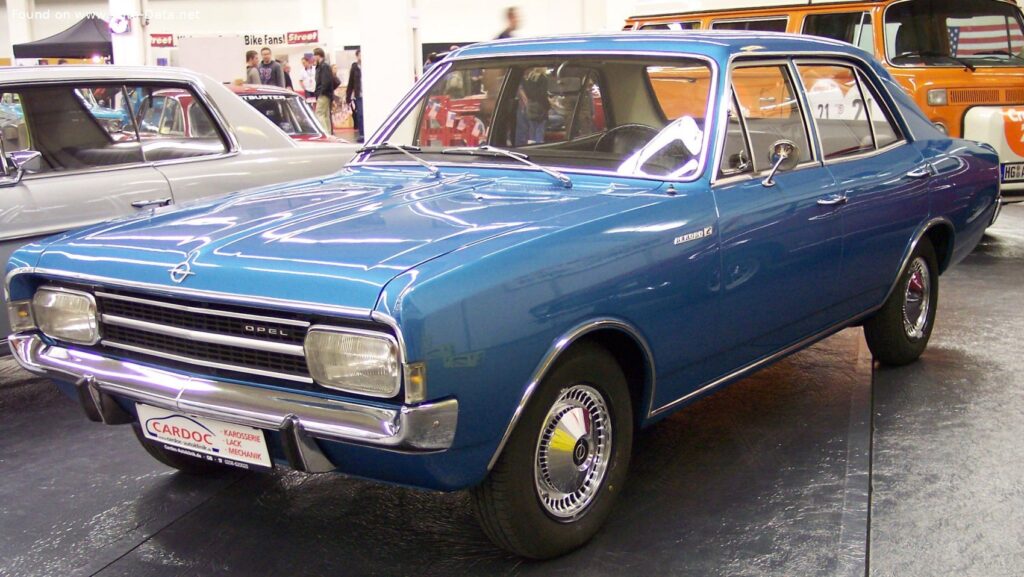
The Opel Rekord C 1.7, producing 60 horsepower, was a mainstay of the Rekord C lineup produced between 1966 and 1971. Positioned as the entry-level model, it offered affordable transportation within the mid-size segment. The Rekord C itself represented a significant evolution for Opel, building upon the success of the Rekord A and B, and was based on the new platform designed for greater comfort and practicality. This 1.7-liter variant, typically equipped with a three-speed manual transmission, catered to buyers prioritizing economy and basic functionality over outright performance. It served as a popular choice for families and individuals seeking a reliable and spacious sedan.
Powertrain & Engine Architecture
The heart of the Rekord C 1.7 was the Opel inline-four cylinder engine, designated with various internal codes depending on the specific year and market. This 1,698 cc (103.62 cubic inches) engine featured a cast iron block and cylinder head, with a two-valve per cylinder configuration. The valvetrain employed Opel’s CIH (Camshaft In Head) design, a relatively advanced system for its time, contributing to improved breathing and efficiency. Fuel delivery was managed by a single carburetor, a common setup for vehicles of this era. The engine produced 60 horsepower at 4,600 rpm and 116 Nm (85.56 lb-ft) of torque between 2,000 and 2,600 rpm.
The engine was mounted longitudinally in the front of the vehicle. The standard transmission was a three-speed manual gearbox. This transmission was chosen for its simplicity and cost-effectiveness, aligning with the entry-level positioning of the 1.7-liter model. The gear ratios were optimized for fuel economy and everyday drivability, rather than sporty acceleration. While an automatic transmission was offered on higher-spec Rekord C models, it was not available with the base 1.7-liter engine.
Engine Specifications
Key engine specifications included a compression ratio of 8.2:1, a bore of 88 mm (3.46 inches), and a stroke of 69.8 mm (2.75 inches). The engine required 3.3 liters (3.49 US quarts) of oil and 6.9 liters (7.29 US quarts) of coolant. The engine oil specification would have varied depending on the year and region, but typically would have been a mineral-based oil meeting the standards of the time.
Driving Characteristics
The driving experience in the Rekord C 1.7 was characterized by its smooth, if unhurried, nature. The 60 horsepower engine provided adequate power for typical urban and highway driving, but acceleration was modest. The three-speed manual transmission required frequent shifting, particularly when overtaking or climbing hills. The engine’s torque peak at 2,000-2,600 rpm meant that it felt relatively responsive at lower speeds, but power tapered off noticeably as the revs climbed. The rear-wheel-drive configuration provided predictable handling, although it lacked the sophistication of more modern suspension systems.
Compared to the more powerful Rekord C variants, such as those equipped with the 1.9-liter or 2.1-liter engines, the 1.7-liter model felt significantly slower. The larger engines offered a more relaxed cruising experience and greater flexibility for passing maneuvers. However, the 1.7-liter version excelled in fuel economy, making it a more attractive option for budget-conscious buyers. The manual transmission, while requiring more driver involvement, offered better control and efficiency than the optional automatic transmissions available on other Rekord C models.
Equipment & Trim Levels
The Rekord C 1.7 was typically equipped with basic, functional features. Standard equipment included cloth upholstery, a simple dashboard layout with analog gauges, and basic exterior trim. The interior was designed for practicality and durability, rather than luxury. Options were limited, but could include a radio, heater, and upgraded interior trim. The exterior typically featured minimal chrome accents and steel wheels with hubcaps. The focus was on providing a reliable and affordable vehicle, rather than a lavishly equipped one.
The trim level for the 1.7-liter model was generally the base level, often simply referred to as the “Rekord C.” Higher trim levels, such as the “Rekord C Deluxe,” offered additional features like more comfortable seating, upgraded interior trim, and additional chrome exterior accents. These higher trims were typically paired with the larger engines.
Chassis & Braking
The Rekord C 1.7 featured a traditional chassis design for the era. The front suspension utilized a double wishbone setup, providing a reasonable level of ride comfort and handling. The rear suspension employed a rigid axle with trailing arms and coil springs. This setup was robust and relatively simple to maintain, but it lacked the sophistication of independent rear suspension systems. The steering was a cone worm with recirculation balls, offering adequate precision but requiring a fair amount of effort.
The braking system consisted of disc brakes on the front wheels and drum brakes on the rear wheels. This configuration was typical for vehicles of this size and price range in the 1960s. The brakes provided adequate stopping power for normal driving conditions, but they lacked the performance of more modern braking systems. The tires were typically 175/75R13, providing a balance of grip and ride comfort.
Market Reception & Comparison
The Opel Rekord C 1.7 was generally well-received by critics as a practical and affordable family sedan. It was praised for its spacious interior, comfortable ride, and reliable engine. However, it was also criticized for its modest performance and basic equipment level. Compared to other vehicles in its class, such as the Ford Taunus and the Volkswagen Passat, the Rekord C 1.7 offered a competitive combination of price, space, and reliability.
Fuel economy was a key selling point for the 1.7-liter model, achieving approximately 12.1 l/100 km (19.4 US mpg). This was relatively good for a vehicle of its size and era. Reliability was also a strong suit, with the 1.7-liter engine proving to be durable and long-lasting. However, maintenance costs could be higher than some competitors due to the need for regular carburetor adjustments and valve adjustments.
Technical Specifications
| Brand | Opel |
| Model | Rekord |
| Generation | Rekord C |
| Type | 1.7 (60 Hp) Manual 3-speed |
| Start of production | 1966 |
| End of production | 1971 |
| Body type | Sedan |
| Seats | 5 |
| Doors | 4 |
| Fuel consumption (combined) | 12.1 l/100 km (19.4 US mpg) |
| Fuel Type | Petrol (Gasoline) |
| Maximum speed | 136 km/h (84.51 mph) |
| Weight-to-power ratio | 17.4 kg/Hp |
| Engine Power | 60 Hp @ 4600 rpm |
| Engine Torque | 116 Nm @ 2000-2600 rpm (85.56 lb.-ft.) |
| Engine layout | Front, Longitudinal |
| Engine displacement | 1698 cm3 (103.62 cu. in.) |
| Number of cylinders | 4 |
| Engine configuration | Inline |
| Cylinder Bore | 88 mm (3.46 in.) |
| Piston Stroke | 69.8 mm (2.75 in.) |
| Compression ratio | 8.2:1 |
| Number of valves per cylinder | 2 |
| Fuel injection system | Carburettor |
| Engine oil capacity | 3.3 l (3.49 US qt | 2.9 UK qt) |
| Coolant capacity | 6.9 l (7.29 US qt | 6.07 UK qt) |
| Kerb Weight | 1045 kg (2303.83 lbs.) |
| Max. weight | 1480 kg (3262.84 lbs.) |
| Max load | 435 kg (959.01 lbs.) |
| Fuel tank capacity | 55 l (14.53 US gal | 12.1 UK gal) |
| Length | 4550 mm (179.13 in.) |
| Width | 1758 mm (69.21 in.) |
| Height | 1453 mm (57.2 in.) |
| Wheelbase | 2668 mm (105.04 in.) |
| Number of gears | 3 |
| Gearbox type | Manual transmission |
Legacy
The Opel Rekord C 1.7, while not the most powerful or luxurious variant of the Rekord C, remains a fondly remembered classic among enthusiasts. Its simple, robust engine and durable construction have ensured that many examples are still on the road today. The 1.7-liter engine, while requiring regular maintenance, is generally considered to be reliable and relatively easy to repair. In the used car market, the Rekord C 1.7 is often sought after by collectors and enthusiasts looking for a classic European sedan. Its affordability and practicality continue to make it an appealing option for those seeking a vintage vehicle with character and charm.