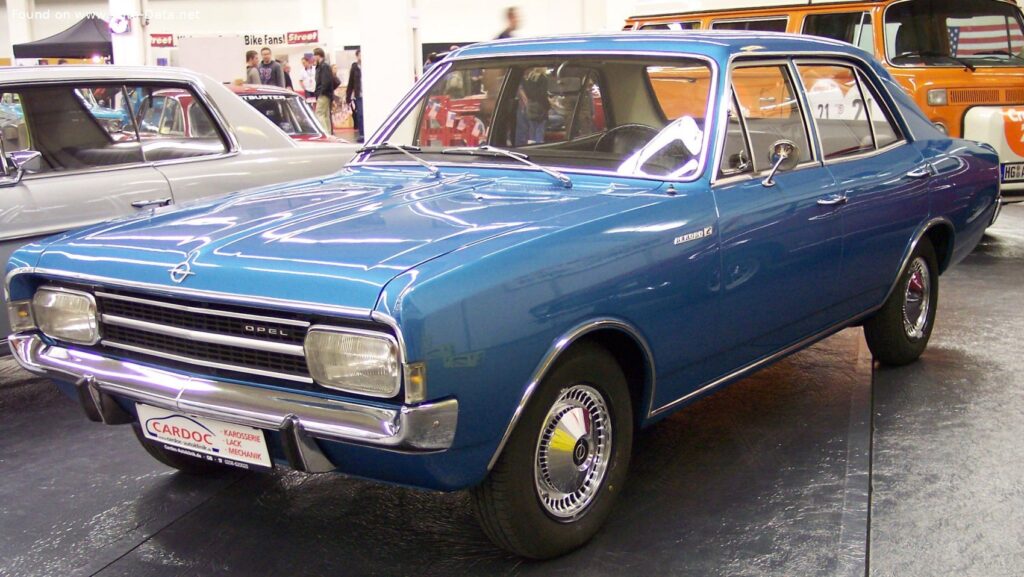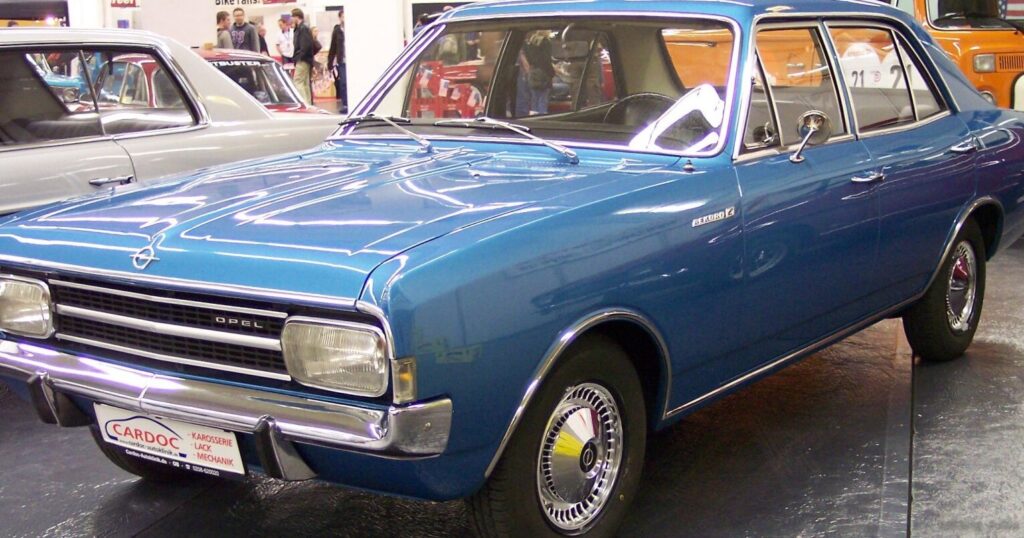
The Opel Rekord C 1.7, producing 60 horsepower, was a mainstay of the Rekord C lineup produced between 1966 and 1971. Positioned as the entry-level model, it offered affordable transportation within the mid-size segment. The Rekord C itself represented a significant step forward for Opel, building upon the success of the Rekord A and B, and was built on the same platform throughout its production run. This variant, with its modest engine and manual transmission, was aimed at buyers prioritizing economy and practicality over outright performance. It served as a popular choice for families and those seeking a reliable, if unexciting, vehicle.
Opel Rekord C 1.7: An Overview
The Rekord C was a crucial model for Opel, helping to establish the brand as a major player in the European automotive market. Introduced in 1966, it featured a more modern design than its predecessors, with a larger cabin and improved comfort. The 1.7-liter variant, with its 60 hp output, was the base engine option, offering a balance between affordability and usability. It was available exclusively with a four-speed manual transmission during its production run. The Rekord C was available as a two-door coupe, a four-door sedan (the most common body style), and a station wagon (Kombi).
Powertrain & Engine Architecture
The heart of the Rekord C 1.7 was the Opel 1698 cc inline-four cylinder engine. This engine, while relatively simple in design, was known for its durability and ease of maintenance. It featured a single overhead camshaft (SOHC) valvetrain, utilizing two valves per cylinder. The engine employed a carburetor for fuel delivery, a common practice for the time, and operated with a compression ratio of 8.2:1. The engine code is not widely documented, but it represents an evolution of Opel’s CIH (Camshaft In Head) engine family. The engine produced 60 hp at 4600 rpm and 116 Nm (85.56 lb-ft) of torque between 2000 and 2600 rpm. The engine was mounted longitudinally in the front of the vehicle, driving the rear wheels.
The four-speed manual transmission was a standard feature, providing a direct and engaging driving experience. Gear ratios were geared towards maximizing fuel efficiency and providing adequate acceleration for everyday driving. The transmission was not known for its sporty feel, but it was robust and reliable. The clutch was a conventional single-plate dry clutch.
Driving Characteristics
The driving experience in the Rekord C 1.7 was characterized by its practicality and ease of use. With 60 horsepower propelling a vehicle weighing around 1045 kg (2303.83 lbs), acceleration was modest. 0 to 60 mph times were not a priority for this model, and a more realistic expectation was a comfortable cruising speed on highways. The four-speed manual transmission required deliberate shifting, but it allowed the driver to maintain control and optimize fuel economy. The rear-wheel-drive configuration provided predictable handling, although it lacked the sophistication of more modern suspension systems. Compared to higher-spec Rekord C models with larger engines (like the 1.9 or 2.1-liter variants), the 1.7 felt noticeably slower, particularly when fully loaded with passengers and luggage. However, the lighter engine weight contributed to slightly better handling balance.
Equipment & Trim Levels
The Rekord C 1.7 was typically equipped with basic, functional features. Standard equipment included cloth upholstery, a simple dashboard layout with basic instrumentation (speedometer, fuel gauge, temperature gauge), and manually operated windows and door locks. The interior was designed for durability and practicality rather than luxury. Optional extras were available, such as a radio, upgraded upholstery, and a heater. The trim level was generally consistent across the 1.7 models, with minor variations depending on the market. The focus was on providing a no-frills, affordable vehicle.
Chassis & Braking
The Rekord C 1.7 utilized a traditional chassis design for the era. The front suspension consisted of double wishbones, providing a reasonable level of ride comfort. The rear suspension employed a rigid axle with trailing arms and coil springs, a setup common in rear-wheel-drive vehicles of the time. Braking was accomplished via disc brakes on the front wheels and drum brakes on the rear wheels. The steering system was a cone worm with recirculation balls, offering a relatively heavy but precise steering feel. Power steering was not available on the base 1.7 model. Tire size was typically 175/75R13 on all four wheels.
Market Reception & Comparison
The Opel Rekord C 1.7 was generally well-received as an affordable and reliable family car. Critics praised its practicality, spacious interior, and durability. However, its performance was often criticized as being underwhelming, particularly compared to competitors offering more powerful engines. Fuel economy was reasonable for the time, averaging around 12.1 l/100 km (19.4 US mpg). Compared to other Rekord C variants, the 1.7 offered the lowest price point, making it accessible to a wider range of buyers. The 1.9-liter and 2.1-liter models provided significantly more power and performance, but at a higher cost. The 1.7 was often seen as a sensible choice for those prioritizing economy and reliability over sporty driving dynamics.
Technical Specifications
| Brand | Opel |
| Model | Rekord C |
| Type | 1.7 (60 Hp) Manual 4-speed |
| Start of Production | 1966 |
| End of Production | 1971 |
| Engine Displacement | 1698 cm3 (103.62 cu. in.) |
| Number of Cylinders | 4, Inline |
| Power | 60 Hp @ 4600 rpm |
| Torque | 116 Nm @ 2000-2600 rpm (85.56 lb.-ft.) |
| Fuel Type | Petrol (Gasoline) |
| Fuel Consumption (Combined) | 12.1 l/100 km (19.4 US mpg, 23.3 UK mpg, 8.3 km/l) |
| Maximum Speed | 136 km/h (84.51 mph) |
| Kerb Weight | 1045 kg (2303.83 lbs) |
| Max. Weight | 1480 kg (3262.84 lbs) |
| Fuel Tank Capacity | 55 l (14.53 US gal, 12.1 UK gal) |
| Length | 4550 mm (179.13 in) |
| Width | 1758 mm (69.21 in) |
| Height | 1453 mm (57.2 in) |
| Wheelbase | 2668 mm (105.04 in) |
| Transmission | 4-speed Manual |
| Front Suspension | Double Wishbone |
| Rear Suspension | Rigid Axle, Trailing Arm, Coil Spring |
| Front Brakes | Disc |
| Rear Brakes | Drum |
Legacy
The Opel Rekord C 1.7, while not the most powerful or exciting variant of the Rekord C, remains a popular choice among classic car enthusiasts. Its simplicity, durability, and affordability make it an attractive option for restoration projects. The 1.7-liter engine is relatively easy to maintain, and spare parts are still available, although sourcing them can sometimes be challenging. In the used car market today, well-maintained examples of the Rekord C 1.7 can fetch reasonable prices, reflecting their growing appeal as a nostalgic reminder of a bygone era. The powertrain, while dated by modern standards, proved to be remarkably reliable, and many examples are still on the road today, a testament to Opel’s engineering prowess.