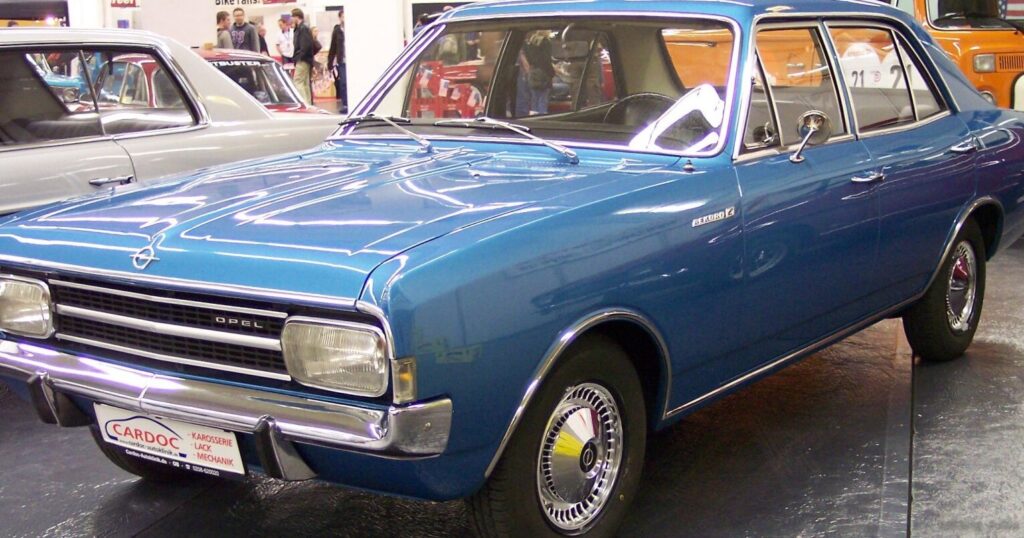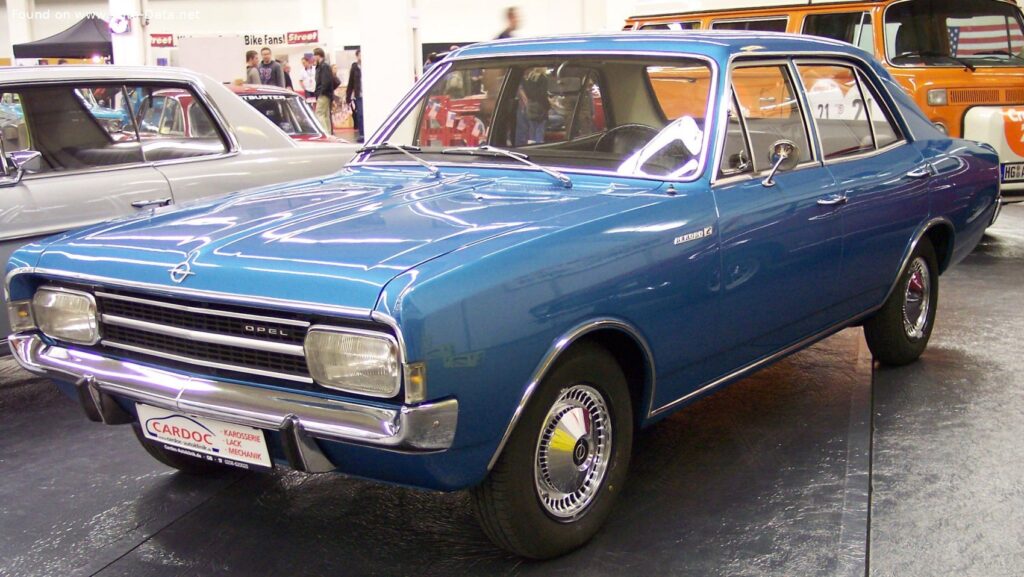
The Opel Rekord C 2.2 (95 hp) Automatic, produced between 1966 and 1968, represented a significant step forward for Opel in the mid-size sedan market. Part of the Rekord C series (1966-1972), this variant occupied a middle ground in the lineup, offering a blend of comfort and reasonable performance. It was positioned above the base models with smaller engines and manual transmissions, but below the more powerful and often more expensive six-cylinder options. The Rekord C itself was a crucial model for Opel, contributing to the company’s growing success and establishing a reputation for reliable, family-oriented vehicles. It was built on the C-platform, which was shared with other General Motors vehicles of the era.
The 2.2-Liter Powertrain and Engine Architecture
The heart of the Rekord C 2.2 Automatic was its 2.2-liter (2239 cc) inline-six cylinder engine. Designated as the ‘22’ engine code internally, it was a naturally aspirated engine producing 95 horsepower at 4800 rpm and 157 Nm (115.8 lb-ft) of torque between 3000 and 3400 rpm. This engine featured a relatively low 8.2:1 compression ratio, typical for the era and designed to accommodate the gasoline available at the time. The engine utilized a single carburetor for fuel delivery, a common practice for engines of this displacement and output in the 1960s. The valvetrain employed Opel’s CIH (Camshaft In Head) design, which was a significant advancement in engine technology, allowing for more efficient combustion and improved performance. The engine was mounted longitudinally in the front of the vehicle.
Paired with the 2.2-liter engine was a two-speed automatic transmission. This was a relatively simple automatic, offering only two forward gears. While not offering the refinement or efficiency of modern automatic transmissions, it provided a level of convenience that appealed to many buyers. The two-speed design prioritized smooth operation and ease of use over outright performance. The transmission was hydraulically controlled, and its gear ratios were optimized for comfortable cruising and adequate acceleration.
Engine Specifications in Detail
The engine’s bore and stroke measured 82.5 mm (3.25 in) and 69.8 mm (2.75 in) respectively. The engine oil capacity was 3.3 liters (3.49 US qt / 2.9 UK qt), and the cooling system required 6.1 liters (6.45 US qt / 5.37 UK qt) of coolant. The engine’s power-to-liter ratio was 42.4 hp/l, a respectable figure for a naturally aspirated six-cylinder engine of the time.
Driving Characteristics
The Rekord C 2.2 Automatic offered a comfortable, if not particularly sporty, driving experience. The two-speed automatic transmission provided smooth shifts, but limited the engine’s ability to rev freely. Acceleration was adequate for everyday driving, with a reported top speed of 163 km/h (101.28 mph). However, compared to the manual transmission versions of the Rekord C or the higher-output six-cylinder models, the 2.2 Automatic felt noticeably slower. The weight-to-power ratio of 11 kg/hp indicated a moderate level of performance. The engine delivered its peak torque at a relatively low rpm range, providing reasonable pulling power for overtaking maneuvers. The automatic transmission did detract from fuel economy, with combined fuel consumption rated at 13 l/100 km (18.1 US mpg / 21.7 UK mpg / 7.7 km/l).
Equipment and Trim Levels
The Rekord C 2.2 Automatic typically came equipped with a standard level of features for a mid-size sedan of the 1960s. Standard interior appointments included cloth upholstery, a basic dashboard layout with analog gauges, and comfortable seating for five passengers. While not lavishly appointed, the interior was functional and well-built. Optional extras included a radio, whitewall tires, and upgraded interior trim. The exterior featured chrome accents, and the body was available in a range of colors. The 2.2 Automatic trim level generally included features such as a heater and defroster as standard equipment. The overall focus was on providing a practical and comfortable vehicle for family use.
Chassis and Braking
The Rekord C 2.2 Automatic utilized a traditional chassis design for the era. The front suspension consisted of a double wishbone setup, providing a relatively comfortable ride. The rear suspension employed a rigid axle with trailing arms and coil springs. This configuration was common for rear-wheel-drive vehicles of the time. Braking duties were handled by disc brakes at the front and drum brakes at the rear. The steering system was a cone worm with recirculation balls, and hydraulic power steering was available as an option, enhancing ease of maneuverability. The vehicle rode on 175/75R13 tires. The front and rear track widths were both 1400 mm (55.12 in).
Market Reception and Comparison
The Opel Rekord C 2.2 Automatic was generally well-received by automotive critics and consumers alike. It was praised for its comfortable ride, spacious interior, and reliable engine. However, the two-speed automatic transmission was often criticized for its limited performance and lack of refinement. Compared to the manual transmission versions of the Rekord C, the automatic offered less engaging driving experience. In terms of fuel economy, the automatic was less efficient than its manual counterpart. However, the convenience of the automatic transmission appealed to a significant segment of the market. The Rekord C 2.2 Automatic competed with other mid-size sedans from manufacturers such as Ford, Vauxhall, and Volvo.
Technical Specifications
| Brand | Opel |
| Model | Rekord |
| Generation | Rekord C |
| Type | 2.2 (95 Hp) Automatic 2-speed |
| Start of production | 1966 |
| End of production | 1968 |
| Body type | Sedan |
| Seats | 5 |
| Doors | 4 |
| Fuel consumption (combined) | 13 l/100 km (18.1 US mpg / 21.7 UK mpg / 7.7 km/l) |
| Fuel Type | Petrol (Gasoline) |
| Maximum speed | 163 km/h (101.28 mph) |
| Weight-to-power ratio | 11 kg/Hp |
| Weight-to-torque ratio | 6.7 kg/Nm |
| Power | 95 Hp @ 4800 rpm |
| Torque | 157 Nm @ 3000-3400 rpm (115.8 lb.-ft. @ 3000-3400 rpm) |
| Engine layout | Front, Longitudinal |
| Engine Model/Code | 22 |
| Engine displacement | 2239 cm3 (136.63 cu. in.) |
| Number of cylinders | 6 |
| Engine configuration | Inline |
| Cylinder Bore | 82.5 mm (3.25 in.) |
| Piston Stroke | 69.8 mm (2.75 in.) |
| Compression ratio | 8.2:1 |
| Number of valves per cylinder | 2 |
| Fuel injection system | Carburettor |
| Engine aspiration | Naturally aspirated |
| Engine oil capacity | 3.3 l (3.49 US qt | 2.9 UK qt) |
| Coolant | 6.1 l (6.45 US qt | 5.37 UK qt) |
| Kerb Weight | 1045 kg (2303.83 lbs.) |
| Max. weight | 1480 kg (3262.84 lbs.) |
| Max load | 435 kg (959.01 lbs.) |
| Fuel tank capacity | 55 l (14.53 US gal | 12.1 UK gal) |
| Length | 4550 mm (179.13 in.) |
| Width | 1758 mm (69.21 in.) |
| Height | 1453 mm (57.2 in.) |
| Wheelbase | 2668 mm (105.04 in.) |
| Minimum turning circle | 11.74 m (38.52 ft.) |
| Drive wheel | Rear wheel drive |
| Number of gears | 2 |
| Gearbox type | Automatic transmission |
Legacy
The Opel Rekord C 2.2 Automatic, while not a performance icon, remains a fondly remembered classic among Opel enthusiasts. The 2.2-liter engine, while simple in design, proved to be relatively reliable and durable. The two-speed automatic transmission, though dated by modern standards, provided years of service for many owners. Today, well-maintained examples of the Rekord C 2.2 Automatic are sought after by collectors and classic car enthusiasts. The car represents a significant era in Opel’s history and offers a glimpse into the automotive landscape of the 1960s. Parts availability can be a challenge, but a dedicated community of owners and suppliers helps to keep these vehicles on the road.