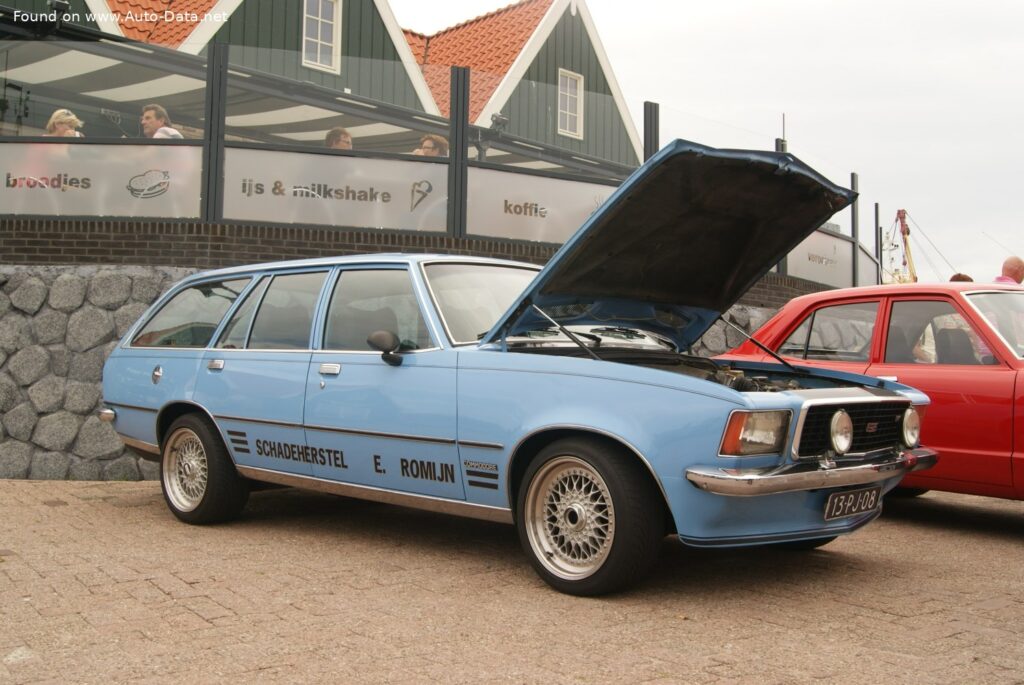
The Opel Rekord D Caravan 1.9 (75 hp) was a station wagon produced between 1975 and 1977 as part of the broader Rekord D series, which spanned from 1972 to 1977. Positioned as a practical family vehicle, the 1.9-liter variant represented an entry-level offering within the Caravan (estate) body style, providing a balance between affordability and space. It was built on the GM’s H-platform, shared with other Opel and Vauxhall models of the era. The Rekord D series aimed to modernize Opel’s lineup, offering improved comfort, safety, and styling compared to its predecessor, the Rekord C.
Opel Rekord D Caravan 1.9: Powertrain & Engine Architecture
The heart of the Rekord D Caravan 1.9 was the Opel CIH (Cylinderkopf-Integrierte Nockenwelle – camshaft integrated in the cylinder head) engine. Specifically, this model utilized a 1.9-liter (1897 cc) inline-four cylinder engine producing 75 horsepower at 4800 rpm and 97.36 lb-ft of torque at 2200-3400 rpm. The engine featured a single overhead camshaft (SOHC) valvetrain with two valves per cylinder. Unlike later iterations, this engine employed a carburetor for fuel delivery, rather than fuel injection. The compression ratio was 7.6:1. Bore and stroke dimensions were 93 mm x 69.8 mm respectively.
The 1.9-liter engine was paired with a four-speed manual transmission as standard. While an automatic transmission was offered on other Rekord D models, it was not typically available with the base 1.9-liter engine. This combination prioritized fuel economy and affordability over outright performance. The drivetrain was rear-wheel drive, a common configuration for European cars of this period.
Engine Codes and Variations
While the core engine architecture remained consistent, minor variations existed. Engine codes associated with this variant include those denoting slight differences in carburetor tuning or emissions control equipment. These variations didn’t significantly alter the overall performance characteristics.
Driving Characteristics
The Rekord D Caravan 1.9 offered modest performance. Acceleration from 0 to 60 mph took approximately 17.1 seconds, and 0 to 100 km/h (62 mph) took 18 seconds. Top speed was around 93.21 mph (150 km/h). The engine’s torque curve provided adequate pulling power for everyday driving and hauling loads, but it wasn’t designed for spirited acceleration. The four-speed manual transmission offered a reasonable spread of gears, but the lack of overdrive meant engine speeds were relatively high at highway cruising speeds.
Compared to the larger-displacement Rekord models, such as the 2.1-liter or 2.8-liter versions, the 1.9-liter felt noticeably less powerful. The higher-output engines provided significantly quicker acceleration and more relaxed highway cruising. However, the 1.9-liter’s simplicity and lower maintenance costs appealed to budget-conscious buyers.
Equipment & Trim Levels
The Rekord D Caravan 1.9 was generally equipped with basic amenities. Standard features typically included cloth upholstery, a basic instrument cluster, and manually operated windows and door locks. The interior was functional and durable, prioritizing practicality over luxury. The dashboard layout was straightforward, with clearly labeled controls.
Optional extras included a radio, upgraded upholstery, and a sunroof. Higher trim levels, available with larger engines, offered more extensive features such as power windows, central locking, and more luxurious interior appointments. The 1.9-liter model served as a base upon which buyers could add selected options to suit their needs and budget.
Chassis & Braking
The Rekord D Caravan featured a conventional chassis design with independent front suspension using coil springs and a rigid rear axle with leaf springs. The suspension was tuned for comfort, providing a relatively smooth ride, although it wasn’t particularly sporty. Steering was by a recirculating ball system.
Braking was accomplished via disc brakes on the front wheels and drum brakes on the rear. The braking system was adequate for the vehicle’s weight and performance, but it lacked the stopping power of more modern systems. The kerb weight of the 1.9-liter Caravan was approximately 2513.27 lbs (1140 kg), and the maximum permissible weight was 3836.04 lbs (1740 kg).
Market Reception & Comparison
The Opel Rekord D Caravan 1.9 was generally well-received as a practical and affordable family vehicle. Critics praised its spacious interior, comfortable ride, and reasonable fuel economy (approximately 21.2 US mpg combined). However, its modest performance and basic equipment levels were often noted.
Compared to other station wagons of the era, such as the Ford Taunus or Volvo 145, the Rekord D Caravan offered a competitive combination of price, space, and reliability. The 1.9-liter engine was considered relatively durable, although it required regular maintenance. Fuel economy was comparable to other similarly sized and powered vehicles of the time. The 1.9-liter version was often chosen by those prioritizing economy and practicality over performance, while those seeking more power and features opted for the larger-engine models.
Technical Specifications
| Brand | Opel |
| Model | Rekord |
| Generation | Rekord D Caravan |
| Type (Engine) | 1.9 (75 Hp) |
| Start of production | 1975 |
| End of production | 1977 |
| Body type | Station wagon (estate) |
| Seats | 5 |
| Doors | 3-5 |
| Fuel consumption (combined) | 11.1 l/100 km |
| Fuel consumption (US mpg) | 21.2 |
| Fuel consumption (UK mpg) | 25.4 |
| Fuel Type | Petrol (Gasoline) |
| Acceleration 0 – 100 km/h | 18 sec |
| Acceleration 0 – 62 mph | 18 sec |
| Acceleration 0 – 60 mph | 17.1 sec |
| Maximum speed | 150 km/h (93.21 mph) |
| Weight-to-power ratio | 15.2 kg/Hp |
| Power | 75 Hp @ 4800 rpm |
| Torque | 132 Nm @ 2200-3400 rpm (97.36 lb.-ft.) |
| Engine displacement | 1897 cm3 (115.76 cu. in.) |
| Number of cylinders | 4 |
| Engine configuration | Inline |
| Cylinder Bore | 93 mm (3.66 in.) |
| Piston Stroke | 69.8 mm (2.75 in.) |
| Compression ratio | 7.6:1 |
| Number of valves per cylinder | 2 |
| Fuel injection system | Carburettor |
| Engine aspiration | Naturally aspirated |
| Valvetrain | SOHC |
| Kerb Weight | 1140 kg (2513.27 lbs) |
| Max. weight | 1740 kg (3836.04 lbs) |
| Max load | 600 kg (1322.77 lbs) |
| Fuel tank capacity | 70 l (18.49 US gal | 15.4 UK gal) |
| Length | 4594 mm (180.87 in.) |
| Width | 1715 mm (67.52 in.) |
| Height | 1440 mm (56.69 in.) |
| Wheelbase | 2668 mm (105.04 in.) |
Legacy
The Opel Rekord D Caravan 1.9, while not the most powerful or luxurious variant of the Rekord D series, remains a popular choice among classic car enthusiasts. The 1.9-liter CIH engine is known for its durability and relative simplicity, making it easier to maintain and repair than more complex engines. Parts availability is generally good, although some components may be difficult to find.
In the used car market, these Caravans are often sought after for their practicality and affordability. They represent a relatively inexpensive entry point into classic Opel ownership. While rust can be a concern, well-maintained examples can provide years of reliable service. The Rekord D Caravan 1.9 stands as a testament to Opel’s commitment to building practical and durable family vehicles during the 1970s.