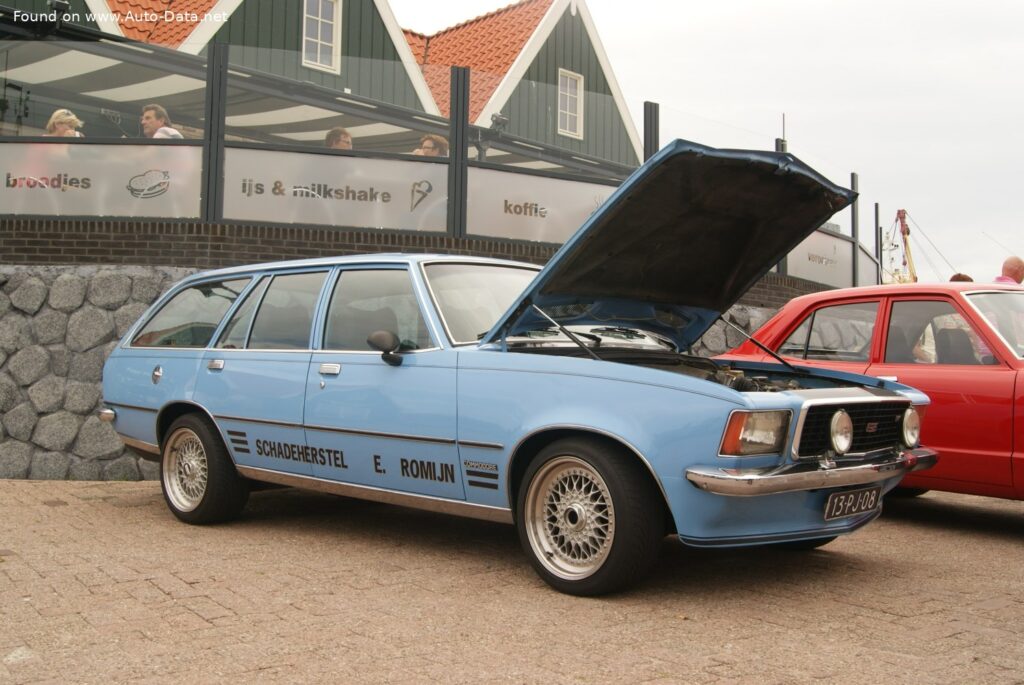
The Opel Rekord D Caravan 2.0 D, produced between 1974 and 1977, was a diesel-powered station wagon variant of the Rekord D series. Positioned as a practical and economical choice within the Rekord D lineup, it catered to buyers needing a spacious vehicle for family or commercial use. The Rekord D series, built on the GM H-platform (internally designated as 1HX0/A3), represented a significant step forward for Opel in terms of styling, comfort, and engineering. The Caravan body style, specifically, offered increased cargo capacity compared to the sedan, making it a popular choice for those requiring versatility.
The 2.0 D Engine and Powertrain
The heart of the Rekord D Caravan 2.0 D was its 1,998 cc (121.93 cu. in.) inline-four cylinder diesel engine. This engine, producing 55 horsepower (Hp) at 4,400 rpm and 113 Nm (83.34 lb.-ft.) of torque at 2,200 rpm, was designed for fuel efficiency rather than outright performance. The engine utilized a precombustion chamber injection system, a common diesel technology of the era, which improved combustion efficiency and reduced engine noise compared to direct injection systems. The compression ratio was a high 22:1, typical for diesel engines, contributing to its fuel economy. The engine featured a single overhead camshaft (SOHC) valvetrain with two valves per cylinder.
Power was delivered to the rear wheels through a four-speed manual transmission. While an automatic transmission was available on some Rekord D models, it was not typically paired with the 2.0 D diesel engine due to the engine’s relatively low power output and the added weight and complexity of the automatic gearbox. The manual transmission was chosen to maximize fuel economy and provide adequate performance for the vehicle’s intended use.
Comparison with Other Rekord D Variants
Compared to the gasoline-powered Rekord D variants, such as the 1.7 and 2.1 liter models, the 2.0 D offered significantly lower power output but superior fuel economy. The gasoline engines produced between 60 and 100 hp, providing quicker acceleration and higher top speeds. However, they were also considerably more expensive to fuel, especially during the oil crises of the 1970s. The 2.0 D was also distinct from the later 2.3 D models, which offered a slight power increase but also came with a higher price tag. The target audience for the 2.0 D was primarily those seeking a durable, economical, and practical vehicle for everyday use, rather than performance enthusiasts.
Driving Characteristics
The driving experience in the Rekord D Caravan 2.0 D was characterized by its relaxed pace and focus on practicality. Acceleration was modest, and overtaking required careful planning. The four-speed manual transmission offered a reasonable spread of gears, allowing the driver to keep the engine in its optimal torque range. The gear ratios were optimized for fuel efficiency and low-speed pulling power, rather than high-speed performance. The engine was relatively quiet for a diesel of its era, but still exhibited the characteristic diesel clatter, particularly when cold. The Caravan’s suspension provided a comfortable ride, absorbing bumps and imperfections in the road effectively, although handling was not particularly sporty.
Equipment and Trim Levels
The Rekord D Caravan 2.0 D was typically equipped with basic but functional features. Standard equipment included cloth upholstery, a simple dashboard layout with analog gauges, and manually operated windows and door locks. The interior was designed for durability and ease of cleaning, reflecting the vehicle’s practical nature. Optional extras included a radio, upgraded upholstery, and a sunroof. The trim level was generally consistent across the 2.0 D models, with limited customization options available. The focus was on providing a reliable and affordable vehicle with essential features.
Chassis and Braking
The Rekord D Caravan 2.0 D featured a robust chassis designed to handle the weight of the vehicle and its cargo. The suspension consisted of independent front suspension with coil springs and a rigid rear axle with leaf springs. The front brakes were disc brakes, providing adequate stopping power, while the rear brakes were drum brakes. The steering was a recirculating ball system, offering reasonable precision but lacking the feel of more modern steering technologies. The kerb weight of the vehicle was 1,255 kg (2,766.8 lbs), and the maximum permissible weight was 1,825 kg (4,023.44 lbs), allowing for a substantial payload of 570 kg (1,256.63 lbs).
Market Reception and Comparison
The Opel Rekord D Caravan 2.0 D was generally well-received by critics and buyers alike, particularly in Europe. It was praised for its fuel efficiency, spacious interior, and robust construction. However, its low power output was often cited as a drawback. Compared to other station wagons of the era, such as the Ford Taunus Turnier and the Volvo 145, the Rekord D Caravan offered a competitive combination of price, practicality, and fuel economy. Its fuel consumption of 8.1 l/100 km (29 US mpg / 34.9 UK mpg) was particularly attractive during a period of rising fuel prices. The vehicle’s reliability was also considered to be good, although diesel engines of this era required regular maintenance to ensure optimal performance.
Technical Specifications
| Brand | Opel |
| Model | Rekord |
| Generation | Rekord D Caravan |
| Type (Engine) | 2.0 D (55 Hp) |
| Start of production | 1974 year |
| End of production | 1977 year |
| Powertrain Architecture | Internal Combustion engine |
| Body type | Station wagon (estate) |
| Seats | 5 |
| Doors | 3-5 |
| Fuel consumption (combined) | 8.1 l/100 km |
| Fuel consumption (US mpg) | 29 US mpg |
| Fuel consumption (UK mpg) | 34.9 UK mpg |
| Fuel Type | Diesel |
| Maximum speed | 130 km/h (80.78 mph) |
| Weight-to-power ratio | 22.8 kg/Hp |
| Weight-to-torque ratio | 11.1 kg/Nm |
| Power | 55 Hp @ 4400 rpm |
| Power per litre | 27.5 Hp/l |
| Torque | 113 Nm @ 2200 rpm (83.34 lb.-ft. @ 2200 rpm) |
| Engine displacement | 1998 cm3 (121.93 cu. in.) |
| Number of cylinders | 4 |
| Engine configuration | Inline |
| Cylinder Bore | 86.5 mm (3.41 in.) |
| Piston Stroke | 85 mm (3.35 in.) |
| Compression ratio | 22:1 |
| Number of valves per cylinder | 2 |
| Fuel injection system | Precombustion chamber injection |
| Engine aspiration | Naturally aspirated engine |
| Valvetrain | SOHC |
| Kerb Weight | 1255 kg (2766.8 lbs) |
| Max. weight | 1825 kg (4023.44 lbs) |
| Max load | 570 kg (1256.63 lbs) |
| Fuel tank capacity | 70 l (18.49 US gal | 15.4 UK gal) |
| Length | 4594 mm (180.87 in.) |
| Width | 1715 mm (67.52 in.) |
| Height | 1440 mm (56.69 in.) |
| Wheelbase | 2668 mm (105.04 in.) |
| Front track | 1419 mm (55.87 in.) |
| Rear track | 1400 mm (55.12 in.) |
| Ride height (ground clearance) | 130 mm (5.12 in.) |
| Drag coefficient (Cd) | 0.50 |
| Minimum turning circle | 11.4 m (37.4 ft.) |
| Drivetrain Architecture | Rear wheel drive |
| Number of gears | 4 |
| Type of gearbox | Manual transmission |
| Front brakes | Disc |
| Rear brakes | Drum |
Legacy
The Opel Rekord D Caravan 2.0 D, while not a performance icon, remains a respected vehicle among classic car enthusiasts. Its robust diesel engine, when properly maintained, proved to be remarkably durable, with many examples still running today. The 2.0 D powertrain is generally considered reliable, although age-related issues such as injector wear and seal deterioration are common. In the used car market, the Rekord D Caravan 2.0 D is valued for its practicality, affordability, and classic styling. It represents a significant piece of automotive history, reflecting the design and engineering trends of the 1970s and the growing demand for fuel-efficient vehicles.