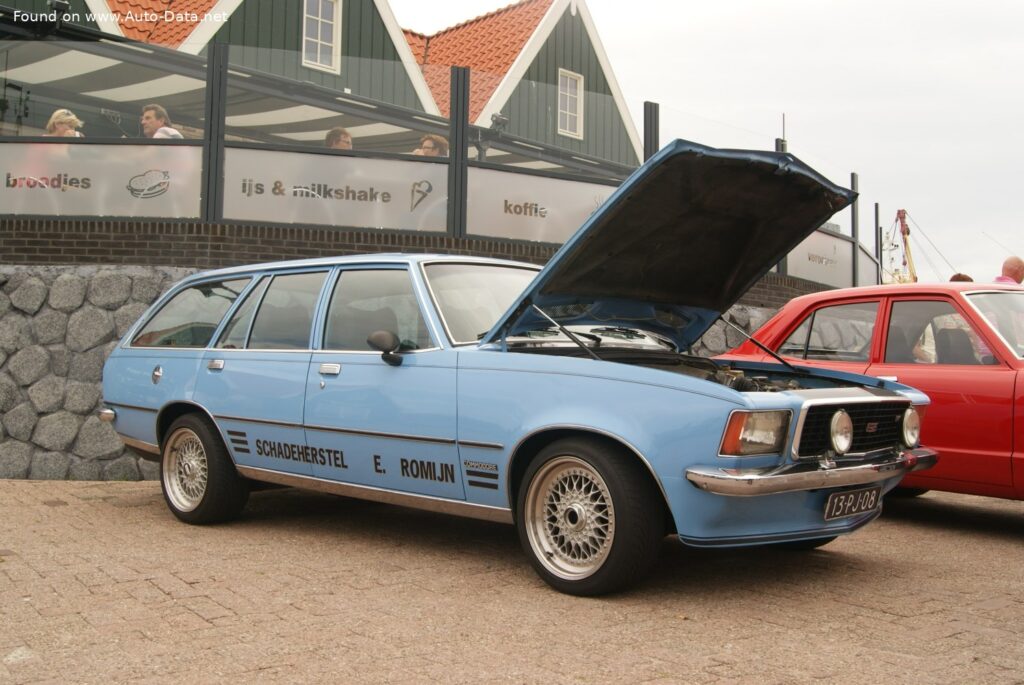
The Opel Rekord D Caravan 2.1 D, produced between 1972 and 1977, represented a practical and economical offering within the broader Rekord D range. Positioned as the diesel-powered variant of the popular Caravan (estate/station wagon) body style, it catered to buyers prioritizing fuel efficiency and load-carrying capacity over outright performance. The Rekord D series, built on the GM platform, was a significant model for Opel, offering a blend of comfort, space, and affordability in the mid-size segment. The 2.1 D version, with its 60 horsepower engine, occupied the entry-level position within the Rekord D Caravan lineup, sitting below the gasoline-powered models in terms of price and performance.
The 2.1 D Engine and Powertrain
The heart of the Rekord D Caravan 2.1 D was the 21D engine, a 2.1-liter (2068 cc / 126.2 cubic inches) inline four-cylinder diesel engine. This engine was a naturally aspirated design, utilizing precombustion chamber injection – a common diesel technology of the era. This system involved a small precombustion chamber connected to the main cylinder, where fuel was initially ignited before being transferred to the main combustion chamber for complete burning. This design aided in cold starting and reduced engine noise compared to direct injection systems. The engine produced 60 horsepower (44 kW) at 4400 rpm and 118 Nm (87.03 lb-ft) of torque at 2500 rpm. The compression ratio was a high 22:1, typical for diesel engines of the time, contributing to its fuel efficiency.
Engine Architecture and Fuel System
The 21D engine featured a single overhead camshaft (SOHC) valvetrain, operating two valves per cylinder. The cylinder bore measured 88 mm (3.46 inches) and the piston stroke was 85 mm (3.35 inches). The fuel injection system, as mentioned, was a precombustion chamber type, relying on a mechanical fuel pump to deliver fuel at high pressure. The engine’s relatively simple design contributed to its durability and ease of maintenance, although it lacked the refinement of more modern diesel engines. The engine code ’21D’ is crucial for identifying parts and specifications related to this specific powerplant.
The 2.1 D engine was paired with a four-speed manual transmission, driving the rear wheels. An automatic transmission was not offered with this engine variant, reflecting the focus on cost-effectiveness and fuel economy. The manual gearbox was chosen to maximize the available power and torque for this lower-output diesel engine.
Driving Characteristics
The driving experience in the Rekord D Caravan 2.1 D was characterized by its utilitarian nature. Acceleration was modest, with a 0-100 km/h (0-62 mph) time of approximately 27.5 seconds. The top speed was around 132 km/h (82 mph). The engine’s torque peak at 2500 rpm provided reasonable pulling power for everyday driving and hauling loads, but it lacked the responsiveness of the gasoline-powered Rekord models. The four-speed manual transmission required frequent shifting, particularly when ascending hills or overtaking. The focus was on providing reliable and economical transportation rather than sporty performance. The gear ratios were optimized for fuel efficiency and load-carrying, rather than rapid acceleration.
Equipment and Trim Levels
The Rekord D Caravan 2.1 D was typically equipped with basic, functional features. Standard equipment included cloth upholstery, a simple dashboard layout, and basic instrumentation. The interior was designed for practicality and durability, rather than luxury. Optional extras, depending on the market and year, could include a radio, upgraded upholstery, and a sunroof. The trim level was generally considered the base level for the Caravan body style, with fewer cosmetic enhancements compared to the higher-spec gasoline models. The emphasis was on providing a spacious and versatile cargo area, making it ideal for families and tradespeople.
Chassis and Braking
The Rekord D Caravan 2.1 D featured a rear-wheel-drive layout with a conventional chassis design. The front suspension utilized independent coil springs, while the rear suspension employed a live axle with leaf springs. The braking system consisted of disc brakes on the front wheels and drum brakes on the rear wheels. The braking performance was adequate for the vehicle’s weight and performance capabilities, but it lacked the stopping power of more modern braking systems. The kerb weight of the vehicle was 1255 kg (2766.8 lbs), and the maximum weight was 1825 kg (4023.44 lbs). The suspension was tuned for comfort and load-carrying capacity, providing a relatively smooth ride even when fully loaded.
Market Reception and Comparison
The Opel Rekord D Caravan 2.1 D was generally well-received as a practical and economical workhorse. Critics acknowledged its fuel efficiency and spaciousness, but noted its lack of performance compared to the gasoline-powered models. Fuel consumption was rated at 8.2 l/100 km (28.7 US mpg / 34.4 UK mpg), which was a significant advantage in the early 1970s. Compared to the 1.7 and 2.1 gasoline versions of the Rekord D Caravan, the 2.1 D offered significantly better fuel economy but considerably slower acceleration. The diesel version appealed to buyers who prioritized cost savings and reliability over driving excitement. Maintenance costs were generally lower for the diesel engine, although repairs could be more complex due to the specialized diesel fuel system.
Technical Specifications
| Brand | Opel |
| Model | Rekord |
| Generation | Rekord D Caravan |
| Type (Engine) | 2.1 D (60 Hp) |
| Start of production | 1972 |
| End of production | 1977 |
| Engine Model/Code | 21D |
| Engine displacement | 2068 cm3 / 126.2 cu. in. |
| Number of cylinders | 4 |
| Engine configuration | Inline |
| Cylinder Bore | 88 mm / 3.46 in. |
| Piston Stroke | 85 mm / 3.35 in. |
| Compression ratio | 22:1 |
| Number of valves per cylinder | 2 |
| Fuel injection system | Precombustion chamber injection |
| Engine aspiration | Naturally aspirated |
| Valvetrain | SOHC |
| Power | 60 Hp @ 4400 rpm |
| Torque | 118 Nm @ 2500 rpm / 87.03 lb.-ft. @ 2500 rpm |
| Fuel Type | Diesel |
| Fuel consumption (combined) | 8.2 l/100 km / 28.7 US mpg / 34.4 UK mpg / 12.2 km/l |
| Acceleration 0 – 100 km/h | 27.5 sec |
| Acceleration 0 – 60 mph | 26.1 sec |
| Maximum speed | 132 km/h / 82.02 mph |
| Kerb Weight | 1255 kg / 2766.8 lbs |
| Max. weight | 1825 kg / 4023.44 lbs |
| Fuel tank capacity | 70 l / 18.49 US gal | 15.4 UK gal |
| Length | 4594 mm / 180.87 in. |
| Width | 1715 mm / 67.52 in. |
| Height | 1440 mm / 56.69 in. |
Legacy
The Opel Rekord D Caravan 2.1 D, while not a performance icon, remains a respected example of a practical and durable vehicle from the 1970s. The 21D diesel engine proved to be relatively reliable, and many examples are still found in running condition today. In the used car market, these vehicles are sought after by enthusiasts and collectors who appreciate their simplicity and classic styling. Parts availability can be a challenge, but a dedicated community of Opel owners and restorers helps to keep these vehicles on the road. The 2.1 D variant represents a significant step in the development of diesel engines for passenger cars, paving the way for the more refined and powerful diesel engines of the future. Its enduring appeal lies in its honest and functional design, offering a glimpse into a bygone era of automotive engineering.