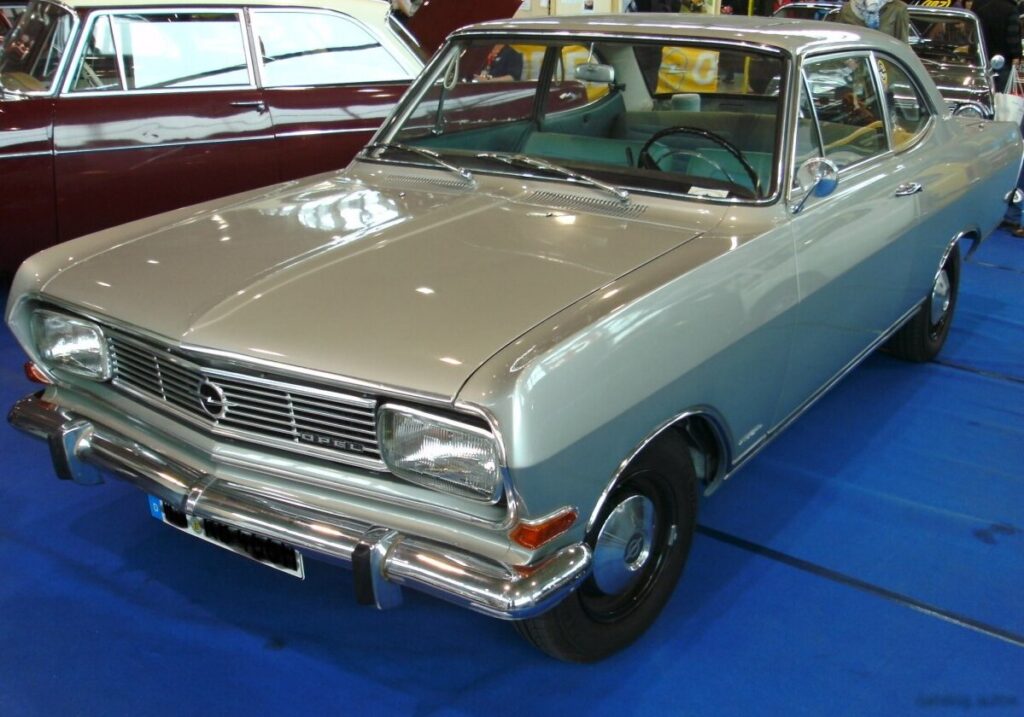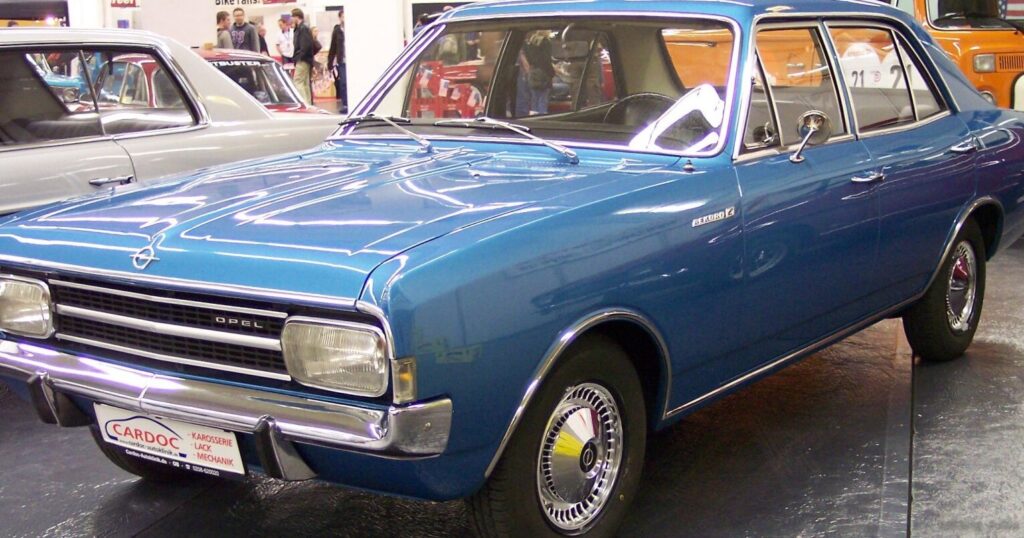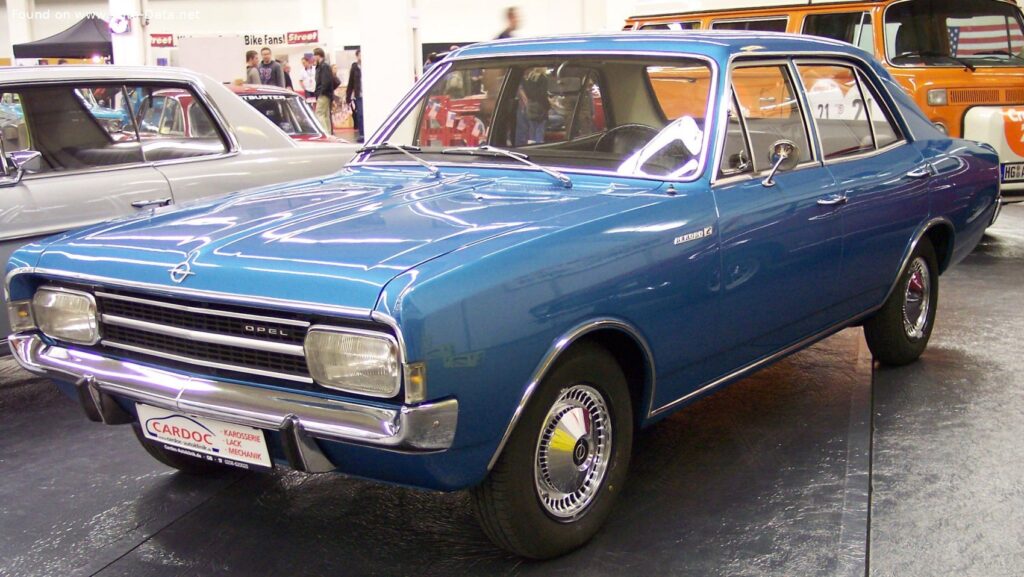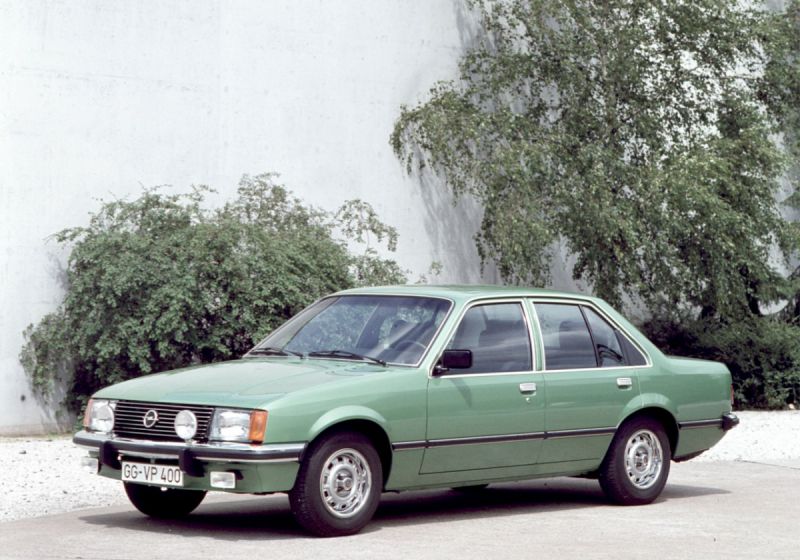
The Opel Rekord E 1.7, producing 60 horsepower, was a mainstay of the Rekord E range produced between 1977 and 1982. Positioned as the entry-level model, it offered affordable family transportation within the larger Rekord E generation (chassis code 1HX0). This variant aimed for fuel efficiency and practicality, appealing to buyers prioritizing cost-effectiveness over outright performance. While the Rekord E was also available with larger, more powerful engines – including 1.9 and 2.0-liter options – and later a diesel – the 1.7-liter model represented the most accessible point of entry into the Rekord lineup.
Powertrain & Engine Architecture
The heart of the Rekord E 1.7 was the Opel 17N engine, a 1,698 cc (103.62 cubic inches) inline-four cylinder gasoline engine. This engine utilized a single overhead camshaft (SOHC) valvetrain with two valves per cylinder. Fuel delivery was managed by a carburetor, a common feature for vehicles of this era and price point. The engine produced 60 hp at 4800 rpm and 112 Nm (82.61 lb-ft) of torque between 2200 and 3000 rpm. The compression ratio was set at 8:1. Engine oil capacity was 3.8 liters (4.02 US quarts / 3.34 UK quarts) and the cooling system held 6.3 liters (6.66 US quarts / 5.54 UK quarts).
The Rekord E 1.7 was primarily offered with a four-speed manual transmission, driving the rear wheels. While an automatic transmission was available on some Rekord E models, it was less common with the 1.7-liter engine due to the lower power output. The automatic, when equipped, was a three-speed unit. The rear-wheel drive configuration was standard for the Rekord E throughout its production run.
Driving Characteristics
The driving experience in the Rekord E 1.7 was characterized by its modest performance. Acceleration from 0 to 100 km/h (0-62 mph) took approximately 20.5 seconds, and 0 to 60 mph required around 19.5 seconds. The top speed was rated at 146 km/h (90.72 mph). The carburetor and relatively low compression ratio contributed to a somewhat sluggish throttle response, particularly at lower engine speeds. The four-speed manual transmission required frequent shifting to maintain momentum, especially when climbing hills or overtaking. Compared to the larger-engined Rekord E variants, the 1.7 felt noticeably less powerful, but it offered a smoother, more relaxed driving experience at cruising speeds. The automatic transmission, while providing convenience, further diminished acceleration performance.
Equipment & Trim Levels
The Rekord E 1.7 was typically equipped with basic, functional features. Standard interior appointments included cloth upholstery, a simple dashboard layout with analog gauges, and vinyl flooring. Power steering and air conditioning were generally not standard on this base model, but were available as optional extras. Exterior features included steel wheels with hubcaps, chrome bumpers, and relatively simple trim. The Rekord E was available in both two-door coupe and four-door sedan body styles, with the sedan being the more common configuration. Optional equipment could include upgraded audio systems, tinted glass, and a sunroof.
Chassis & Braking
The Rekord E 1.7 utilized a conventional chassis design with independent front suspension and a solid rear axle. The front suspension featured coil springs and anti-roll bar, while the rear suspension employed leaf springs. Braking was accomplished with ventilated disc brakes on the front wheels and drum brakes on the rear. The braking system was adequate for the vehicle’s weight and performance, but lacked the stopping power of more modern systems. The curb weight of the Rekord E 1.7 was approximately 1100 kg (2425.08 lbs), with a maximum permissible weight of 1600 kg (3527.4 lbs). The front track measured 1435 mm (56.5 in) and the rear track 1412 mm (55.59 in).
Market Reception & Comparison
The Opel Rekord E 1.7 was generally well-received as a practical and affordable family car. Critics acknowledged its fuel economy – rated at 9.9 l/100 km (23.8 US mpg / 28.5 UK mpg) – as a key selling point. However, the engine’s limited power output was often criticized, particularly when compared to the more powerful Rekord E variants. The 1.9-liter and 2.0-liter models offered significantly improved performance, but at a higher price point. The later introduction of the diesel engine provided an alternative for buyers prioritizing fuel efficiency over performance. Compared to competitors like the Ford Taunus and Volkswagen Passat, the Rekord E 1.7 offered a good balance of price, practicality, and reliability. The Rekord E, in general, was known for its robust build quality and relatively low maintenance costs.
Technical Specifications
| Brand | Opel |
| Model | Rekord |
| Generation | Rekord E |
| Type (Engine) | 1.7 (60 Hp) |
| Start of production | 1977 |
| End of production | 1982 |
| Engine Model/Code | 17N |
| Engine displacement | 1698 cm3 (103.62 cu. in.) |
| Number of cylinders | 4 |
| Engine configuration | Inline |
| Cylinder Bore | 88 mm (3.46 in.) |
| Piston Stroke | 69.8 mm (2.75 in.) |
| Compression ratio | 8:1 |
| Number of valves per cylinder | 2 |
| Fuel injection system | Carburettor |
| Engine aspiration | Naturally aspirated |
| Power | 60 Hp @ 4800 rpm |
| Torque | 112 Nm @ 2200-3000 rpm (82.61 lb.-ft. @ 2200-3000 rpm) |
| Fuel consumption (combined) | 9.9 l/100 km (23.8 US mpg / 28.5 UK mpg / 10.1 km/l) |
| Acceleration 0 – 100 km/h | 20.5 sec |
| Acceleration 0 – 62 mph | 20.5 sec |
| Acceleration 0 – 60 mph | 19.5 sec |
| Maximum speed | 146 km/h (90.72 mph) |
| Kerb Weight | 1100 kg (2425.08 lbs.) |
| Max. weight | 1600 kg (3527.4 lbs.) |
| Fuel tank capacity | 65 l (17.17 US gal / 14.3 UK gal) |
| Trunk (boot) space – minimum | 540 l (19.07 cu. ft.) |
| Drivetrain | Rear wheel drive |
| Number of gears | 4 (manual) / 3 (automatic) |
| Front brakes | Ventilated discs |
| Rear brakes | Drum |
| Length | 4593 mm (180.83 in.) |
| Width | 1726 mm (67.95 in.) |
| Height | 1420 mm (55.91 in.) |
Legacy
The Opel Rekord E 1.7, while not the most powerful or exciting variant of the Rekord E, proved to be a reliable and durable vehicle. The 17N engine, though simple in design, was known for its longevity and relatively low maintenance requirements. Today, the Rekord E 1.7 is a relatively affordable classic car, appealing to enthusiasts seeking a nostalgic driving experience. Parts availability can be a challenge, but many components are still obtainable through specialist suppliers. The 1.7-liter engine, while underpowered by modern standards, remains a relatively straightforward unit to maintain and repair. The Rekord E 1.7 represents a significant piece of automotive history, embodying the practical and affordable family car ethos of the 1970s and early 1980s.