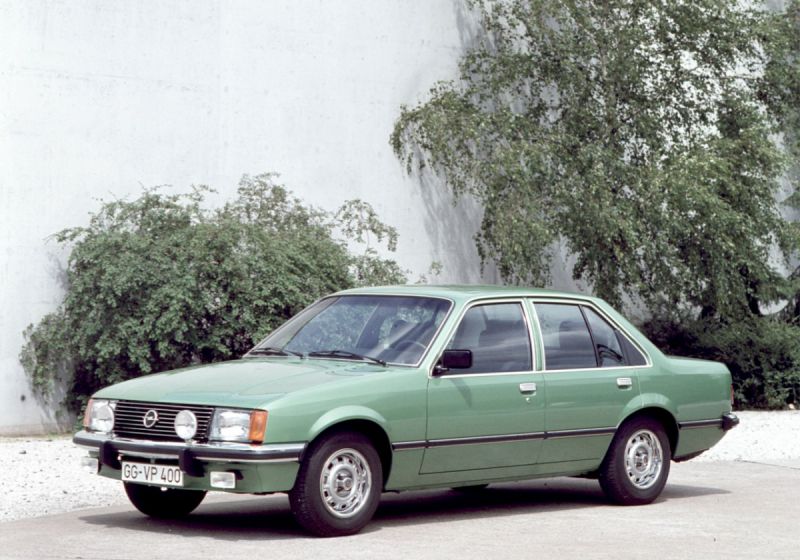
The Opel Rekord E 1.9 (75 hp) Automatic, produced between 1977 and 1982, represented a mainstream, comfort-oriented variant within the broader Rekord E range. Positioned as an entry-to-mid-level trim, it offered a balance between affordability and convenience, appealing to families and drivers prioritizing ease of use over outright performance. The Rekord E itself was a significant model for Opel, built on the H-platform (internally designated as 1HX0/A3), and represented a substantial redesign over its predecessor, the Rekord D. This generation focused on improved safety, comfort, and fuel efficiency, though the 1.9-liter automatic configuration lagged behind more powerful and sporting versions in the latter regard.
Powertrain & Engine Architecture
The heart of the Rekord E 1.9 Automatic was the Opel 19N engine, a 1,897 cc (115.76 cubic inches) inline-four cylinder gasoline engine. This engine utilized a single overhead camshaft (SOHC) valvetrain with two valves per cylinder. Unlike later iterations of Opel engines, the 19N employed a carburetor for fuel delivery, specifically a Solex or Pierburg unit, rather than fuel injection. This carburetor setup contributed to its relatively modest power output and lower fuel economy compared to injected engines. The engine produced 75 horsepower at 4,800 rpm and 97.36 lb-ft of torque at 2,200-3,400 rpm. The compression ratio was 7.9:1.
The engine was mated to a three-speed automatic transmission. This transmission, while providing convenience, was a relatively simple design and contributed to the car’s slower acceleration. The automatic transmission was chosen to appeal to a broader demographic, particularly those who preferred the ease of automatic operation over a manual gearbox. The rear wheels were driven via a conventional driveshaft and differential.
Engine Code Specifics
The 19N engine code designates this specific configuration. While variations existed within the Rekord E range, the 19N was consistently paired with the three-speed automatic in this power output. Maintenance on the 19N engine is relatively straightforward, though the carburetor requires periodic adjustment and cleaning. The engine is known for its durability, but age-related issues such as oil leaks and wear on the timing chain are common in surviving examples.
Driving Characteristics
The driving experience in the Rekord E 1.9 Automatic was characterized by smooth, but unhurried, acceleration. The 0-60 mph time was approximately 16.6 seconds, and 0-100 km/h took 17.5 seconds. The three-speed automatic transmission had relatively widely spaced gear ratios, resulting in noticeable shifts and a lack of the responsiveness found in manual transmission or more modern automatic gearboxes. The engine’s torque peak at 2,200-3,400 rpm meant that it felt reasonably capable in everyday driving situations, such as merging onto highways or overtaking slower traffic, but it lacked the punch of the larger-displacement Rekord models. The rear-wheel drive configuration provided predictable handling, but the car wasn’t particularly sporty. The focus was on comfortable cruising and practicality.
Compared to the 2.0-liter or 2.1-liter versions of the Rekord E, the 1.9 Automatic felt noticeably slower. The manual transmission options offered a more engaging driving experience and improved fuel economy. The diesel versions, while even slower in acceleration, provided significantly better fuel efficiency.
Equipment & Trim Levels
The Rekord E 1.9 Automatic typically came with a standard level of equipment, reflecting its position as a mainstream model. Interior upholstery was typically cloth, available in a range of colors. The dashboard featured a straightforward layout with analog gauges for speed, fuel level, coolant temperature, and battery voltage. Power steering was often included, but air conditioning was typically an optional extra. Other available options included a radio, upgraded sound system, and tinted glass. The trim level often dictated the quality of the interior materials and the availability of certain features.
The base trim level offered minimal frills, while higher trims added features like upgraded upholstery, woodgrain trim, and more comprehensive instrumentation. The Rekord E was available in both two-door and four-door sedan body styles, with the four-door being the more popular choice.
Chassis & Braking
The Rekord E 1.9 Automatic utilized a conventional chassis design with independent front suspension and a solid rear axle. The front suspension employed MacPherson struts with coil springs and an anti-roll bar. The rear suspension featured leaf springs and shock absorbers. Braking was accomplished via ventilated discs on the front wheels and drum brakes on the rear wheels. The braking system was adequate for the car’s weight and performance, but it lacked the stopping power of more modern braking systems.
The kerb weight of the Rekord E 1.9 Automatic was approximately 2,469.18 lbs (1,120 kg). The weight distribution was fairly balanced, contributing to predictable handling. The suspension was tuned for comfort, providing a relatively smooth ride over uneven road surfaces.
Market Reception & Comparison
The Opel Rekord E 1.9 Automatic was generally well-received as a practical and affordable family car. Critics praised its comfortable ride and spacious interior, but noted its relatively slow acceleration and modest fuel economy. Compared to other cars in its class, such as the Ford Taunus and the Volkswagen Passat, the Rekord E offered a good balance of features and value. However, the 1.9-liter automatic configuration was often seen as a compromise, with the more powerful engines offering a more enjoyable driving experience.
Fuel consumption was rated at 10.6 l/100 km (22.2 US mpg, 26.6 UK mpg, 9.4 km/l), which was typical for a car of its size and era, but less efficient than the diesel versions. Reliability was generally good, but the carburetor required regular maintenance. The Rekord E 1.9 Automatic represented a sensible choice for buyers prioritizing comfort and convenience over performance.
Technical Specifications
| Brand | Opel |
| Model | Rekord |
| Generation | Rekord E |
| Type (Engine) | 1.9 (75 Hp) Automatic |
| Start of production | 1977 |
| End of production | 1982 |
| Engine Model/Code | 19N |
| Engine displacement | 1897 cm3 (115.76 cu. in.) |
| Number of cylinders | 4 |
| Engine configuration | Inline |
| Cylinder Bore | 93 mm (3.66 in.) |
| Piston Stroke | 69.8 mm (2.75 in.) |
| Compression ratio | 7.9:1 |
| Number of valves per cylinder | 2 |
| Fuel injection system | Carburettor |
| Engine aspiration | Naturally aspirated |
| Valvetrain | SOHC |
| Power | 75 Hp @ 4800 rpm |
| Torque | 132 Nm @ 2200-3400 rpm (97.36 lb.-ft. @ 2200-3400 rpm) |
| Fuel consumption (combined) | 10.6 l/100 km (22.2 US mpg, 26.6 UK mpg, 9.4 km/l) |
| Acceleration 0 – 100 km/h | 17.5 sec |
| Acceleration 0 – 62 mph | 17.5 sec |
| Acceleration 0 – 60 mph | 16.6 sec |
| Maximum speed | 150 km/h (93.21 mph) |
| Kerb Weight | 1120 kg (2469.18 lbs.) |
| Max. weight | 1600 kg (3527.4 lbs.) |
| Trunk (boot) space – minimum | 540 l (19.07 cu. ft.) |
| Fuel tank capacity | 65 l (17.17 US gal | 14.3 UK gal) |
| Length | 4593 mm (180.83 in.) |
| Width | 1726 mm (67.95 in.) |
| Height | 1420 mm (55.91 in.) |
| Wheelbase | 2668 mm (105.04 in.) |
Legacy
The Opel Rekord E 1.9 Automatic, while not the most sought-after variant, remains a relatively common sight in the classic car market. The 19N engine is known for its durability, and many examples are still running today. However, age-related issues such as rust, carburetor problems, and wear on the suspension components are common. The car’s simplicity makes it relatively easy to maintain and repair, appealing to enthusiasts who enjoy working on older vehicles. Today, the Rekord E 1.9 Automatic represents a nostalgic reminder of a bygone era of automotive design, offering a comfortable and affordable entry point into the world of classic cars.