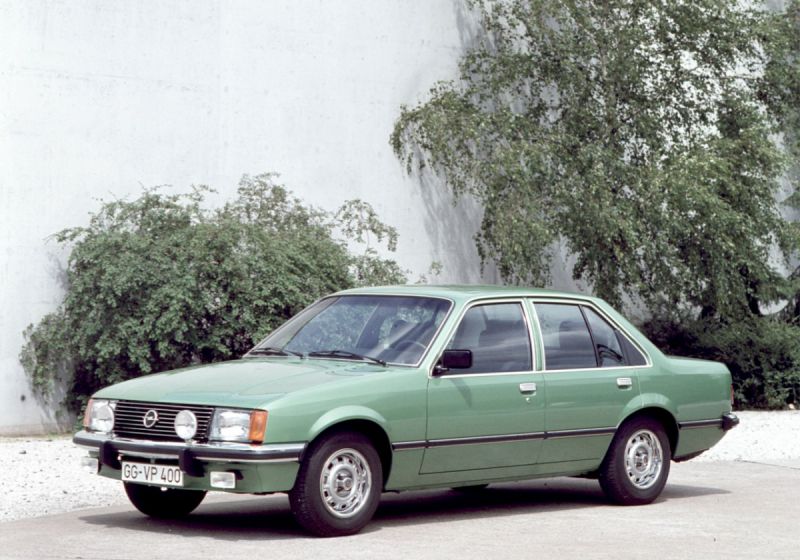
The Opel Rekord E 2.0 (90 hp) Automatic, produced between 1977 and 1982, represented a significant offering in Opel’s mid-size lineup. Part of the Rekord E generation (internally designated as the 1HX0 series), this variant aimed to provide a comfortable and affordable option for families and drivers prioritizing ease of use over outright performance. It occupied a middle ground within the Rekord E range, positioned above the base 1.7L models and below the more powerful 2.1L and 2.2L variants. The Rekord E itself was a popular choice in Europe, known for its practicality and relatively modern styling for its time.
The 2.0L Automatic: Positioning and Market Role
The 2.0L (90 hp) Automatic trim was designed to appeal to buyers seeking a blend of reasonable performance and the convenience of an automatic transmission. In a market where manual transmissions were still dominant, the availability of an automatic option broadened the Rekord E’s appeal, particularly to drivers in urban areas or those who preferred a less demanding driving experience. This model was not marketed as a sporty option; instead, it focused on providing a smooth, reliable, and comfortable ride for everyday use. It was a common choice for company car fleets and families.
Powertrain & Engine Architecture
At the heart of the Rekord E 2.0 Automatic lay the Opel 20N engine, a 1,979 cc (120.77 cubic inches) inline-four cylinder gasoline engine. This engine produced 90 horsepower at 5,200 rpm and 142 Nm (104.73 lb-ft) of torque between 3,000 and 3,800 rpm. The 20N featured a single overhead camshaft (SOHC) valvetrain with two valves per cylinder. Fuel delivery was managed by a carburetor, a common setup for the era, though less efficient than fuel injection systems. The compression ratio was 8:1. The engine was known for its durability, but its carbureted fuel system could require periodic adjustment and maintenance.
The automatic transmission paired with the 20N engine was a three-speed unit. While not known for its sophistication, it provided smooth shifts and contributed to the car’s ease of driving. The transmission’s gear ratios were optimized for comfortable cruising and adequate acceleration, but it wasn’t designed for rapid gear changes or sporty driving. The rear-wheel drive configuration was standard for the Rekord E.
Driving Characteristics
The driving experience in the Rekord E 2.0 Automatic was characterized by smoothness and predictability. Acceleration from 0 to 100 km/h (0-62 mph) took approximately 15.5 seconds, and 0 to 60 mph was achieved in around 14.7 seconds. Top speed was rated at 160 km/h (99.42 mph). Compared to the manual transmission versions of the 2.0L, the automatic suffered a slight performance penalty due to the transmission’s inherent inefficiencies. However, the convenience of the automatic more than compensated for this loss in performance for many drivers. The car felt stable and comfortable on the highway, but its handling was not particularly sharp or engaging. The automatic transmission’s shift points were relatively conservative, prioritizing fuel economy and smooth operation over aggressive acceleration.
Equipment & Trim Levels
The standard equipment level for the Rekord E 2.0 Automatic was fairly basic, reflecting its position as a mid-range model. Typically, it included cloth upholstery, a basic instrument cluster, and manual windows and door locks. Optional extras included a sunroof, upgraded audio systems, and more comfortable seating. Higher trim levels, often denoted by additional badges or model names, offered features like central locking, power windows, and more luxurious interior appointments. The dashboard layout was functional and straightforward, with clearly labeled controls. The interior space was generous, providing comfortable seating for five adults. Trunk space was a respectable 540 liters (19.07 cubic feet).
Chassis & Braking
The Rekord E 2.0 Automatic utilized a conventional chassis design with a rear-wheel drive layout. The suspension consisted of independent front suspension with coil springs and a rigid axle rear suspension with leaf springs. This setup provided a comfortable ride, but it wasn’t particularly sophisticated in terms of handling. The front brakes were ventilated discs, offering good stopping power, while the rear brakes were drums. This combination was typical for cars of this era and weight class. The steering was a recirculating ball system, which provided a relatively light steering feel but lacked precision. The curb weight of the vehicle was 1,120 kg (2,469.18 lbs), and the maximum permissible weight was 1,600 kg (3,527.4 lbs).
Market Reception & Comparison
The Opel Rekord E 2.0 Automatic received generally positive reviews from automotive critics. It was praised for its comfortable ride, spacious interior, and reliable engine. However, it was also criticized for its relatively slow acceleration and somewhat dated styling. Compared to other trims in the Rekord E lineup, the 2.0L Automatic offered a good balance of performance and fuel economy. The 1.7L models were more affordable but lacked the power of the 2.0L, while the 2.1L and 2.2L versions offered more performance but were more expensive to purchase and operate. In terms of fuel economy, the 2.0L Automatic averaged around 11 liters per 100 km (21.4 US mpg), which was typical for a car of its size and era. The manual transmission versions of the 2.0L offered slightly better fuel economy.
Technical Specifications
| Brand | Opel |
| Model | Rekord |
| Generation | Rekord E |
| Type (Engine) | 2.0 (90 Hp) Automatic |
| Start of production | 1977 |
| End of production | 1982 |
| Engine Model/Code | 20N |
| Engine displacement | 1979 cm3 (120.77 cu. in.) |
| Number of cylinders | 4 |
| Engine configuration | Inline |
| Cylinder Bore | 95 mm (3.74 in.) |
| Piston Stroke | 69.8 mm (2.75 in.) |
| Compression ratio | 8:1 |
| Number of valves per cylinder | 2 |
| Fuel injection system | Carburettor |
| Engine aspiration | Naturally aspirated |
| Valvetrain | SOHC |
| Power | 90 Hp @ 5200 rpm |
| Torque | 142 Nm @ 3000-3800 rpm (104.73 lb.-ft. @ 3000-3800 rpm) |
| Fuel consumption (combined) | 11 l/100 km (21.4 US mpg, 25.7 UK mpg, 9.1 km/l) |
| Acceleration 0 – 100 km/h | 15.5 sec |
| Acceleration 0 – 62 mph | 15.5 sec |
| Acceleration 0 – 60 mph | 14.7 sec |
| Maximum speed | 160 km/h (99.42 mph) |
| Kerb Weight | 1120 kg (2469.18 lbs) |
| Max. weight | 1600 kg (3527.4 lbs) |
| Fuel tank capacity | 65 l (17.17 US gal | 14.3 UK gal) |
| Trunk (boot) space – minimum | 540 l (19.07 cu. ft.) |
| Length | 4593 mm (180.83 in.) |
| Width | 1726 mm (67.95 in.) |
| Height | 1420 mm (55.91 in.) |
Legacy
The Opel Rekord E 2.0 Automatic, while not a particularly rare or collectible model today, remains a popular choice among classic car enthusiasts. The 20N engine is known for its reliability, and parts availability is generally good. However, the carbureted fuel system can require periodic maintenance. The automatic transmission is also relatively durable, but it may exhibit signs of wear and tear after many years of use. In the used car market, these vehicles are typically affordable and offer a nostalgic driving experience. They represent a snapshot of automotive engineering from the late 1970s and early 1980s, offering a blend of practicality, comfort, and reliability that appealed to a wide range of drivers.