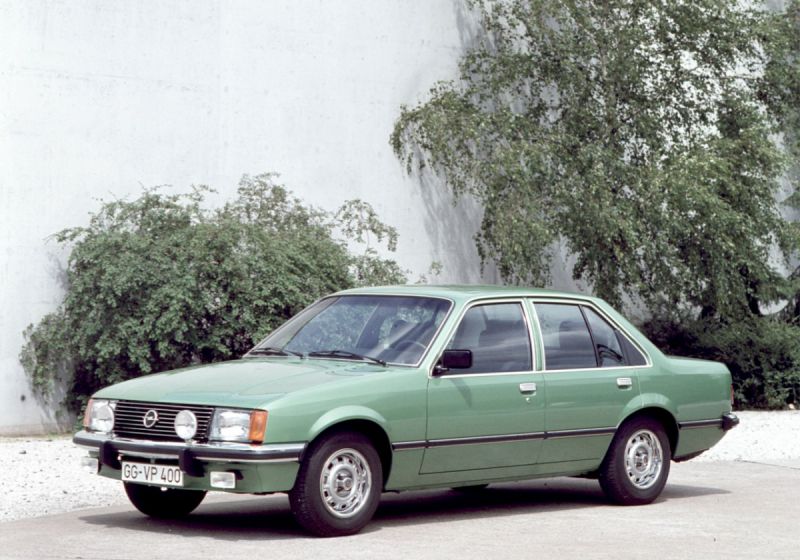
The Opel Rekord E 2.0 S Automatic, produced between 1977 and 1982, represented a mid-range offering within the broader Rekord E lineup. The Rekord E, built on the H-platform (internally designated as 1HX0/A3), was a significant model for Opel, aiming to provide a comfortable and practical family sedan. The 2.0 S Automatic variant specifically targeted buyers seeking a balance between performance and convenience, offering a larger engine and the ease of an automatic transmission without the higher price tag of the top-tier models. It was positioned above the base 1.7L and 1.9L models, and below the more powerful 2.1L and diesel options.
Powertrain & Engine Architecture
The heart of the Rekord E 2.0 S Automatic was the 20S engine, a 1,979 cc (120.77 cubic inches) inline-four cylinder gasoline engine. This engine produced 101 horsepower at 5,600 rpm and 155 Nm (114.32 lb-ft) of torque between 3,400 and 3,800 rpm. The engine featured a single overhead camshaft (SOHC) valvetrain with two valves per cylinder. Crucially, the 2.0 S utilized a carburetor for fuel delivery, a common practice for the era, rather than fuel injection. This carburetor system, while simpler and less expensive than injection, contributed to the engine’s slightly lower fuel efficiency and responsiveness compared to later designs.
The engine’s bore and stroke measured 95 mm (3.74 inches) and 69.8 mm (2.75 inches) respectively, resulting in a compression ratio of 9:1. The engine was naturally aspirated, meaning it did not employ a turbocharger or supercharger. Paired with this engine was a three-speed automatic transmission. This transmission, while providing ease of use, was not known for its particularly quick shifts or wide gear ratio spread. It was a typical automatic of its time, prioritizing smooth operation over outright performance.
Transmission Details
The three-speed automatic transmission used in the Rekord E 2.0 S was a General Motors-sourced unit, reflecting Opel’s long-standing relationship with GM. The gear ratios were optimized for comfortable cruising and reasonable acceleration, but the limited number of gears meant the engine often operated at higher rpm during highway driving, impacting fuel economy and potentially increasing noise levels. The transmission lacked modern features like overdrive or selectable driving modes.
Driving Characteristics
The driving experience in the Rekord E 2.0 S Automatic was characterized by smooth, if not particularly exhilarating, performance. Acceleration from 0 to 100 km/h (0-62 mph) took approximately 14 seconds, and 0 to 60 mph was achieved in around 13.3 seconds. The top speed was rated at 168 km/h (104.39 mph). Compared to the manual transmission versions of the 2.0 S, the automatic suffered a slight performance penalty due to the inherent inefficiencies of the torque converter and the limited gear selection. The automatic transmission also diminished the driver’s control over engine braking and gear selection, making spirited driving less engaging.
The power delivery was relatively linear, with the peak torque available in a usable mid-range. However, the carburetor’s tuning meant that throttle response wasn’t as crisp as it would be with a fuel-injected engine. The rear-wheel drive configuration provided a traditional driving feel, but also meant that traction could be a concern in slippery conditions. Overall, the 2.0 S Automatic was best suited for relaxed cruising and everyday commuting.
Equipment & Trim Levels
The Rekord E 2.0 S Automatic came reasonably well-equipped for its time, though the level of standard features varied depending on the market. Standard equipment typically included cloth upholstery, a basic AM/FM radio, and manual windows and door locks. The “S” designation indicated a slightly more sporting trim level, often including upgraded interior trim and exterior detailing. Optional extras included a sunroof, upgraded audio systems, power windows, and central locking. The interior design was functional and straightforward, with a focus on practicality rather than luxury. The dashboard layout was typical of the late 1970s, featuring analog gauges and a simple control layout.
Chassis & Braking
The Rekord E 2.0 S Automatic utilized an independent McPherson strut suspension at the front and a spring strut suspension at the rear. This suspension setup provided a comfortable ride, absorbing bumps and irregularities in the road surface effectively. The front brakes were ventilated discs, offering good stopping power, while the rear brakes were drums. This combination was typical for vehicles in this class during the late 1970s. The steering was a rack and pinion system with hydraulic power assistance, making it relatively easy to maneuver at low speeds. The 185/70 R14 tires provided adequate grip for everyday driving conditions. The curb weight of the vehicle was 1,120 kg (2,469.18 lbs), and the maximum weight was 1,600 kg (3,527.4 lbs).
Market Reception & Comparison
The Opel Rekord E 2.0 S Automatic was generally well-received by automotive critics as a practical and comfortable family sedan. However, it wasn’t considered a particularly exciting or sporty vehicle. Critics noted the engine’s adequate performance but also pointed out the limitations of the carburetor and the three-speed automatic transmission. Compared to the manual transmission versions of the 2.0 S, the automatic offered less engaging driving experience. Fuel economy was rated at 9.9 l/100 km (23.8 US mpg, 28.5 UK mpg), which was typical for a vehicle of its size and engine displacement in the late 1970s, but not particularly impressive. The 2.1L Rekord offered more power, but at a higher price point. The diesel Rekord offered better fuel economy, but with significantly reduced performance.
Technical Specifications
| Brand | Opel |
| Model | Rekord |
| Generation | Rekord E |
| Type (Engine) | 2.0 S (101 Hp) Automatic |
| Start of production | 1977 |
| End of production | 1982 |
| Engine Model/Code | 20S |
| Engine displacement | 1979 cm3 (120.77 cu. in.) |
| Number of cylinders | 4 |
| Engine configuration | Inline |
| Cylinder Bore | 95 mm (3.74 in.) |
| Piston Stroke | 69.8 mm (2.75 in.) |
| Compression ratio | 9:1 |
| Number of valves per cylinder | 2 |
| Fuel injection system | Carburettor |
| Engine aspiration | Naturally aspirated |
| Valvetrain | SOHC |
| Power | 101 Hp @ 5600 rpm |
| Torque | 155 Nm @ 3400-3800 rpm (114.32 lb.-ft. @ 3400-3800 rpm) |
| Fuel consumption (combined) | 9.9 l/100 km (23.8 US mpg, 28.5 UK mpg, 10.1 km/l) |
| Acceleration 0 – 100 km/h | 14 sec |
| Acceleration 0 – 62 mph | 14 sec |
| Acceleration 0 – 60 mph | 13.3 sec |
| Maximum speed | 168 km/h (104.39 mph) |
| Kerb Weight | 1120 kg (2469.18 lbs.) |
| Max. weight | 1600 kg (3527.4 lbs.) |
| Trunk (boot) space – minimum | 540 l (19.07 cu. ft.) |
| Fuel tank capacity | 65 l (17.17 US gal | 14.3 UK gal) |
| Number of gears and type of gearbox | 3 gears, automatic transmission |
| Drive wheel | Rear wheel drive |
Legacy
The Opel Rekord E 2.0 S Automatic, while not a particularly rare or collectible vehicle today, remains a representative example of 1970s German engineering. The 20S engine, while relatively simple, proved to be reasonably durable and reliable when properly maintained. However, the carburetor system can require periodic servicing and adjustment. The automatic transmission, while generally reliable, is prone to wear and tear with age. In the used car market, these vehicles are often sought after by enthusiasts looking for a classic European sedan. Parts availability can be a challenge, but many components are still available through specialist suppliers. The Rekord E 2.0 S Automatic serves as a reminder of a time when comfort and practicality were prioritized over outright performance, and when the automatic transmission was becoming increasingly popular among family car buyers.