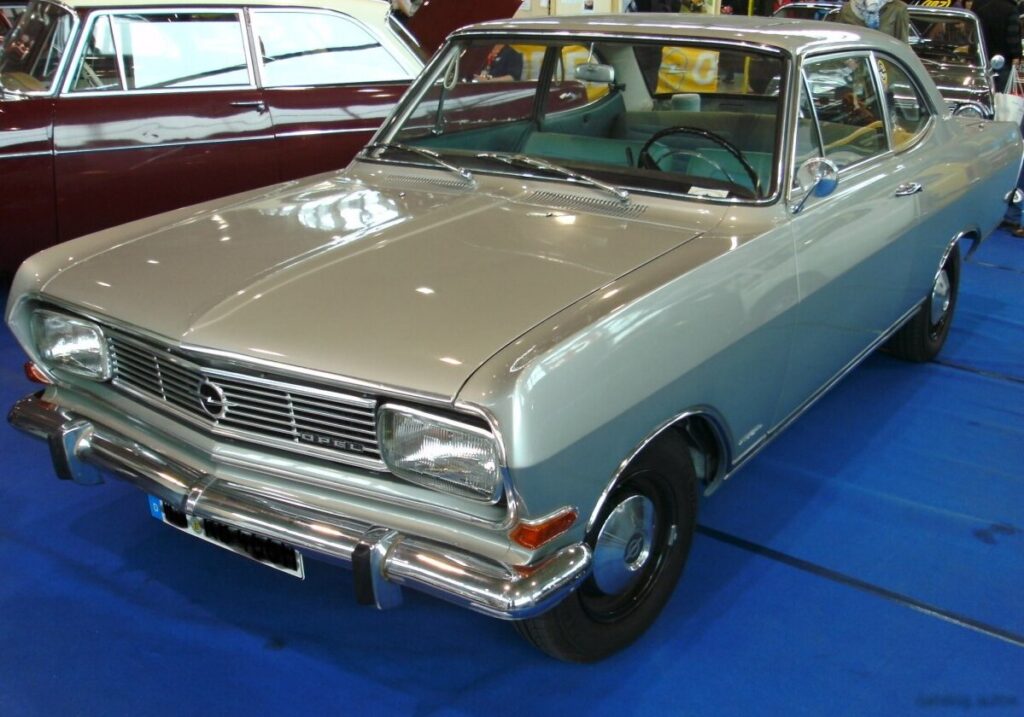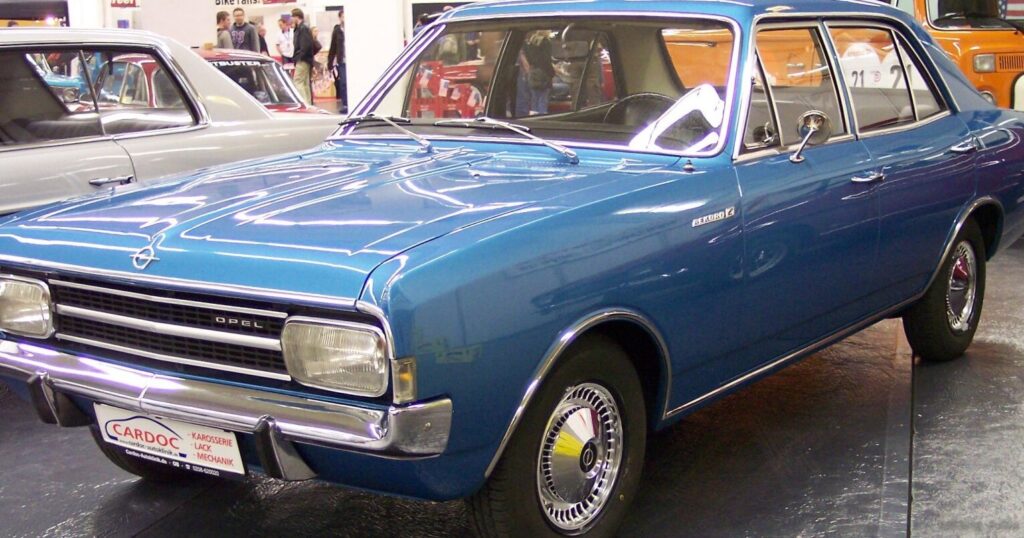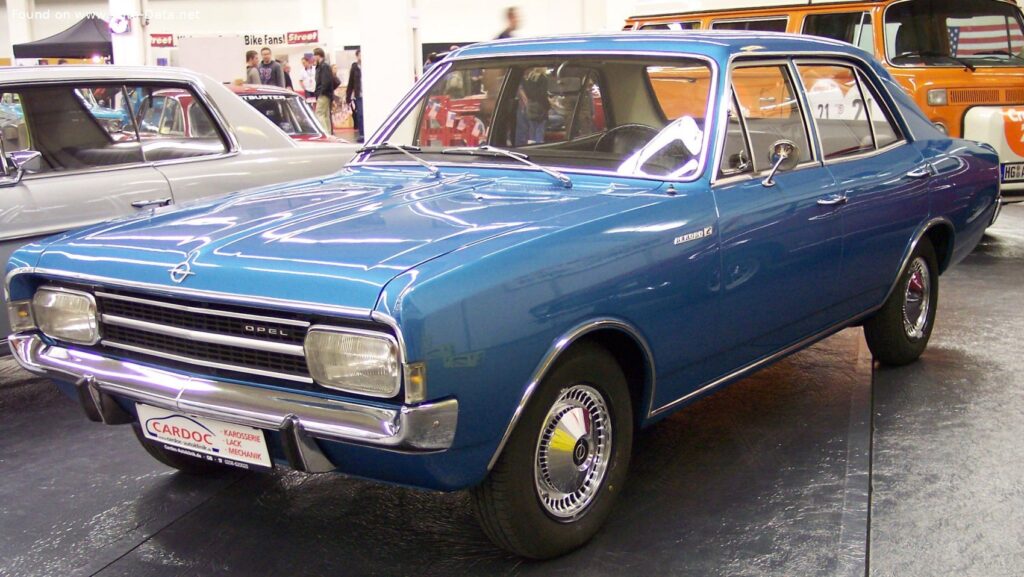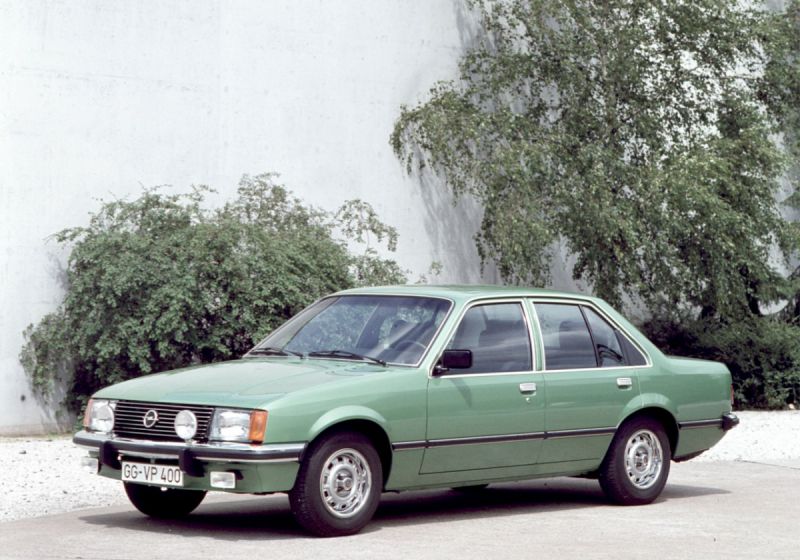
The Opel Rekord E 2.1 D Automatic, produced between 1977 and 1978, represented a diesel-powered, economy-focused variant within the broader Rekord E range. The Rekord E, manufactured from 1977 to 1986, was Opel’s mid-size offering, positioned above the Ascona and below the Commodore. This particular 2.1-liter diesel automatic model served as the entry point into the Rekord E lineup for buyers prioritizing fuel efficiency and practicality over outright performance. It was built on the 1HX0 platform, shared with other General Motors vehicles of the era.
The 2.1 D Automatic: Positioning and Market Role
The 2.1 D Automatic occupied a specific niche within the Rekord E range. While the Rekord E was available with a variety of gasoline engines, including 1.7, 2.0, and 2.2-liter options, and even a 2.8-liter six-cylinder, the 2.1 D offered a diesel alternative. The automatic transmission further distinguished it, as most Rekord E models were offered with manual gearboxes. This combination targeted buyers who desired the convenience of an automatic transmission and the fuel economy benefits of a diesel engine, typically fleet operators, long-distance commuters, or those seeking a durable and economical family sedan. It was generally considered the base model for those wanting a diesel Rekord E.
Powertrain & Engine Architecture
The heart of the Rekord E 2.1 D Automatic was the 21D engine, a 2068 cc (126.2 cu. in.) inline-four cylinder diesel. This engine featured precombustion chamber injection, a common diesel technology of the time. This system involved a small precombustion chamber connected to the main cylinder, where fuel was injected and ignited by the compression ratio of 22:1, then transferring the flame to the main combustion chamber. The engine produced 60 horsepower (hp) at 4400 rpm and 118 Nm (87.03 lb-ft) of torque at 2500 rpm. The valvetrain employed a single overhead camshaft (SOHC) design with two valves per cylinder. The engine’s relatively low power output was typical for diesel engines of the era, prioritizing fuel efficiency and longevity over high performance.
The engine was mated to a three-speed automatic transmission. While specific details on the transmission’s internal construction are scarce, it was a conventional hydraulic automatic, designed for smooth, if not particularly quick, gear changes. The transmission’s gear ratios were optimized for fuel economy and drivability at lower speeds, rather than rapid acceleration. The rear wheels were driven via a standard rear-wheel drive configuration.
Driving Characteristics
The driving experience in the Rekord E 2.1 D Automatic was characterized by its relaxed and unhurried nature. Acceleration was slow, with a 0-62 mph (0-100 km/h) time of around 28 seconds. The engine’s torque peak at 2500 rpm provided adequate pulling power for everyday driving, but overtaking maneuvers required careful planning. The automatic transmission contributed to a comfortable driving experience, particularly in urban environments, but it also diminished the driver’s control over engine speed and power delivery. Compared to the manual transmission versions of the 2.1 D, the automatic offered less driver engagement and slightly reduced fuel economy. Compared to the gasoline-powered Rekord Es, the 2.1 D Automatic was significantly slower but offered substantially better fuel economy – around 8.9 l/100 km (26.4 US mpg).
Equipment & Trim Levels
The Rekord E 2.1 D Automatic typically came with a fairly basic level of equipment, reflecting its position as an entry-level model. Standard features generally included cloth upholstery, basic instrumentation (speedometer, fuel gauge, temperature gauge), and a two-spoke steering wheel. Optional extras could include a radio, upgraded upholstery, and power-assisted steering. The interior design was functional and durable, prioritizing practicality over luxury. The dashboard layout was straightforward, with clearly labeled controls. The Rekord E offered either a two-door or four-door body style, with the four-door being the more common configuration.
Chassis & Braking
The Rekord E 2.1 D Automatic utilized a conventional chassis design with independent front suspension and a live axle rear suspension. The front suspension featured coil springs and anti-roll bar, while the rear suspension employed leaf springs. The braking system consisted of ventilated disc brakes at the front and drum brakes at the rear. The braking performance was adequate for the vehicle’s weight and power output, but it lacked the stopping power of more modern braking systems. The kerb weight of the vehicle was 1255 kg (2766.8 lbs), and the maximum weight was 1735 kg (3825.02 lbs). The front track measured 1435 mm (56.5 in), and the rear track was 1412 mm (55.59 in).
Market Reception & Comparison
The Opel Rekord E 2.1 D Automatic received mixed reviews. Critics generally praised its fuel economy and durability, but criticized its lack of performance. It was seen as a sensible and practical choice for buyers prioritizing economy and reliability over driving excitement. Compared to other diesel-powered sedans of the era, such as the Volkswagen Passat Diesel, the Rekord E 2.1 D Automatic offered a similar level of fuel economy and practicality, but was often considered to be slightly less refined. Within the Rekord E lineup, the 2.1 D Automatic was positioned as the most economical option, appealing to a different segment of the market than the more powerful gasoline-powered models.
Technical Specifications
| Brand | Opel |
| Model | Rekord |
| Generation | Rekord E |
| Type (Engine) | 2.1 D (60 Hp) Automatic |
| Start of production | 1977 |
| End of production | 1978 |
| Engine Model/Code | 21D |
| Engine displacement | 2068 cm3 (126.2 cu. in.) |
| Number of cylinders | 4 |
| Engine configuration | Inline |
| Cylinder Bore | 88 mm (3.46 in.) |
| Piston Stroke | 85 mm (3.35 in.) |
| Compression ratio | 22:1 |
| Number of valves per cylinder | 2 |
| Fuel injection system | Precombustion chamber injection |
| Engine aspiration | Naturally aspirated |
| Valvetrain | SOHC |
| Power | 60 Hp @ 4400 rpm |
| Torque | 118 Nm @ 2500 rpm (87.03 lb.-ft. @ 2500 rpm) |
| Fuel Type | Diesel |
| Fuel consumption (combined) | 8.9 l/100 km (26.4 US mpg, 31.7 UK mpg, 11.2 km/l) |
| Acceleration 0 – 100 km/h | 28 sec |
| Acceleration 0 – 62 mph | 28 sec |
| Acceleration 0 – 60 mph | 26.6 sec |
| Maximum speed | 133 km/h (82.64 mph) |
| Kerb Weight | 1255 kg (2766.8 lbs) |
| Max. weight | 1735 kg (3825.02 lbs) |
| Trunk (boot) space | 540 l (19.07 cu. ft.) |
| Fuel tank capacity | 65 l (17.17 US gal, 14.3 UK gal) |
| Number of gears and type of gearbox | 3 gears, automatic transmission |
| Drive wheel | Rear wheel drive |
| Length | 4593 mm (180.83 in.) |
| Width | 1726 mm (67.95 in.) |
| Height | 1420 mm (55.91 in.) |
Legacy
The Opel Rekord E 2.1 D Automatic, while not a performance icon, proved to be a durable and reliable vehicle. The 21D diesel engine, though underpowered by modern standards, was known for its longevity and relatively simple maintenance requirements. Today, these vehicles are relatively rare, and well-maintained examples are sought after by classic car enthusiasts and collectors. The powertrain, while not particularly sophisticated, is generally considered to be robust and capable of providing years of service with proper care. The Rekord E 2.1 D Automatic represents a snapshot of automotive engineering from the late 1970s, prioritizing fuel efficiency and practicality in a time of rising fuel prices and increasing environmental awareness.