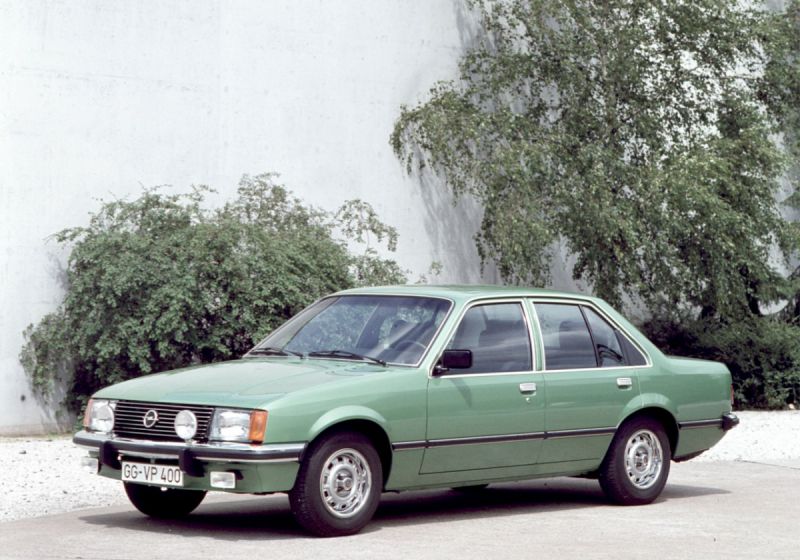
The Opel Rekord E 2.3 D, producing 65 horsepower, was a diesel-powered variant of the Rekord E series, manufactured between 1978 and 1982. Positioned as the economy-focused model within the Rekord E lineup, it catered to buyers prioritizing fuel efficiency and durability over outright performance. The Rekord E itself was a significant model for Opel, built on the H-platform (internally designated as 1HX0/A3), representing a substantial redesign of the Rekord series with a focus on modern styling and improved comfort. The 2.3 D offered a practical and robust transportation solution, particularly appealing in markets where diesel fuel was more affordable and readily available.
The 2.3 D Engine and Powertrain
The heart of the Rekord E 2.3 D was its 2260 cc (137.91 cu. in.) inline-four cylinder diesel engine, designated the 23D. This engine utilized precombustion chamber injection, a common diesel technology of the era. Unlike direct injection systems, precombustion chambers housed a glow plug and a small auxiliary combustion chamber connected to the main cylinder. Fuel was injected into the precombustion chamber, initiating combustion and then igniting the main charge in the cylinder. This system offered smoother combustion and reduced engine noise compared to earlier diesel designs, though it was less efficient than later direct injection systems. The engine featured a single overhead camshaft (SOHC) valvetrain with two valves per cylinder.
The 23D engine produced 65 hp at 4200 rpm and 127 Nm (93.67 lb-ft) of torque at 2500 rpm. This relatively low power output was typical for diesel engines of the time, prioritizing fuel economy and longevity. The engine had a compression ratio of 22:1, reflecting the high compression required for diesel ignition. The 2.3 D was exclusively offered with a four-speed manual transmission, driving the rear wheels. The transmission was chosen to maximize fuel efficiency and provide a durable, reliable drivetrain suitable for the engine’s torque characteristics.
Engine Specifications
The 23D engine was known for its robust construction and relative simplicity. While not a high-performance engine, it was designed for durability and low maintenance. The precombustion chamber design, while less efficient than later technologies, contributed to quieter operation and reduced emissions for its time. The engine’s relatively low specific output (28.8 hp/liter) meant it was not stressed, contributing to its longevity.
Driving Characteristics
The driving experience in the Rekord E 2.3 D was defined by its practicality and fuel economy rather than sporty performance. Acceleration was leisurely, taking approximately 22 seconds to reach 100 km/h (62 mph) and around 20.9 seconds to reach 60 mph. The top speed was limited to 140 km/h (87 mph). The four-speed manual transmission required careful gear selection to maintain momentum, especially when climbing hills or overtaking. The engine’s torque peak at 2500 rpm provided reasonable pulling power in everyday driving situations, but it lacked the responsiveness of higher-output gasoline engines.
Compared to the gasoline-powered Rekord E variants, the 2.3 D offered significantly better fuel economy – around 8.3 l/100 km (28.3 US mpg, 34 UK mpg). However, it lacked the refinement and acceleration of its petrol counterparts. The 2.3 D was also noticeably slower than the Rekord E 2.0 or 2.2 models. The target audience for this variant was primarily those seeking a cost-effective and reliable vehicle for commuting and long-distance travel, where fuel efficiency was a primary concern.
Equipment and Trim Levels
The Rekord E 2.3 D was typically equipped with a relatively basic level of trim, reflecting its position as the entry-level diesel model. Standard features generally included cloth upholstery, vinyl flooring, and a simple dashboard layout. Power steering and air conditioning were typically optional extras. The exterior trim was also relatively understated, with black plastic bumpers and steel wheels being common.
Optional equipment could include upgraded cloth upholstery, a more comprehensive instrument panel, and a radio. The Rekord E offered a range of body styles, including a two-door coupe, a four-door sedan, and a station wagon (Caravan). The 2.3 D was available in all body styles, though the sedan was the most popular configuration. The interior space was generous for its time, offering comfortable seating for five passengers and a reasonably sized trunk with a capacity of 540 liters (19.07 cu. ft.).
Chassis and Braking
The Rekord E 2.3 D utilized a conventional rear-wheel-drive chassis with independent front suspension and a solid rear axle. The front suspension featured MacPherson struts with stabilizer bar, while the rear suspension employed leaf springs. The braking system consisted of ventilated disc brakes at the front and drum brakes at the rear. The braking performance was adequate for the vehicle’s weight and power, but it lacked the stopping power of more modern braking systems.
The kerb weight of the Rekord E 2.3 D was 1235 kg (2722.71 lbs), and the maximum permissible weight was 1735 kg (3825.02 lbs). The suspension was tuned for comfort, providing a relatively smooth ride on most road surfaces. The stabilizer bar at the front helped to reduce body roll during cornering, but the overall handling was not particularly sporty.
Market Reception and Comparison
The Opel Rekord E 2.3 D was generally well-received by critics as a practical and fuel-efficient vehicle. It was praised for its durability and low running costs, but criticized for its lack of performance. Compared to other diesel-powered cars of the era, the Rekord E 2.3 D offered a good balance of fuel economy, comfort, and reliability. However, it faced competition from other European manufacturers, such as Volkswagen and Peugeot, who also offered diesel-powered sedans and wagons.
In terms of fuel economy, the Rekord E 2.3 D was competitive with other diesel models, achieving around 8.3 l/100 km. Its reliability was also considered to be good, with the 23D engine proving to be a durable and long-lasting unit. However, the Rekord E 2.3 D was not as refined or as well-equipped as some of its competitors.
Technical Specifications
| Brand | Opel |
| Model | Rekord |
| Generation | Rekord E |
| Type (Engine) | 2.3 D (65 Hp) |
| Start of production | 1978 |
| End of production | 1982 |
| Fuel consumption (combined) | 8.3 l/100 km |
| Fuel Type | Diesel |
| Acceleration 0 – 100 km/h | 22 sec |
| Acceleration 0 – 62 mph | 22 sec |
| Acceleration 0 – 60 mph | 20.9 sec |
| Maximum speed | 140 km/h |
| Power | 65 Hp @ 4200 rpm |
| Torque | 127 Nm @ 2500 rpm |
| Engine Model/Code | 23D |
| Engine displacement | 2260 cm3 |
| Number of cylinders | 4 |
| Cylinder Bore | 92 mm |
| Piston Stroke | 85 mm |
| Compression ratio | 22:1 |
| Kerb Weight | 1235 kg |
| Max. weight | 1735 kg |
| Trunk (boot) space – minimum | 540 l |
| Fuel tank capacity | 65 l |
| Drive wheel | Rear wheel drive |
| Number of gears and type of gearbox | 4 gears, manual transmission |
| Front brakes | Ventilated discs |
| Rear brakes | Drum |
| Length | 4593 mm |
| Width | 1726 mm |
| Height | 1420 mm |
Legacy
The Opel Rekord E 2.3 D, while not a particularly exciting vehicle, remains a significant example of 1970s and early 1980s automotive engineering. The 23D engine proved to be a durable and reliable powerplant, and many examples are still on the road today. In the used car market, the Rekord E 2.3 D is valued for its simplicity, affordability, and fuel efficiency. It appeals to enthusiasts seeking a classic diesel-powered vehicle or a project car. The Rekord E series as a whole is remembered as a comfortable and practical family car that played a significant role in Opel’s history.
The 23D engine, while superseded by more modern diesel technologies, represents a key step in the development of diesel engines for passenger cars. Its robust construction and relatively simple design contributed to its longevity and made it a popular choice for those seeking a reliable and economical vehicle.