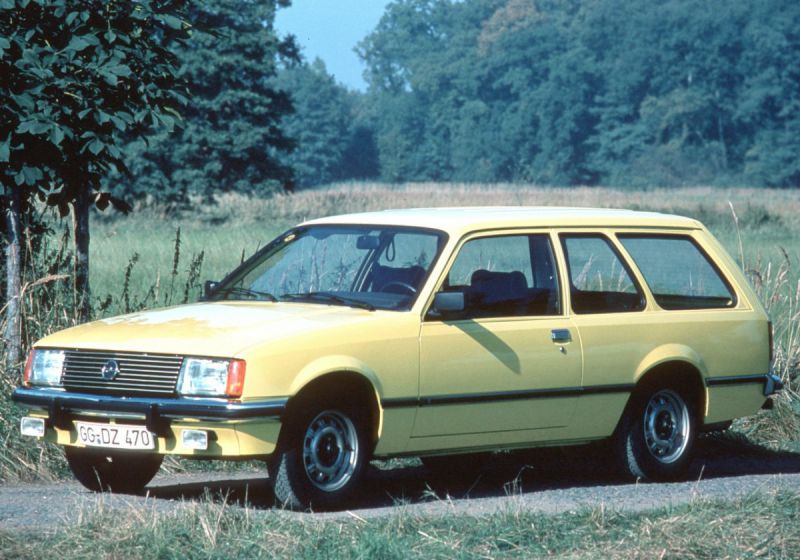
The Opel Rekord E Caravan 1.7, producing 60 horsepower, was a variant of the Rekord E series produced between 1977 and 1982. This model occupied the entry-level position within the Rekord E Caravan (estate) lineup, offering a more affordable and fuel-conscious option compared to the larger-displacement engines available. It was designed to appeal to families and individuals needing a practical, spacious vehicle for everyday use, prioritizing economy over outright performance. The Rekord E series itself was built upon the GM’s H-platform, shared with other European Opel and Vauxhall models, and represented a significant step forward in Opel’s design and engineering compared to its predecessor.
The 1.7L Engine and its Role in the Rekord E Lineup
The 1.7-liter engine, designated as the 17N, was a key component of the Rekord E’s appeal to budget-conscious buyers. While the Rekord E was also offered with 1.6L, 2.0L, and 2.1L engines, the 1.7L provided a balance between acceptable performance and reasonable fuel consumption. It was positioned as the base engine, making the Caravan accessible to a wider range of customers. The larger engines, particularly the 2.1L, were aimed at those who prioritized power and were willing to accept higher running costs. The 1.7L version was particularly popular in markets where fuel prices were a concern, or where drivers favored a less demanding driving experience.
Powertrain & Engine Architecture
The 17N engine is a 1698 cc (103.62 cubic inches) inline-four cylinder engine. It featured a single overhead camshaft (SOHC) valvetrain with two valves per cylinder. The engine’s bore measured 88 mm (3.46 inches) and its stroke 69.8 mm (2.75 inches), resulting in a compression ratio of 8:1. Fuel delivery was managed by a carburetor, a common feature for engines of this era, rather than fuel injection. This carburetor setup, while simpler and less expensive, contributed to the engine’s lower power output and slightly higher emissions compared to later fuel-injected designs. The engine produced 60 hp at 4800 rpm and 112 Nm (82.61 lb-ft) of torque between 2200-3000 rpm. The engine was paired with a four-speed manual transmission as standard, although an automatic transmission was also available as an option, albeit less common with this engine.
Driving Characteristics
The Rekord E Caravan 1.7 with the four-speed manual transmission offered a relatively leisurely driving experience. Acceleration from 0 to 100 km/h (0-62 mph) took approximately 21.5 seconds, and 0 to 60 mph was achieved in around 20.4 seconds. The top speed was around 143 km/h (88.86 mph). The engine’s torque peak at 2200-3000 rpm meant that it was reasonably responsive in everyday driving situations, but overtaking required careful planning. The optional automatic transmission further reduced acceleration performance, as it introduced torque converter losses and less direct power delivery. Compared to the 2.0L or 2.1L Rekord E Caravans, the 1.7L felt noticeably slower, but it provided a smoother and more relaxed driving experience, particularly in urban environments. The rear-wheel-drive configuration provided predictable handling, but lacked the sophistication of more modern traction control systems.
Equipment & Trim Levels
The Rekord E Caravan 1.7 typically came with a fairly basic level of equipment, reflecting its position as the entry-level model. Standard features generally included cloth upholstery, basic instrumentation (speedometer, fuel gauge, temperature gauge), and a two-spoke steering wheel. The interior was functional and durable, prioritizing practicality over luxury. Optional extras included a radio, upgraded upholstery, tinted glass, and a sunroof. Higher trim levels, available with the larger engines, offered features such as power windows, central locking, and more luxurious interior appointments. The Caravan body style itself was a significant selling point, offering a generous 881 liters (31.11 cubic feet) of cargo space with the rear seats up, making it ideal for families and those needing to transport large items.
Chassis & Braking
The Rekord E Caravan 1.7 featured a conventional rear-wheel-drive chassis with independent front suspension and a live axle rear suspension. The front suspension utilized coil springs and wishbones, while the rear suspension employed leaf springs. The braking system consisted of ventilated disc brakes at the front and drum brakes at the rear. This configuration was typical for vehicles of this size and price range in the late 1970s and early 1980s. The kerb weight of the 1.7L Caravan was 1145 kg (2524.29 lbs), contributing to its relatively modest performance. The suspension provided a comfortable ride, but handling was not particularly sporty. Stabilizer bars were often optional, and their presence significantly improved body roll control.
Market Reception & Comparison
The Opel Rekord E Caravan 1.7 was generally well-received as a practical and affordable family car. Critics praised its spacious interior, comfortable ride, and reasonable fuel economy. However, its performance was often criticized as being underwhelming, particularly when compared to its larger-engined siblings. Fuel consumption was rated at 10.7 l/100 km (22 US mpg, 26.4 UK mpg, 9.3 km/l), and CO2 emissions were 265 g/km. Compared to the 2.0L Rekord E Caravan, the 1.7L offered significantly lower performance but better fuel economy. The 1.7L was also generally more reliable than the larger engines, as it was less stressed and had fewer potential failure points. In terms of competition, the Rekord E Caravan 1.7 faced rivals such as the Ford Taunus, Volvo 240, and various other European estate cars.
Technical Specifications
| Brand | Opel |
| Model | Rekord |
| Generation | Rekord E Caravan |
| Type (Engine) | 1.7 (60 Hp) |
| Start of production | 1977 |
| End of production | 1982 |
| Engine Model/Code | 17N |
| Engine displacement | 1698 cm3 (103.62 cu. in.) |
| Number of cylinders | 4 |
| Engine configuration | Inline |
| Cylinder Bore | 88 mm (3.46 in.) |
| Piston Stroke | 69.8 mm (2.75 in.) |
| Compression ratio | 8:1 |
| Number of valves per cylinder | 2 |
| Fuel injection system | Carburettor |
| Engine aspiration | Naturally aspirated |
| Valvetrain | SOHC |
| Power | 60 Hp @ 4800 rpm |
| Torque | 112 Nm @ 2200-3000 rpm (82.61 lb.-ft. @ 2200-3000 rpm) |
| Fuel consumption (combined) | 10.7 l/100 km (22 US mpg, 26.4 UK mpg, 9.3 km/l) |
| CO2 emissions | 265 g/km |
| Acceleration 0 – 100 km/h | 21.5 sec |
| Acceleration 0 – 62 mph | 21.5 sec |
| Acceleration 0 – 60 mph | 20.4 sec |
| Maximum speed | 143 km/h (88.86 mph) |
| Kerb Weight | 1145 kg (2524.29 lbs.) |
| Max. weight | 1765 kg (3891.16 lbs.) |
| Fuel tank capacity | 70 l (18.49 US gal | 15.4 UK gal) |
| Length | 4620 mm (181.89 in.) |
| Width | 1726 mm (67.95 in.) |
| Height | 1470 mm (57.87 in.) |
| Wheelbase | 2668 mm (105.04 in.) |
Legacy
The Opel Rekord E Caravan 1.7, while not the most powerful or exciting variant of the Rekord E, remains a fondly remembered vehicle for many. The 17N engine proved to be relatively durable and reliable, and well-maintained examples can still be found on the road today. In the used car market, these vehicles are often sought after by enthusiasts and collectors who appreciate their simplicity, practicality, and classic styling. Parts availability can be a challenge, but a dedicated community of Opel enthusiasts helps to keep these cars running. The Rekord E Caravan 1.7 represents a significant piece of automotive history, embodying the design and engineering trends of the late 1970s and early 1980s.