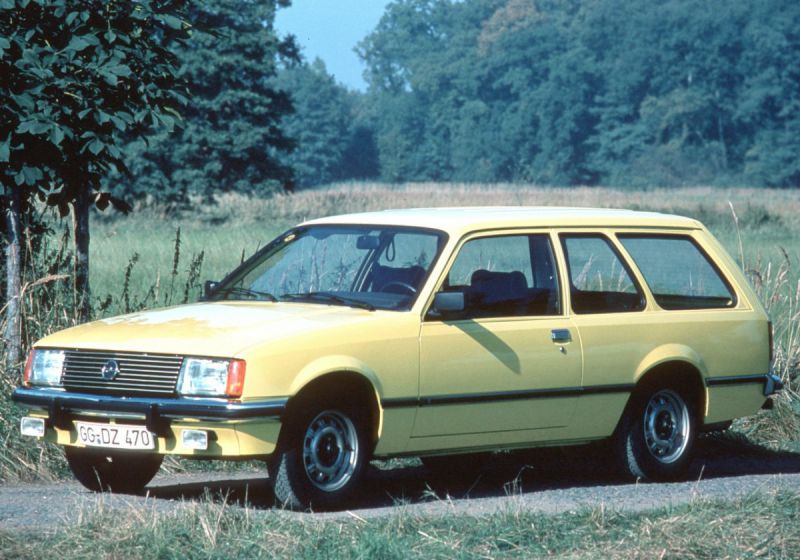
The Opel Rekord E Caravan 1.9 (75 hp) Automatic, produced between 1977 and 1982, represented a practical and affordable option within the Rekord E range. Positioned as a mid-range offering, it catered to families and those requiring a spacious, versatile vehicle. The Rekord E, launched in 1977, was a significant update to the Rekord line, built on the GM’s H-platform (internally designated as 1HX0/A3), and offered in both sedan and station wagon (Caravan) body styles. This particular variant combined a modest 1.9-liter four-cylinder engine with a three-speed automatic transmission, prioritizing comfort and ease of use over outright performance.
Powertrain & Engine Architecture
The heart of the Rekord E Caravan 1.9 Automatic was the Opel 19N engine, a 1,897 cc (115.76 cubic inches) inline-four cylinder gasoline engine. This engine utilized a single overhead camshaft (SOHC) valvetrain with two valves per cylinder. Fuel delivery was managed by a carburetor, a common feature for vehicles of this era, rather than fuel injection. The 19N produced 75 horsepower at 4,800 rpm and 97.36 lb-ft of torque at 2,200-3,400 rpm. The compression ratio was 7.9:1. Bore and stroke dimensions were 93 mm (3.66 inches) and 69.8 mm (2.75 inches) respectively.
The engine was paired with a three-speed automatic transmission. While specific details on the transmission’s internal construction are limited, it was a conventional hydraulic automatic, designed for smooth, if not particularly rapid, gear changes. This transmission was chosen to provide a comfortable driving experience, particularly appealing to buyers who preferred the convenience of an automatic over a manual gearbox. The combination of the engine and transmission resulted in a vehicle geared towards relaxed cruising rather than spirited acceleration.
Engine Code Specifics
The 19N engine code designates this specific iteration of the 1.9-liter engine. While variations existed within the Rekord E range, the 19N was consistently paired with the three-speed automatic transmission in the Caravan model. Later iterations of the Rekord E would see the introduction of fuel injection and other engine refinements, but the 19N remained a staple for the early years of the E generation.
Driving Characteristics
The driving experience in the Rekord E Caravan 1.9 Automatic was characterized by its comfort and practicality. Acceleration was modest, with a 0-62 mph (0-100 km/h) time of approximately 20 seconds. The engine’s torque peak at 2,200-3,400 rpm provided adequate pulling power for everyday driving, but overtaking maneuvers required careful planning. The three-speed automatic transmission, while smooth, lacked the responsiveness of more modern gearboxes. Gear ratios were optimized for fuel economy and relaxed cruising, rather than performance. Compared to the more powerful Rekord variants, such as those equipped with larger engines or manual transmissions, the 1.9 Automatic felt noticeably slower. However, it offered a more refined and less demanding driving experience, particularly in urban environments.
Equipment & Trim Levels
The Rekord E Caravan 1.9 Automatic typically came equipped with a reasonable level of standard features for its time. Interior upholstery was generally cloth, with a focus on durability rather than luxury. The dashboard layout was functional and straightforward, featuring analog gauges for speed, fuel level, coolant temperature, and battery voltage. Power-assisted steering was often included, making maneuvering easier, especially at low speeds. Other standard features included front ventilated disc brakes, rear drum brakes, and a basic AM/FM radio. Optional extras included a sunroof, upgraded audio systems, and more luxurious interior trim options. The Caravan body style itself was a key feature, offering a large cargo area accessible through a rear tailgate. The rear seats could be folded down to further increase cargo capacity.
Chassis & Braking
The Rekord E Caravan 1.9 Automatic utilized a rear-wheel drive layout with a conventional suspension setup. The front suspension consisted of independent coil springs and wishbones, while the rear suspension employed a live axle with leaf springs. This configuration provided a comfortable ride, but handling was not particularly sporty. The front brakes were ventilated discs, offering good stopping power, while the rear brakes were drums. Stabilizer bars were typically fitted to both the front and rear axles to reduce body roll during cornering. The chassis was designed to accommodate the weight of the vehicle and its occupants, as well as the substantial cargo capacity of the Caravan body style. The kerb weight of the vehicle was 1,165 kg (2,568.39 lbs).
Market Reception & Comparison
The Opel Rekord E Caravan 1.9 Automatic was generally well-received as a practical and affordable family vehicle. Critics praised its spacious interior, comfortable ride, and reasonable fuel economy (10.7 l/100 km or 22 US mpg). However, its performance was often criticized as being underwhelming, particularly when compared to more powerful Rekord variants or competing vehicles from other manufacturers. Compared to the Rekord E equipped with the larger 2.0-liter or 2.2-liter engines, the 1.9 Automatic offered significantly less power and acceleration. The 1.9 TDI diesel version, introduced later in the Rekord E’s production run, provided better fuel economy but even less performance. The 1.9 Automatic appealed to buyers who prioritized comfort, practicality, and affordability over sporty driving dynamics.
Technical Specifications
| Brand | Opel |
| Model | Rekord |
| Generation | Rekord E Caravan |
| Type (Engine) | 1.9 (75 Hp) Automatic |
| Start of production | 1977 |
| End of production | 1982 |
| Engine Model/Code | 19N |
| Engine displacement | 1897 cm3 (115.76 cu. in.) |
| Number of cylinders | 4 |
| Engine configuration | Inline |
| Cylinder Bore | 93 mm (3.66 in.) |
| Piston Stroke | 69.8 mm (2.75 in.) |
| Compression ratio | 7.9:1 |
| Number of valves per cylinder | 2 |
| Fuel injection system | Carburettor |
| Engine aspiration | Naturally aspirated |
| Valvetrain | SOHC |
| Power | 75 Hp @ 4800 rpm |
| Torque | 132 Nm @ 2200-3400 rpm (97.36 lb.-ft. @ 2200-3400 rpm) |
| Fuel consumption (combined) | 10.7 l/100 km (22 US mpg, 26.4 UK mpg, 9.3 km/l) |
| Acceleration 0 – 100 km/h | 20 sec |
| Acceleration 0 – 62 mph | 20 sec |
| Acceleration 0 – 60 mph | 19 sec |
| Maximum speed | 147 km/h (91.34 mph) |
| Kerb Weight | 1165 kg (2568.39 lbs.) |
| Max. weight | 1765 kg (3891.16 lbs.) |
| Trunk (boot) space – minimum | 881 l (31.11 cu. ft.) |
| Fuel tank capacity | 70 l (18.49 US gal | 15.4 UK gal) |
| Number of gears and type of gearbox | 3 gears, automatic transmission |
| Front brakes | Ventilated discs |
| Rear brakes | Drum |
Legacy
The Opel Rekord E Caravan 1.9 Automatic, while not a particularly high-performance vehicle, proved to be a reliable and durable workhorse for many owners. The 19N engine, while simple in design, was generally robust and capable of withstanding years of use. The three-speed automatic transmission, though not technologically advanced, was also relatively reliable. Today, these vehicles are relatively rare, and well-maintained examples are sought after by classic car enthusiasts. Parts availability can be a challenge, but many components are still available through specialist suppliers. The Rekord E Caravan 1.9 Automatic represents a snapshot of automotive engineering from the late 1970s and early 1980s, offering a glimpse into a time when practicality and affordability were often prioritized over outright performance.