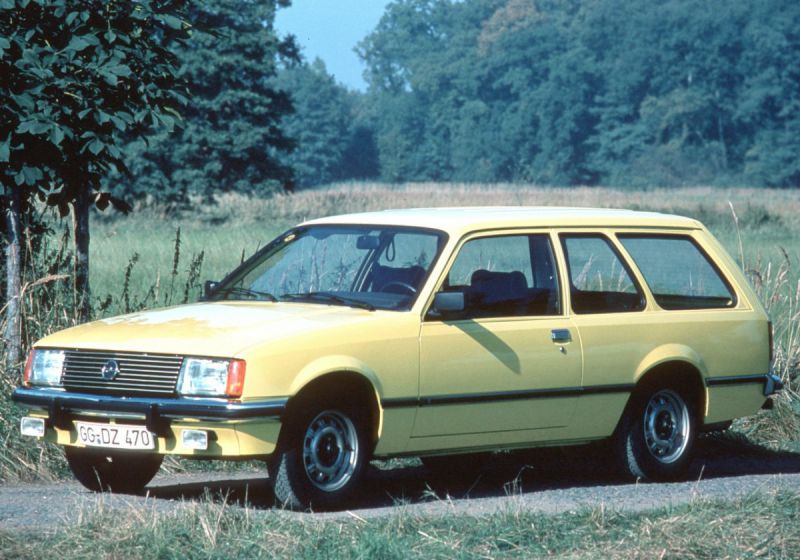
The Opel Rekord E Caravan 2.0 (90 hp) Automatic, produced between 1977 and 1982, represented a practical and comfortable family vehicle within the broader Rekord E range. Part of the third generation of the Rekord, the E model (chassis codes 1HX0/A3) was a significant departure from its predecessors, offering a more modern design and improved features. The Caravan body style, a station wagon or estate, was particularly popular for its spaciousness and versatility. The 2.0-liter, 90 horsepower engine paired with an automatic transmission positioned this variant as a mid-range offering, appealing to buyers prioritizing ease of driving over outright performance. It sat below the more powerful fuel-injected versions and above the smaller displacement engines in the lineup.
Powertrain & Engine Architecture
The heart of the Rekord E Caravan 2.0 Automatic was the Opel 20N engine, a 1,979 cc (120.77 cubic inches) inline-four cylinder gasoline engine. This engine featured a single overhead camshaft (SOHC) valvetrain with two valves per cylinder. The 20N utilized a naturally aspirated configuration, relying on atmospheric pressure for intake, and a compression ratio of 8:1. Fuel delivery was managed by a Solex carburetor, a common setup for the era. The engine produced 90 horsepower at 5,200 rpm and 142 Nm (104.73 lb-ft) of torque between 3,000 and 3,800 rpm.
The automatic transmission was a three-speed unit, providing smooth but not particularly rapid gear changes. While specific details on the transmission’s internal construction are scarce, it was a conventional hydraulic automatic, typical of the late 1970s and early 1980s. The transmission was geared towards comfortable cruising and fuel efficiency rather than sporty acceleration. The rear-wheel drive configuration was standard for the Rekord E.
Engine Code Specifics
The 20N engine code designates this specific iteration of the Opel four-cylinder. While mechanically similar to other 20-series engines, the 20N’s carburetor tuning and compression ratio were optimized for the 90 hp output. Later versions of the Rekord E would see the introduction of fuel injection systems, offering increased power and efficiency, but the 20N remained a reliable and relatively simple powerplant.
Driving Characteristics
The Rekord E Caravan 2.0 Automatic offered a comfortable, if uninspiring, driving experience. The 90 hp engine and three-speed automatic transmission resulted in a 0-62 mph (0-100 km/h) acceleration time of 16.5 seconds. Top speed was rated at 157 km/h (97.56 mph). The automatic transmission, while convenient, did detract from the engine’s available power, resulting in noticeable lag during acceleration. Compared to the manual transmission versions of the 2.0-liter engine, the automatic was demonstrably slower. The higher-output fuel-injected engines, such as the 2.0E, offered significantly improved performance. However, the automatic transmission provided a smoother and more relaxed driving experience, particularly in city traffic. The rear-wheel drive configuration provided predictable handling, but lacked the stability of more modern front-wheel drive systems.
The gear ratios of the three-speed automatic were optimized for cruising, with a relatively tall final drive ratio. This contributed to reasonable fuel economy for the time, but also limited acceleration. Power delivery was linear, with peak torque available across a broad range of engine speeds.
Equipment & Trim Levels
The Rekord E Caravan 2.0 Automatic typically came equipped with a reasonable level of standard features for a family car of the era. These included cloth upholstery, a basic instrument cluster, and manually adjustable seats. The Caravan body style inherently offered a large cargo area, making it ideal for families or those needing to transport bulky items. Optional extras included a sunroof, upgraded audio systems, and power windows. Interior trim levels varied depending on the market and specific package selected. Generally, the 2.0 Automatic trim offered a step up in comfort and convenience compared to the base models with smaller engines.
Dashboard configuration was relatively simple, with a focus on functionality. The instrument panel typically included a speedometer, fuel gauge, temperature gauge, and ammeter. The steering wheel was typically a two-spoke design, and the interior trim was generally durable and practical.
Chassis & Braking
The Rekord E Caravan featured a conventional chassis design with independent front suspension and a solid rear axle. The front suspension utilized MacPherson struts with coil springs and an anti-roll bar. The rear suspension employed leaf springs and shock absorbers. The 2.0 Automatic variant typically featured ventilated disc brakes on the front wheels and drum brakes on the rear. The braking system was hydraulically operated, providing adequate stopping power for normal driving conditions. Stabilizer bar thickness was moderate, contributing to a comfortable ride quality but not particularly sporty handling. The kerb weight of the vehicle was 1,165 kg (2,568.39 lbs), and the maximum permissible weight was 1,765 kg (3,891.16 lbs).
Market Reception & Comparison
The Opel Rekord E Caravan 2.0 Automatic was generally well-received by automotive critics as a practical and comfortable family vehicle. It was praised for its spacious interior, comfortable ride, and relatively affordable price. However, it was also criticized for its lack of performance and somewhat dated technology. Compared to other trims in the Rekord E lineup, the 2.0 Automatic offered a good balance of features and affordability. The smaller-engined models were more economical but lacked power, while the fuel-injected versions were more expensive and complex. In terms of fuel economy, the 2.0 Automatic achieved approximately 11.1 l/100 km (21.2 US mpg), which was typical for a vehicle of its size and class in the late 1970s and early 1980s. Reliability was generally good, although the carburetor could require occasional adjustment.
Technical Specifications
| Brand | Opel |
| Model | Rekord |
| Generation | Rekord E Caravan |
| Type (Engine) | 2.0 (90 Hp) Automatic |
| Start of production | 1977 |
| End of production | 1982 |
| Powertrain Architecture | Internal Combustion engine |
| Body type | Station wagon (estate) |
| Seats | 5 |
| Doors | 3-5 |
| Fuel consumption (combined) | 11.1 l/100 km |
| Fuel consumption (US mpg) | 21.2 |
| Fuel consumption (UK mpg) | 25.4 |
| Fuel Type | Petrol (Gasoline) |
| Acceleration 0 – 100 km/h | 16.5 sec |
| Acceleration 0 – 62 mph | 16.5 sec |
| Acceleration 0 – 60 mph | 15.7 sec |
| Maximum speed | 157 km/h |
| Weight-to-power ratio | 12.9 kg/Hp |
| Engine Model/Code | 20N |
| Engine displacement | 1979 cm3 |
| Engine configuration | Inline 4 |
| Cylinder Bore | 95 mm |
| Piston Stroke | 69.8 mm |
| Compression ratio | 8:1 |
| Number of valves per cylinder | 2 |
| Kerb Weight | 1165 kg |
| Max. weight | 1765 kg |
| Trunk (boot) space – minimum | 881 l |
| Fuel tank capacity | 70 l |
| Length | 4620 mm |
| Width | 1726 mm |
| Height | 1470 mm |
| Wheelbase | 2668 mm |
| Number of gears and type of gearbox | 3 gears, automatic transmission |
| Front brakes | Ventilated discs |
| Rear brakes | Drum |
Legacy
The Opel Rekord E Caravan 2.0 Automatic, while not a particularly groundbreaking vehicle, remains a fondly remembered classic among enthusiasts. The 20N engine, while relatively simple, proved to be durable and reliable. Today, well-maintained examples are sought after by collectors and classic car enthusiasts. The automatic transmission, while not known for its performance, contributed to the car’s ease of driving and broad appeal. The Rekord E Caravan represents a significant chapter in Opel’s history, and the 2.0 Automatic variant offers a glimpse into the automotive landscape of the late 1970s and early 1980s. Its relatively simple construction makes it easier to maintain and repair compared to more modern vehicles, contributing to its continued presence on the roads today. The used car market values these vehicles based on condition, originality, and completeness, with well-preserved examples commanding higher prices.