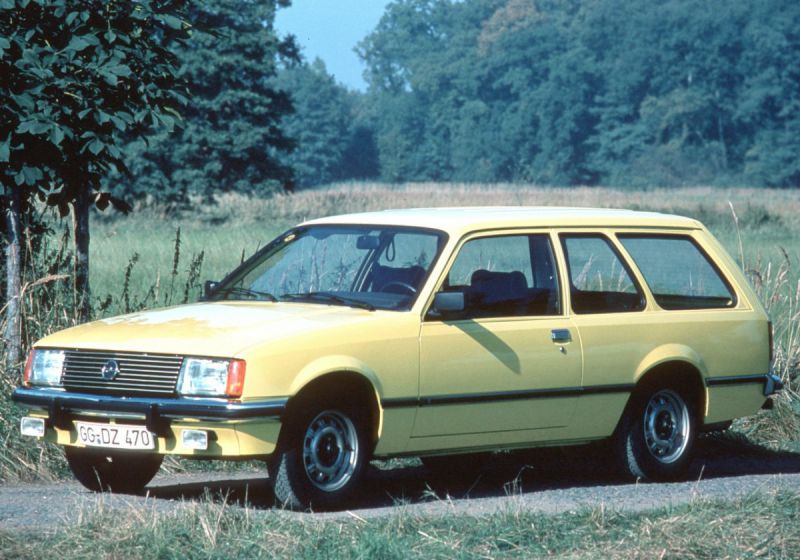
The Opel Rekord E Caravan 2.0 S (101 Hp) Automatic, manufactured between 1977 and 1982, is a notable example of European automotive engineering from the German automaker Opel. As the fifth generation of the Rekord series, the ‘E’ model continued the line’s reputation for being a dependable, spacious, and practical vehicle for families and commercial use. While never officially sold in the United States, the Rekord E was a common sight on European roads, representing a quintessential mid-size car that balanced functionality, comfort, and simple engineering. The Caravan, or station wagon version, proved particularly popular due to its ample cargo capacity combined with passenger comfort, making it a versatile choice for a broad range of buyers. This specific configuration, featuring the 2.0 S engine coupled with an automatic transmission, aimed to provide a balance of adequate power and driving ease for European consumers.
Powertrain & Engine Architecture
The 1977-1982 Opel Rekord E Caravan 2.0 S was powered by a 2.0-liter (1979 cm³) inline-four cylinder gasoline engine, internally designated as the ‘20S’ engine code. This naturally aspirated engine utilized a Single Overhead Camshaft (SOHC) valvetrain with two valves per cylinder – a common and reliable design for the period. Fuel delivery was managed by a carburetor, a technology still widely used in the late 1970s before the widespread adoption of fuel injection systems. The engine produced 101 horsepower at 5200 rpm, resulting in a power-per-liter output of 51 hp/l. Torque was rated at 114.32 lb-ft (155 Nm), available between 3400 and 3800 rpm, providing sufficient pulling power for everyday driving and carrying loads. The engine’s bore and stroke measured 3.74 inches (95 mm) and 2.75 inches (69.8 mm) respectively, with a compression ratio of 9.4:1.
Power was transmitted to the rear wheels through a 3-speed automatic transmission. While modern automatic transmissions offer a greater number of gears, a 3-speed unit was standard for many mainstream vehicles of this era, prioritizing smooth shifting and ease of operation over maximum performance or fuel efficiency. The transmission was designed for durability and straightforward maintenance, reflecting the overall engineering philosophy of the Rekord E.
Driving Characteristics
The Opel Rekord E Caravan 2.0 S Automatic offered a driving experience focused on comfort and practicality rather than outright performance. Acceleration from 0 to 60 mph was calculated at approximately 14.3 seconds, with a top speed of 102.53 mph (165 km/h). These figures positioned it as a competent, but not sporty, performer, well-suited for typical European highway and urban driving conditions. Compared to the manual transmission versions of the 2.0 S, the automatic resulted in a slight performance decrease due to the inherent power losses within the torque converter and the less direct connection to the engine. The 3-speed automatic’s gear ratios were optimized for smooth cruising and reasonable acceleration in everyday traffic. The power delivery was linear, with the engine providing adequate torque throughout the rev range, making it easy to drive in various situations. Compared to higher-output Rekord variants, such as those equipped with the larger 2.1-liter engine, the 2.0 S Automatic offered a more economical and relaxed driving experience.
Equipment & Trim Levels
The Rekord E Caravan 2.0 S Automatic typically came equipped with a standard set of features reflecting its position as a mid-range offering. Interior upholstery was generally cloth, with options for upgraded materials available. The dashboard layout was functional and straightforward, featuring analog gauges for speed, fuel level, coolant temperature, and other essential information. Standard equipment included power-assisted steering, a radio (often a basic AM/FM unit), and manually adjustable seats. Optional extras included a sunroof, upgraded sound systems, and more luxurious interior trim options. The Caravan’s defining feature was its spacious interior and large cargo area, accessible through a rear tailgate. The 2.0 S trim level generally indicated a slightly higher level of equipment compared to the base models, often including features like chrome trim, upgraded wheels, and a more refined interior finish.
Chassis & Braking
The Opel Rekord E Caravan featured a conventional chassis design for a rear-wheel-drive vehicle of its era. The suspension consisted of independent front suspension with coil springs and a rigid rear axle with leaf springs. This setup provided a comfortable ride, although it wasn’t particularly sporty in terms of handling. The braking system utilized ventilated disc brakes at the front and drum brakes at the rear, a common configuration for vehicles in this weight class. The size of the brake discs and drums, as well as the diameter of the master cylinder, were adequate for the vehicle’s weight and performance capabilities. Stabilizer bars were typically fitted to both the front and rear axles to reduce body roll during cornering. The Rekord E Caravan’s suspension was tuned for comfort and stability, prioritizing a smooth ride over sharp handling.
Market Reception & Comparison
The Opel Rekord E Caravan 2.0 S Automatic received generally positive reviews from automotive critics in Europe. It was praised for its spaciousness, practicality, and comfortable ride. However, some critics noted that the 3-speed automatic transmission felt somewhat dated compared to newer designs, and the performance was not particularly exciting. Fuel economy was considered competitive for a mid-size wagon with an automatic transmission at the time, rated at a combined 23.5 US mpg (10 l/100 km). Compared to other trims in the Rekord E lineup, the 2.0 S Automatic offered a good balance of power and fuel efficiency. The manual transmission versions of the 2.0 S provided slightly better performance and fuel economy, while the larger-engined models offered more power but at the expense of increased fuel consumption. The Rekord E Caravan competed directly with models like the Ford Taunus, Volkswagen Passat, and various offerings from French and Italian manufacturers. It was generally considered to be a reliable and well-built vehicle, offering good value for money.
Technical Specifications
| Category | Specification |
| Brand | Opel |
| Model | Rekord |
| Generation | Rekord E Caravan |
| Type (Engine) | 2.0 S (101 Hp) Automatic |
| Start of production | 1977 year |
| End of production | 1982 year |
| Powertrain Architecture | Internal Combustion engine |
| Body type | Station wagon (estate) |
| Seats | 5 |
| Doors | 3-5 |
| Fuel consumption (economy) – combined | 10 l/100 km |
| Fuel Type | Petrol (Gasoline) |
| Acceleration 0 – 60 mph | 14.3 sec |
| Maximum speed | 165 km/h |
| Weight-to-power ratio | 11.5 kg/Hp, 86.7 Hp/tonne |
| Weight-to-torque ratio | 7.5 kg/Nm, 133 Nm/tonne |
| Power | 101 Hp @ 5200 rpm. |
| Power per liter | 51 Hp/l |
| Torque | 155 Nm @ 3400-3800 rpm. |
| Engine Model/Code | 20S |
| Engine displacement | 1979 cm3 |
| Number of cylinders | 4 |
| Engine configuration | Inline |
| Cylinder Bore | 95 mm |
| Piston Stroke | 69.8 mm |
| Compression ratio | 9.4:1 |
| Number of valves per cylinder | 2 |
| Fuel injection system | Carburetor |
| Engine aspiration | Naturally aspirated engine |
| Valvetrain | SOHC |
| Kerb Weight | 1165 kg |
| Max. weight | 1765 kg |
| Max load | 600 kg |
| Trunk (boot) space – minimum | 881 l |
| Fuel tank capacity | 70 l |
| Minimum turning circle (turning diameter) | 10.8 m |
| Drivetrain Architecture | The Internal combustion engine (ICE) drives the rear wheels of the vehicle. |
| Drive wheel | Rear wheel drive |
| Number of gears and type of gearbox | 3 gears, automatic transmission |
| Front brakes | Ventilated discs |
| Rear brakes | Drum |
Legacy
The Opel Rekord E Caravan 2.0 S Automatic powertrain, while not known for groundbreaking innovation, proved to be remarkably durable and reliable. Many examples continued to provide years of service long after their production ended. In the used car market today, these vehicles are relatively rare, but those that remain are often sought after by classic car enthusiasts and collectors. The 20S engine is known for its simplicity and ease of maintenance, making it a relatively straightforward engine to repair and restore. The automatic transmission, while not as refined as modern units, is also generally reliable if properly maintained. The Rekord E Caravan’s enduring appeal lies in its practicality, robustness, and nostalgic charm, representing a bygone era of European automotive engineering focused on functionality and dependability.