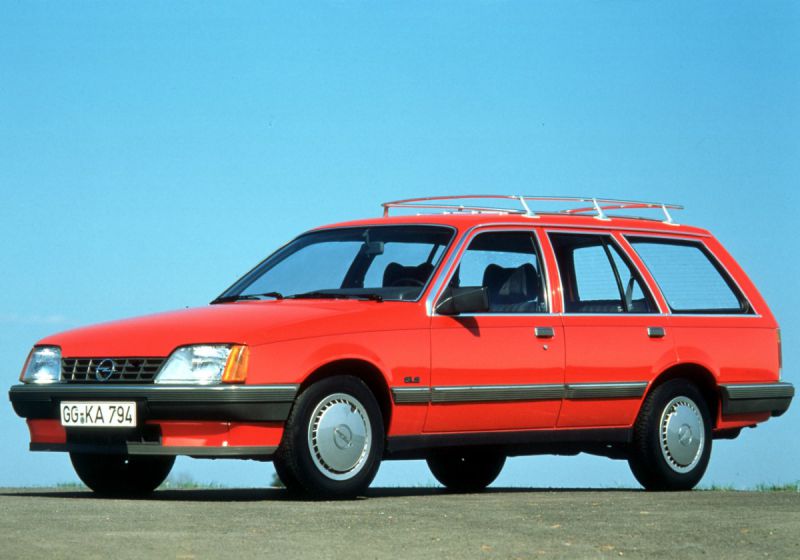
The Opel Rekord E Caravan (facelift 1982) represents a significant chapter in the history of European family transportation. Produced by the German automaker Opel, a subsidiary of General Motors, the Rekord series was a long-running and highly successful line of executive cars and family vehicles, particularly popular across Western Europe. The E-generation, launched in 1977, received a notable facelift in September 1982, bringing updated styling and minor mechanical refinements that kept it competitive into the mid-1980s. This particular variant, the 2.0 S (101 Hp) Automatic, exemplifies the practical and reliable motoring Opel offered to families and businesses alike, serving as a dependable station wagon (or estate car, as it’s known in Europe) designed for utility and comfort. While never officially sold in the United States, the Rekord E Caravan played a crucial role in Opel’s strategy to provide accessible, robust vehicles for the European market.
Powertrain & Engine Architecture of the 2.0 S Automatic
Under the hood, the Opel Rekord E Caravan (facelift 1982) 2.0 S was powered by Opel’s 2.0-liter (1979 cm³ or 120.77 cu. in.) inline-four engine, designated with the code “20S.” This naturally aspirated powerplant utilized a carburetor fuel injection system – specifically, a Solex 32 PHN carburetor – a common and reliable setup for its era. It featured a Single Overhead Camshaft (SOHC) valvetrain with two valves per cylinder. The engine delivered 101 horsepower at 5400 rpm, generating 115.06 lb.-ft. (156 Nm) of torque at a lower 3800 rpm. This engine was known for its smooth operation and durability, characteristics highly valued by buyers of family wagons.
The 20S engine’s design prioritized reliability and ease of maintenance over outright performance. The carburetor system, while less efficient than fuel injection systems found in later vehicles, was relatively simple to diagnose and repair. The SOHC valvetrain contributed to the engine’s smooth operation and reduced complexity. The engine block was constructed from cast iron, providing excellent durability, while the cylinder head was made of aluminum alloy to reduce weight.
Mated to a 3-speed automatic transmission (typically a BorgWarner Type 35), the powertrain was designed for ease of driving and comfortable cruising rather than outright speed. This transmission was a common choice for Opel vehicles of the period, known for its smooth shifting and reliability. The automatic transmission featured a torque converter, providing smooth acceleration from a standstill. The gear ratios were optimized for fuel efficiency and comfortable highway cruising, rather than rapid acceleration.
Driving Characteristics
The Opel Rekord E Caravan 2.0 S Automatic offered a comfortable and predictable driving experience. The 3-speed automatic transmission, while not offering the responsiveness of a manual gearbox, provided smooth and effortless gear changes. Acceleration from 0 to 60 mph took approximately 14.3 seconds, reaching a maximum speed of 105 mph (169 km/h). These figures were adequate for the typical usage patterns of a family station wagon in the early 1980s, which prioritized cargo capacity and passenger comfort over blistering acceleration.
Compared to the 1.8-liter versions of the Rekord E, the 2.0 S Automatic offered a noticeable improvement in performance, particularly when fully loaded with passengers and luggage. The extra displacement and slightly higher torque output provided more effortless cruising and better hill-climbing ability. However, it wasn’t as sporty as the manual transmission versions, which allowed for more driver control and quicker acceleration. Compared to the later 2.2-liter and diesel variants, the 2.0 S Automatic represented a middle ground, offering a balance between performance, fuel economy, and affordability.
The rear-wheel-drive architecture provided predictable handling, although it wasn’t as nimble as front-wheel-drive cars. The suspension, consisting of MacPherson struts at the front and a rigid axle with leaf springs at the rear, provided a comfortable ride, but could feel somewhat bouncy when encountering uneven road surfaces.
Equipment & Trim Levels
The 2.0 S Automatic trim level represented a mid-range offering within the Rekord E Caravan lineup. Standard features included cloth upholstery, a basic AM/FM radio, and manual windows. The interior was functional and durable, designed to withstand the rigors of family use. The dashboard featured a straightforward layout with clearly labeled gauges and controls.
Optional extras available for the 2.0 S Automatic included power windows, a sunroof, upgraded audio systems, and metallic paint finishes. Higher trim levels, such as the GL and SE, offered more luxurious features, such as velour upholstery, central locking, and alloy wheels. The 2.0 S Automatic was often chosen by buyers who wanted a well-equipped and comfortable station wagon without the added expense of the top-of-the-line models.
The Caravan body style itself was a key feature, offering a large and versatile cargo area. The rear seats could be folded down to create an even larger loading space, making it ideal for transporting bulky items. The tailgate featured a large opening for easy access to the cargo area.
Chassis & Braking
The Opel Rekord E Caravan 2.0 S Automatic utilized a robust chassis designed to handle the weight of passengers and cargo. The suspension consisted of MacPherson struts with coil springs at the front and a rigid axle with leaf springs at the rear. This setup provided a comfortable ride, but wasn’t particularly sporty. The rear leaf springs were chosen for their durability and ability to handle heavy loads.
The braking system featured ventilated disc brakes at the front and drum brakes at the rear. This was a common setup for family cars of the period, offering reliable stopping power. The brakes were hydraulically operated, providing good pedal feel and modulation. The braking system was adequate for the vehicle’s weight and performance, but lacked the sophistication of more modern braking systems.
Steering was accomplished via a recirculating ball steering system, which provided a relatively heavy but precise steering feel. The steering wasn’t power-assisted on the base models, requiring some effort to maneuver at low speeds.
Market Reception & Comparison
The Opel Rekord E Caravan 2.0 S Automatic was generally well-received by critics and buyers alike. It was praised for its spacious interior, comfortable ride, and reliable powertrain. However, some critics noted that its performance was somewhat lackluster compared to other cars in its class. Fuel economy was considered competitive for a vehicle of its size and weight with an automatic transmission at the time, averaging around 25 US mpg (9.4 l/100 km).
Compared to the 1.8-liter Rekord E Caravan, the 2.0 S Automatic offered a noticeable improvement in performance and refinement. However, it was more expensive to purchase and operate. Compared to the diesel versions, the 2.0 S Automatic offered better acceleration and a quieter driving experience, but consumed more fuel. The Ford Sierra Estate and Volkswagen Passat Variant were its main competitors, offering similar levels of practicality and comfort.
The Rekord E Caravan’s reputation for reliability contributed to its strong resale value. It was a popular choice for families and businesses who needed a dependable and spacious vehicle.
Technical Specifications
| Category | Specification |
| Brand | Opel |
| Model | Rekord E Caravan (facelift 1982) 2.0 S (101 Hp) Automatic |
| Production Start | September, 1982 |
| Production End | August, 1984 |
| Body Type | Station wagon (estate) |
| Seats | 5 |
| Doors | 3-5 |
| Powertrain Architecture | Internal Combustion Engine, Rear-Wheel Drive |
| Fuel Consumption (Combined) | 9.4 l/100 km |
| Fuel Type | Petrol (Gasoline) |
| Acceleration 0 – 60 mph | 14.3 sec |
| Acceleration 0 – 100 km/h | 15 sec |
| Maximum Speed | 169 km/h |
| Weight-to-Power Ratio | 11.7 kg/Hp |
| Weight-to-Torque Ratio | 7.6 kg/Nm |
| Power | 101 Hp @ 5400 rpm |
| Torque | 156 Nm @ 3800 rpm |
| Engine Model/Code | 20S |
| Engine Displacement | 1979 cm³ |
| Number of Cylinders | 4 |
| Engine Configuration | Inline |
| Cylinder Bore | 95 mm |
| Piston Stroke | 69.8 mm |
| Compression Ratio | 9:1 |
| Valves per Cylinder | 2 |
| Fuel Injection System | Carburetor |
| Engine Aspiration | Naturally aspirated |
| Valvetrain | SOHC |
| Engine Oil Capacity | 3.8 l |
| Coolant Capacity | 6.1 l |
| Kerb Weight | 1180 kg |
| Max. Weight | 1800 kg |
| Max Load | 620 kg |
| Fuel Tank Capacity | 70 l |
| Permitted Trailer Load with Brakes (12%) | 1250 kg |
| Permitted Trailer Load without Brakes | 535 kg |
| Length | 4678 mm |
| Width | 1720 mm |
| Height | 1475 mm |
| Wheelbase | 2668 mm |
| Front Track | 1435 mm |
| Rear Track | 1432 mm |
| Ride Height (Ground Clearance) | 140 mm |
| Drag Coefficient (Cd) | 0.40 |
| Minimum Turning Circle | 10.8 m |
| Drive Wheel | Rear-wheel drive |
| Number of Gears | 3 |
| Type of Gearbox | Automatic transmission |
| Front Brakes | Ventilated discs |
| Rear Brakes | Drum |
Legacy
The Opel Rekord E Caravan 2.0 S Automatic, while not a particularly rare or collectible car today, remains a popular choice among classic car enthusiasts and those seeking a reliable and affordable vintage vehicle. The 20S engine, when properly maintained, is known for its durability and longevity. Parts availability is generally good, as many components were shared with other Opel and General Motors models.
In the used car market, these vehicles are typically found in well-preserved condition, often owned by enthusiasts who have taken care to maintain them. Prices vary depending on condition, mileage, and originality, but generally remain affordable. The Rekord E Caravan’s enduring appeal lies in its practicality, reliability, and nostalgic charm. It represents a bygone era of automotive engineering, when cars were built to last and designed to meet the everyday needs of families.